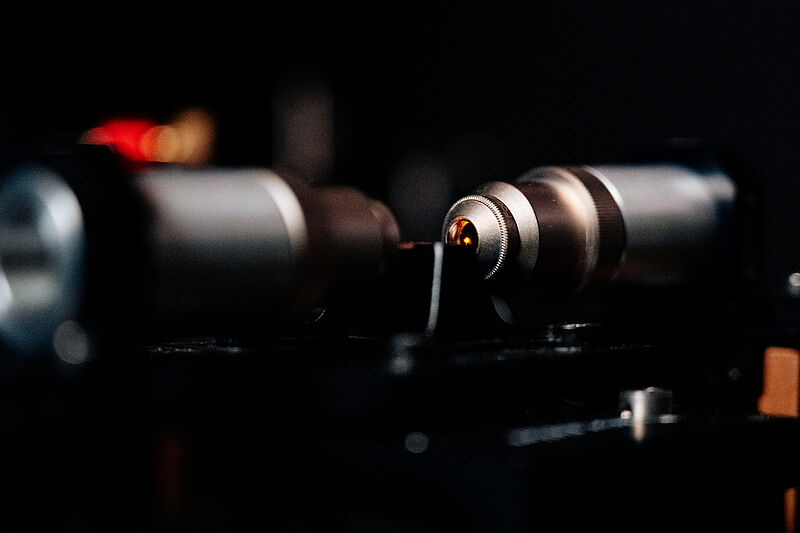
Quantum computers are one of the key future technologies of the 21st century. Researchers at Paderborn University, working under Professor Thomas Zentgraf and in cooperation with colleagues from the Australian National University and Singapore University of Technology and Design, have developed a new technology for manipulating light that can be used as a basis for future optical quantum computers. The results have now been published in the internationally renowned professional journal “Nature Photonics.”
New optical elements for manipulating light will allow for more advanced applications in modern information technology, particularly in quantum computers. However, a major challenge that remains is non-reciprocal light propagation through nanostructured surfaces, where these surfaces have been manipulated at a tiny scale. Professor Thomas Zentgraf, head of the working group for ultrafast nanophotonics at Paderborn University, explains, “In reciprocal propagation, light can take the same path forward and backward through a structure; however, non-reciprocal propagation is comparable to a one-way street where it can only spread out in one direction.” Non-reciprocity is a special characteristic in optics that causes light to produce different material characteristics when its direction is reversed. One example would be a window made of glass that is transparent from one side and lets light through, but which acts as a mirror on the other side and reflects the light. This is known as duality. “In the field of photonics, such a duality can be very helpful in developing innovative optical elements for manipulating light,” says Zentgraf.
In a current collaboration between his working group at Paderborn University and researchers at the Australian National University and Singapore University of Technology and Design, non-reciprocal light propagation was combined with a frequency conversion of laser light, in other words a change in the frequency and thus also the colour of the light. “We used the frequency conversion in the specially designed structures, with dimensions in the range of a few hundred nanometres, to convert infrared light – which is invisible to the human eye – into visible light,” explains Dr. Sergey Kruk, Marie Curie Fellow in Zentgraf’s group. The experiments show that this conversion process takes place only in one illumination direction for the nanostructured surface, while it is completely suppressed in the opposite illumination direction. This duality in the frequency conversion characteristics was used to code images into an otherwise transparent surface. “We arranged the various nanostructures in such a way that they produce a different image depending on whether the sample surface is illuminated from the front or the back,” says Zentgraf, adding, “The images only became visible when we used infrared laser light for the illumination.”
In their first experiments, the intensity of the frequency-converted light within the visible range was still very small. The next step, therefore, is to further improve efficiency so that less infrared light is needed for the frequency conversion. In future optically integrated circuits, the direction control for the frequency conversion could be used to switch light directly with a different light, or to produce specific photon conditions for quantum-optical calculations directly on a small chip. “Maybe we will see an application in future optical quantum computers where the directed production of individual photons using frequency conversion plays an important role,” says Zentgraf.
Reference
Asymmetric parametric generation of images with nonlinear dielectric metasurfaces
Sergey S. Kruk, Lei Wang, Basudeb Sain, Zhaogang Dong, Joel Yang, Thomas Zentgraf & Yuri Kivshar
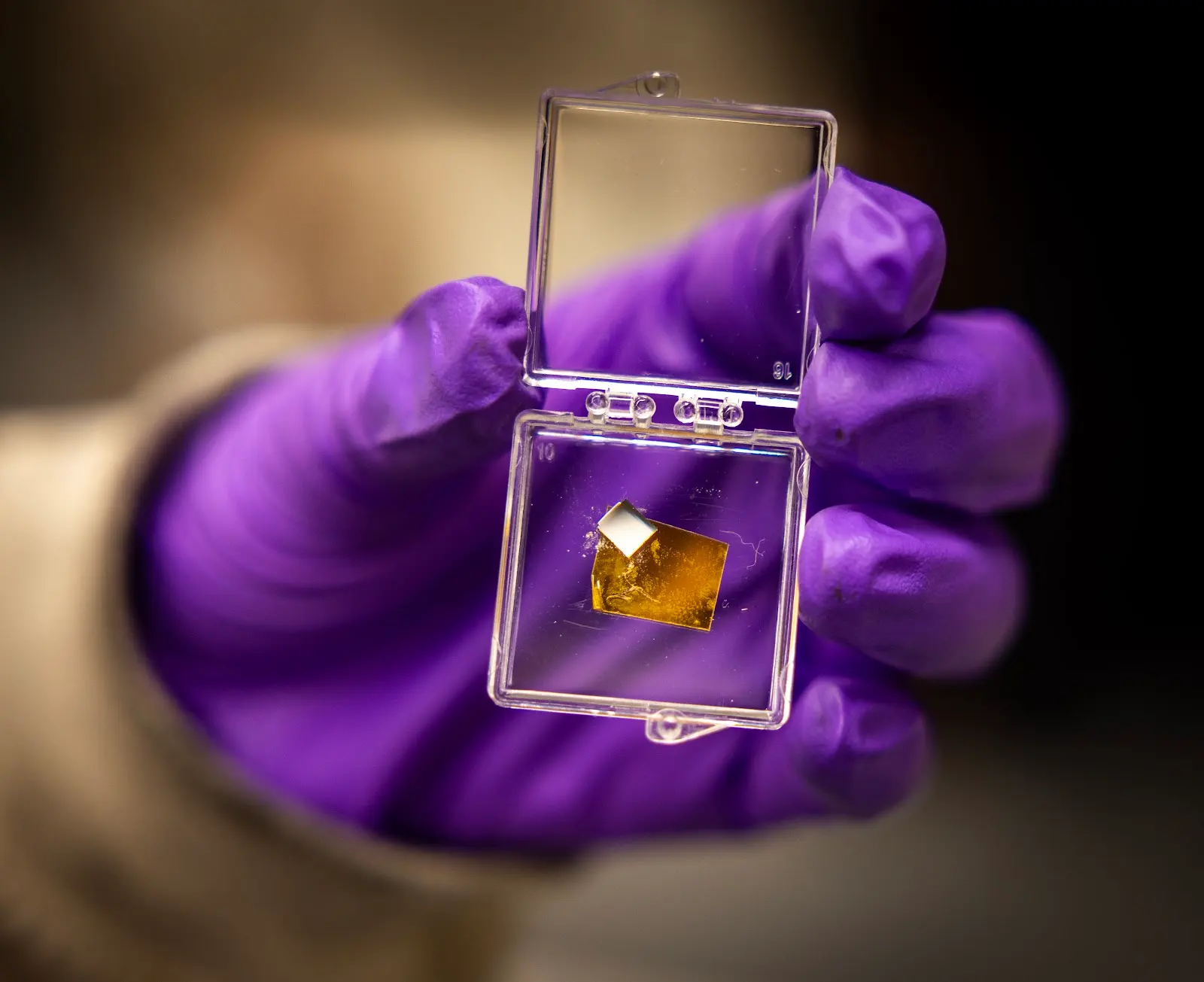
University of Michigan and University of Wisconsin researchers, backed by up to $6M from DARPA, propose an alternative to the transistor that could make computing 100 to 1,000 times faster and more energy efficient. The M3BOLT device pairs ferroelectric PMN-PT with a magnetic iron-gallium alloy, using magnons and sound waves instead of moving electrons as bits. Magnetic states also persist without power, adding memory.
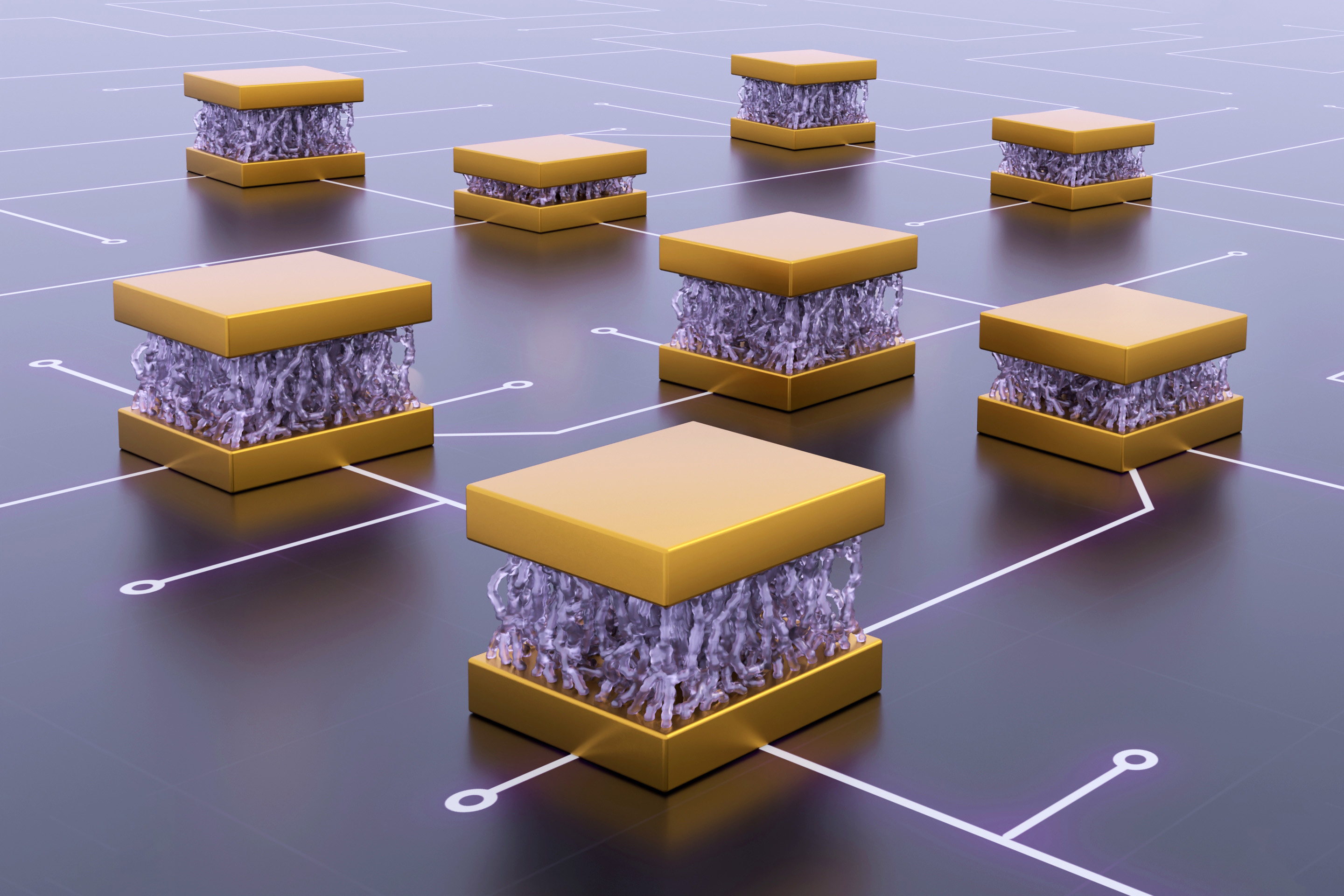
This illustration shows the nano-mechanical devices the researchers developed. Inspired by neurons, they can perform computing tasks with high energy efficiency. Image: Emily Theobald MIT researchers have created a new computing platform that could be used to develop intelligent and adaptive next-generation electronics that can simultaneously perform multiple functions, like computing and memory, all within one extremely compact, energy-efficient device. Such a platform opens opportunities...
Breakthrough from a team led by Jacob Covey, associate professor in the University of Chicago’s Pritzker School of Molecular Engineering and Department of Physics, turns helium-3’s low mass into a quantum resource
This week in nanotech
15 deals tracked
New products
 Ti-WCMBN Nanomaterialia Featured
 DLS-1 Mass Spectrometer for Fusion Gas AnalysisHiden Analytical Featured
 Ionic® Purification SystemBionano Genomics, Inc.
Market insights
Last 30 days: Quantum Technologies drew the most money: $126.3M.
Money raised per month