Quantum dots are nanoscale crystals capable of emitting light of different colors. Display devices based on quantum dots promise greater power efficiency, brightness and color purity than previous generations of displays. Of the three colors typically required to display full color images — red, green and blue — the last has proved difficult to produce. A new method based on self-organizing chemical structures offers a solution, and a cutting-edge imaging technique to visualize these novel blue quantum dots proved essential to their creation and analysis.
Peer closely at the screen of your device, and you might be able to see the individual picture elements, pixels, that make up the image. Pixels can appear almost any color, but they are not actually the smallest element on your screen as they are typically made up of subpixels which are red, green and blue. The variable intensity of these subpixels gives the individual pixels the appearance of a single color from a palette of billions. The underlying technology behind subpixels has evolved from the days of early color television, and there is now a number of possible options. But the next big leap is likely to be so-called quantum dot light emitting diodes, or QD-LEDs.
Displays based on QD-LEDs already exist, but the technology is still maturing, and current options have some drawbacks, specifically regarding the blue subpixels within them. Of the three primary colors, blue subpixels are the most important. Through a process called down-conversion, blue light is used to generate green and red light. Because of this, blue quantum dots require more tightly controlled physical parameters. This often means blue quantum dots are highly complex and costly to produce, and their quality a critical factor in any display. But now, a team of researchers led by Professor Eiichi Nakamura from the University of Tokyo’s Department of Chemistry has a solution.
“Previous design strategies for blue quantum dots were very top down, taking relatively large chemical substances and putting them through a series of processes to refine them into something that worked,” said Nakamura. “Our strategy is bottom up. We built on our team’s knowledge of self-organizing chemistry to precisely control molecules until they form the structures we want. Think of it like building a house from bricks rather than carving one from stone. It’s much easier to be precise, design the way you want, and is more efficient and cost effective too.”
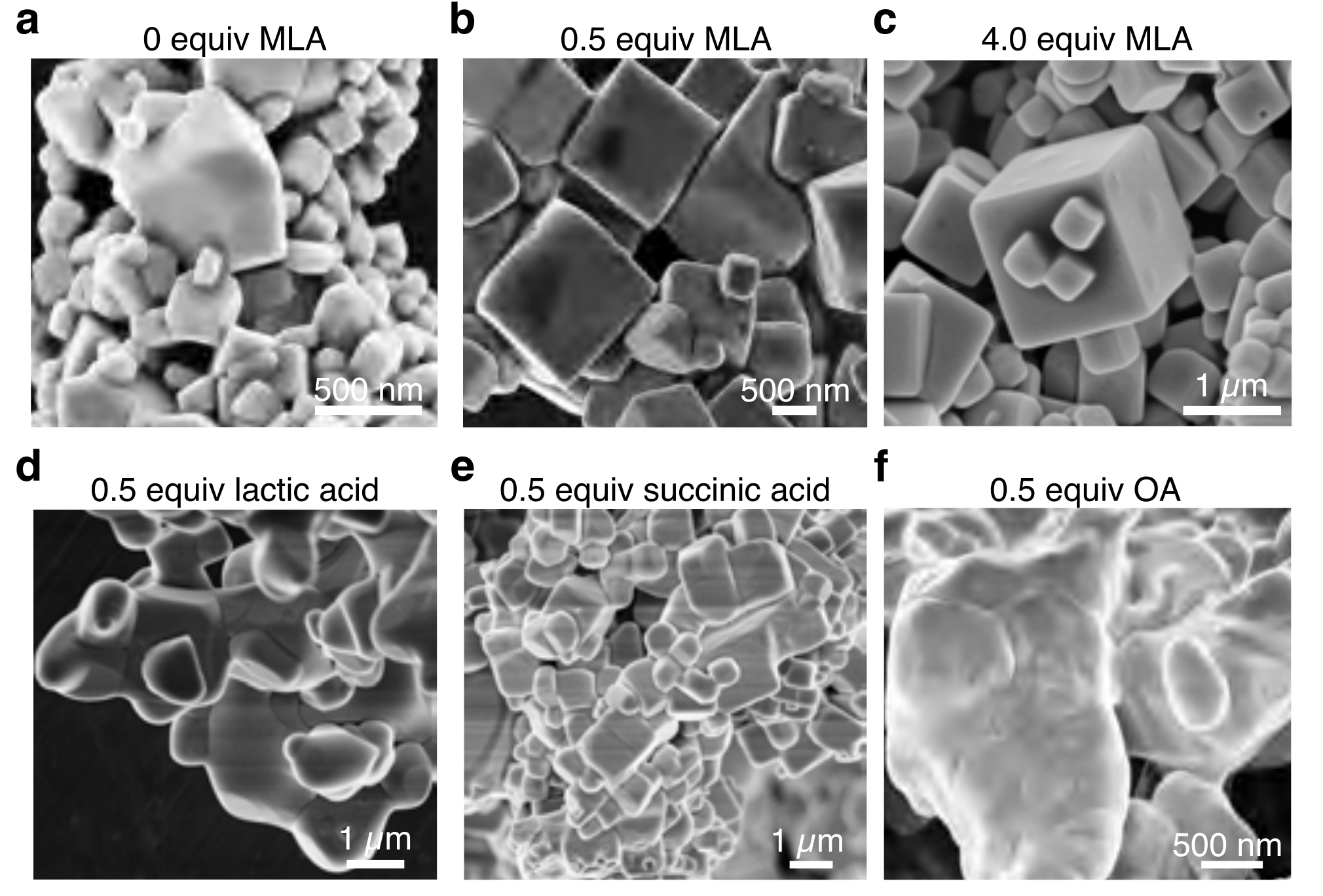
But it’s not just the way Nakamura’s team produced their blue quantum dot that’s special; when exposed to ultraviolet light, it produces nearly perfect blue light, according to the international standard for measuring color accuracy, known as BT.2020. This is due to the unique chemical makeup of their dot, a hybrid mix of organic and inorganic compounds including lead perovskite, malic acid and oleylamine. And only through self-organization can these be coaxed into the form required, which is a cube of 64 lead atoms, four to a side.
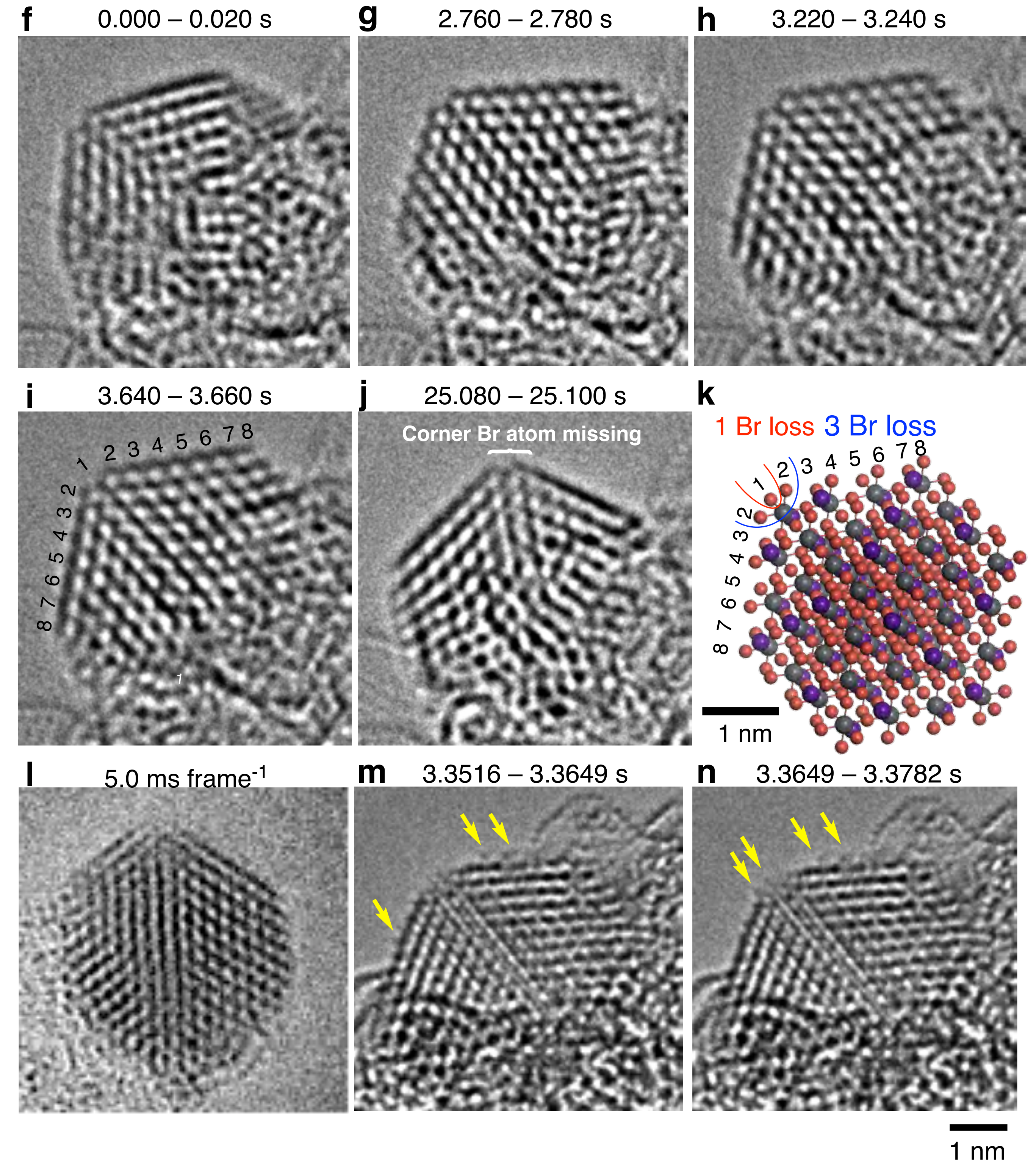
“Surprisingly, one of our biggest challenges was in finding that malic acid was a key piece of our chemical puzzle. It took over a year methodically trying different things to find it,” said Nakamura. “Perhaps less surprising is that our other main challenge was to determine the structure of our blue quantum dot. At 2.4 nanometers, 190 times smaller than the wavelength of the blue light we sought to create with it, the structure of a quantum dot cannot be imaged by conventional means. So, we turned to an imaging tool pioneered by some of our team known as SMART-EM, or ‘cinematic chemistry’ as we like to call it.”
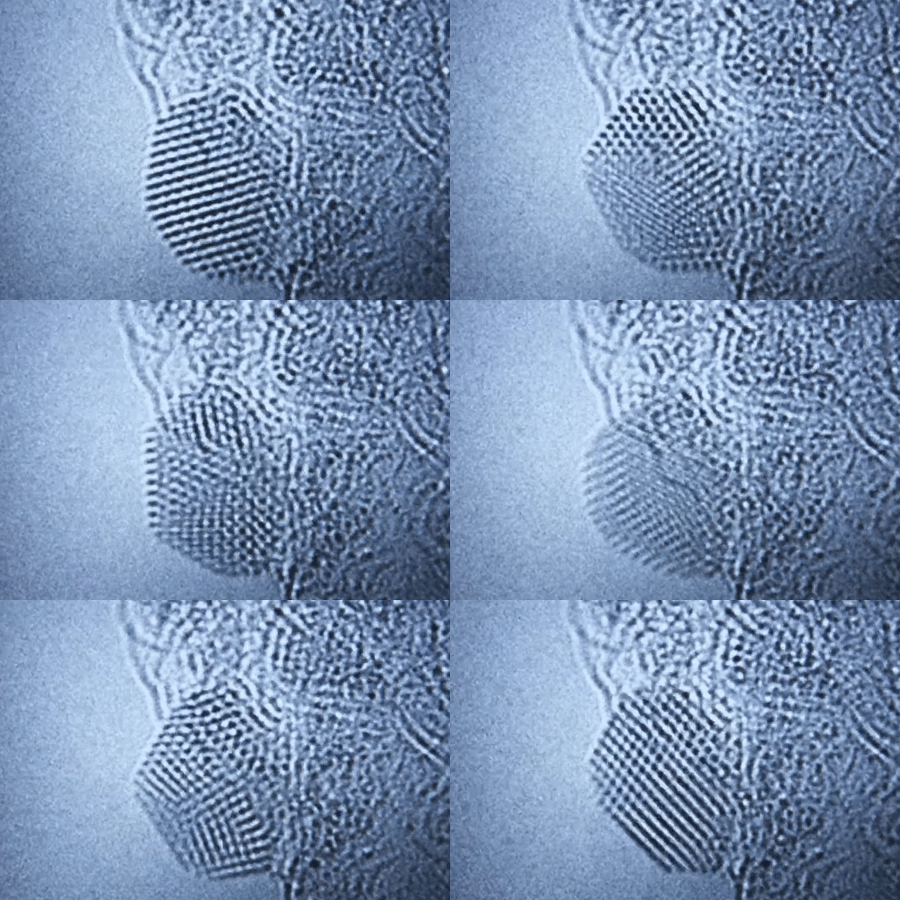
Cinematic chemistry is an evolution of electron microscope imaging that is more akin to shooting a video than taking a still image. For capturing details of the structure of the blue quantum dot, this is essential, as the nanocrystal is actually quite dynamic, so any single image of it would only tell a small piece of its story. Unfortunately, the blue quantum dot is also quite short-lived, though this was expected, and the team is now aiming to improve its stability with the aid of industrial collaboration.
Reference
Precision Synthesis and Atomistic Analysis of Deep-Blue Cubic Quantum Dots Made via Self-Organization
Olivier J. G. L. Chevalier, Takayuki Nakamuro, Wataru Sato, Satoru Miyashita, Takayuki Chiba, Junji Kido, Rui Shang, and Eiichi Nakamura
https://pubs.acs.org/doi/10.1021/jacs.2c08227
University of Tokyo
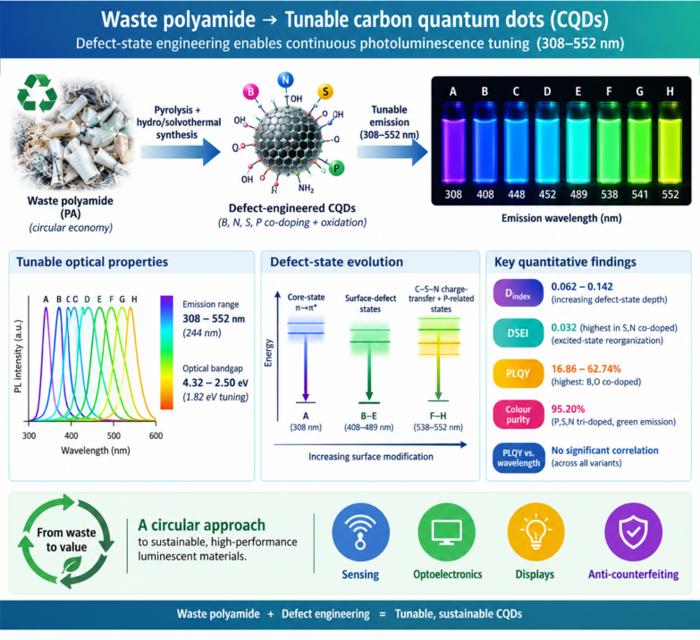
Waste polyamide-derived CQDs show continuous photoluminescence tuning from 308 to 552 nm through sequential defect-state engineering, with optical transition energies decreasing from 4.32 to 2.50 eV. @Christian Ebere Enyoh from Saitama University Carbon quantum dots (CQDs) are fluorescent carbon nanomaterials with potential applications in sensing, optoelectronics, displays, anti-counterfeiting, and environmental technologies. Their optical properties can be adjusted by modifying the carbon...
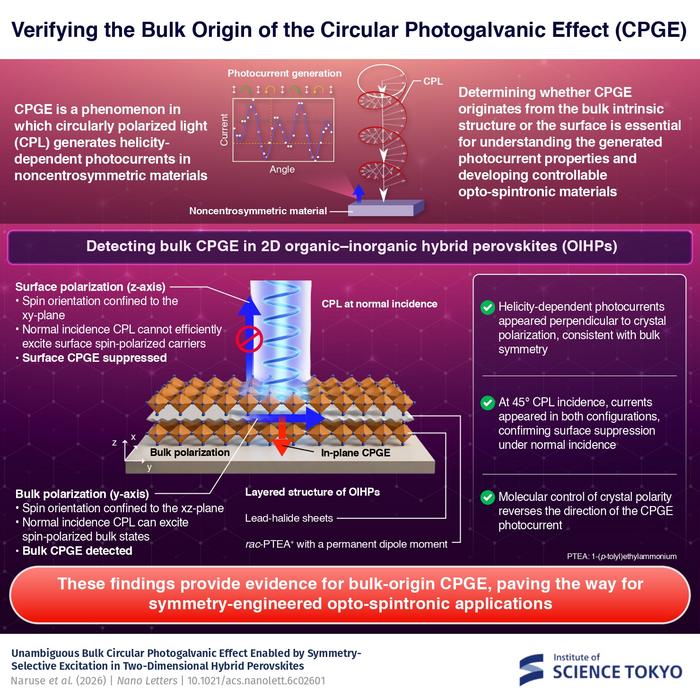
The researchers used circularly polarized light at normal incidence and found that helicity-dependent photocurrents appeared perpendicular to the crystal’s polarization but vanished when measured parallel to it, supporting a bulk origin of CPGE. @Institute of Science Tokyo The circular photogalvanic effect (CPGE), a phenomenon that generates helicity-dependent photocurrents in noncentrosymmetric materials, can originate purely from a crystal's internal structure without contribution from the...
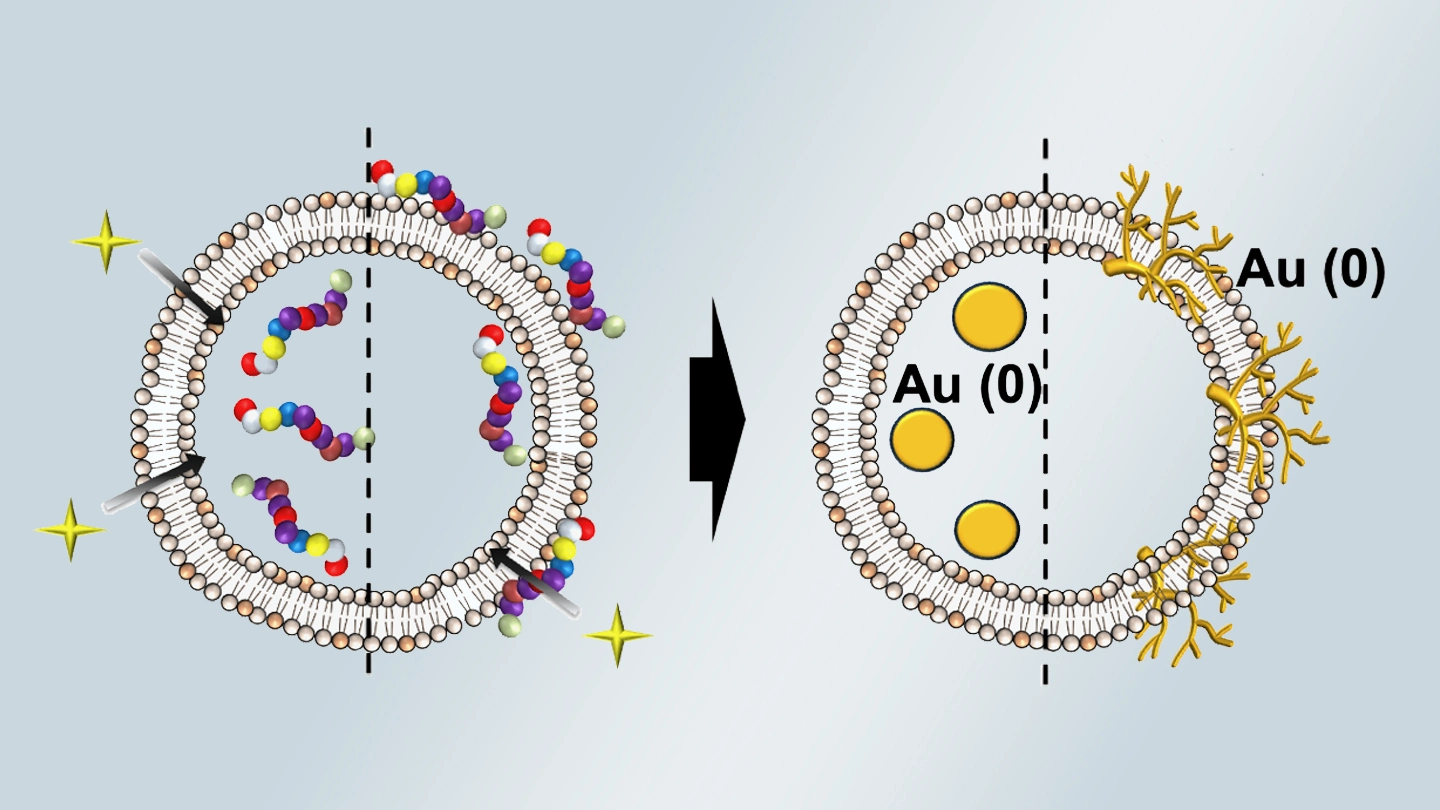
Summary of gold nanoparticle growth programming in liposome based on localization of biomineralization peptide The position of biomineralization peptides within liposomes can influence how gold nanoparticles grow, reports a research team from Institute of Science Tokyo. Peptides localized at the membrane interface promote branched structures, while those confined to the liposome interior favor spherical nanoparticles. The findings offer a new strategy for controlling nanoscale reaction...
