Advanced Institute for Materials Research (AIMR), Tohoku University
Quantum computers represent an exciting next step in the fast-paced evolution of technology. Using quantum bits (qubits), they have the potential to run certain calculations exponentially faster than conventional computers. However, developing and fine-tuning quantum computers requires an enormous number of repetitive tests. To accelerate the overall timeline of quantum technology development, we need a method that can read quantum states at ultra-fast speeds.
A research team from Tohoku University and the National Institute for Materials Science (NIMS) has made a breakthrough that enables ultra-sensitive, high-speed charge detection in 2D-material-based quantum devices necessary to accelerate this development. It brings us one step closer to the realization of next-generation quantum computers, which could eventually revolutionize industries like medicine, logistics, and cybersecurity.
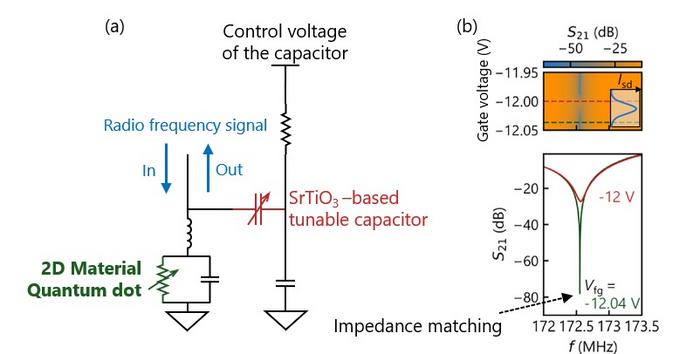
The research study successfully solves a technical bottleneck in quantum physics: the inability to measure high-resistance 2D-material-based quantum devices at high speeds. The team achieved this by integrating a variable capacitor made from strontium titanate (SrTiO3) into a high-frequency resonant circuit. This configuration accomplished near-perfect impedance matching with highly resistive 2D-material-based quantum devices, allowing the researchers to clearly capture "Coulomb oscillations"- the explicit signals of electrons entering and leaving a quantum dot one by one. Crucially, the system remains stable under a perpendicular magnetic field, a condition mandatory for operating spin-valley qubits.
"By applying strontium titanate-based variable capacitors to 2D-material-based quantum devices, we achieved near-perfect impedance matching, even under the perpendicular magnetic fields," says Associate Professor Tomohiro Otsuka at Tohoku University's Advanced Institute for Materials Research (WPI-AIMR). "This unlocks charge detection sensitivity that equals or surpasses conventional quantum dot sensors. It provides a powerful new platform for high-speed qubit readouts in 2D materials."
This innovation directly solves a long-standing bottleneck in quantum physics. While 2D materials like bilayer graphene hold immense promise for creating stable qubits with exceptionally long coherence times, the high electrical resistance of quantum devices made from these materials has historically blocked sensitive high-frequency measurements. Without a way to match impedance, fast and accurate state readout was considered difficult.
"Evaluating quantum states quickly is essential, but the high resistance of 2D materials got in the way," Otsuka explains. "Because qubit development requires massive amounts of repetitive statistical measurements, a fast readout technique acts as an essential catalyst. This foundational technology will significantly accelerate the overall research and development cycle of 2D-material-based quantum devices."
Reference
Perfect impedance matching unlocks sensitive radio-frequency reflectometry in 2D material quantum dots
Motoya Shinozaki, Akitomi Shirachi, Yuta Kera, Tomoya Johmen, Shunsuke Yashima, Aruto Hosaka, Tsuyoshi Yoshida, Takeshi Kumasaka, Yusuke Kozuka, and Tomohiro Otsuka
Ultrafast light pulses have given physicists fresh evidence on the pseudogap, the enigmatic quantum state that has clouded cuprate superconductors for nearly four decades. Using time- and angle-resolved photoemission spectroscopy, researchers suppressed superconductivity in a copper-based compound and watched the pseudogap appear in its place, then fade as superconductivity returned.
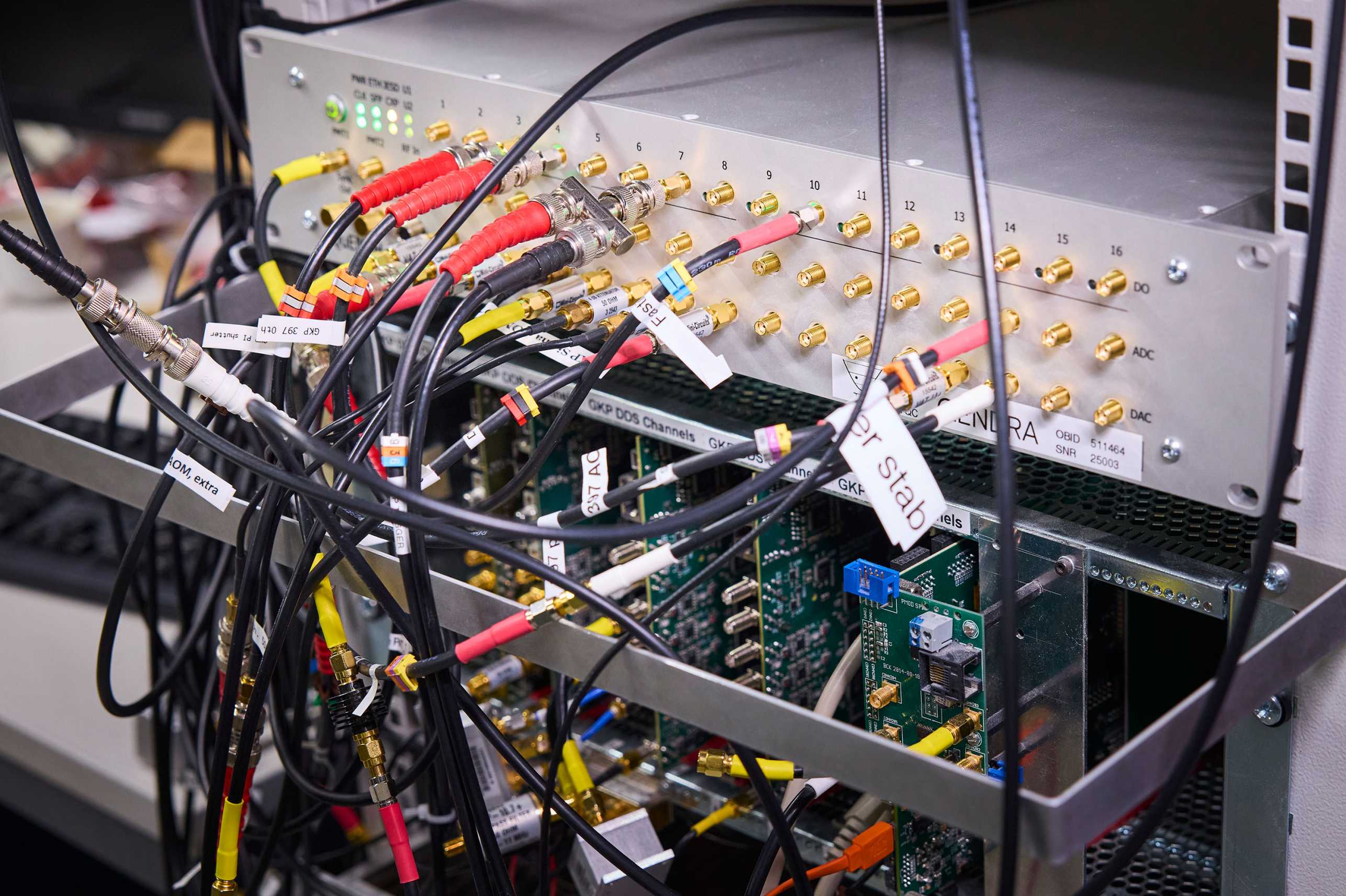
Qendra, an ETH Zurich spin-off, is building a compact control system that generates and coordinates the radio-frequency and laser signals driving trapped-ion and neutral-atom qubits. The device synchronises lasers, cameras and detectors and can evaluate measurements continuously to trigger corrective pulses during a calculation, addressing the lack of real-time error correction in existing controllers.
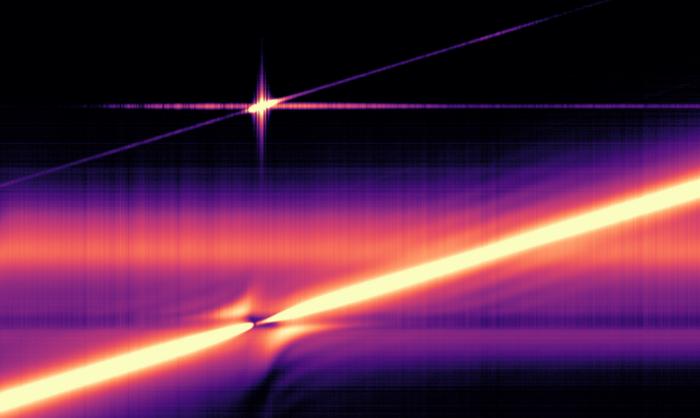
Researchers at the Max Planck Institute for the Science of Light and Leibniz University Hannover have achieved strong coupling between light and long-lived acoustic vibrations in an optical fiber for the first time, using stimulated Brillouin scattering at 4 K without any optical or mechanical resonator. A measurable gap in the spectral response confirms the effect, which typically appears only in cavity systems.
This week in nanotech
$110M raised
9 funding rounds · 58 deals tracked
New products
 Ti-WCMBN Nanomaterialia Featured
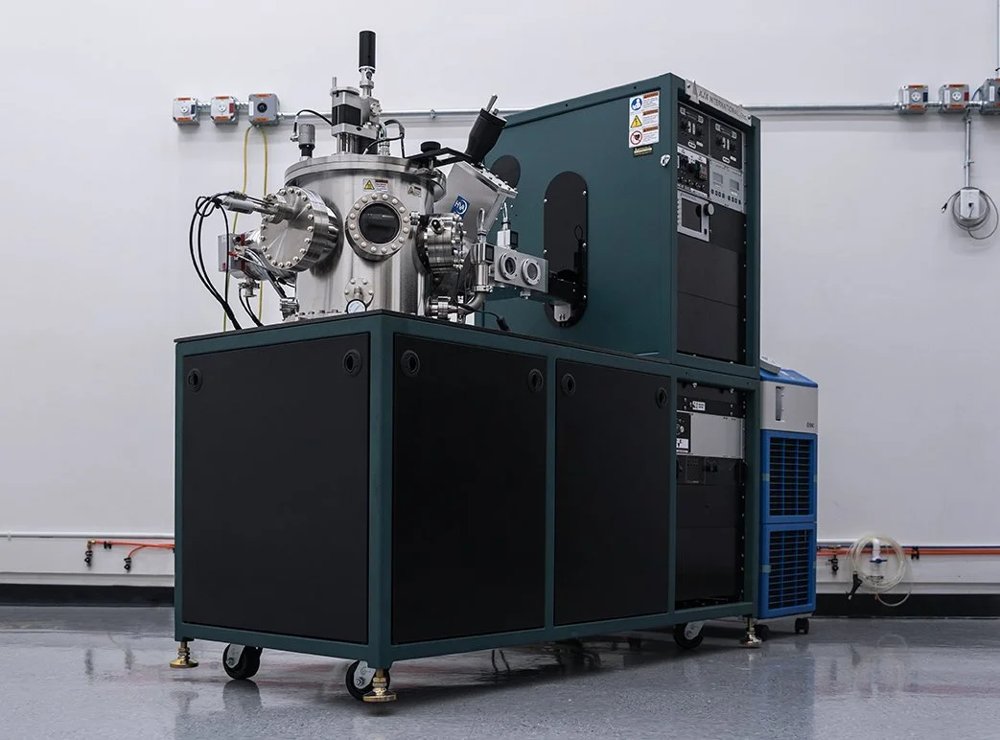 Orion Sputtering Deposition SystemsAJA International Featured
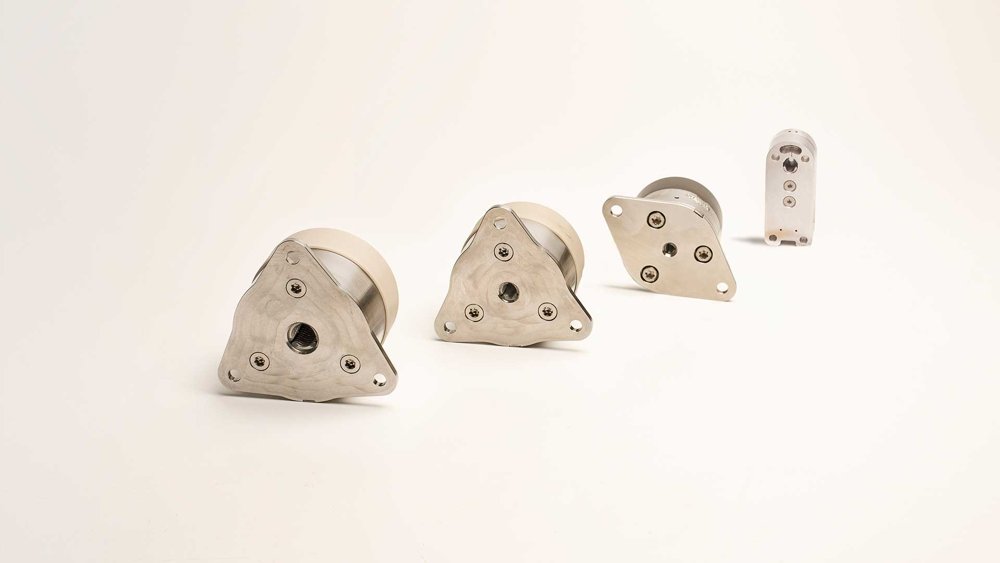 Hold Down & Release Mechanisms (HDRM) REACT – 5KN, 15KN and 35KN space qualified resettable mechanismsARQUIMEA
Market insights
Last 30 days: Quantum Technologies drew the most money: $3.17B.
Money raised per month