Institut national de la recherche scientifique - INRS
MONTREAL, QC, October 20, 2026 - Transmitting electricity without losing any energy may sound impossible, yet this is precisely the promise of superconductivity. For nearly 40 years, scientists have been working to understand materials that exhibit this remarkable property at relatively high temperatures. Unlocking their secrets could one day help make power grids more efficient, enhance medical technologies, and support the development of quantum computing.
Among the most promising of these materials are cuprates, a family of copper-based compounds discovered in 1986. The breakthrough was so significant that its discoverers, Bednorz and Müller, were awarded the Nobel Prize in Physics the following year. Despite decades of research, however, the mechanisms that allow cuprates to become superconducting remain poorly understood.
At the heart of this puzzle lies the pseudogap, a mysterious quantum state whose exact role continues to spark debate. Some scientists believe it helps superconductivity emerge, while others see it as a competing phenomenon.
That question is precisely what a team led by INRS Professor Fabio Boschini, Canada Research Chair in Quantum Materials’ Dynamics and recipient of an Alfred P. Sloan Research Fellowship, set out to investigate. In a study published in Nature Physics, the researchers provide new evidence suggesting that the pseudogap and superconductivity compete with one another rather than work together.
“The pseudogap is one of the greatest mysteries in condensed-matter physics. Understanding how it interacts with superconductivity is essential if we want to explain why these materials can carry electricity without energy loss at unusually high temperatures,” says Fabio Boschini, Professor at INRS and a specialist in ultrafast spectroscopy of quantum condensed matter.
The research was carried out at the INRS Énergie Matériaux Télécommunications Research Centre, using world-class research infrastructure, including the time- and angle-resolved photoemission spectroscopy (TR-ARPES) endstation at the Advanced Laser Light Source (ALLS). The INRS team also collaborated with several international partners, including the Center for Computational Quantum Physics at the Flatiron Institute in New York.
“The pseudogap and superconducting states in cuprates are among the most complex phenomena to reproduce theoretically. Our study reveals that they compete with one another and provides new insight into their behavior when both are excited simultaneously,” said Olivier Gingras, Associate Research Scientist at the Flatiron Institute's Center for Computational Quantum Physics.
Revealing a quantum rivalry with light
To better understand the role of the pseudogap, the researchers temporarily suppressed superconductivity using a pulse of light and then observed how the material responded in real time.
The experiment allowed the team to observe, for the first time, a light-induced transient pseudogap and to access electronic states that had previously remained hidden from conventional techniques.
“Thanks to the unique capabilities of the TR-ARPES system at the ALLS laboratory at INRS, we were able to directly observe what happens when superconductivity temporarily disappears and then re-emerges. It is a bit like uncovering missing frames from a film that scientists have been trying to piece together for decades,” says Dario Armanno, a PhD student at INRS and first author of the study.
The results show that when superconductivity is suppressed, the pseudogap emerges in its place. As superconductivity returns, the pseudogap fades away.
These findings suggest that the two phenomena compete rather than cooperate, challenging the long-standing hypothesis that the pseudogap acts as a precursor to superconductivity.
“This research is essential to advancing the quantum technologies of the future. It contributes to the training of highly qualified personnel in a field that is critical to Canada’s technological sovereignty and to the implementation of its National Quantum Strategy,” says François Légaré, Director of the INRS Énergie Matériaux Télécommunications Research Centre.
While this is fundamental research, the discovery represents an important step forward in understanding a phenomenon that could play a key role in the development of next-generation superconductors and, ultimately, more energy-efficient technologies.
Reference
Light-induced asymmetric pseudogap below the critical temperature in cuprates
D. Armanno, O. Gingras, F. Goto, J.-M. Parent, A. Longa, A. Jabed, B. Frimpong, R. D. Zhong, J. Schneeloch, G. D. Gu, G. Jargot, H. Ibrahim, F. Légaré, B. J. Siwick, N. Gauthier, A. Georges, A. J. Millis, F. Boschini
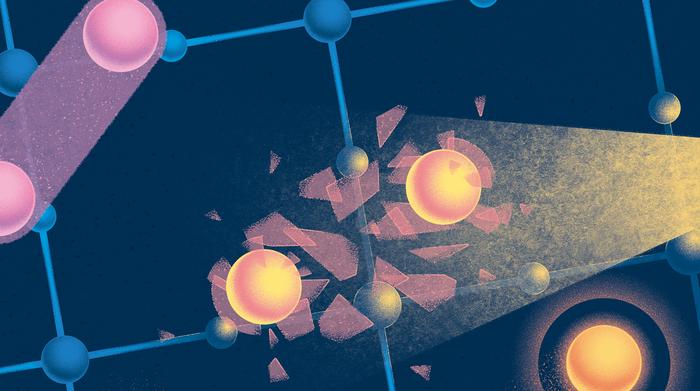
New research on cuprates reveals that superconductivity and the pseudogap state compete for dominance rather than the pseudogap serving as a precursor, a finding that challenges prevailing models of high-temperature superconductivity. Using laser pulses and angle-resolved photoemission spectroscopy on a copper alloy, combined with computer simulations, the team tracked how electrons behave as the material shifts between the two phases.
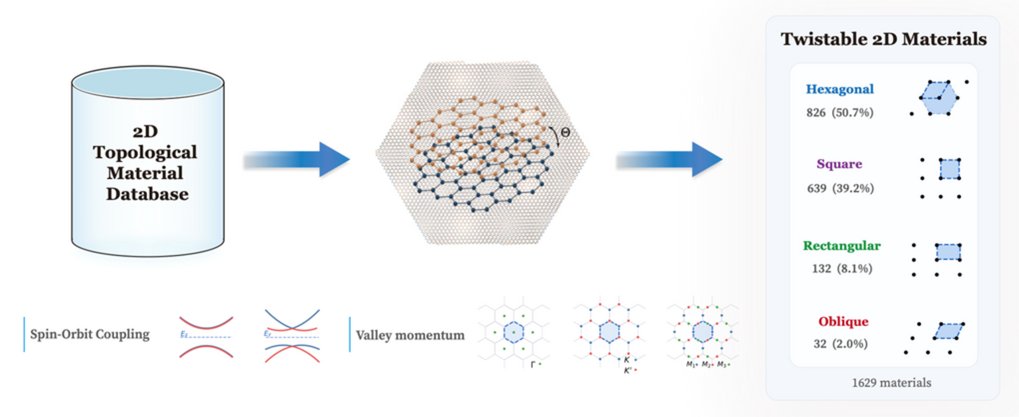
Two new studies catalog nearly 9,000 two-dimensional materials and identify 61 semimetals and 1,568 insulators suited to twistronics, the stacking and rotating of atomically thin layers to engineer narrow electronic bands. The work maps topological electronic structures, predicts promising twisted bilayers such as tin diselenide and hafnium disulfide, and confirms several candidates can be grown in bulk and exfoliated into working devices, giving researchers a systematic route to designer…
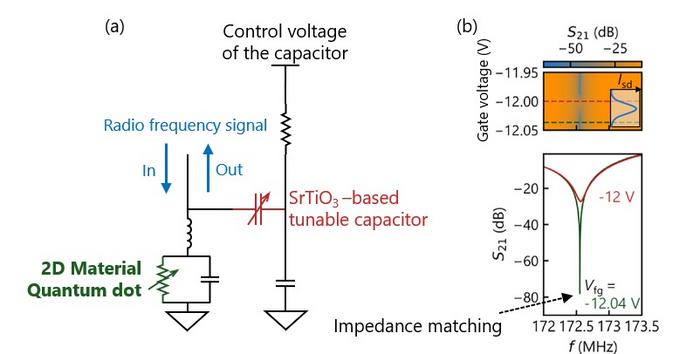
Researchers at Tohoku University and NIMS have overcome a long-standing barrier to fast charge detection in high-resistance 2D-material quantum devices. By integrating a strontium titanate variable capacitor into a high-frequency resonant circuit, the team achieved near-perfect impedance matching, clearly resolving Coulomb oscillations from individual electrons and remaining stable under the perpendicular magnetic fields needed for spin-valley qubits.
This week in nanotech
$110M raised
9 funding rounds · 58 deals tracked
New products
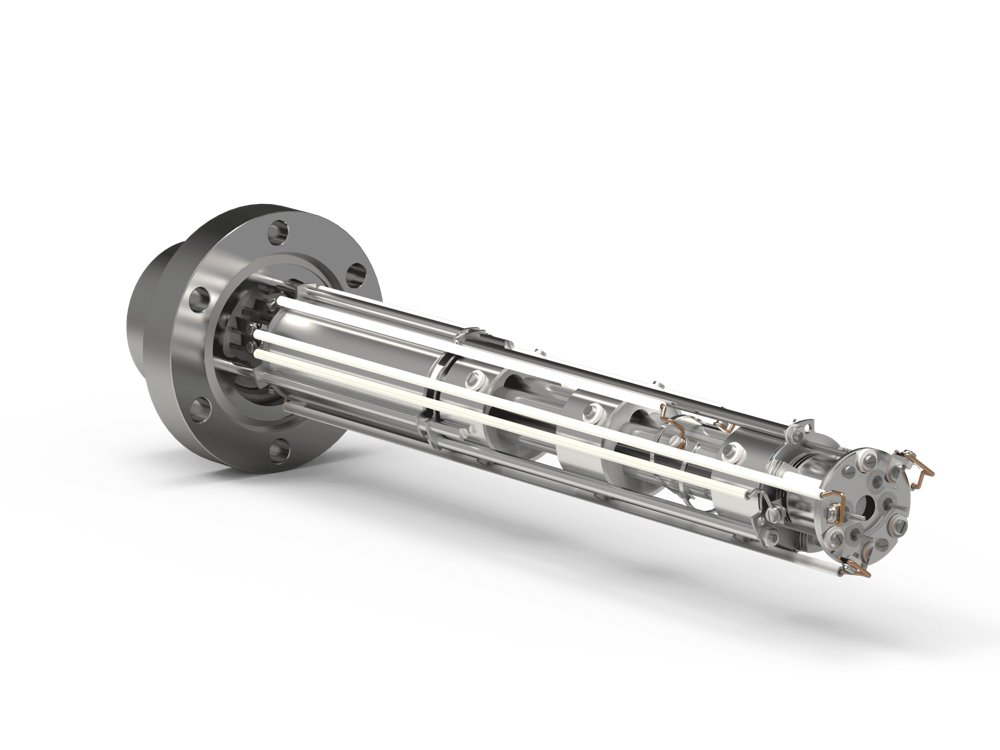 DLS-1 Mass Spectrometer for Fusion Gas AnalysisHiden Analytical Featured
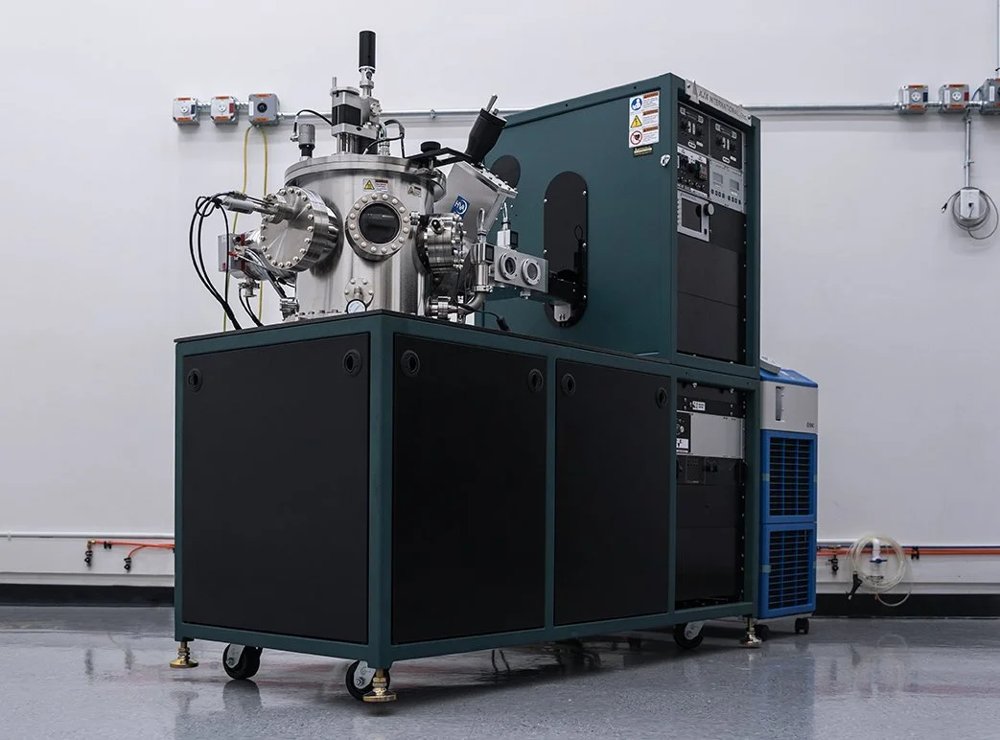 Orion Sputtering Deposition SystemsAJA International Featured
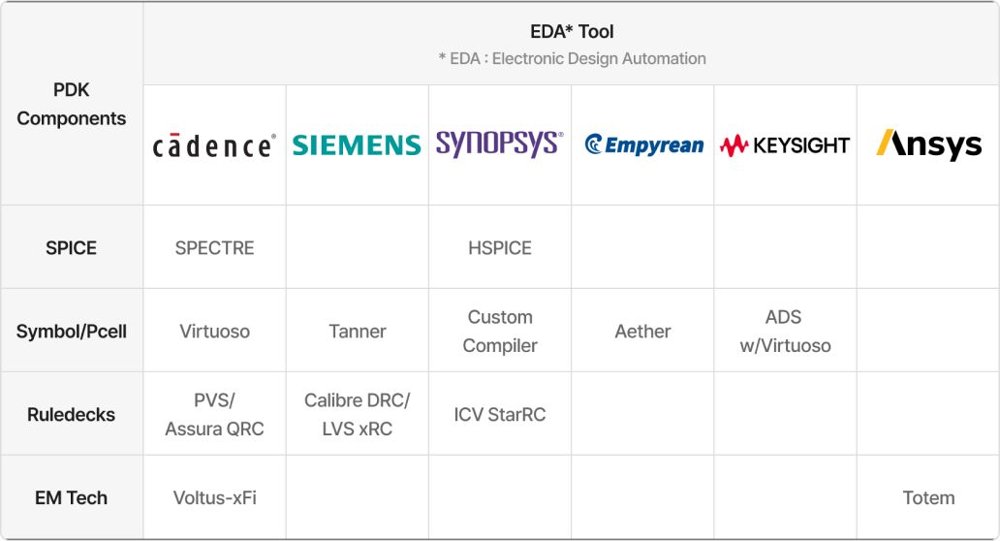 PDK (Process Design Kit)DB HiTek
Market insights
Last 30 days: Quantum Technologies drew the most money: $3.17B.
Money raised per month
Behind the deal
Who led Qilimanjaro Quantum Tech’s $21.9M Series A?
See the investors with Insights Pro →