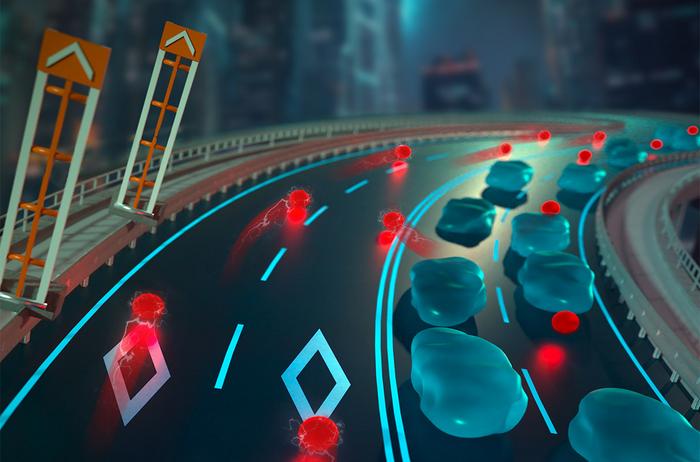
A speed record has been broken using nanoscience, which could lead to a host of new advances, including improved battery charging, biosensing, soft robotics and neuromorphic computing.
Scientists at Washington State University and Lawrence Berkeley National Laboratory have discovered a way to make ions move more than ten times faster in mixed organic ion-electronic conductors. These conductors combine the advantages of the ion signaling used by many biological systems, including the human body, with the electron signaling used by computers.
The new development, detailed in the journal Advanced Materials, speeds up ion movement in these conductors by using molecules that attract and concentrate ions into a separate nanochannel creating a type of tiny “ion superhighway.”
“Being able to control these signals that life uses all the time in a way that we've never been able to do is pretty powerful,” said Brian Collins, WSU physicist and senior author on the study. “This acceleration could also have benefits for energy storage, which could be a big impact.”
These types of conductors hold a lot of potential because they allow movement of both ions and electrons at once, which is critical for battery charging and energy storage. They also power technologies that combine biological and electrical mechanisms, such as neuromorphic computing, which attempts to mimic thought patterns in the human brain and nervous system.
However, exactly how these conductors coordinate movement of both ions and electrons has not been well understood. As part of the investigations for this study, Collins and his colleagues observed that ions moved within the conductor relatively slowly. Because of their coordinated movement, the slow ion movement also slowed the electrical current.
“We found that the ions that were flowing all right in the conductor, but they had to go through this matrix, like a rat's nest of pipelines for electrons to flow. That was slowing down the ions,” Collins said.
To work around this problem, the researchers created a straight nanometer-sized channel just for the ions. Then, they had to attract the ions to it. For that they turned to biology. All living cells, including those in the human body, use ion channels to move compounds in and out of cells, so Collins’ team used a similar mechanism found in cells: molecules that love or hate water.
First, Collins’ team lined the channel with water-loving hydrophilic molecules which attracted the ions dissolved in water, also known as electrolyte. The ions then moved very quickly through channel—at speeds more than ten times faster than they would through water alone. The movement of ions represented a new world record for ion speed in any material.
Conversely, when the researchers lined the channel with hydrophobic, water-repelling, molecules, ions stayed away and were forced to travel through the slower “rat’s nest” instead.
Collins’ team found that chemical reactions could flip the molecules’ attractiveness to the electrolyte. This would open and close the ion superhighway, much the same way that biological systems control access through cell walls.
As part of their investigations, the team created a sensor that could quickly detect a chemical reaction near the channel because the reaction would open or close the ion superhighway creating an electrical pulse that a computer could read.
This detection ability on a nanoscale could help with sensing pollution in the environment, or neurons firing in the body and brain, which is one of many potential uses of the development, Collins said.
“The next step is really to learn all the fundamental mechanisms of how to control this ion movement and bring this new phenomenon to technology in a variety of ways,” he said.
Reference
Local Chemical Enhancement and Gating of Organic Coordinated Ionic-Electronic Transport
Tamanna Khan, Terry McAfee, Thomas J. Ferron, Awwad Alotaibi, Brian A. Collins
https://onlinelibrary.wiley.com/doi/10.1002/adma.202406281
Washington State University
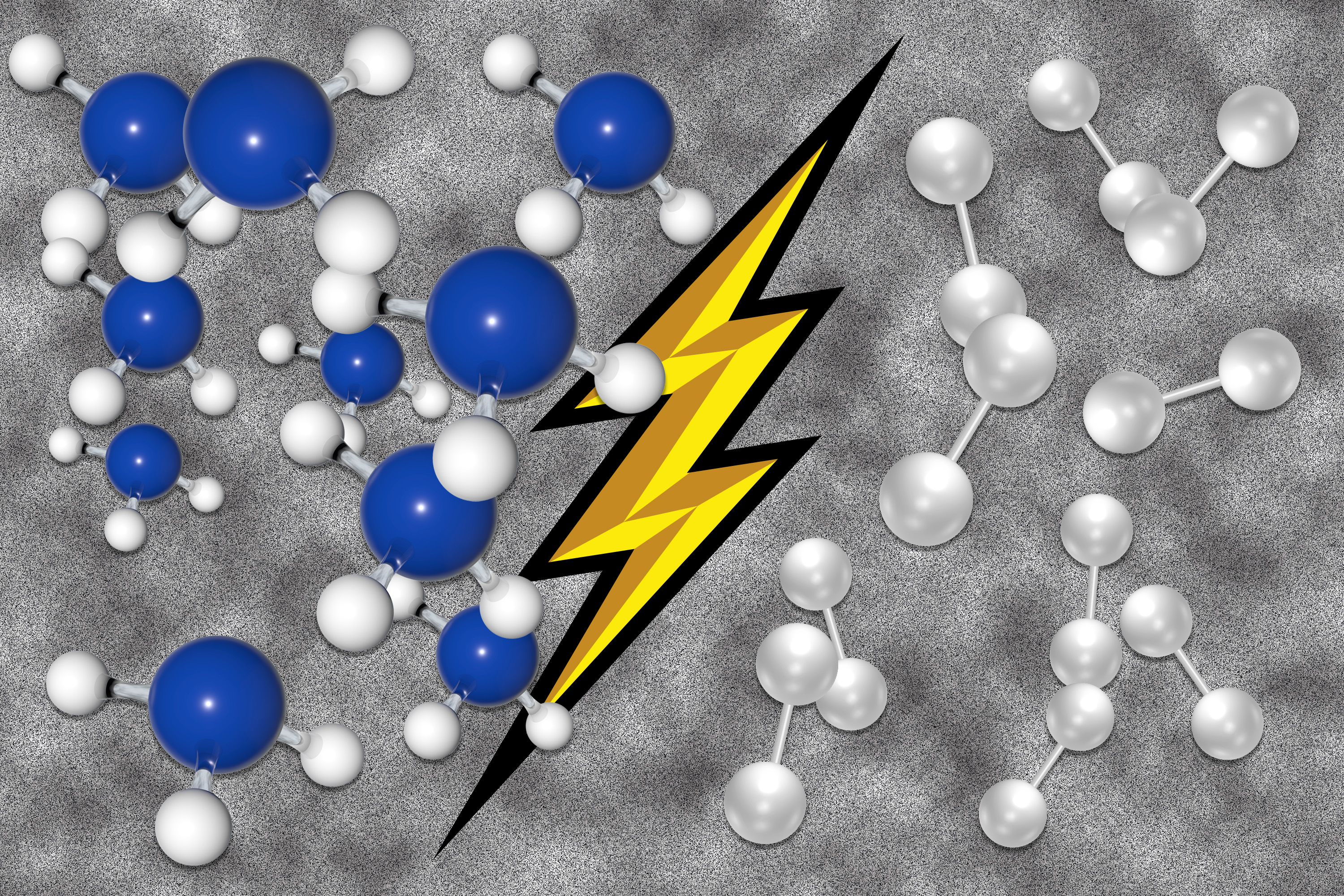
MIT researchers have developed a new way to extract pure hydrogen gas from ammonia and other hydrogen carrier molecules. Their strategy, which uses electricity to speed up the extraction, reduces the temperature and energy required to recover hydrogen from these molecules. As a liquid that is easily stored and transported, ammonia (NH3) is an attractive carrier for hydrogen, which is used in fuel cells, semiconductor manufacturing, chemical processing, and other applications. However,...
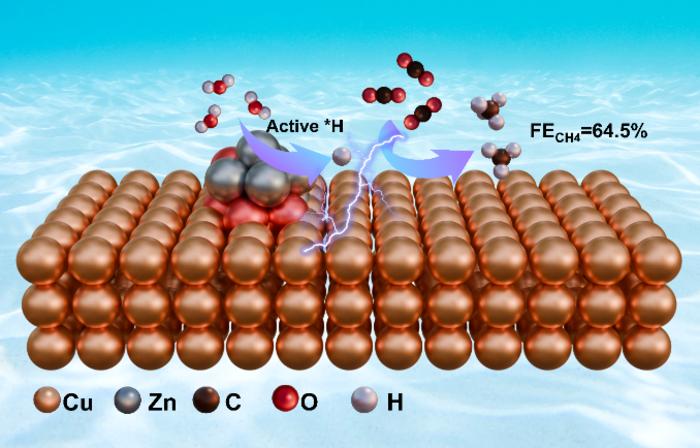
image: CuZn800@C was constructed via solvothermal method and utilizes the high-temperature volatility of zinc to prepare through calcination at different temperatures, which displays a high methane Faradaic efficiency of 64.5% and a remarkable partial current density of -551.3 mA/cm2 at -1.7 V vs. RHE, along with excellent stability. Zn and Cu form a tandem reaction system. Zn sites promote water splitting to provide protons, while Cu sites reduce the energy barrier for *CO hydrogenation....
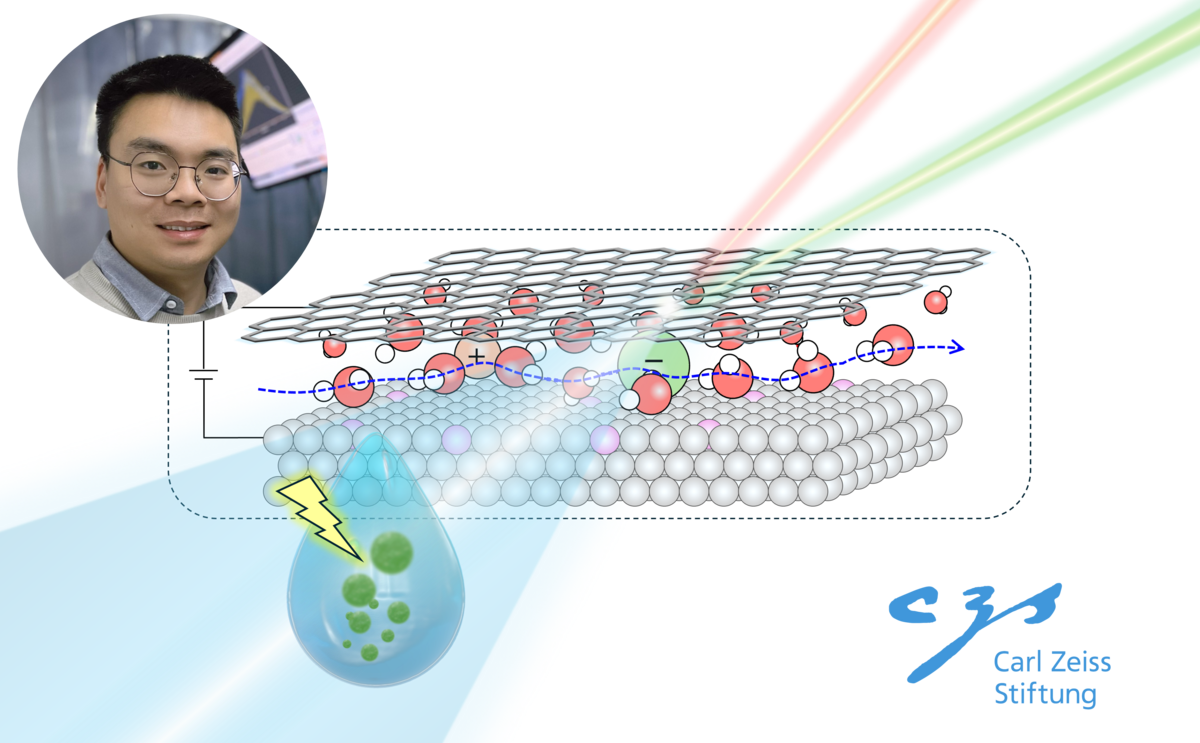
Electrochemical water splitting powered by renewable electricity is a promising pathway to sustainable hydrogen production, but its efficiency and scalability remain limited by costly catalysts and slow reaction kinetics. With €1.5 million in funding from the Carl-Zeiss-Stiftung for five years, Dr. Yongkang Wang and his team will pursue a new approach by visualizing and controlling water at the molecular level, using nanoscale confinement to shape its structure and dynamics at catalytic...
