Separating out a particular toxic chemical from industrial processes linked to the manufacture of nylon, paint, certain foams found in furniture and even detergents requires a lot of energy and hassle. Now a team of scientists from UT Austin and Zhejiang University have struck upon a solution that could prove far more energy efficient and practical. The team published their research this month in the journal Nature.
Companies often use a chemical called cyclohexane in making a range of materials, but cyclohexane is typically produced from a similarly shaped chemical called benzene, which is a carcinogen. When chemists create cyclohexane, they often form toxic benzene as an additional, unwanted product, and the process for separating the two is highly energy-intensive. The researchers’ solution involves a molecularly woven fabric that can filter out most of the benzene in a mixture.
“Unbelievable amounts of energy go into chemical separation. It’s one of the top energy sinks in the modern world,” said UT chemist Jonathan Sessler, one of the corresponding authors on the paper. “In a sense, we are addressing the challenge of improving efficiency using one of humanity’s oldest technologies: weaving. It’s remarkable that the same principle of interlacing works at the molecular level.”
Chemical plants traditionally separate cyclohexane from benzene by using a distillation method. Different chemicals have different boiling points, so in many cases chemists can heat a mixture up until the unwanted chemicals vaporize, leaving the necessary ones behind or vice versa. However, cyclohexane and benzene have nearly the same boiling points and tend to vaporize together. This complicates the distillation process and typically requires the addition of additives.
“This makes traditional distillation-based benzene-cyclohexane separations challenging and expensive,” said Sessler, the R.P. Doherty, Jr.-Welch Regents Chair in Chemistry.
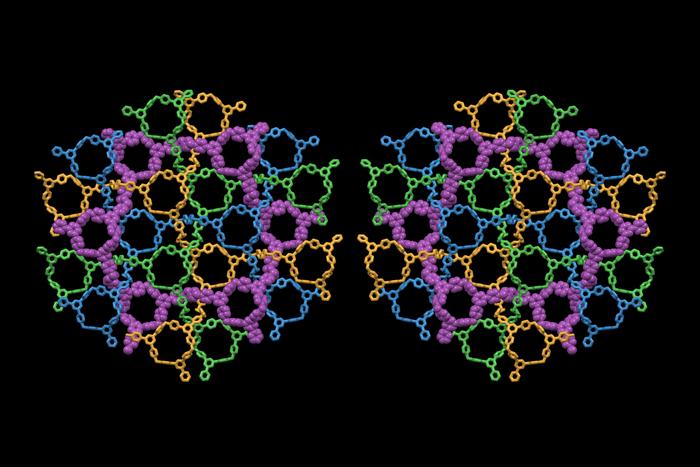
The new fabric is made of four molecular networks that weave above and below each other to create a layer with an interlocking pattern. A single layer of the material can come in two forms: one in which the various molecular networks cross each other in a clockwise spiral and a mirror-like version in which the networks cross in a counterclockwise spiral. This property is known as chirality or “handedness.” To create the fabric, layers are stacked on top of each other, alternating between the regular orientation and the mirror image orientation.
Watch a video showing how these layers self-assemble and stack
This creates a springy fabric that can act as a thick filter, separating large amounts of benzene from cyclohexane. The multi-thread fabric is stronger than linearly-woven fabric, where single threads are woven to make a layer.
The new fabric is self-assembling, meaning that the molecular networks arrange and interconnect on their own.
“The whole thing converges by itself based on the underlying chemistry, which is especially cool because it allows the creation of these new materials in a facile way,” Sessler said.
The fabric is also reusable. After pouring a benzene-containing mixture onto the fabric, scientists can heat it up, vaporize the benzene and use the fabric again.
Sessler and the Zhejiang University team led by professors Feihe Huang and Guangfeng Li tested the fabric by pouring on a mixture that was 50% benzene and 50% cyclohexane. The fabric absorbed 97.9% of the benzene. For applications that require higher levels of separation, multiple passes might be used. They also demonstrated the fabric’s ability to separate several other compounds of commercial interest.
Sessler said that at Zhejiang University, scientists have demonstrated how to use the fabric on a larger, industrial scale. Although an economic analysis has not yet been performed, the researchers believe this could significantly reduce the amount of energy the chemical industry uses for molecular separation, with major implications for industries that manufacture paint, nylon, polyurethane and other cyclohexane-containing products.
The work at UT was supported by the Robert A. Welch Foundation and the work abroad was supported by the National Natural Science Foundation of China, the Zhejiang Provincial Natural Science Foundation of China, the ‘Pioneer’ and ‘Leading Goose’ R&D Program of Zhejiang, the Ministry of Education of China and the China Postdoctoral Science Foundation.
Among the study’s coauthors is the late Sir Fraser Stoddart, a co-recipient of the 2016 Nobel Prize in Chemistry, who passed away before the study was complete.
Reference
A two-dimensional reticular triaxial molecularly woven fabric
Mengbin Wang, Shuai Fang, Xuedong Xiao, Zhewen Guo, Tianyu Shan, Han Han, Chun Tang, Ding Xiao, Guangguo Wang, Zhongwen Liu, Bohan Zhao, Shang Li, Ming Liu, Yan-Fang Wang, Jinbo Li, Ming Li, Liya Chen, Zhenglin Du, Chong Yao, Yizhao Du, Jiyong Liu, J. Fraser Stoddart, Jonathan L. Sessler, Guangfeng Li, and Feihe Huang
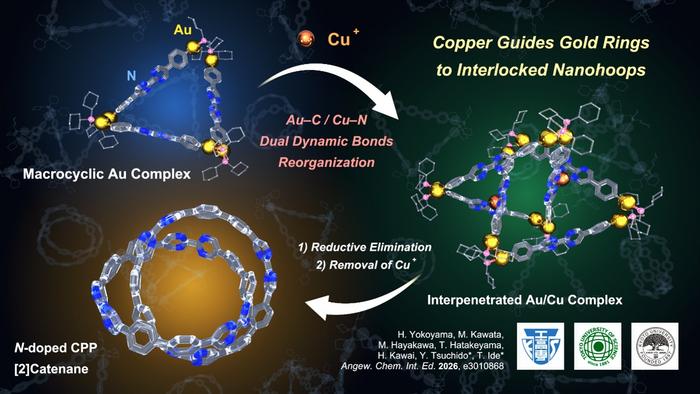
Researchers in Japan have combined gold(I) carbon bonds and copper(I) nitrogen coordination to assemble an interlocked catenane of nitrogen-doped carbon nanohoops in a single pot. Demetallation gave a metal-free [2]catenane of two fully conjugated [12]CPP rings in only eight steps, with a 2.9% overall yield that improves on conventional routes.
Researchers have built a perovskite chiral multiple quantum-well system that sustains spin polarization roughly 300 times longer at room temperature, reaching about 5 nanoseconds. A two-step seed-assisted crystallization creates coupled wells with graded energy and continuous intrinsic chirality, enabling an efficient spin cascade that limits interfacial losses.
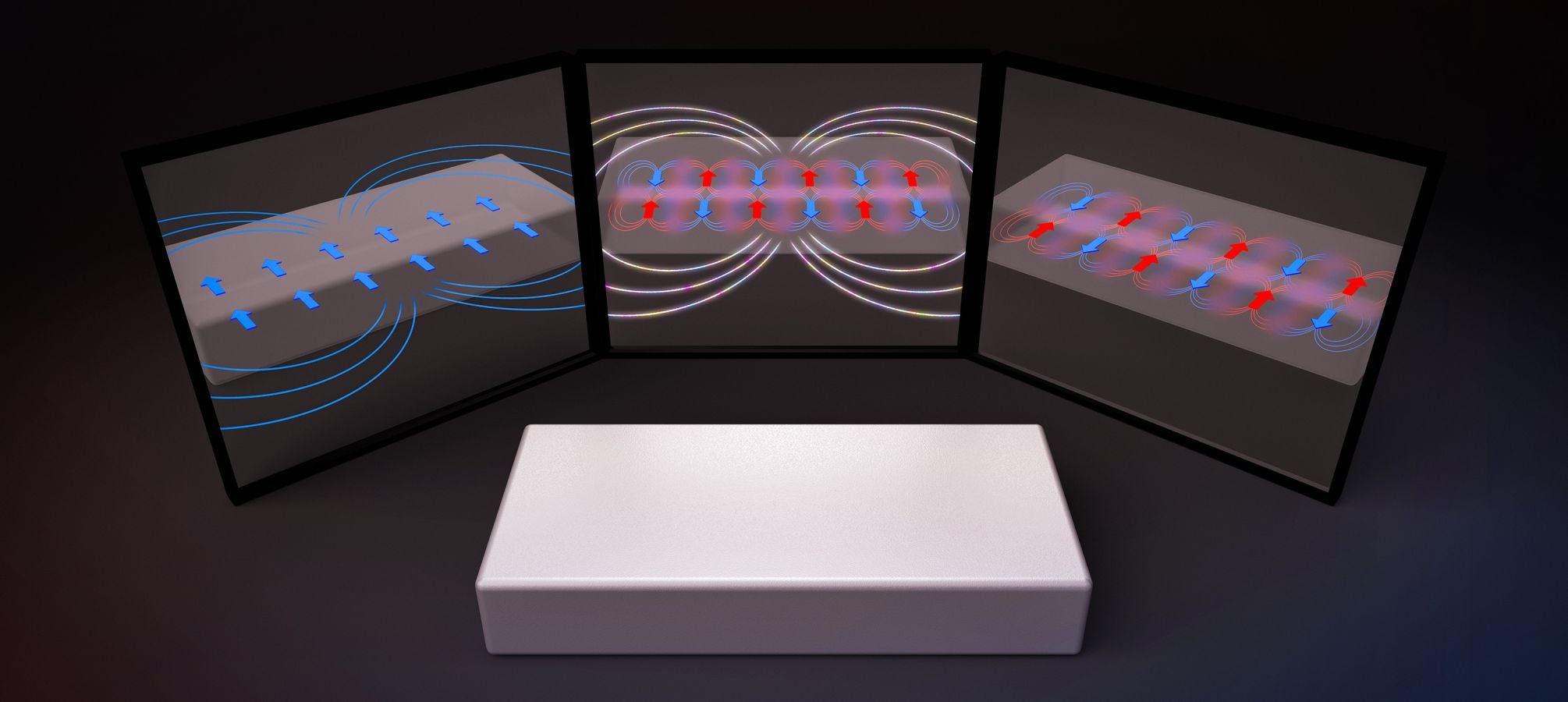
Physicists had long recognized only ferromagnetism and antiferromagnetism, but a SLAC-led team has now delivered conclusive experimental proof of a third phase: altermagnetism. Using circularly polarized X-rays at the European Synchrotron Radiation Facility, the researchers detected chirality in manganese telluride, a signature that conventional antiferromagnets cannot produce.
This week in nanotech
$109M raised
3 funding rounds · 18 deals tracked
New products
 Nion-compatible In Situ STEM Holders for Electrical BiasingHummingbird Scientific Featured
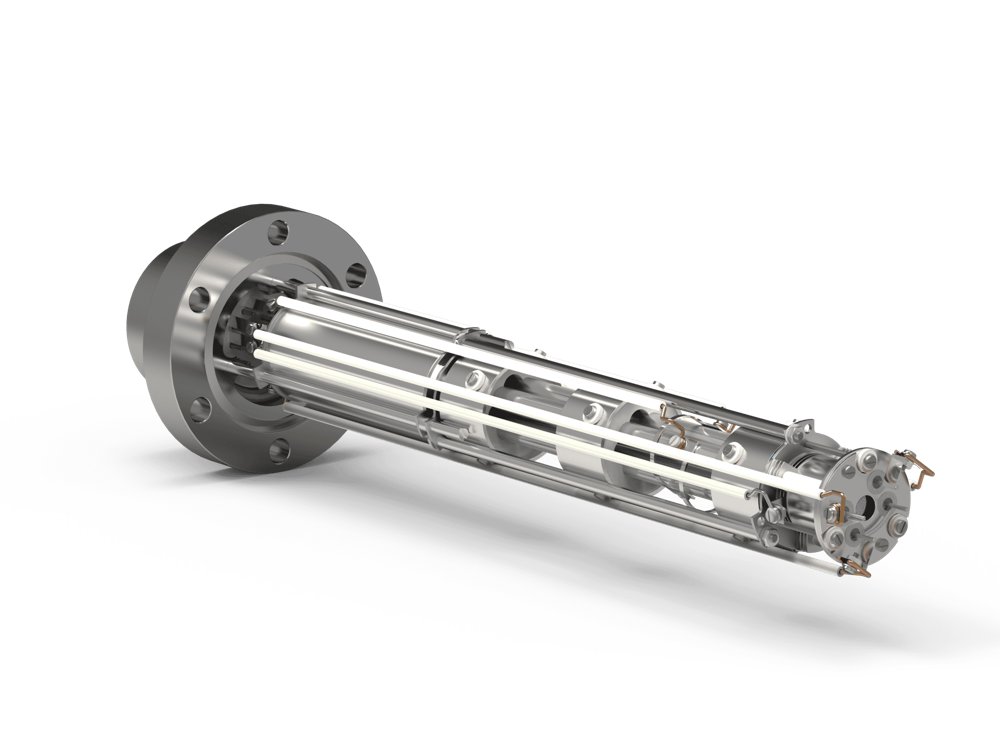 DLS-1 Mass Spectrometer for Fusion Gas AnalysisHiden Analytical Featured
 GiiiGii
Market insights
Last 30 days: Semiconductors & Electronics drew the most money: $545M.
Money raised per month