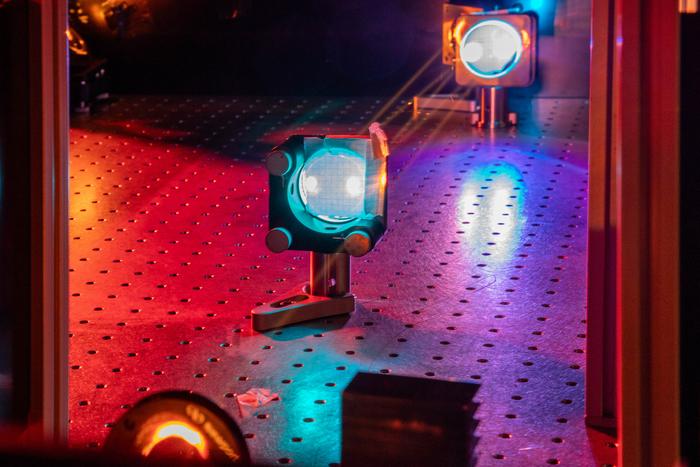
Understanding what happens inside a material when it is hit by ultrashort light pulses is one of the great challenges of matter physics and modern photonics. A new study published in Nature Photonics and led by Politecnico di Milano reveals a hitherto neglected but essential aspect, precisely the contribution of virtual charges, charge carriers that exist only during interaction with light, but which profoundly influence the material’s response.
The research, conducted in partnership with the University of Tsukuba, the Max Planck Institute for the Structure and Dynamics of Matter, and the Institute of Photonics and Nanotechnology (Cnr-Ifn) investigated the behaviour of monocrystalline diamonds subjected to light pulses lasting a few attoseconds (billionths of a billionth of a second), using an advanced technique called attosecond-scale transient reflection spectroscopy.
By comparing experimental data with state-of-the-art numerical simulations, researchers were able to isolate the effect of so-called virtual vertical transitions between the electronic bands of the material. Such an outcome changes the perspective on how light interacts with solids, even in extreme conditions hitherto attributed only to the movement of actual charges.
“Our work shows that virtual carrier excitation, which develops in a few billionths of a billionth of a second, are indispensable to correctly predict the rapid optical response in solids,” said Matteo Lucchini, professor at the Department of Physics, senior author of the study, and associate at CNR-Ifn.
“These results mark a key step in the development of ultra-fast technologies in electronics,” adds Rocío Borrego Varillas, researcher at CNR-IFN.
The progress achieved offers new insights into the creation of ultra-fast optical devices, such as switches and modulators capable of operating at petahertz frequencies, a thousand times faster than current electronic devices. This requires a deep understanding of both the behaviour of actual charges, and of virtual charges, as demonstrated by this study.
Reference
Attosecond virtual charge dynamics in dielectrics
Gian Luca Dolso, Shunsuke A. Sato, Giacomo Inzani, Nicola Di Palo, Bruno Moio, Rocío Borrego-Varillas, Mauro Nisoli & Matteo Lucchini
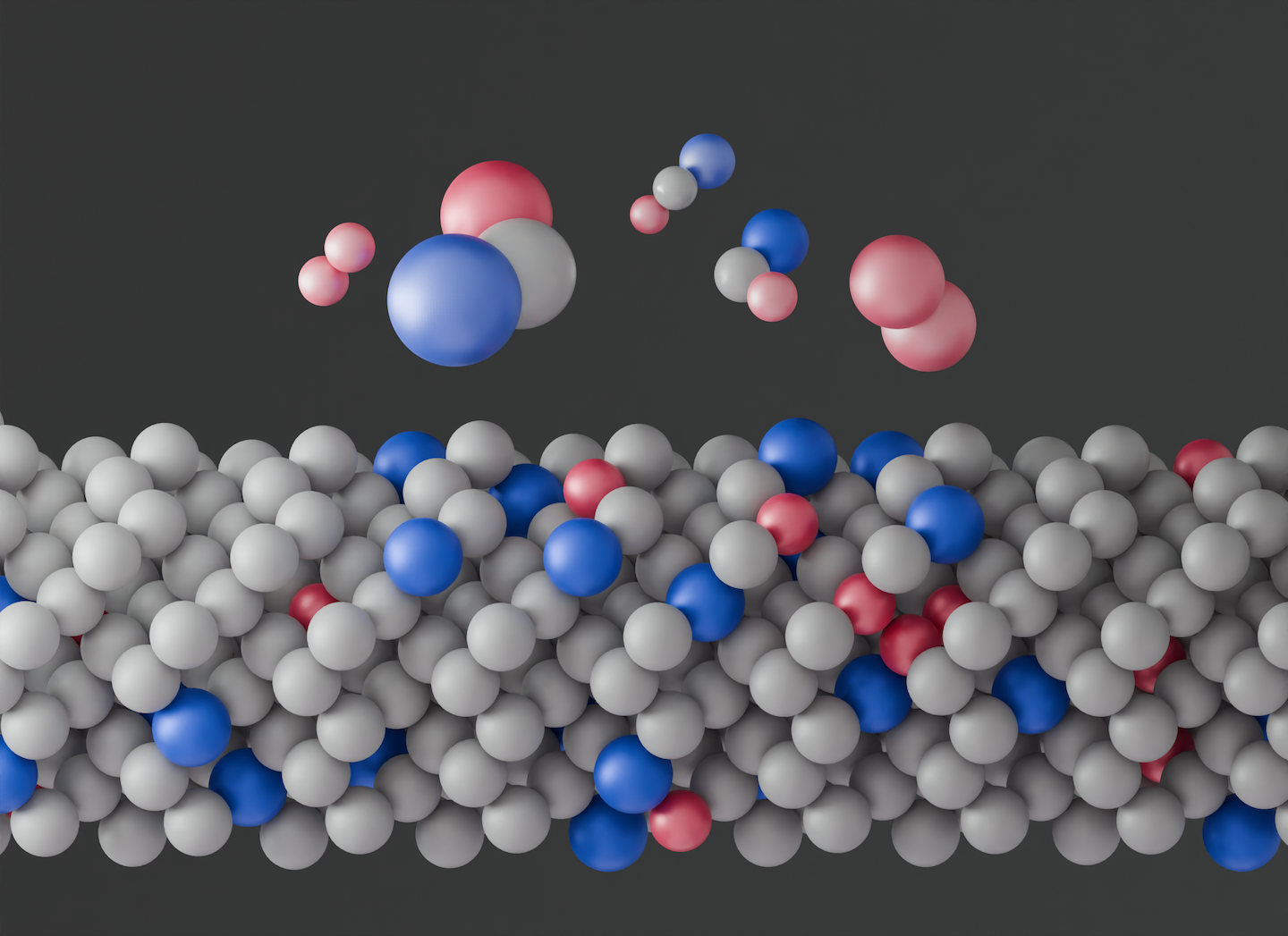
A team led by Lawrence Berkeley National Laboratory (Berkeley Lab) and George Washington University have confirmed that atoms in semiconductors will arrange themselves in distinctive localized patterns that change the material’s electronic behavior. The research, published today in Science, may provide a foundation for designing specialized semiconductors for quantum-computing and optoelectronic devices for defense technologies. On the atomic scale, semiconductors are crystals made of differe...
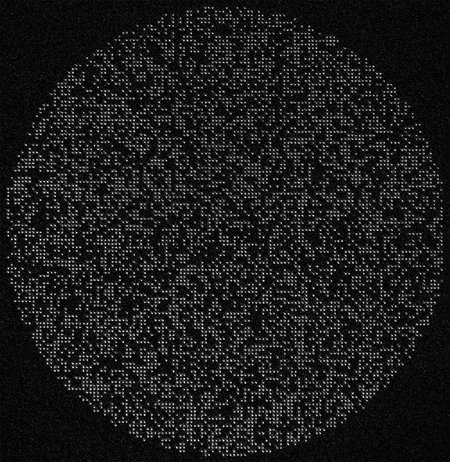
Quantum computers will need large numbers of qubits to tackle challenging problems in physics, chemistry, and beyond. Unlike classical bits, qubits can exist in two states at once—a phenomenon called superposition. This quirk of quantum physics gives quantum computers the potential to perform certain complex calculations better than their classical counterparts, but it also means the qubits are fragile. To compensate, researchers are building quantum computers with extra, redundant qubits to...
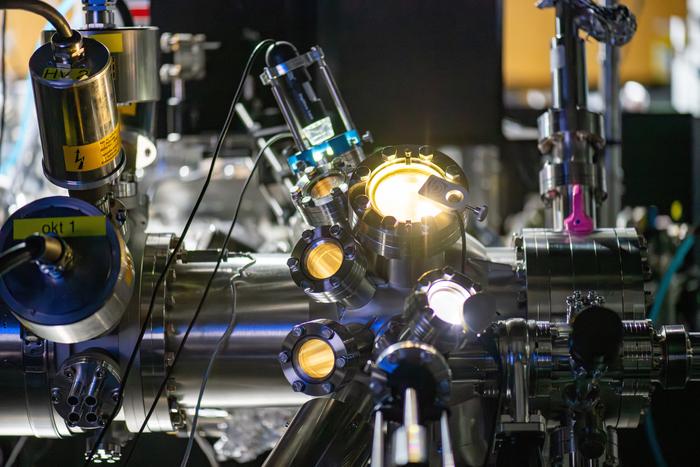
In a world-first, researchers from the Femtosecond Spectroscopy Unit at the Okinawa Institute of Science and Technology (OIST) have directly observed the evolution of the elusive dark excitons in atomically thin materials, laying the foundation for new breakthroughs in both classical and quantum information technologies. Their findings have been published in Nature Communications. Professor Keshav Dani, head of the unit, highlights the significance: "Dark excitons have great potential as info...
This week in nanotech
$13.6M raised
3 funding rounds · 20 deals tracked
New products
 Orion Sputtering Deposition SystemsAJA International Featured
 Nion-compatible In Situ STEM Holders for Electrical BiasingHummingbird Scientific Featured
 Aether®Lam Research
Market insights
Last 30 days: Quantum Technologies was the busiest vertical: 61 of 192 events (32%).
Money raised per month