
Current state-of-the-art techniques have clear limitations when it comes to imaging the smallest nanoparticles, making it difficult for researchers to study viruses and other structures at the molecular level.
Scientists from the University of Houston and the University of Texas M.D. Anderson Cancer Center have reported in Nature Communications a new optical imaging technology for nanoscale objects, relying upon unscattered light to detect nanoparticles as small as 25 nanometers in diameter. The technology, known as PANORAMA, uses a glass slide covered with gold nanodiscs, allowing scientists to monitor changes in the transmission of light and determine the target's characteristics.
PANORAMA takes its name from Plasmonic Nano-aperture Label-free Imaging (PlAsmonic NanO-apeRture lAbel-free iMAging), signifying the key characteristics of the technology. PANORAMA can be used to detect, count and determine the size of individual dielectric nanoparticles.
Wei-Chuan Shih, professor of electrical and computer engineering at UH and corresponding author for the paper, said the smallest transparent object a standard microscope can image is between 100 nanometers and 200 nanometers. That's mainly because - in addition to being so small - they don't reflect, absorb or "scatter" enough light, which could allow imaging systems to detect their presence.
Labeling is another commonly used technique; it requires researchers to know something about the particle they are studying - that a virus has a spike protein, for example - and engineer a way to tag that feature with fluorescent dye or some other method in order to more easily detect the particle.
"Otherwise, it will appear as invisible as a tiny dust particle under the microscope, because it's too small to detect," Shih said.
Another drawback? Labeling is only useful if researchers already know at least something about the particle they want to study.
"With PANORAMA, you don't have to do the labeling," Shih said. "You can view it directly because PANORAMA does not rely on detecting the scattered light from the nanoparticle."
Instead, the system allows observers to detect a transparent target as small as 25 nanometers by monitoring light transmission through the gold nanodisc-covered glass slide. By monitoring changes in the light, they are able to detect the nearby nanoparticles. The optical imaging system is a standard bright-field microscope commonly found in any lab. There is no need for lasers or interferometers which are required in many other label-free imaging technologies.
"The size limit has not been reached, according to the data. We stopped at 25 nm nanoparticles simply because that is the smallest polystyrene nanoparticle on the market," Shih said.
Contact
Wei-Chuan Shih
Professor of electrical and computer engineering
University of Houston
1 (713) 743-4454
wshih@central.uh.edu
Reference
Plasmonic nano-aperture label-free imaging (PANORAMA)
Nareg Ohannesian, Ibrahim Misbah, Steven H. Lin & Wei-Chuan Shih
Nature Communications volume 11, Article number: 5805 (2020)

Over the decades, many strains of disease-causing bacteria have evolved defenses to even the most potent antibiotics, setting off a growing health crisis. The rise of antibiotic-resistant “superbugs” has also set off an arms race. As germs find new ways to withstand drugs, researchers are looking for new ways to break down their defenses. In a significant step forward, a research team led by Yan Yu, the Art Krieg Professor of Chemistry, in Arts & Sciences, and of biomedical engineering, at th...
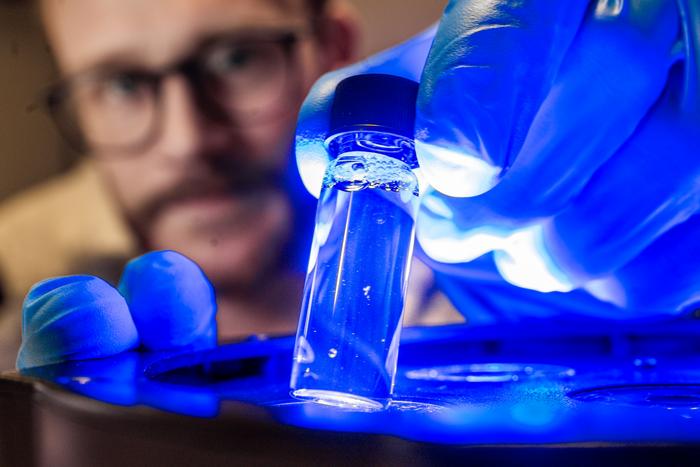
Visible light can be used to create electrodes from conductive plastics completely without hazardous chemicals. This is shown in a new study carried out by researchers at Linköping and Lund universities, Sweden. The electrodes can be created on different types of surfaces, which opens up for a new type of electronics and medical sensors.
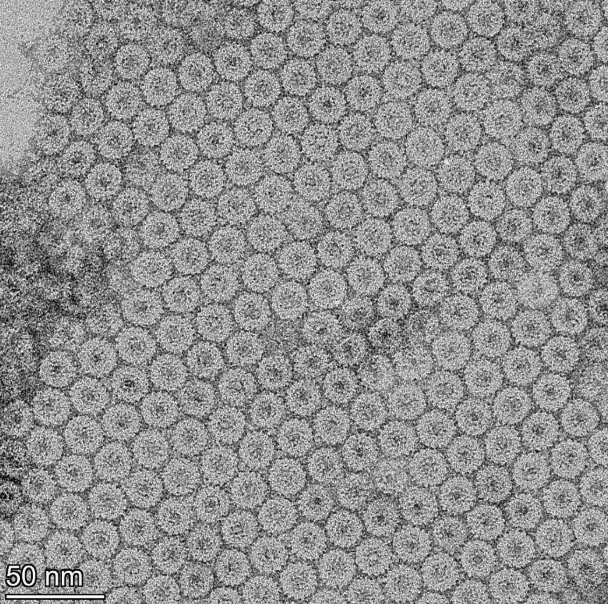
Using proteins from a common tobacco plant virus, McGill chemistry researchers have developed a simple, eco-friendly way to arrange gold nanoparticles into ultrathin sheets, strengthening the particles’ optical properties. The result: cheaper, safer materials for solar panels, sensors and advanced optical devices. Gold nanoparticles are only effective in strengthening optical signals when the nanoparticles are arranged on a surface and spaced at exact distances. Until now, creating those patt...






