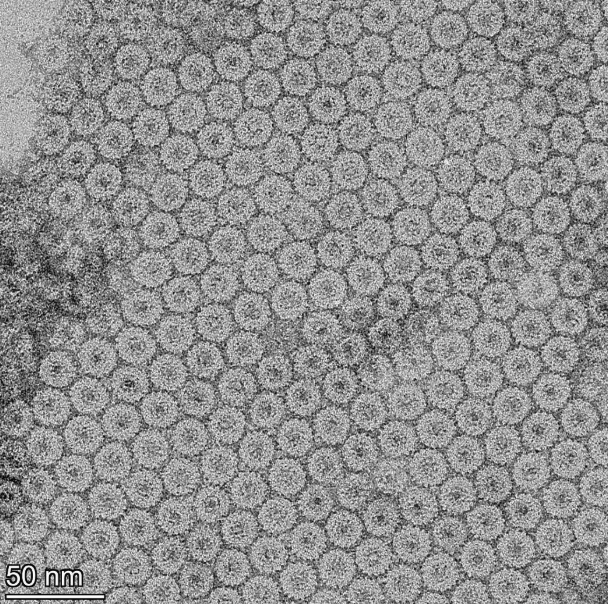
Using proteins from a common tobacco plant virus, McGill chemistry researchers have developed a simple, eco-friendly way to arrange gold nanoparticles into ultrathin sheets, strengthening the particles’ optical properties. The result: cheaper, safer materials for solar panels, sensors and advanced optical devices.
Gold nanoparticles are only effective in strengthening optical signals when the nanoparticles are arranged on a surface and spaced at exact distances. Until now, creating those patterns required harsh chemicals and tightly controlled lab conditions.
The McGill team modified a tobacco mosaic virus so that it would self-assemble into sheets in water and at room temperature, with the nanoparticles properly spaced.
“If you just chuck these nanoparticles on a surface, some fraction of them will randomly cause enhancement,” said Associate Professor and co-author Amy Blum. “But if you can get them to be at a fixed good distance, then the whole surface is active.”
The result is a nanomaterial that can be made at a lower cost and with less environmental impact, compared to the existing method.
Nature’s building blocks
Blum said that this work represents an important step toward sustainable nanomaterials for everyday technologies.
“This is about using nature’s building blocks to make technology cleaner, cheaper and smarter,” the researcher said.
“For safety, we don’t use the active virus. We just use the shell, which contains no genetic material,” she added.
Building the protein scaffold
To build the scaffold, the team modified the virus’s protein by adding a short chain of histidine – essentially tiny hooks that latch onto gold nanoparticles and guide the proteins to self-assemble into ultrathin sheets.
“We rely on a large number of very weak interactions,” Blum said. “If I have one, it definitely won’t hold together. If I have 15, it’ll hold it very, very rigidly.”
Without this modification, the protein tends to clump. The weaker interactions instead encourage the proteins to lay flat, Blum noted.
The team was surprised to find that under certain conditions the sheets could roll themselves into nanoscale tubes. This opens the way for researchers to investigate whether the tubes might one day function like nanoscopic fibre-optic cables, Blum said.
Reference
Extended Plasmonic Nanostructures Templated by Tobacco Mosaic Virus Coat Protein
Ismael Abu-Baker, Alexander Al-Feghali, Elliot Zolfaghar, Gangamallaiah Velpula, Artur P. Biela, Steven De Feyter, Jonathan G. Heddle, Gonzalo Cosa, Amy Szuchmacher Blum
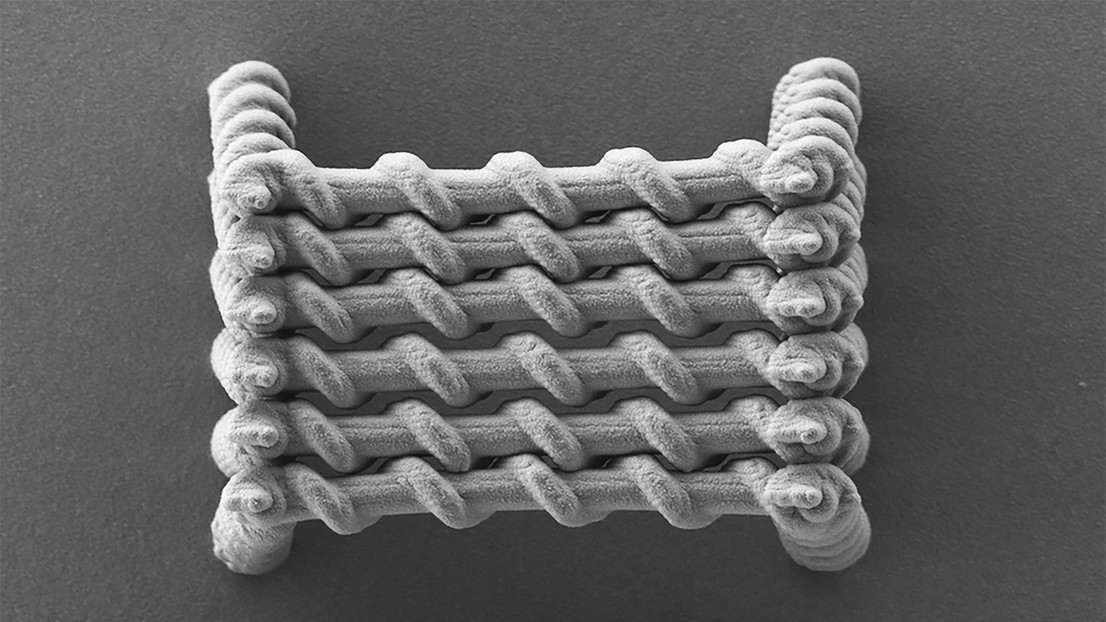
In collaboration with scientists in Germany, EPFL researchers have demonstrated that the spiral geometry of tiny, twisted magnetic tubes can be leveraged to transmit data based on quasiparticles called magnons, rather than electrons.

When ice melts into water, it happens quickly, with the transition from solid to liquid being immediate. However, very thin materials do not adhere to these rules. Instead, an unusual state between solid and liquid arises: the hexatic phase. Researchers at the University of Vienna have now succeeded in directly observing this exotic phase in an atomically thin crystal. Using state-of-the-art electron microscopy and neural networks, they filmed a silver iodide crystal protected by graphene as...

A team from the Faculty of Physics and the Centre for Quantum Optical Technologies at the Centre of New Technologies, University of Warsaw has developed a new method for measuring elusive terahertz signals using a "quantum antenna." The authors of the work utilized a novel setup for radio wave detection with Rydberg atoms to not only detect but also precisely calibrate a so-called frequency comb in the terahertz band. This band was until recently a white spot in the electromagnetic spectrum...
This week in nanotech
$10.2M raised
2 funding rounds · 18 deals tracked
New products
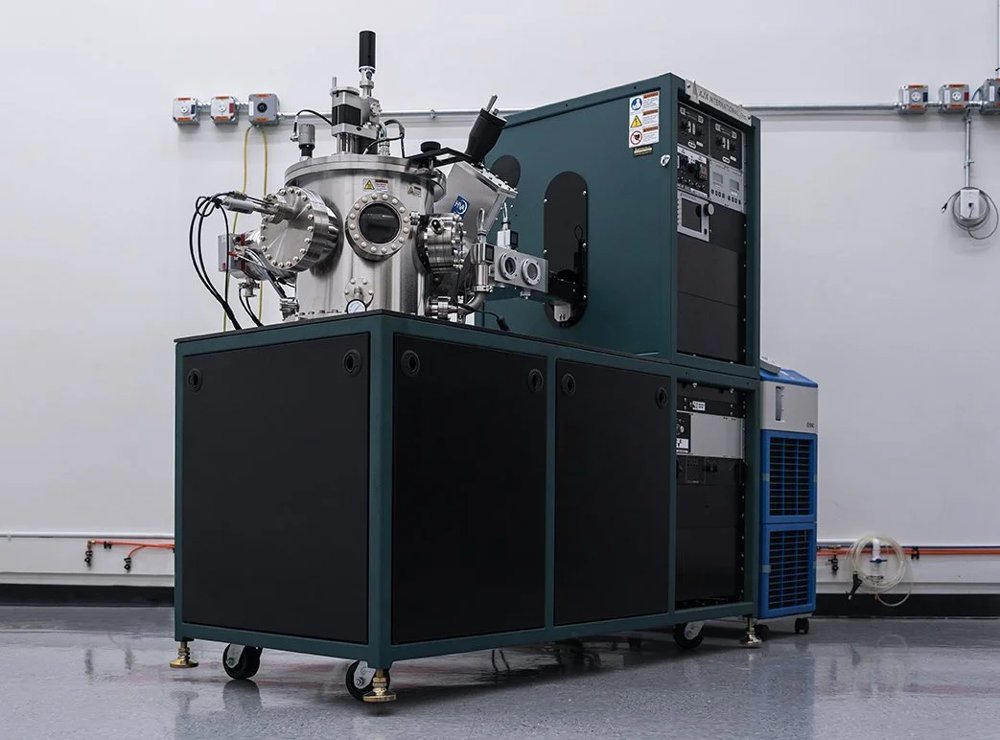 Orion Sputtering Deposition SystemsAJA International Featured
 Nion-compatible In Situ STEM Holders for Electrical BiasingHummingbird Scientific Featured
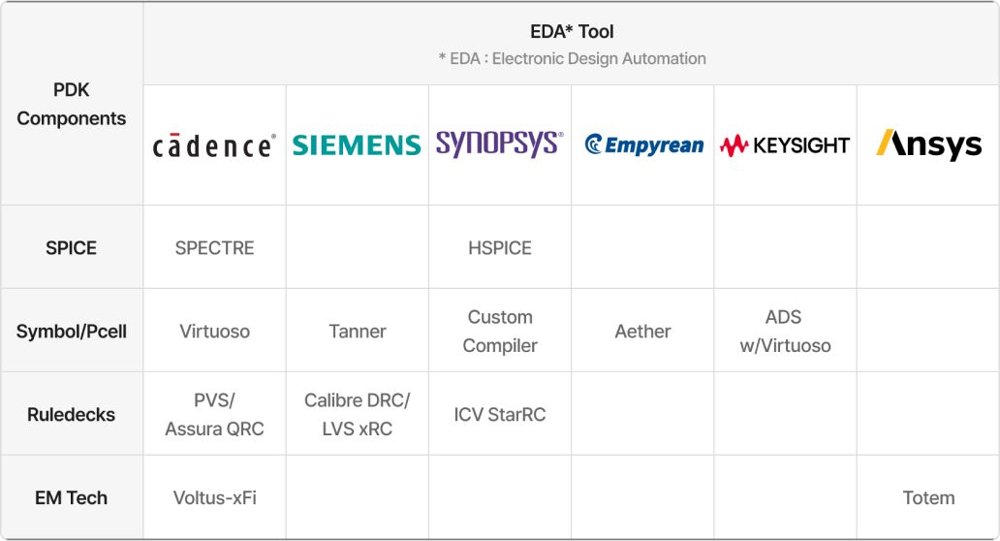 PDK (Process Design Kit)DB HiTek
Market insights
Last 30 days: Quantum Technologies was the busiest vertical: 52 of 174 events (30%).
Money raised per month