Broomfield, 19 October 2026. Quantinuum (NASDAQ: QNT) announced a quantum error-correction result on its Helios commercial computer, achieving a logical fidelity of 99.9995%. The company said this marks its second error-correction result in two months and confirms that its accuracy performance is within the target range for Apollo, its planned universal fault-tolerant quantum computer expected to be available by 2029.
The result is equivalent to five errors per million operations. Quantinuum said the error rate is 10 times lower than its own record achieved last month and 100 times lower than the best published result across all other hardware modalities, which was reported by Google Quantum AI on a superconducting system.
The study used a color code within Quantinuum's error-correction architecture, which integrates tailored AI decoders, all-to-all qubit connectivity, high-fidelity physical operations, and hardware-level error correction. Logical errors fell exponentially as the company increased the code distance, with each tested increase reducing remaining logical errors by a factor of 12.
"With this result, we've proven that we have the error-correction architecture and trapped-ion technology required to achieve universal fault-tolerance," said Dr. Rajeeb Hazra, CEO of Quantinuum. "We have reduced error rates tenfold in rapid succession using a different code on the same commercial hardware, demonstrating the flexibility of our error-correction architecture."
In September 2026, Quantinuum used the same architecture with its Helix code to demonstrate record-setting logical memory and computation on the same Helios hardware. On Helios, Helix used 10 physical qubits per logical qubit, compared with up to 37 for the color code, while the color code delivered lower logical error rates.
"This is a significant milestone that quantum computing researchers have been working toward for many years," said Robin Blume-Kohout, co-director of Sandia National Laboratories' Quantum Performance Lab, who was not involved in the study. "The paper demonstrates real, serious performance gains from quantum error correction, a logical qubit nearly 100x better than its component physical qubits."
Source: Quantinuum news
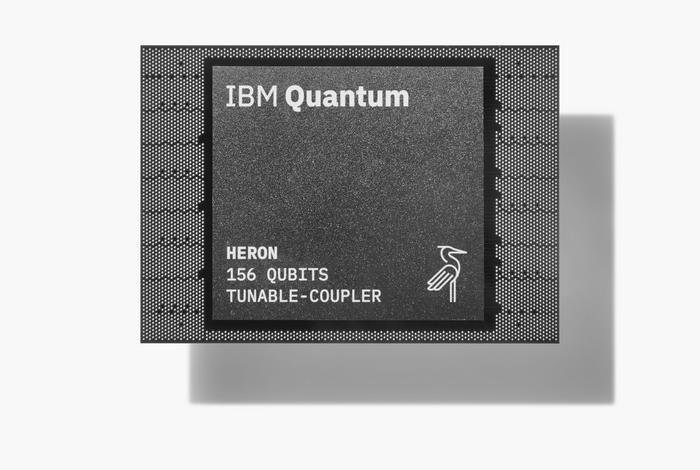
Researchers from Rutgers, IBM and collaborators demonstrated real-time quantum feedback control on a 156-qubit Heron processor, using up to 100 connected qubits. By alternately scrambling information and resetting qubits nearly 5,000 times each, they steered the system from chaos to an ordered state, revealing a sharp phase transition.
Alice & Bob has shared Phase 1 results from PROQCIMA, the French government's quantum computing programme. It assembled and operated three demonstrators, two on 6-qubit chips and one on a 12-qubit chip.
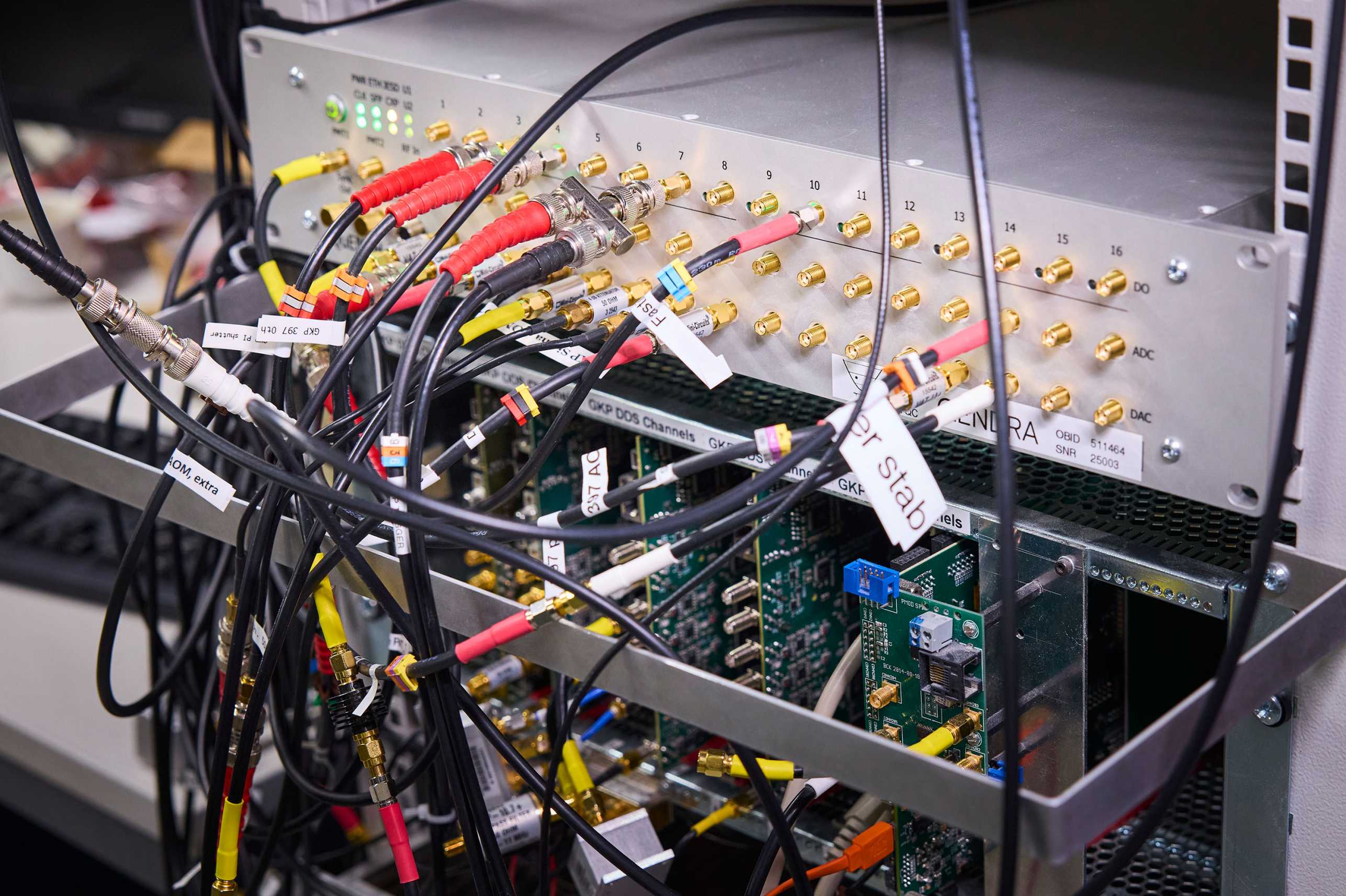
Qendra, an ETH Zurich spin-off, is building a compact control system that generates and coordinates the radio-frequency and laser signals driving trapped-ion and neutral-atom qubits. The device synchronises lasers, cameras and detectors and can evaluate measurements continuously to trigger corrective pulses during a calculation, addressing the lack of real-time error correction in existing controllers.
This week in nanotech
$110M raised
9 funding rounds · 58 deals tracked
New products
 Ti-WCMBN Nanomaterialia Featured
 Nion-compatible In Situ STEM Holders for Electrical BiasingHummingbird Scientific Featured
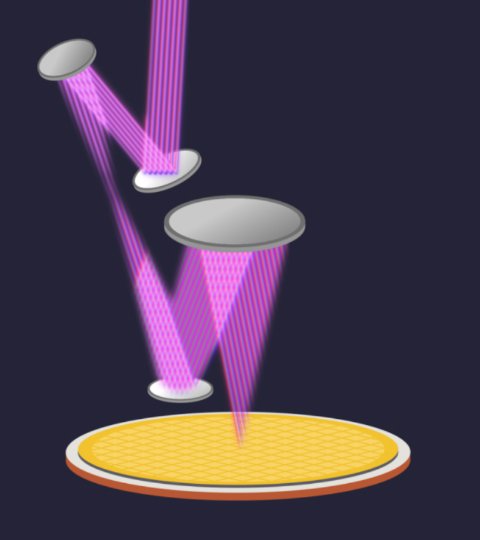 Aether®Lam Research
Market insights
Last 30 days: Quantum Technologies drew the most money: $3.17B.
Money raised per month
Behind the deal
Who led Qilimanjaro Quantum Tech’s $21.9M Series A?
See the investors with Insights Pro →