20 October 2026. Alice & Bob has shared a summary of results from Phase 1 of PROQCIMA, the French government's quantum computing programme. PROQCIMA is led by the French Defense Innovation Agency (AID) and the Direction générale de l'Armement. It aims to develop two prototypes of universal quantum computers, each capable of supporting 1,000 logical qubits, ready for industrialisation by 2032.
The programme is structured as a 10-year competition. Three candidates will continue after the first four years, with two ultimately selected to continue beyond year eight. Five companies were selected to participate: Alice & Bob, Pasqal, Quandela, Quobly and C12.
Alice & Bob began work on Phase 1 in 2024, committing to build an integrated multi-block demonstrator with partial functional validation to demonstrate the core operations of its error-correction architecture on real hardware. The company assembled and operated three independent demonstrators, two on 6-qubit chips and one on a 12-qubit chip. It demonstrated each building block of a cat-qubit logical qubit, with further optimisation on-going.
Alice & Bob also built a digital twin of the processor from its measured performance data. Simulations run on it show the improvements needed to operate below the error-correction threshold, starting with extending qubit coherence consistently across the chip. The demonstrators were supervised by Alice & Bob's MnR proprietary software, which measured performance across more than 50 indicators per qubit.
"The race for fault-tolerant quantum computing is a question of who will master one of the defining technologies of this century, and France starts from a position of real strength," says Théau Peronnin, CEO, Alice & Bob.
Source: The Quantum Insider
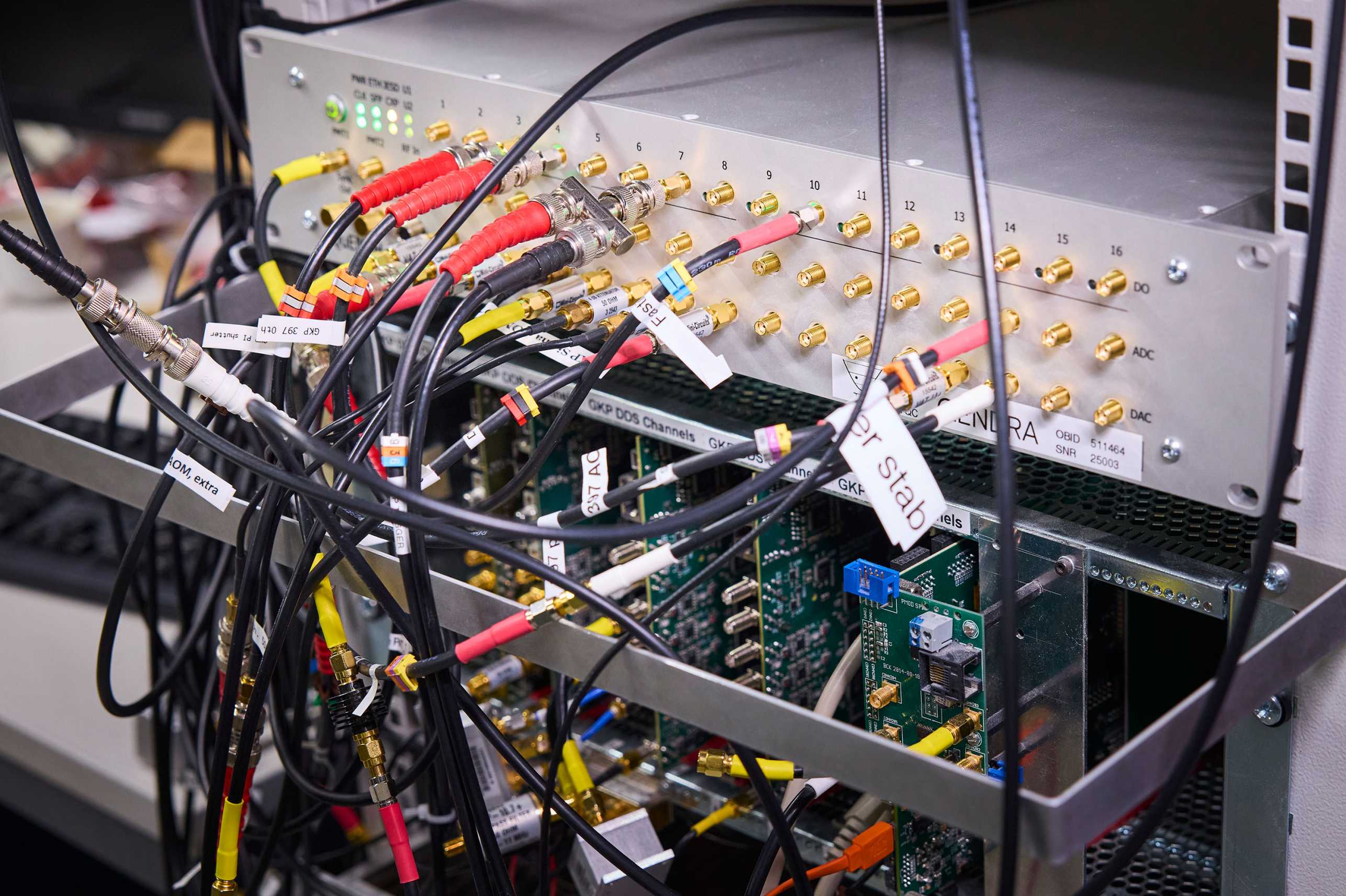
Qendra, an ETH Zurich spin-off, is building a compact control system that generates and coordinates the radio-frequency and laser signals driving trapped-ion and neutral-atom qubits. The device synchronises lasers, cameras and detectors and can evaluate measurements continuously to trigger corrective pulses during a calculation, addressing the lack of real-time error correction in existing controllers.
Quantinuum achieved a logical fidelity of 99.9995% on its Helios computer, equivalent to five errors per million operations. The company said the logical error rate is 10 times lower than its record set last month.
Alice & Bob shared results from implementing GPUs to decode its LDPC-cat architecture using NVIDIA NVQLink. The proof of concept using synthetic data is the first time LDPC-cat codes have been decoded on GPUs via NVQLink.
This week in nanotech
$110M raised
9 funding rounds · 58 deals tracked
New products
 Nion-compatible In Situ STEM Holders for Electrical BiasingHummingbird Scientific Featured
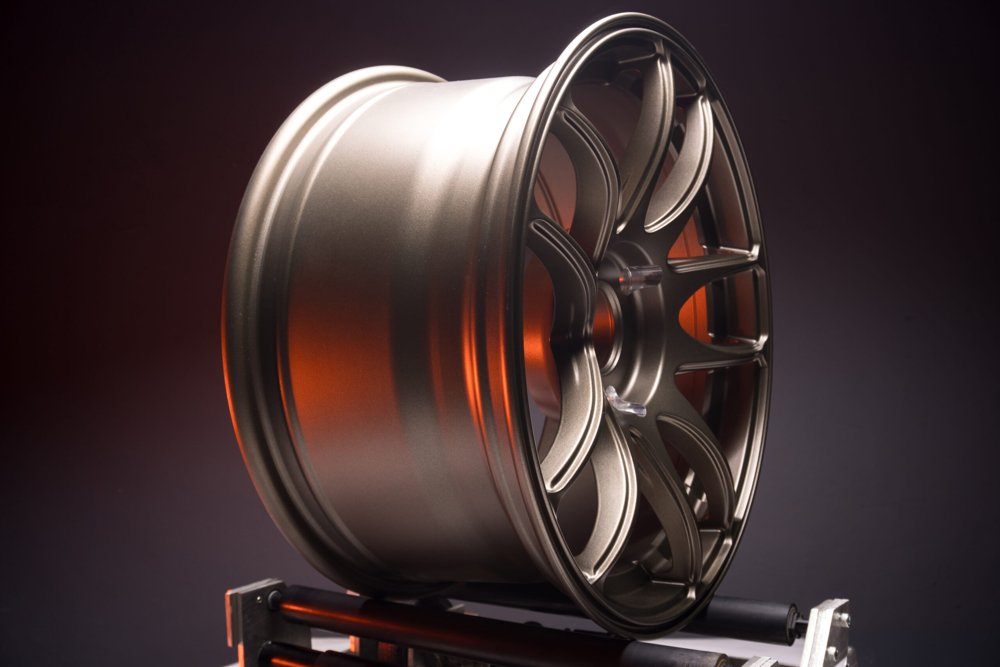 Ti-WCMBN Nanomaterialia Featured
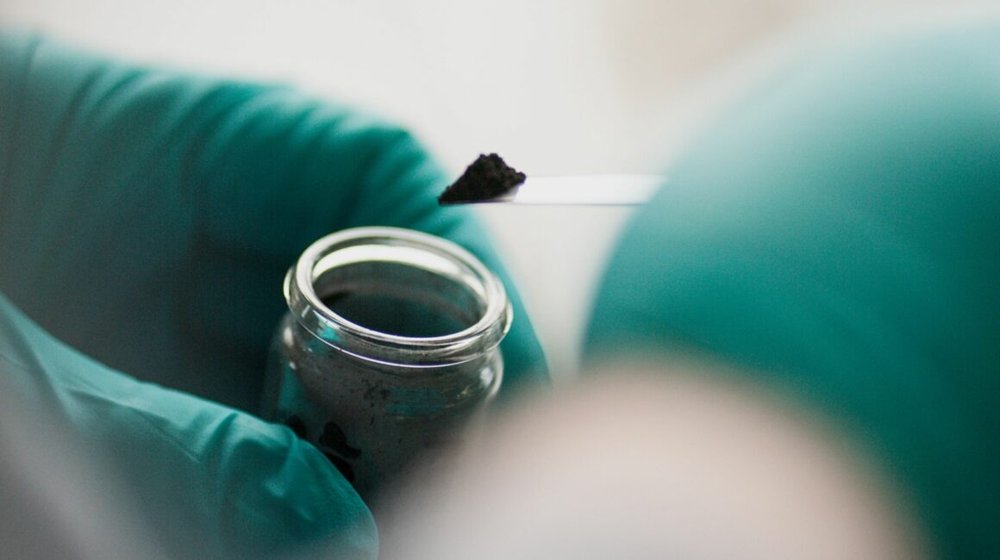 Talphene™ Graphene AdditivesTalga Group
Market insights
Last 30 days: Quantum Technologies drew the most money: $3.17B.
Money raised per month