13 October 2026. Alice & Bob shared results from implementing GPUs to decode its LDPC-cat architecture using NVIDIA NVQLink. The proof of concept using synthetic data is the first time LDPC-cat codes have been decoded on GPUs via the low-latency, high throughput NVQLink architecture.
NVQLink is NVIDIA's open system architecture for tightly coupling the performance of GPU supercomputing with quantum processors (QPUs) to build accelerated quantum supercomputers. It supports tasks that require fast communication between quantum and classical hardware, such as error-correction decoding, calibration, and hybrid quantum-classical applications across any qubit modality.
Alice & Bob assessed the feasibility of GPU decoding for LDPC-cat codes using an NVQLink connection with Quantum Machines OPX1000 and Open Acceleration Stack, a modular framework that couples the controller directly to GPUs and other classical processors with microsecond-scale roundtrip latency. Researchers assessed whether measurement data could be transferred from the control electronics to the GPU.
LDPC-cat codes were developed by Alice & Bob for its cat-qubit architecture and first introduced in the paper LDPC-cat codes for low-overhead quantum computing in 2D published in January 2025. Though a proof of concept and not constituting real-time decoding, the results show how decoding can scale by becoming more efficient as several syndromes are decoded in parallel.
Alice & Bob will now optimize the pipeline, the chain of steps that carry the measurement data through NVQLink to the GPU, to enable the performance needed for real-time decoding.
"Error correction is what will turn quantum computers into useful machines, and decoding is one of its most demanding classical tasks. Showing that our LDPC-cat codes can be decoded on NVIDIA GPUs with existing tools is encouraging for scaling, because it means decoding capacity can grow with the machine. The next step is making it fast enough to keep pace with the quantum computer, and we're working with NVIDIA to get there," said Juliette Peyronnet, US GM Alice & Bob.
"A major challenge with present day quantum computing is errors build up faster than they can be corrected, and traditionally it has been a challenge to bring state of the art compute to this problem for faster qubit modalities like cat qubits," said Sam Stanwyck, Director, Quantum Product, NVIDIA. "Alice & Bob's work shows how NVQLink can in fact accelerate the real-time decoding needed to turn cat qubits into fault tolerant quantum-GPU supercomputers."
In March 2026, the companies announced a runtime of 1 hour 57 minutes for the decoding of simulated syndrome data of its Elevator Codes with the NVIDIA CUDA-Q platform. In June 2025, the companies announced integration of NVIDIA CUDA-Q into Dynamiqs, Alice & Bob's QPU simulation library.
Source: The Quantum Insider
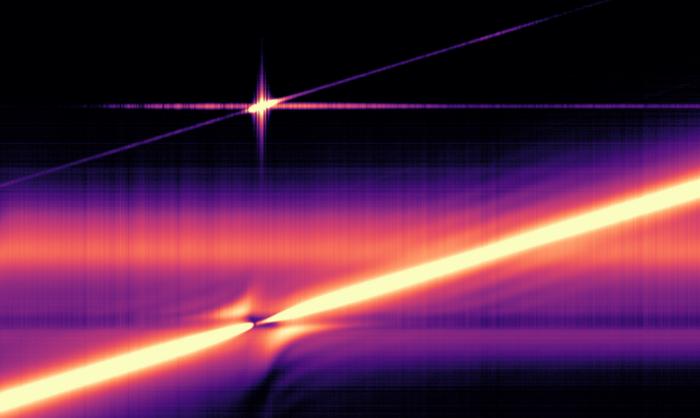
Researchers at the Max Planck Institute for the Science of Light and Leibniz University Hannover have achieved strong coupling between light and long-lived acoustic vibrations in an optical fiber for the first time, using stimulated Brillouin scattering at 4 K without any optical or mechanical resonator. A measurable gap in the spectral response confirms the effect, which typically appears only in cavity systems.
Quantum effects already underpin everyday devices such as transistors, lasers and MRI scanners, yet their full potential remains untapped. Researchers are engineering two-dimensional materials and quantum spin liquids to serve as building blocks for topological quantum computing and more stable qubits, combining theoretical modelling with material fabrication. Other efforts use quantum sensors to probe dark matter and read superconducting qubit data without disturbing it.
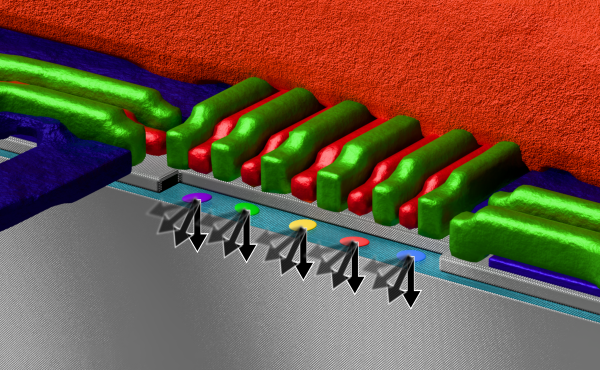
Silicon spin qubits usually lose accuracy when many qubits are driven in parallel, a barrier to scalable quantum processors. Writing in Nature Physics, RIKEN researchers traced the main error source to AC Stark shifts from shared microwave control signals. Their pairwise phase calibration protocol restored gate fidelities above 99.99% for up to three simultaneous qubits, and about 99.9% across all five, near fault-tolerant requirements.