RadianX, formerly California Perovskite Technology, Inc., announced $9 million in venture and project financing to scale production of its certified perovskite solar modules. The Seed round was co-led by SOSV and Twynam, with participation from One Small Planet, Sahsen Ventures, Avila VC, California Innovation Fund, quantumEDGE, Riceberg Ventures and Alumni Ventures.
Pacific Union Technology Precision Manufacturing (PUT), a publicly listed precision components manufacturer, is partnering with RadianX to fund a dedicated production line for the company's device and IoT vertical. RadianX is building its first automated 6MW production line.
RadianX makes perovskite solar modules for edge energy applications including sensors, wearables, connected devices and agrivoltaics. The modules are as thin as 0.7mm and available in custom sizes and output voltages. The company says perovskite can continue generating power in low and indoor light, where silicon becomes less effective.
The modules are certified by TÜV in all three categories of IEC 63163, the specification for photovoltaic modules in consumer products, including Category 3 for high outdoor exposure. Certified efficiency results include 22.33% on a 1.2-by-0.6-meter module. The modules have passed EU REACH lead-release testing and comply with RoHS.
"By building our first automated 6MW production line, we are creating a blueprint we can replicate at larger scale anywhere in the world," said Vivian Qu, Co-founder and Chief Executive Officer of RadianX.
RadianX is a participant in the 2026 Amazon Devices Climate Tech Accelerator, run by Plug and Play, and is working with NGK Corporation to pair RadianX modules with NGK's EnerCera batteries in wireless asset trackers. The company is based in Redwood City, California.
Source: RadianX news
RadianX, formerly California Perovskite Technology, raised $9 million in a Seed round co-led by SOSV and Twynam. PUT is partnering to fund a dedicated production line for the device/IoT vertical.
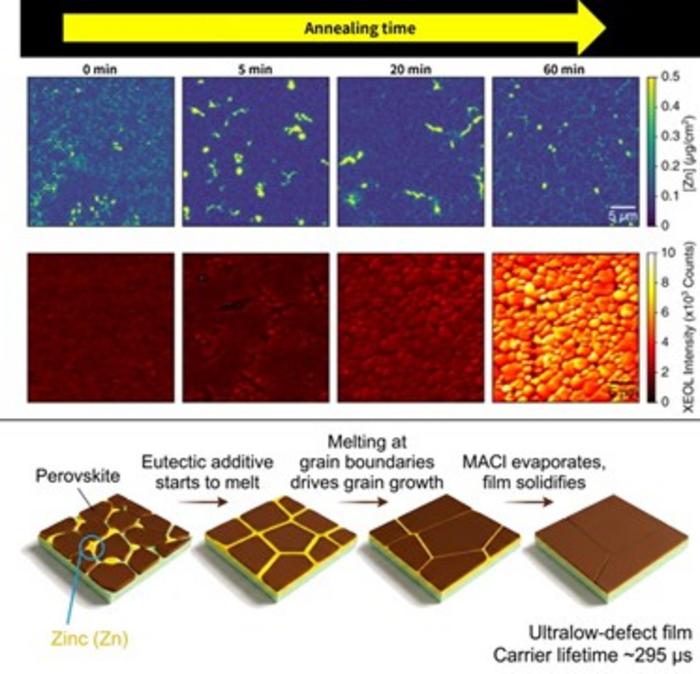
A eutectic mixture of methylammonium chloride and a zinc halide melts at about 100 degrees Celsius, forming a transient liquid layer at perovskite grain boundaries that lets crystals merge into larger, cleaner grains. The resulting films reached a carrier lifetime of roughly 295 microseconds and a surface recombination velocity of 0.3 cm/s, the lowest reported for lead halide perovskites.
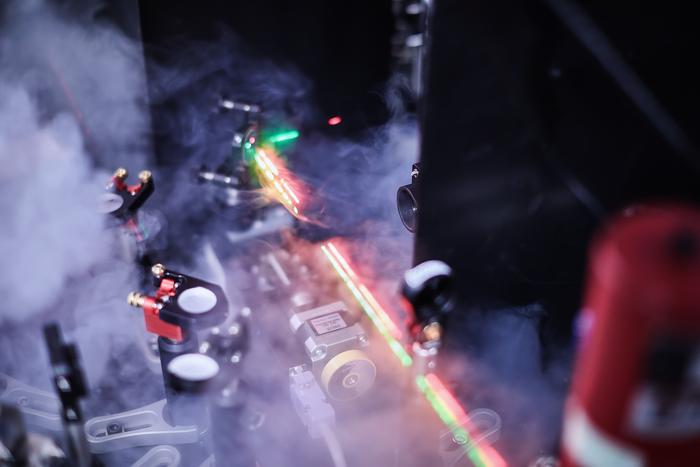
Researchers at MLU Halle-Wittenberg and the Max Planck Institute of Microstructure Physics have identified an unintended ferromagnetic interlayer that forms between ultrashort-pulse-excited Mn3Sn films and platinum, masking the chiral antiferromagnet's true properties. Curing the Mn3Sn layer before platinum deposition avoids the artefact, revealing spin-to-charge conversion at roughly 10% of platinum's efficiency.
This week in nanotech
$129.9M raised
6 funding rounds · 39 deals tracked
New products
 Nion-compatible In Situ STEM Holders for Electrical BiasingHummingbird Scientific Featured
 Ti-WCMBN Nanomaterialia Featured
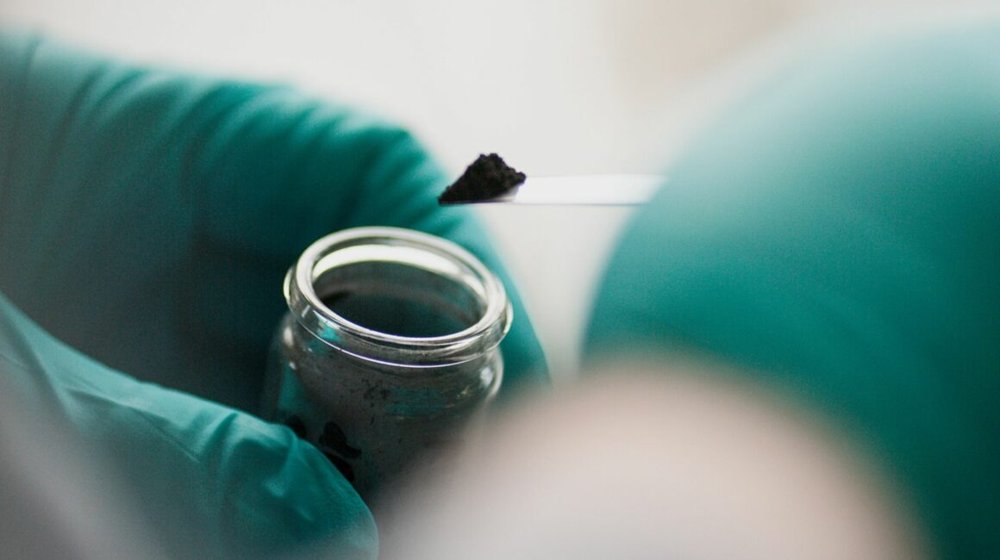 Talphene™ Graphene AdditivesTalga Group
Market insights
Last 30 days: Semiconductors & Electronics drew the most money: $547.7M.
Money raised per month