ETH Zurich
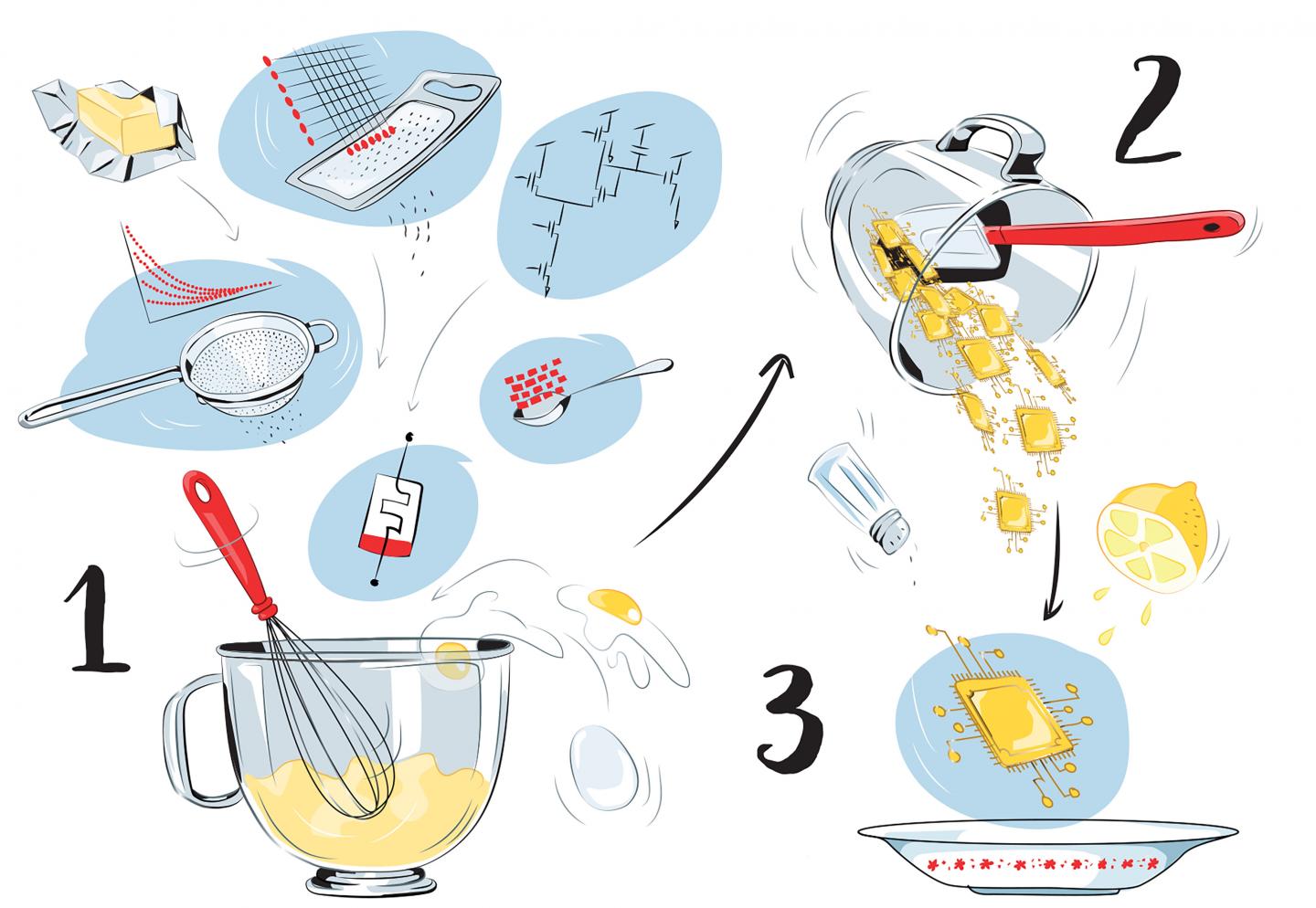
During the 1990s, Carver Mead and colleagues combined basic research in neuroscience with elegant analog circuit design in electronic engineering. This pioneering work on neuromorphic electronic circuits inspired researchers in Germany and Switzerland to explore the possibility of reproducing the physics of real neural circuits by using the physics of silicon.
The field of "brain-mimicking" neuromorphic electronics shows great potential not only for basic research but also for commercial exploitation of always-on edge computing and "internet of things" applications.
In Applied Physics Letters, from AIP Publishing, Elisabetta Chicca, from Bielefeld University, and Giacomo Indiveri, from the University of Zurich and ETH Zurich, present their work to understand how neural processing systems in biology carry out computation, as well as a recipe to reproduce these computing principles in mixed signal analog/digital electronics and novel materials.
One of the most distinctive computational features of neural networks is learning, so Chicca and Indiveri are particularly interested in reproducing the adaptive and plastic properties of real synapses. They used both standard complementary metal-oxide semiconductor (CMOS) electronic circuits and advanced nanoscale memory technologies, such as memristive devices¬, to build intelligent systems that can learn.
This work is significant, because it can lead to a better understanding of how to implement sophisticated signal processing using extremely low-power and compact devices.
Their key findings are that the apparent disadvantages of these low-power computing technologies, mainly related to low precision, high sensitivity to noise and high variability, can actually be exploited to perform robust and efficient computation, very much like the brain can use highly variable and noisy neurons to implement robust behavior.
The researchers said it is surprising to see the field of memory technologies, typically concerned with bit-precise high-density device technologies, now looking at animal brains as a source of inspiration for understanding how to build adaptive and robust neural processing systems. It is very much in line with the basic research agenda that Mead and colleagues were following more than 30 years ago.
"The electronic neural processing systems that we build are not intended to compete with the powerful and accurate artificial intelligence systems that run on power-hungry large computer clusters for natural language processing or high-resolution image recognition and classification," said Chicca.
In contrast, their systems "offer promising solutions for those applications that require compact and very low-power (submilliwatt) real-time processing with short latencies," Indiveri said.
He said examples of such applications fall within "the 'extreme-edge computing' domain, which require a small amount of artificial intelligence to extract information from live or streaming sensory signals, such as for bio-signal processing in wearable devices, brain-machine interfaces and always-on environmental monitoring."
A recipe for creating ideal hybrid memristive-CMOS neuromorphic computing systems
Elisabetta Chicca and Giacomo Indiveri
Applied Physics Letters (2020)
DOI: 10.1063/1.5142089
Contact information:
Professor at Bielefeld University
chicca@cit-ec.uni-bielefeld.de
Phone: +49 521 106-12043 / 12121
Neuromorphic Behaving Systems Group
Professor at ETH Zurich
Phone: +41 44 635 3024
Neuromorphic Cognitive Systems Group
Kopin Corporation has secured an $18.6 million sole source award from the Office of the Secretary of War through the U.S. Army Contracting Command under the IBAS program. The award brings Kopin's total IBAS funding to $34 million.
Emerson has integrated NevadaNano's MPS 6.0 technology into the Rosemount 628MP Combustible Gas Sensor for use with the Rosemount 928 Wireless Gas Monitor. MPS 6.0 consumes 1.35 mW and needs no field calibration.
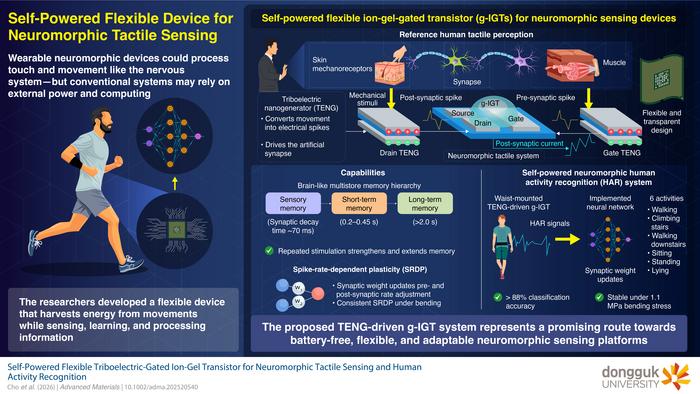
The proposed TENG-driven g-IGT is a flexible, self-powered neuromorphic device capable of reproducing multiple memory states and spike-rate-dependent learning Neuromorphic devices, which are designed to emulate aspects of biological neural networks, are promising candidates for developing low-power and intelligent sensing technologies, including wearable applications. Among the device architectures explored for neuromorphic computing, graphene-channel ion-gel-gated transistors (g-IGTs) are...
This week in nanotech
$108.5M raised
7 funding rounds · 39 deals tracked
New products
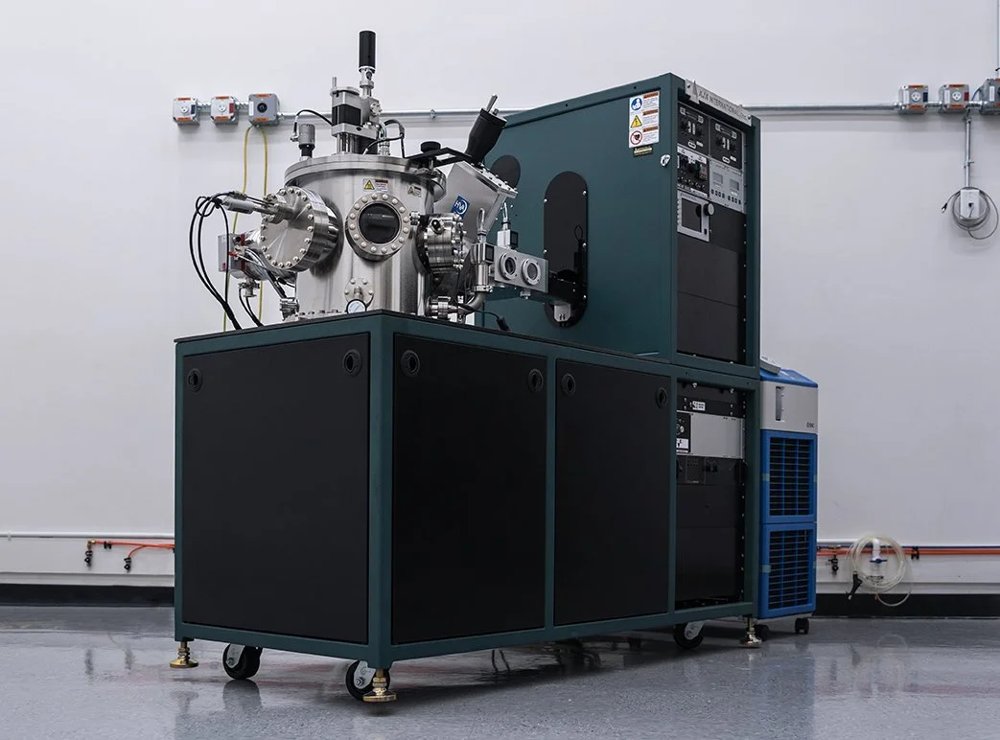 Orion Sputtering Deposition SystemsAJA International Featured
 Ti-WCMBN Nanomaterialia Featured
 PDK (Process Design Kit)DB HiTek
Market insights
Last 30 days: Quantum Technologies drew the most money: $3.17B.
Money raised per month
Behind the deal
Who invested in Photon Bridge’s $11.2M Series A?
See the investors with Insights Pro →