SLAC National Accelerator Laboratory

Photosynthesis plays a crucial role in shaping and sustaining life on Earth, yet many aspects of the process remain a mystery. One such mystery is how Photosystem II, a protein complex in plants, algae and cyanobacteria, harvests energy from sunlight and uses it to split water, producing the oxygen we breathe. Now researchers from the Department of Energy’s SLAC National Accelerator Laboratory and Lawrence Berkeley National Laboratory, together with collaborators from Uppsala University, Humboldt University, and other institutions have succeeded in cracking a key secret of Photosystem II.
Using SLAC’s Linac Coherent Light Source (LCLS) and the SPring-8 Angstrom Compact free electron LAser (SACLA) in Japan, they captured for the first time in atomic detail what happens in the final moments leading up to the release of breathable oxygen. The data reveal an intermediate reaction step that had not been observed before.
The results, recently published in Nature, shed light on how nature has optimized photosynthesis and are helping scientists develop artificial photosynthetic systems that mimic photosynthesis to harvest natural sunlight to convert carbon dioxide into hydrogen and carbon-based fuels.
“The more we learn about how nature does it, the closer we get to using those same principles in human-made processes, including ideas for artificial photosynthesis as a clean and sustainable energy source,” said co-author Jan Kern, a scientist at Berkeley Lab.
@ Chris Smith/SLAC National Accelerator Laboratory
Co-author Junko Yano, also at Berkeley Lab, said, “Photosystem II is giving us the blueprint for how to optimize our clean energy sources and avoid dead ends and dangerous side products that damage the system. What we once thought was just fundamental science could become a promising avenue to improving our energy technologies.”
Bases loaded
During photosynthesis, Photosystem II’s oxygen-evolving center – a cluster of four manganese atoms and one calcium atom connected by oxygen atoms – facilitates a series of challenging chemical reactions that act to split apart a water molecule to release molecular oxygen.
The center cycles through four stable oxidation states, known as S0 through S3, when exposed to sunlight. On a baseball field, S0 would be the start of the game when a player on home base is ready to go to bat. S1-S3 would be players on first, second, and third. Every time a batter connects with a ball, or the complex absorbs a photon of sunlight, the player on the field advances one base. When the fourth ball is hit, the player slides into home, scoring a run or, in the case of Photosystem II, releasing one molecule of breathable oxygen.
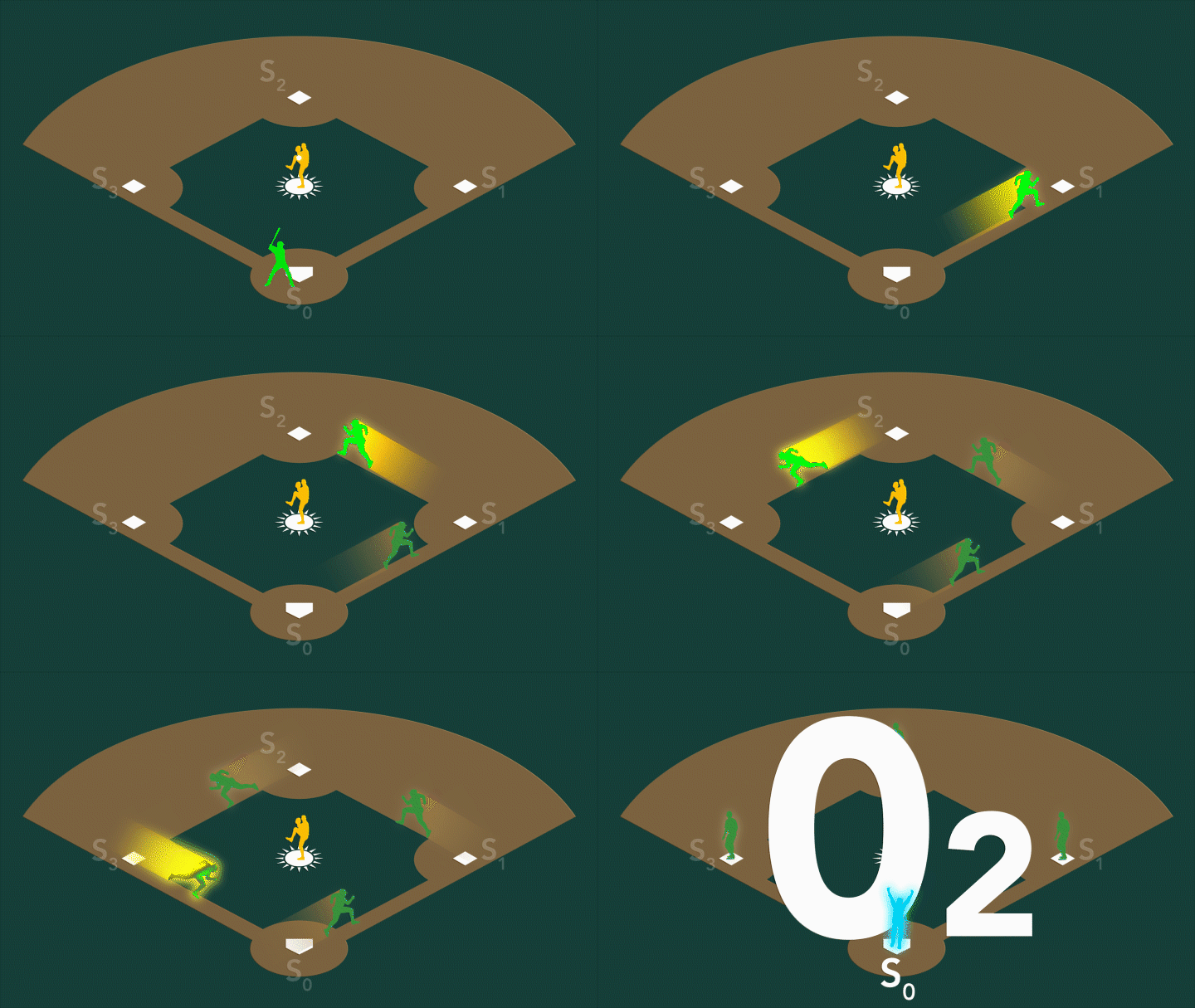
In their experiments, the researchers probed this center by exciting samples from cyanobacteria with optical light and then probing them with ultrafast X-ray pulses from LCLS and SACLA. The data revealed the atomic structure of the cluster and the chemical process around it.
A home run
Using this technique, the scientists for the first time imaged the mad dash for home – the transient state, or S4, where two atoms of oxygen bond together and an oxygen molecule is released. The data showed that there are additional steps in this reaction that had never been seen before.
“Other experts argued that this is something that could never be captured,” said co-author Uwe Bergmann, a scientist and professor at the University of Wisconsin-Madison. “It’s really going to change the way we think about Photosystem II. Although we can't say we have a unique mechanism based on the data yet, we can exclude some models and ideas people have proposed over the last few decades. It’s the closest anyone has ever come to capturing this final step and showing how this process works with actual structural data.”
The new study is the latest in a series undertaken by the team over the past decade. Earlier work focused on observing various steps of the photosynthetic cycle at the temperature at which is occurs in nature.
“Most of the process that produces breathable oxygen happens in this last step,” said co-author Vittal Yachandra, a scientist at Berkeley Lab. “But there are several things happening at different parts of Photosystem II and they all have to come together in the end for the reaction to succeed. Just like how in baseball, factors like the location of the ball and the position of the basemen and fielders affect the moves a player takes to get to home base, the protein environment around the catalytic center influences how this reaction plays out.”
Brighter X-rays for a brighter future
Based on these results, the researchers plan to conduct experiments designed to capture many more snapshots of the process.
“There are still things happening in between that we could not catch yet,” Kern said. “There are more snapshots we really want to take which would bridge the remaining gaps and tell the whole story.”
To do so, they need to push the quality of their data even further. In the past, these types of measurements proved challenging because the X-ray signals from the samples are faint and the rates at which existing X-ray lasers like LCLS and SACLA produce X-ray pulses are too slow.
“It took quite some effort to optimize the setup, so we couldn't collect all the data we needed for this one publication in a single experiment,” said co-author and SLAC scientist Roberto Alonso-Mori. “These results actually include data taken over six years.”
When an LCLS upgrade called LCLS-II comes online later this year, the repetition rate will skyrocket from 120 pulses per second to up to a million per second.
“With these upgrades, we will be able to collect several days’ worth of data in just a few hours,” Bergmann said. “We will also be able to use soft X-rays to further understand the chemical changes happening in the system. These new capabilities will continue to drive this research forward and shed new light on photosynthesis.”
Reference
Structural evidence for intermediates during O2 formation in photosystem II
Asmit Bhowmick, Rana Hussein, Isabel Bogacz, Philipp S. Simon, Mohamed Ibrahim, Ruchira Chatterjee, Margaret D. Doyle, Mun Hon Cheah, Thomas Fransson, Petko Chernev, In-Sik Kim, Hiroki Makita, Medhanjali Dasgupta, Corey J. Kaminsky, Miao Zhang, Julia Gätcke, Stephanie Haupt, Isabela I. Nangca, Stephen M. Keable, A. Orkun Aydin, Kensuke Tono, Shigeki Owada, Leland B. Gee, Franklin D. Fuller, Alexander Batyuk, Roberto Alonso-Mori, James M. Holton, Daniel W. Paley, Nigel W. Moriarty, Fikret Mamedov, Paul D. Adams, Aaron S. Brewster, Holger Dobbek, Nicholas K. Sauter, Uwe Bergmann, Athina Zouni, Johannes Messinger, Jan Kern, Junko Yano & Vittal K. Yachandra
https://www.nature.com/articles/s41586-023-06038-z
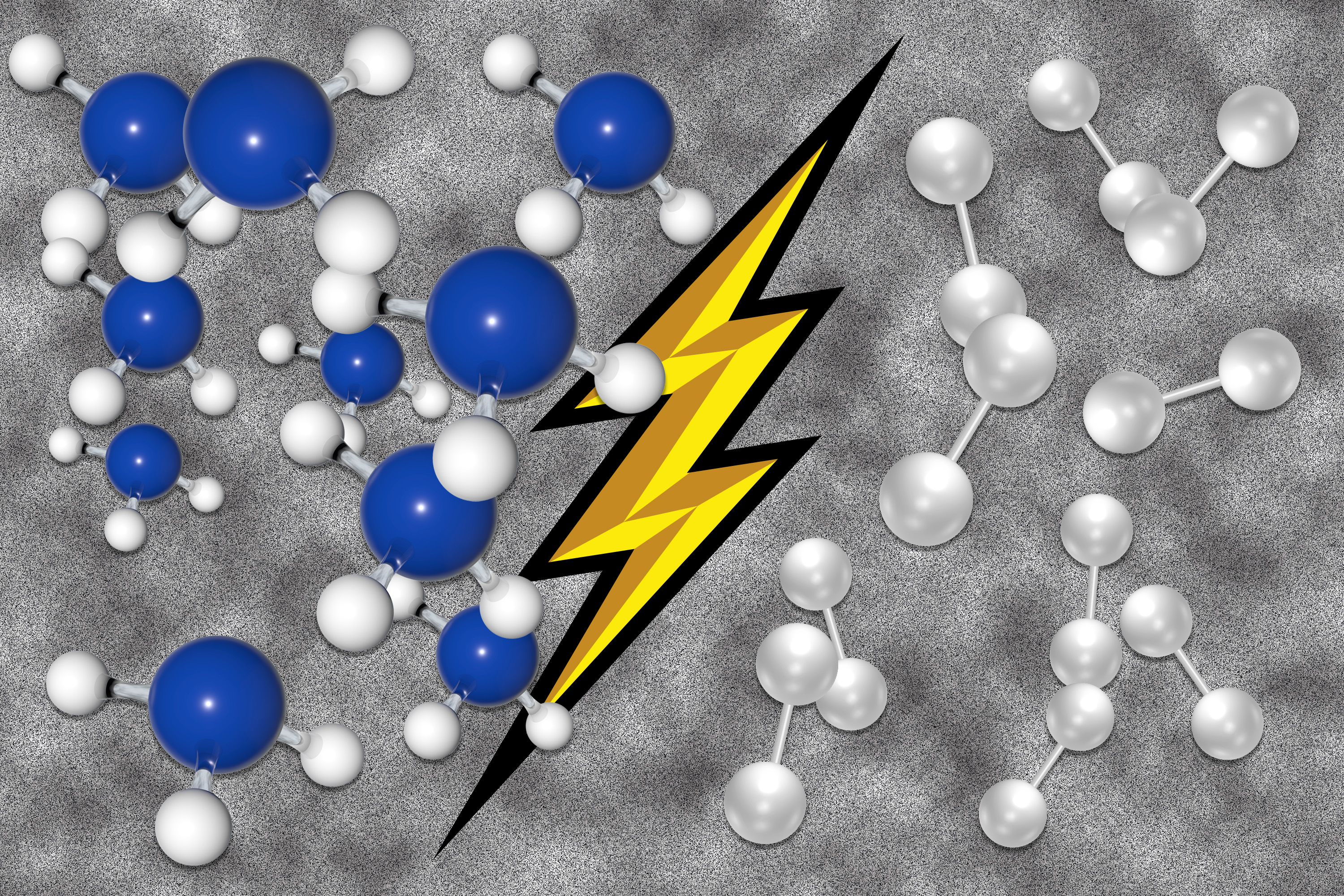
MIT researchers have developed a new way to extract pure hydrogen gas from ammonia and other hydrogen carrier molecules. Their strategy, which uses electricity to speed up the extraction, reduces the temperature and energy required to recover hydrogen from these molecules. As a liquid that is easily stored and transported, ammonia (NH3) is an attractive carrier for hydrogen, which is used in fuel cells, semiconductor manufacturing, chemical processing, and other applications. However,...
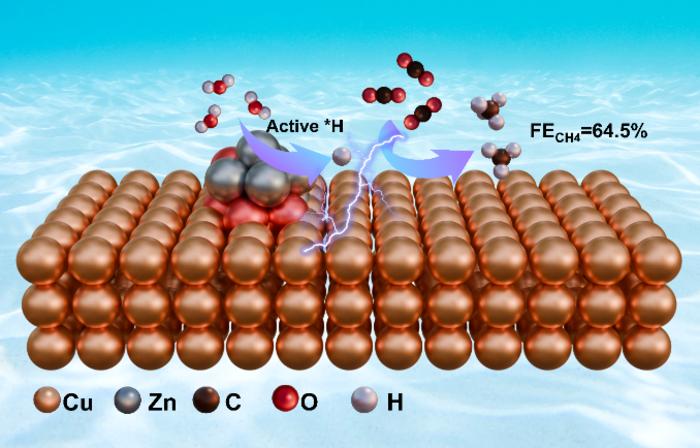
image: CuZn800@C was constructed via solvothermal method and utilizes the high-temperature volatility of zinc to prepare through calcination at different temperatures, which displays a high methane Faradaic efficiency of 64.5% and a remarkable partial current density of -551.3 mA/cm2 at -1.7 V vs. RHE, along with excellent stability. Zn and Cu form a tandem reaction system. Zn sites promote water splitting to provide protons, while Cu sites reduce the energy barrier for *CO hydrogenation....
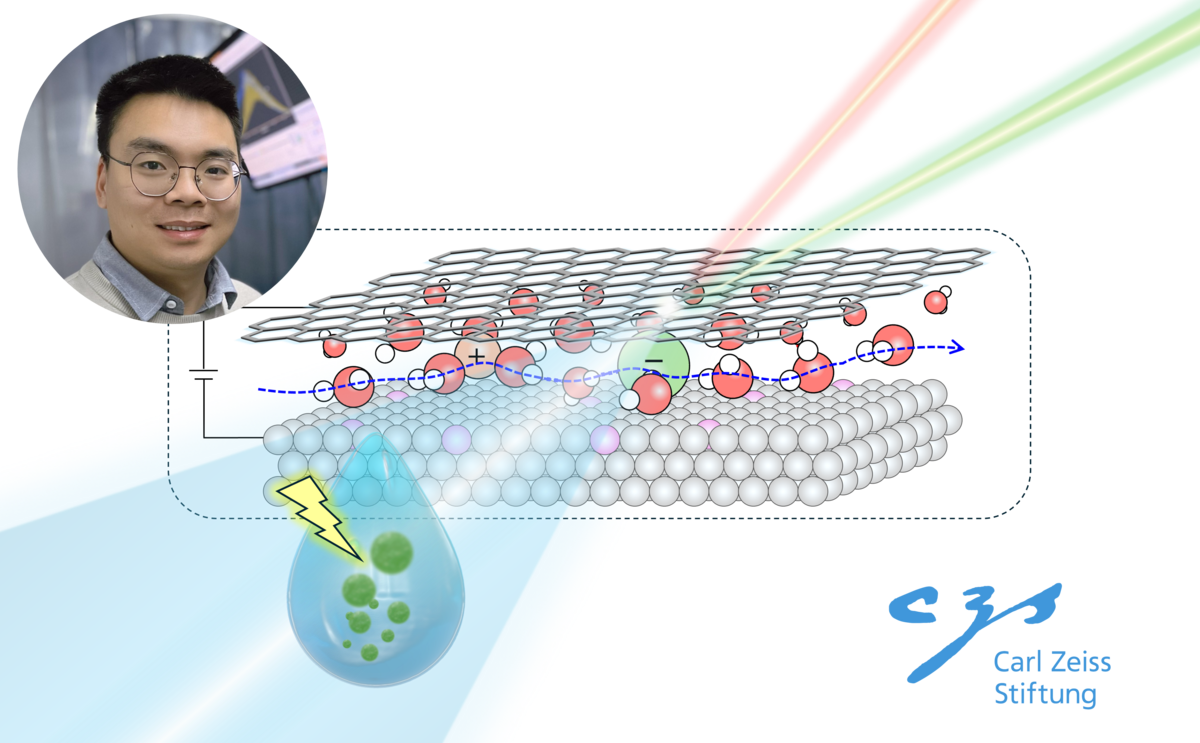
Electrochemical water splitting powered by renewable electricity is a promising pathway to sustainable hydrogen production, but its efficiency and scalability remain limited by costly catalysts and slow reaction kinetics. With €1.5 million in funding from the Carl-Zeiss-Stiftung for five years, Dr. Yongkang Wang and his team will pursue a new approach by visualizing and controlling water at the molecular level, using nanoscale confinement to shape its structure and dynamics at catalytic...
