Hefei Institutes of Physical Science, Chinese Academy of Sciences
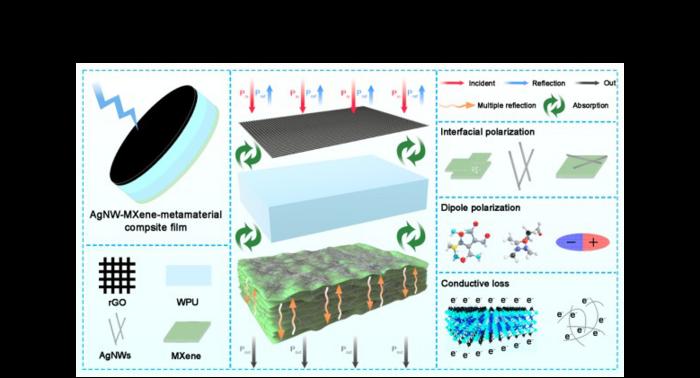
A research team led by Prof. JI Shulin from the Institute of Solid State Physics, Hefei Institutes of Physical Science, Chinese Academy of Sciences, has developed a method for manufacturing flexible films that can effectively shield electromagnetic waves across a broad frequency range. The films can be produced on a square-meter scale.
"This means we can make thin materials that protect electronic devices from electromagnetic interference," said Prof. JI.
The research was published in ACS Applied Materials & Interfaces and Langmuir.
With the growing use of electronic devices and communication technologies, electromagnetic waves are increasingly common in everyday environments. However, conventional materials for absorbing or shielding these waves often need to be thick to work effectively and typically cover only a limited frequency range. This makes it difficult to develop thin, flexible films that provide broadband protection.
In this study, the team introduced a design called cross-dimensional percolation, which cmbines nanomaterials of different dimensions into a three-dimensional interconnected network. By adding precisely printed conductive patterns, known as metastructures, the researchers enabled the films to control electromagnetic waves across a wider range of frequencies.
The team also developed a manufacturing process combining pressure-assisted filtration, precision inkjet printing and transfer techniques. They improved the films' flexibility by modifying their surface chemistry and developed a conductive ink to ensure accurate printing of the metastructures. The resulting films can withstand repeated folding.
The films achieve electromagnetic shielding effectiveness of more than 100 decibels, demonstrating their strong shielding performance.
The work could support the development of flexible electromagnetic protection materials for wearable devices and sensitive electronic equipment.
Reference
Cross-Dimensional Percolation and Metastructure-Assisted Highly Efficient Electromagnetic Interference Shielding Films
Qingyang Zeng, Zhenhua Zhong, Qianru Ge, Xinhao Bao, and Shulin Ji
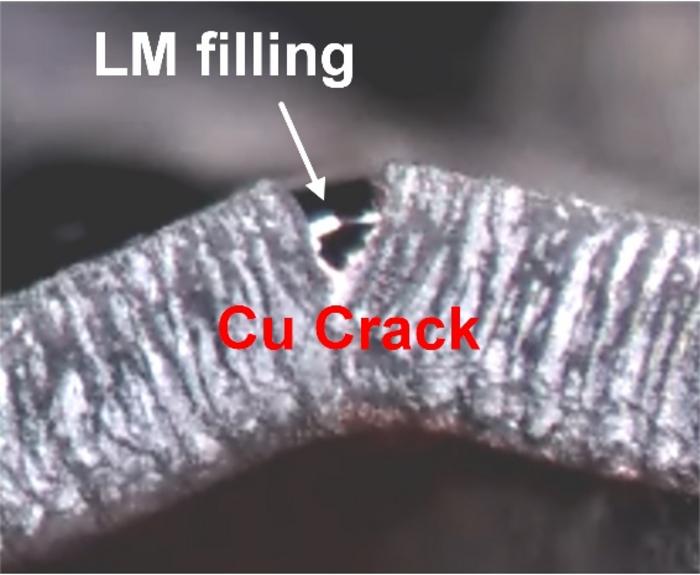
By bonding a galinstan liquid metal reservoir above commercial copper foil, researchers at Xi'an Jiaotong University created self-healing flexible circuits. Gallium reacts with copper to form a self-limiting CuGa2 barrier, leaving a pure copper core while liquid alloy wicks into cracks as they form. The hybrid traces withstood 230,000 bending cycles at 0.5 mm radius and 60,000 full folds, versus 500 for untreated copper, and held resistance nearly stable under 4 MPa compression.
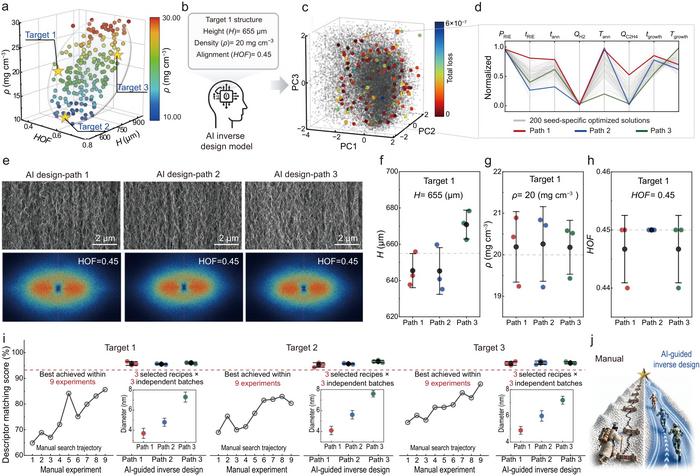
An AI-assisted inverse-design framework has identified multiple distinct growth recipes that reach the same prescribed height, density and alignment in carbon nanotube forests. Trained on 200 water-assisted chemical vapour deposition experiments, the model searched backward from structural targets; 26 of 27 validation batches scored above 95% descriptor matching, yet nanotube diameters and wall structures differed.
UbiQD announced UC Davis research showing 9% greater water-use efficiency and 21% higher lettuce yields with its UbiGro quantum dot greenhouse glass, based on spring 2026 greenhouse trials.
This week in nanotech
32 deals tracked
New products
 Orion Sputtering Deposition SystemsAJA International Featured
 Ti-WCMBN Nanomaterialia Featured
 GiiiGii
Market insights
Last 30 days: Semiconductors & Electronics was the busiest vertical: 58 of 185 events (31%).
Money raised per month