The University of Texas at Dallas
A University of Texas at Dallas scientist and her colleagues have discovered an unusual atomic pattern in a uranium-based material that gives it a rare combination of magnetic properties, a finding that could open new pathways for designing advanced electronic and computer memory devices.
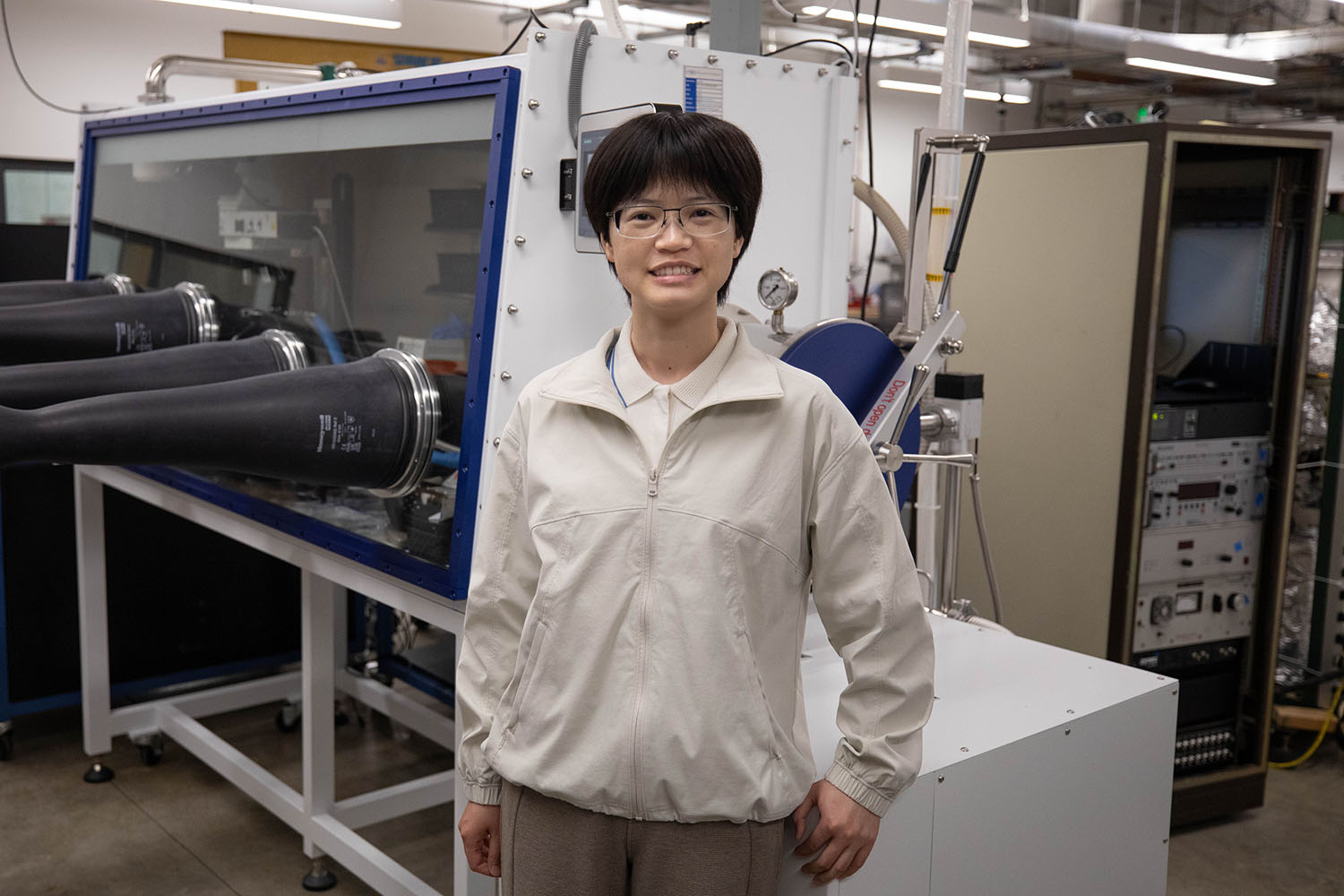
Dr. Mengke Liu, an assistant professor of physics in the School of Natural Sciences and Mathematics, and her collaborators found a previously unrecognized chiral superlattice in a crystal of uranium oxytelluride (UOTe). Liu is a corresponding author of a study detailing the research published online Oct. 7 in the journal Nature.
The discovery began when Liu was a Harvard Quantum Initiative in Science and Engineering postdoctoral fellow, a position she held before joining the UT Dallas faculty in 2025.
One of Liu’s collaborators, Dr. Sheng Ran, associate professor of physics at Washington University in St. Louis, gave Liu crystals of a uranium compound that he had synthesized for her to analyze. Liu, an experimental physicist and an expert in imaging technology, was using transmission electron microscopy and scanning tunneling microscopy to examine and generate high-resolution images of materials’ surfaces at the atomic scale.
Using the techniques, she detected in the UOTe sample the presence of a repeating, twisted structural pattern of atoms called a chiral superlattice. Chiral means the spiral structures are twisted predominantly in a left-handed or right-handed direction. Electrons moving through this structure behaved in unexpected ways, which the researchers determined was the result of the material having both ferromagnetic and antiferromagnetic characteristics.
“I was originally studying this material for an entirely different reason,” Liu said. “When I examined it with high-resolution microscopy, I found a naturally occurring superstructure no one had recognized before.”
Ferromagnetic materials are magnetic, while antiferromagnets have a net magnetization of zero.
“Finding a single material that combines both of these properties is interesting fundamentally,” Liu said.
Liu’s colleagues at Harvard University, led by co-corresponding author Dr. Suyang Xu, the John L. Loeb Associate Professor of the Natural Sciences, were simultaneously investigating the same material. The two teams regularly shared and compared the findings from their complementary experiments, which brought together different pieces of the puzzle. During their collaboration, the researchers carried out extensive additional measurements, confirming that the material’s unique atomic organization is a key factor governing how electrons travel through it.
The combined properties of the material could be valuable for future magnetic computer memory technologies. Antiferromagnetic materials are generally more resistant to perturbations from external magnetic fields and can operate more quickly than conventional ferromagnets.
“If those advantages can be harnessed, memory devices could potentially become both faster and more robust,” Liu said.
The researchers also conducted computational analyses that suggest that hundreds of related compounds could host similar superlattice structures.
“This study provides a new way of looking for materials with these unusual properties,” Liu said. “Instead of focusing only on the fundamental atomic arrangement, we can also now explore larger superstructures that might influence how electrons behave.”
Liu said the discovery highlights the importance of reexamining known materials with modern experimental tools.
“Uranium oxytelluride has been known since the 1960s, but it has been largely ignored in research since then. Now, with today’s techniques, we’re able to uncover and study properties that previously were hidden,” Liu said.
Other researchers from the Harvard team who are corresponding authors of the Nature article are Dr. Philip Kim and Dr. Jianxiang Qiu, who is now at the University of California, Berkeley. Additional authors are from Howard University; Argonne National Laboratory; Los Alamos National Laboratory; Northeastern University; Michigan State University; Texas A&M University; Boston College; the University of Michigan; the National Institute for Materials Science in Japan; S. N. Bose National Centre for Basic Sciences in India; Institute of Physics, Academia Sinica in Taiwan; National Cheng Kung University in Taiwan; Max Planck Institute for Chemical Physics of Solids in Germany; Johannes Gutenberg University Mainz in Germany; and Delft University of Technology in the Netherlands.
The research was funded in part by the U.S. Department of Energy, the Office of Naval Research, the National Science Foundation, the Air Force Office of Scientific Research and the Army Research Office.
Reference
A chiral superlattice route to spin-split topological antiferromagnetism
Thao Dinh, Mengke Liu, Jian-Xiang Qiu, Sougata Mardanya, Suk Hyun Sung, Xuan Hoang Le, Christopher Broyles, Chengfeng Zhu, Qiaozhi Xu, Haotian Chen, Zack Rehfuss, Yu-Fei Liu, Xiaoyu Zeng, Houchen Li, Peng Guo, Jinchen Liu, Tianye Huang, Jingtian Shi, Michael Smith, Joanna M. Blawat, John Singleton, Ross McDonald, Iván E. Arvizo, Dongtao Cui, Shao-Liang Zheng, Kenji Watanabe, Takashi Taniguchi, Vineet Kumar Sharma, Sudip Ghorai, Barun Ghosh, Hsin Lin, Ting Yong Lim, Tay-Rong Chang, Arun Bansil, Ivar Martin, Ashvin Vishwanath, Weiwei Xie, Claudia Felser, Jairo Sinova, Anyuan Gao, Mikhail D. Lukin, Jennifer E. Hoffman, Sugata Chowdhury, Qiong Ma, Kai Sun, Ismail El Baggari, Sheng Ran, Talieh S. Ghiasi, Hongkun Park, Philip Kim, and Su-Yang Xu
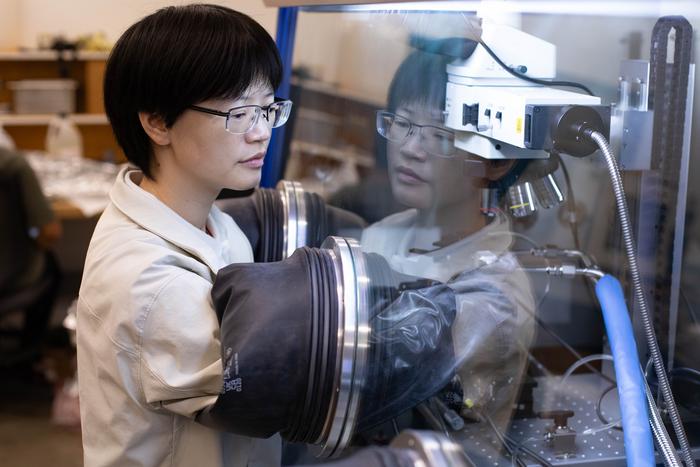
Microscopy of uranium oxytelluride has revealed a chiral superlattice, a twisted atomic pattern that was previously unrecognized in a compound known since the 1960s. Electrons moving through the spiral structure behave unexpectedly because the material combines ferromagnetic and antiferromagnetic order, an unusual pairing that could support faster, more robust magnetic memory.
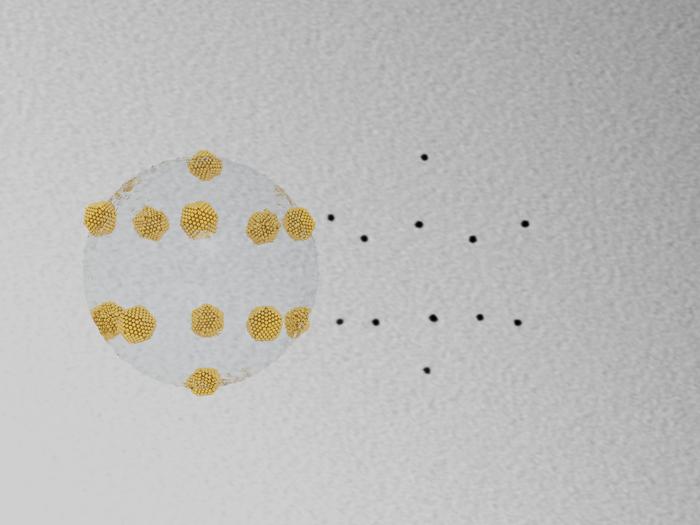
Physicists at the University of Innsbruck have turned the Thomson problem, a 120-year-old optimization puzzle, into a laboratory experiment. Superfluid helium nanodroplets were multiply charged and passed through gold vapor, so gold nanoparticles grew at each charge center. After the helium evaporated, transmission electron microscopy imaged the arrangements made by 5 to 36 charges per droplet, matching predicted lowest-energy configurations.
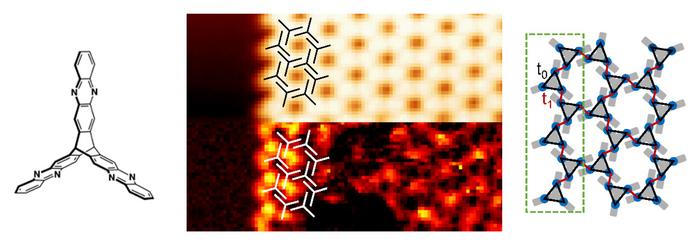
Researchers have assembled a triptycene-derived organic molecule into a two-dimensional diatomic Kagome lattice, a hybrid of honeycomb and Kagome geometries, and observed topological edge states confined to its boundaries. Strong electronic coupling between the propeller-shaped molecules, confirmed by scanning tunneling microscopy and theoretical analysis, shows that supramolecular assemblies can host quantum behavior once thought to require inorganic crystals.
This week in nanotech
$282.2M raised
8 funding rounds · 36 deals tracked
New products
 DLS-1 Mass Spectrometer for Fusion Gas AnalysisHiden Analytical Featured
 Orion Sputtering Deposition SystemsAJA International Featured
 Talphene™ Graphene AdditivesTalga Group
Market insights
Last 30 days: Quantum Technologies drew the most money: $3.17B.
Money raised per month