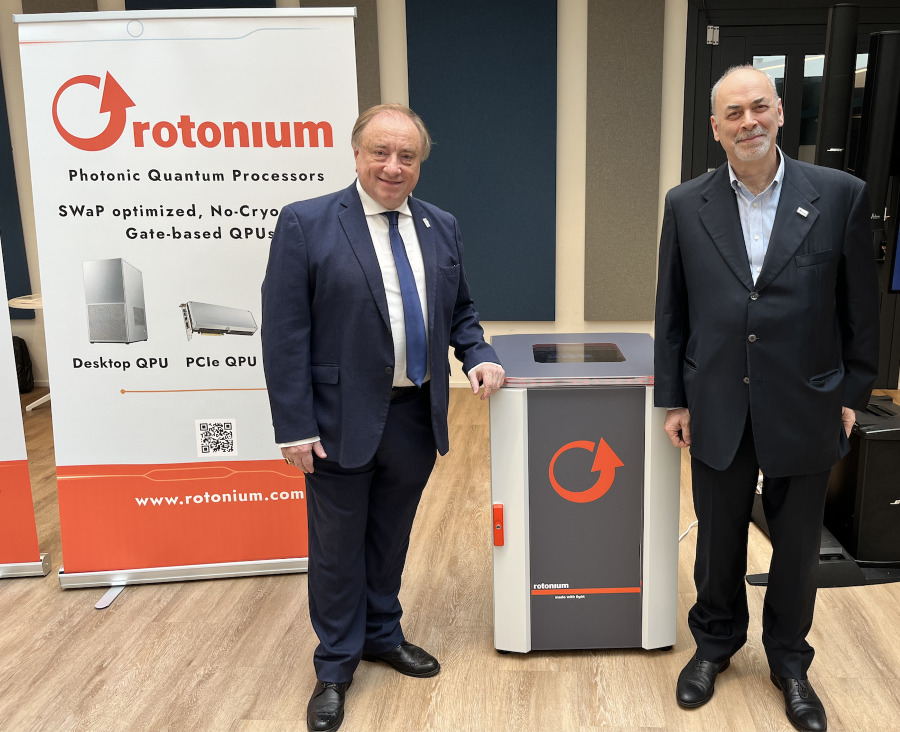
Rotonium has unveiled a quantum computer prototype that operates at room temperature, with no cryogenic cooling anywhere in the quantum chain, from the single-photon source to the processor and the detectors that read the results. The announcement was made in Padua on 11 November 2026.
The machine houses a photonic quantum processor with four effective qubits on a chip measuring 18 by 4 millimetres. Rotonium defines effective qubits as qubits that can be used together in a verified computation under the stated test conditions.
The technology encodes quantum information in different properties of a single photon, known as degrees of freedom, which makes it possible to represent multiple qubits within one photon. It is protected by six patent families, with 25 patent applications and six patents granted, and is designed for manufacturing processes compatible with silicon photonics.
Rotonium's approach targets edge quantum computing: compact quantum accelerators that can be integrated into industrial systems, robots, autonomous vehicles and satellites, where size, weight and power consumption are critical. "Quantum computing must not become a technology reserved for a handful of large research centres," says Roberto Siagri, co-founder and CEO of Rotonium. "What matters is not only how many qubits we can develop, but how usable they really are at the edge. This is what we call Industrial Quantum Utility."
"The entire system operates at room temperature, without cryogenics", explains Fabrizio Tamburini, co-founder and Chief Quantum Officer of Rotonium. "Our prototype demonstrates the feasibility of compact photonic circuits and provides the foundation for a progressive increase in computing capacity."
The company's roadmap foresees a desktop system with 16 effective qubits in 2028, a PCI Express accelerator card with 32 effective qubits in 2029, and a System-on-Module with 96 effective qubits by 2030, with thousands of effective qubits targeted by 2035.
Source: Rotonium news
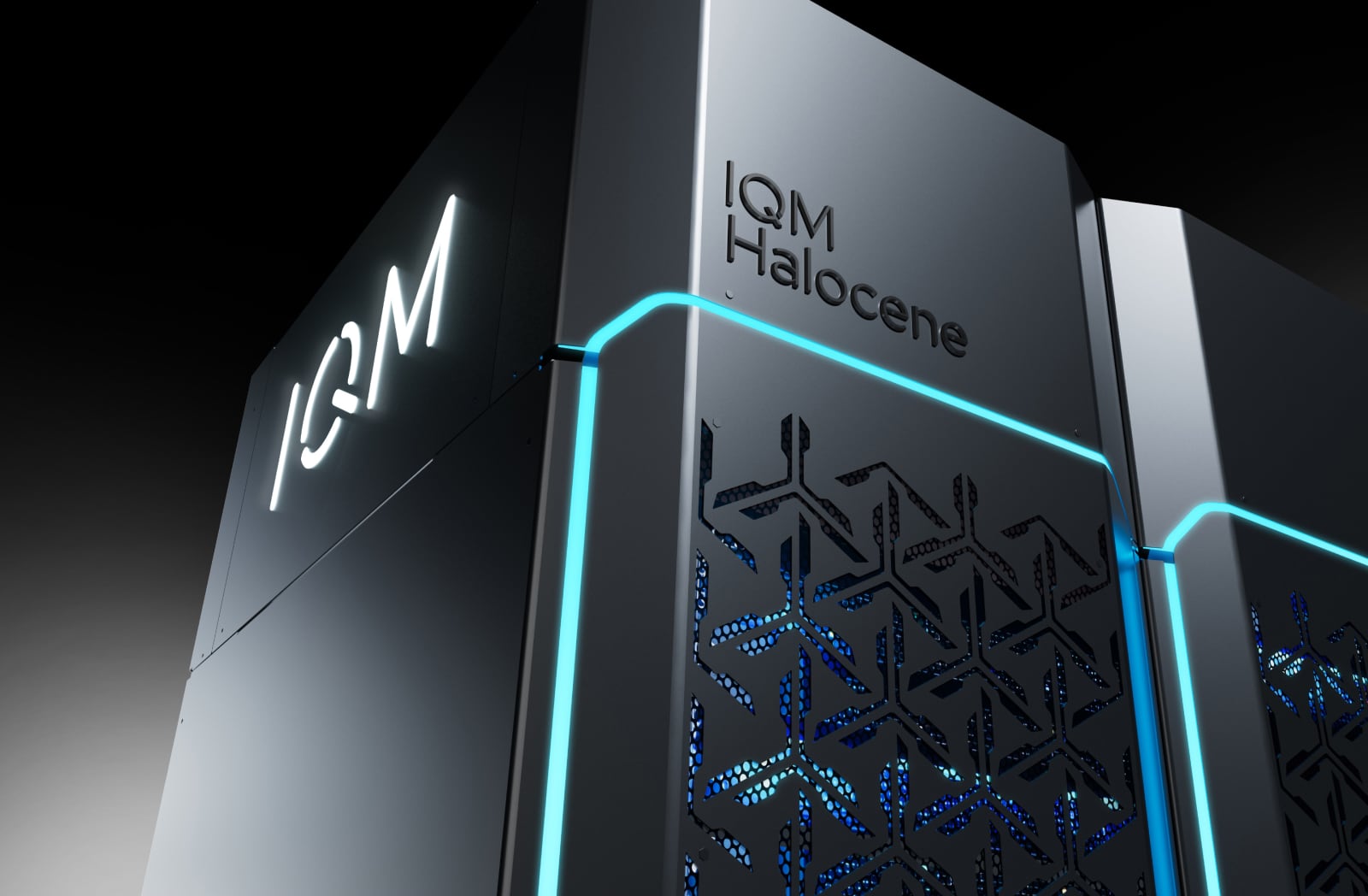
IQM Quantum Computers announced an upgrade programme for its Halocene error-correction product line, giving customers a path from a 150-qubit system to over 1,000 qubits without downtime.
AXT reported first quarter 2026 revenue of $26.9 million, compared with $19.4 million a year earlier, and a GAAP net loss of $1.6 million, or $0.03 per share.
Quandela signed a strategic partnership with Mekdam Holding Group Q.P.S.C. and MEEZA QSTP-LLC at MWC26 Doha to deploy photonic quantum computing solutions across the Gulf region.
This week in nanotech
25 deals tracked
New products
 Ti-WCMBN Nanomaterialia Featured
 Nion-compatible In Situ STEM Holders for Electrical BiasingHummingbird Scientific Featured
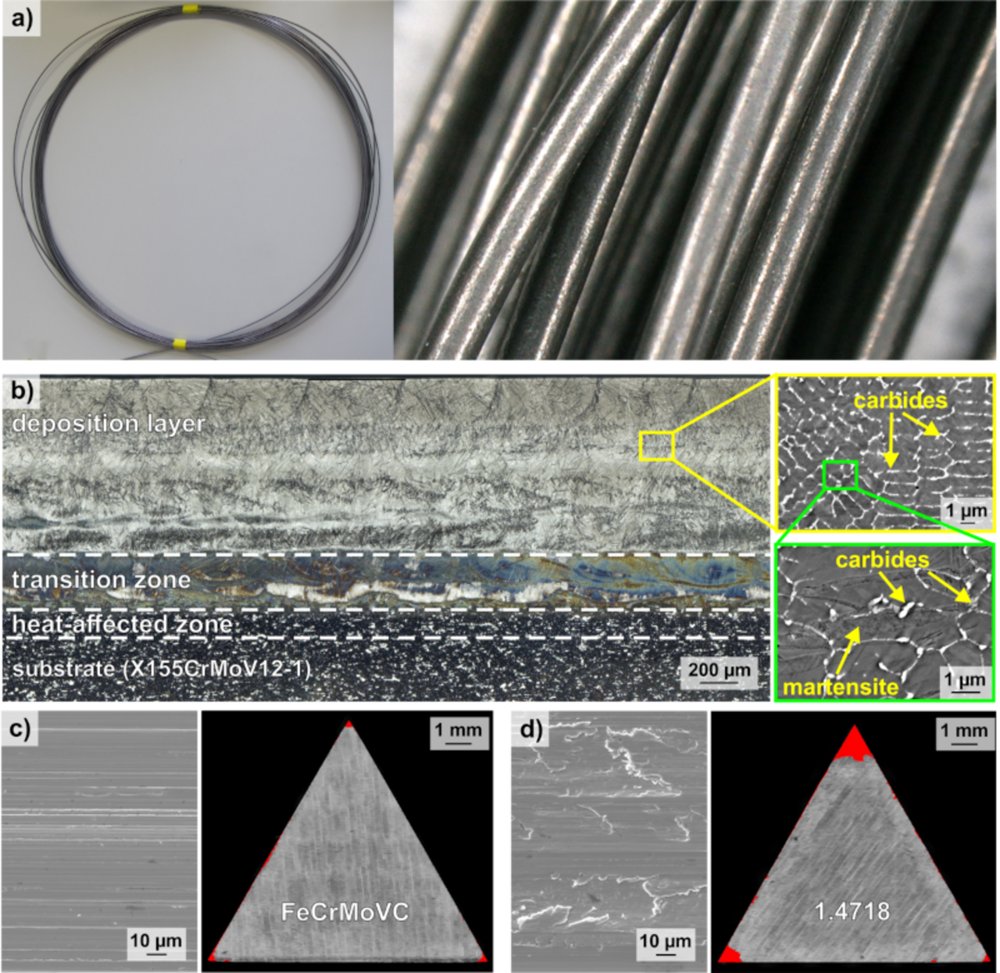 Fe85Cr4Mo8V2C1 wire filler materialLeibniz Institute for Solid State and Materials Research Dresden - IFW Dresden
Market insights
Last 30 days: Semiconductors & Electronics was the busiest vertical: 54 of 175 events (31%).
Money raised per month