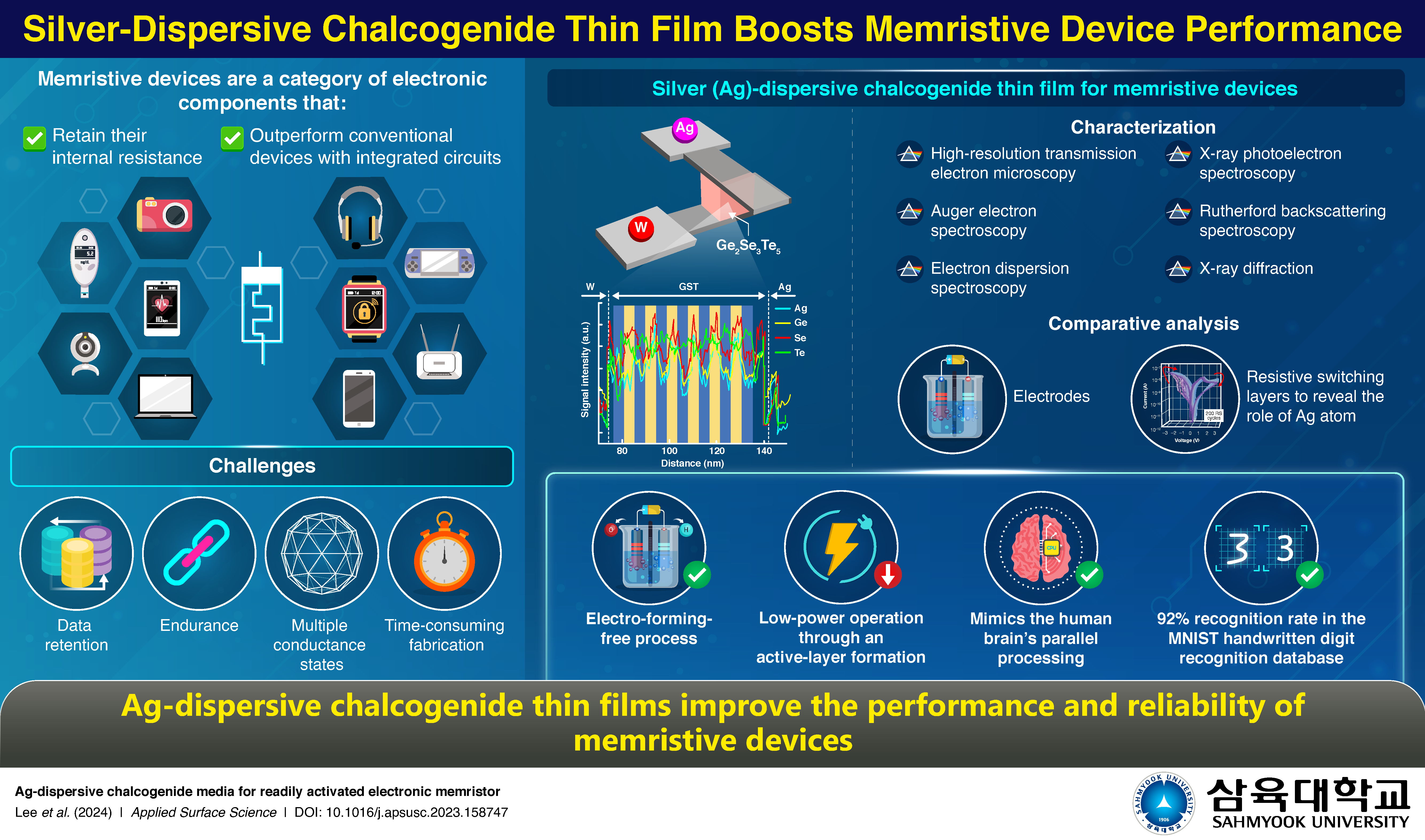
Memristive devices, a class of vital electronic components, face challenges with data retention and endurance. To overcome them, researchers have now developed a silver-dispersive chalcogenide thin film for resistance-switching in memristive devices, enabling low-power operation and showcasing human brain-like parallel processing. Remarkably, this innovation achieves a 92% recognition rate in digit recognition databases and emphasizes the ability of chalcogenide materials to enhance memristive device performance for applications in artificial intelligence systems.
Memristive devices constitute a category of devices capable of retaining their internal resistance, thus offering superior performance compared to conventional devices that use integrated circuits. Several materials have been explored to manufacture these devices. In recent years, transition metal oxides have gradually become widely popular for this purpose.
Due to their increasing application in diverse domains like artificial intelligence systems, memristive devices must now overcome several issues related to data retention, endurance, and a large number of conductance states. Moreover, the individual fabrication of these devices is time-consuming. As a result, several challenges need to be addressed to improve their performance and reliability.
In a recent study led by Professor Min Kyu Yang from Sahmyook University, Korea, researchers have developed a silver (Ag)-dispersive chalcogenide thin film for use as a resistance-switching material in memristive devices. Their paper was made available online on October 27, 2023, and published in Volume 664 of the journal Applied Surface Science on January 30, 2024.
The proposed thin film facilitates an “electro-forming-free” process (it does not require an electric current to induce chemical change before manufacture or operation), allowing low-power operation via formation of an active layer. According to Prof. Yang: “Our diffusive Ag-based memristive device in a chalcogenide thin film shows low power consumption and mimics the human brain’s parallel processing. This makes it suitable for implementation in crossbar arrays, and it achieved ~ 92% recognition rate in the MNIST (Modified National Institute of Standards and Technology) handwritten digit recognition database.”
In this study, the researchers utilized a multitude of spectroscopic techniques to characterize the film material, including high-resolution transmission electron microscopy, X-ray photoelectron spectroscopy, Auger electron spectroscopy, and Rutherford backscattering spectroscopy. The team also analyzed various electrodes and resistive switching layers to reveal the significant role played by the Ag atom.
The device demonstrated both state retention and reliable endurance even in a challenging environment of 85 ℃ for 2 hours. This study thus emphasizes the capability of chalcogenide materials to enhance the performance of memristive devices.
The present technology is expected to address the need to increase the memory capacity of semiconductors for big data applications, where the terabyte unit of storage is now considered inadequate. However, this poses the challenge of managing a large volume of chips. Consequently, the “neuromorphic chip” is being developed as the next-generation semiconductor for artificial intelligence systems. These chips need to possess characteristics like low power consumption, compact size, and the capability to analyze human behavior patterns.
“Employing the diffusive Ag-based memristive device structures could lead to the development of neuromorphic chips that could find extensive applications in the Fourth Industrial Revolution markets, including data analysis, speech recognition, facial recognition, autonomous vehicles, and the Internet of Things, as well as contributing to the ongoing 5G communication revolution,” envisions Prof. Yang.
In the long term, the power consumption of these memristive devices could be suitable for applications in modeling of biological synapses in the human brain. Featuring electro-forming-free operation and low-power consumption, they are promising candidates for future nonvolatile memory and artificial synaptic devices.
Reference
Ag-dispersive chalcogenide media for readily activated electronic memristor
Su Yeon Lee, Jin Joo Ryu, Hyun Kyu Seo, Hyunchul Sohn, Gun Hwan Kim, Min Kyu Yang
https://www.sciencedirect.com/science/article/abs/pii/S0169433223024273?via%3Dihub
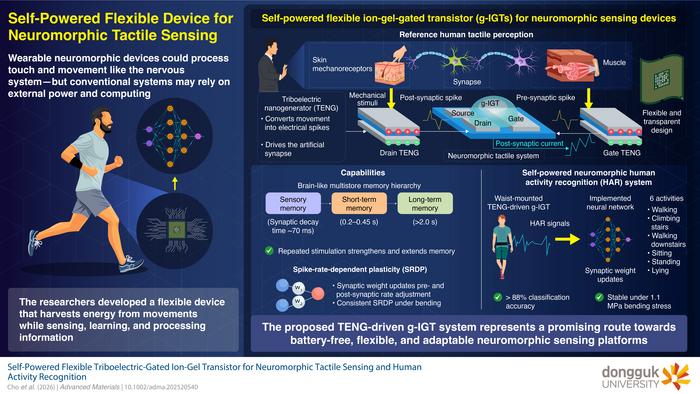
The proposed TENG-driven g-IGT is a flexible, self-powered neuromorphic device capable of reproducing multiple memory states and spike-rate-dependent learning Neuromorphic devices, which are designed to emulate aspects of biological neural networks, are promising candidates for developing low-power and intelligent sensing technologies, including wearable applications. Among the device architectures explored for neuromorphic computing, graphene-channel ion-gel-gated transistors (g-IGTs) are...
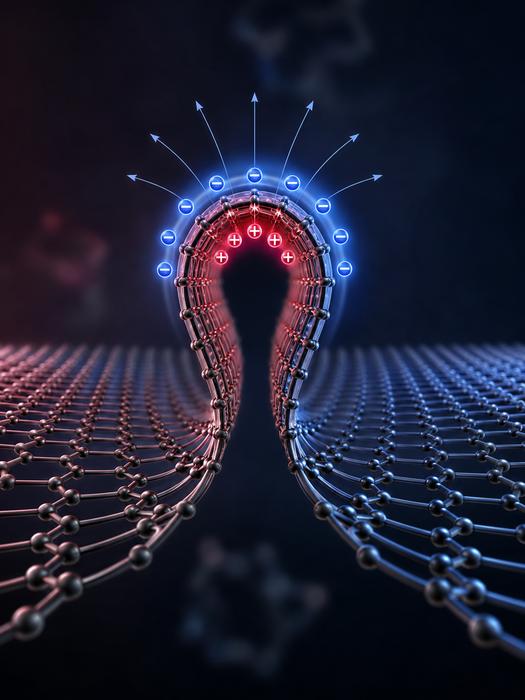
Rice University researchers have shown that sub-nanometer wrinkles in graphene generate flexoelectric charge separation, reshaping local electrical behavior through curvature alone. Extreme bending produces polarization far stronger than in larger systems and may enable geometry-controlled electronics without chemical doping. Published in Advanced Materials.
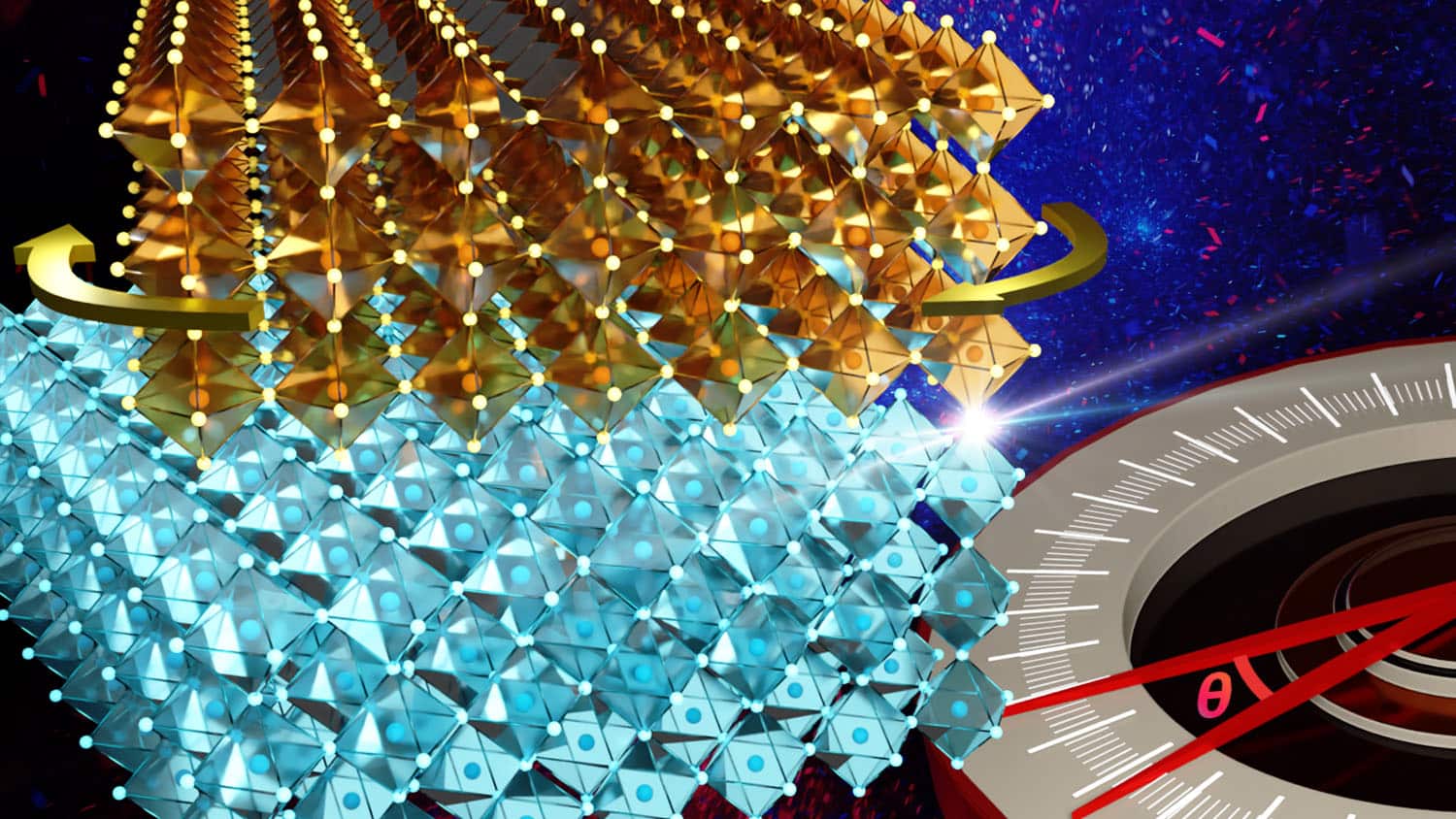
Researchers at NC State have extended twistronics beyond van der Waals materials into strongly bonded crystalline oxides. By stacking sodium niobate membranes with twist angles controlled down to 0.1 degrees, and confirming results via synchrotron X-ray diffraction, the team found interlayer bonds distort the atomic lattice, shifting phase structure and domain configuration. The technique works at near-millimeter scale, far larger than typical twistronic devices, marking a real step toward pract
