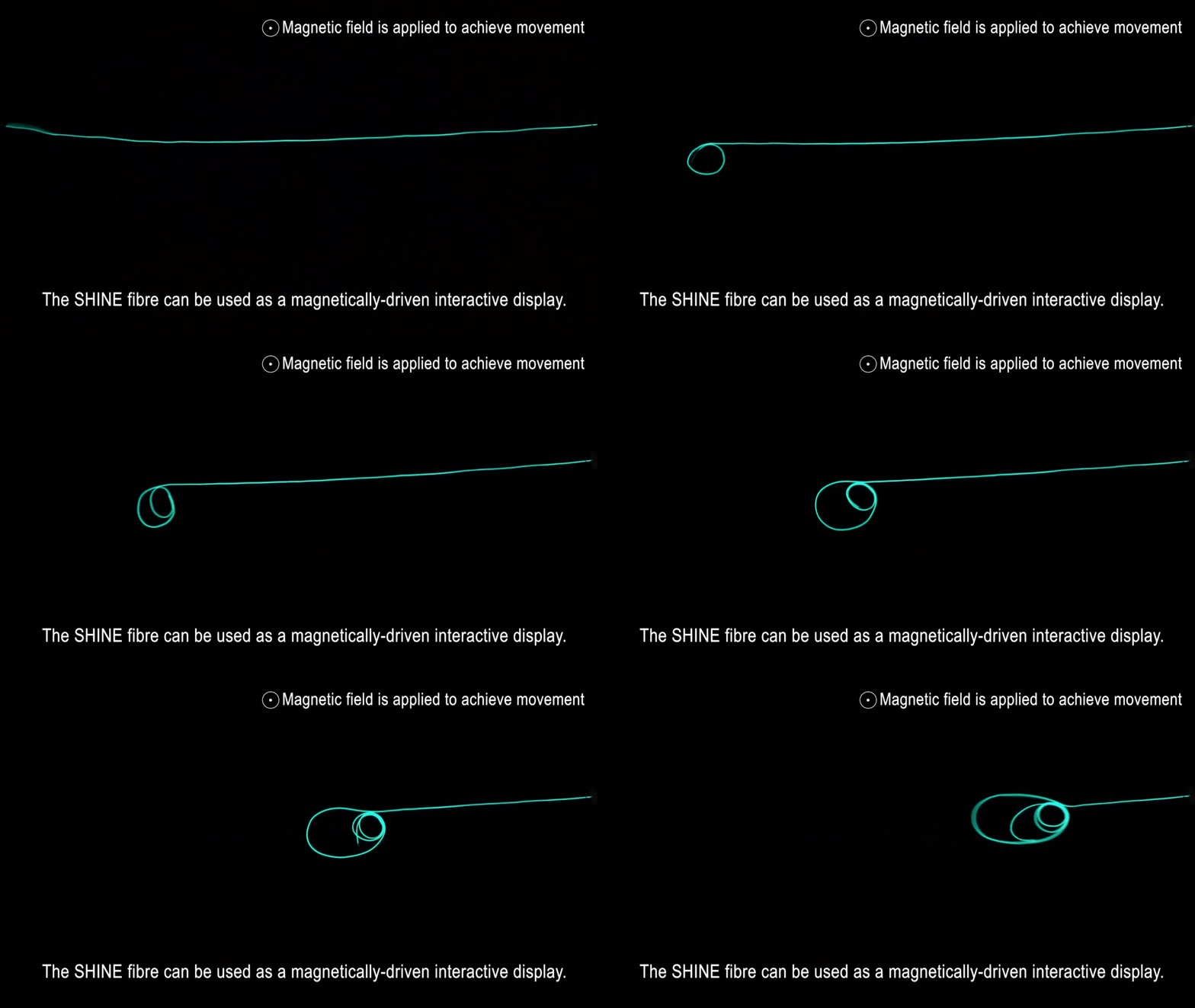
An innovative fibre with a range of exceptional features, including the ability to emit light, self-repair when damaged, and respond to magnetic fields could open up new possibilities in fields such as robotics, fashion, and wearable technology.
The SHINE fibre – short for Scalable Hydrogel-clad Ionotronic Nickel-core Electroluminescent fibre – has been developed by an interdisciplinary team led by Associate Professor Benjamin Tee (Materials Science and Engineering). It is designed to be both flexible and durable, but also highly visible even in brightly lit spaces and can be wirelessly powered.
“Most digital information today is transmitted largely through light-emissive devices,” said Assoc Prof Tee. “We are very interested in developing sustainable materials that can emit light and explore new form factors, such as fibres, that could extend application scenarios, for example, smart textiles. One way to engineer sustainable light-emitting devices is to make them self-healable, just like biological tissues such as skin.”
The team’s research, conducted in collaboration with the Institute for Health Innovation & Technology (iHealthtech) at NUS, was published in Nature Communications.
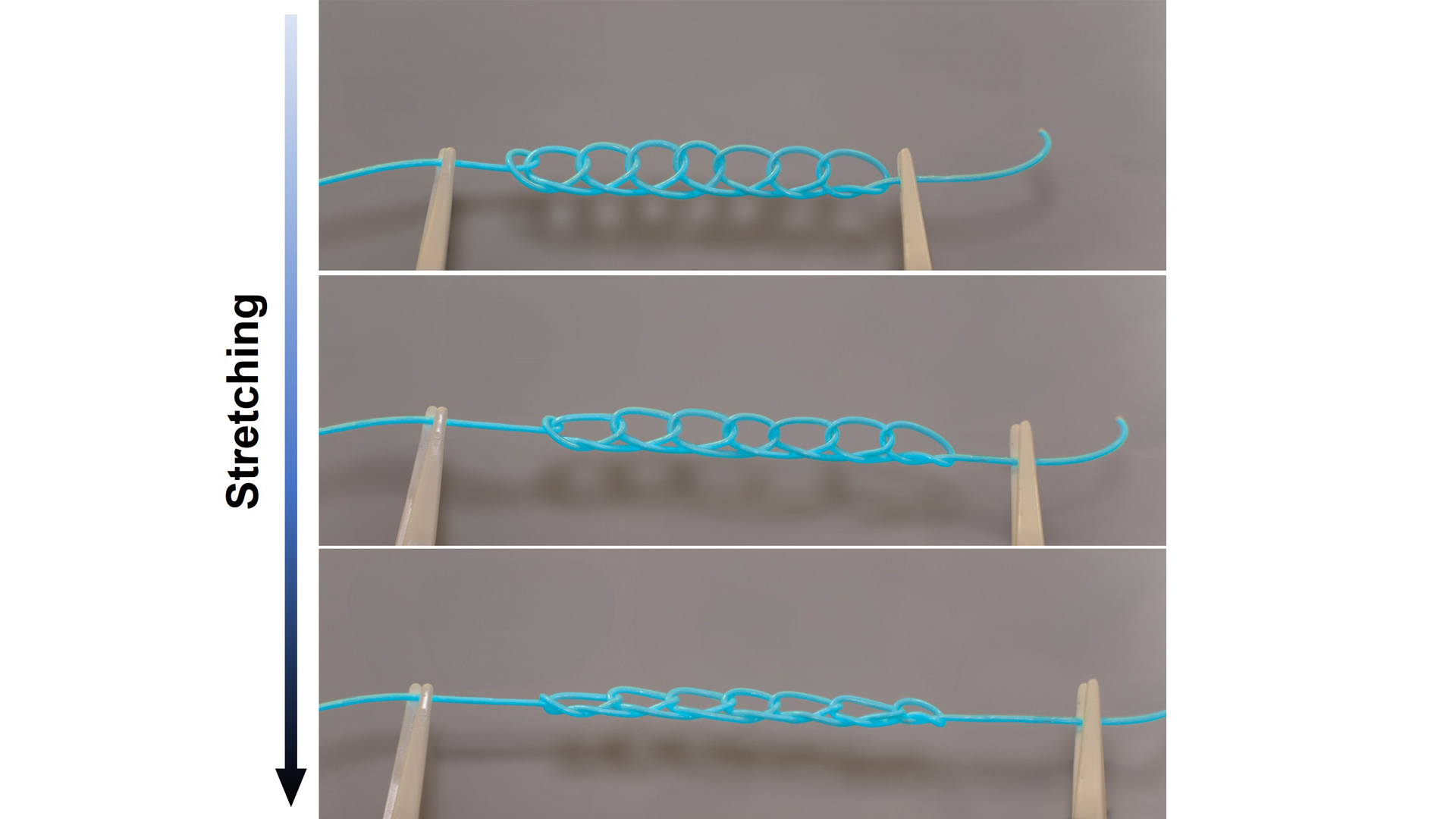
Multifunctional and durable
The SHINE fibres are made using a unique combination of materials: a nickel core as a magnetically responsive electrode, a light-emitting zinc sulphide layer, and a transparent hydrogel cladding that doubles as a transparent electrode. The result is a fibre that’s not only functional but also highly durable, retaining its properties even after being stored in open air for nearly a year.
When the fibre is damaged, it can self-repair through a gentle heating process, followed by reabsorbing moisture from the air under ambient conditions, recovering almost all of its original brightness. This reusability makes the fibres more sustainable than traditional light-emitting fibres.
With a record brightness of 1068 cd/m²—more than double the minimum needed for visibility in well-lit spaces—these fibres offer significant advantages over existing alternatives. They can also be controlled magnetically, allowing them to move in tight spaces and perform complex motions, making them ideal for applications in robotics.
Smart textiles and beyond
The SHINE fibres can be woven into smart textiles, creating wearable technology that emits light and self-heals after damage. This makes them a practical choice for wearable tech, soft robotics, and interactive displays.
The SHINE fibre also features magnetic actuation enabled by its nickel core. This property allows the fibre to be manipulated with external magnetic fields. The fibre’s magnetic properties also enable new applications for human-robot interaction, allowing for responsive and intuitive designs.
“This is an interesting property as it enables applications like light-emitting soft robotic fibres capable of manoeuvring tight spaces, performing complicated motions and signalling optically in real-time,” said Dr Fu Xuemei, the first author of the research paper.
Next steps
The research team is now working on refining the precision of the fibre’s magnetic actuation to support more dexterous robotic applications. They are also exploring the possibility of weaving sensing capabilities – such as the ability to detect temperature and humidity – into light-emitting textiles made entirely from SHINE fibres.
Reference
Self-healing actuatable electroluminescent fibres
Xuemei Fu, Guanxiang Wan, Hongchen Guo, Han-Joon Kim, Zijie Yang, Yu Jun Tan, John S. Ho & Benjamin C. K. Tee
https://www.nature.com/articles/s41467-024-53955-2
National University of Singapore
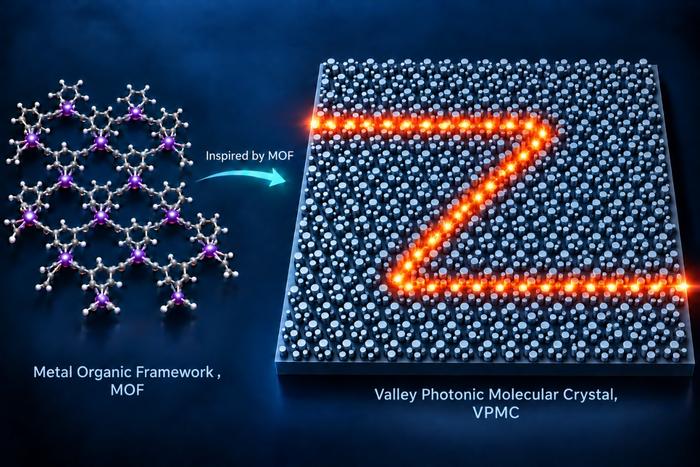
Inspired by Metal-Organic Framework based topological insulators, researchers at Tsinghua University proposed valley photonic molecular crystal (VPMC) and investigated the impact of molecular rotation on the valley-topological properties of VPMC. Credit: Tsinghua University/Xue Feng A research team led by Yidong Huang at Tsinghua University, including Xue Feng and Yongzhuo Li, has developed valley photonic molecular crystals (VPMCs) on a silicon platform. Combining theoretical modeling,...
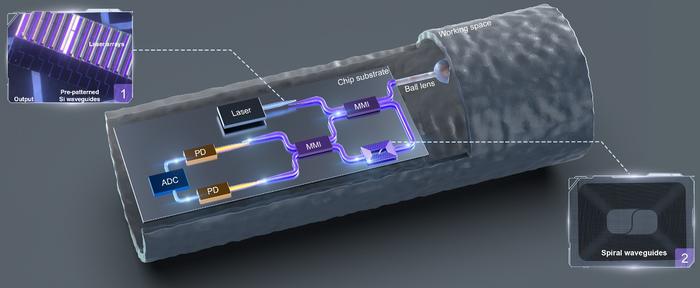
The system integrates a III-V semiconductor light source, SiN-based interferometers, Si-Ge photodetectors (PDs), and an integrated ball-lens microprobe, thereby combining the distinct advantages of multiple photonic integration platforms. The insets illustrate complementary technologies that can be incorporated to realize a miniaturized, fully integrated OCT system. Abbreviations: ADC, analog-to-digital converter. Inset 1: Foundry-scalable embedded III-V lasers on silicon-on-insulator (SOI)...

From left to right: Three photons with different quantum states enter an interferometer with three beam splitters. At each beam splitter, they can take different paths at the same time in superposition. The researchers then measured how often the three photons ended up together at the same output. Counterintuitively, it is possible to make the photons more similar to each other and at the same make them less likely to “bunch” together. AI-generated illustration, by Leonardo Novo. We usually...
