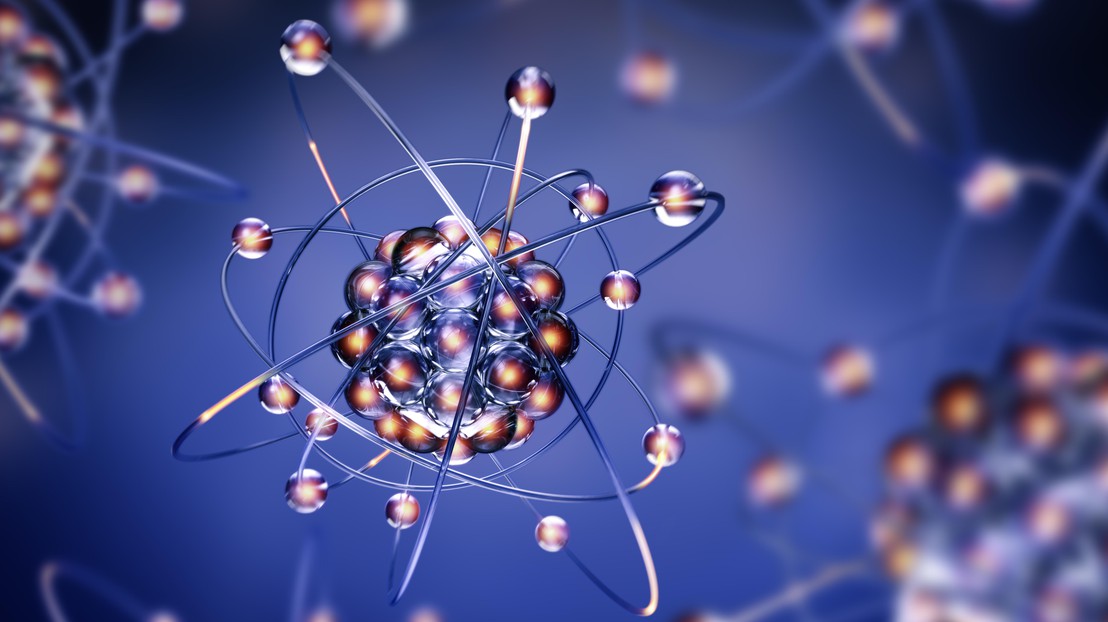
Physicists at EPFL have developed a formulation to solve the longstanding problem of electron self-interaction when studying polarons – quasiparticles produced by electron-phonon interactions in materials. The work can lead to unprecedented calculations of polarons in large systems, systematic studies of large sets of materials, and molecular dynamics evolving over long time periods.
One of the many peculiarities of quantum mechanics is that particles can also be described as waves. A common example is the photon, the particle associated with light.
In ordered structures, known as crystals, electrons can be seen and described as waves that spread across the entire system – a rather harmonious picture. As electrons move through the crystal, ions – atoms carrying a negative or positive charge — are periodically arranged in space.
Now, if we were to add an extra electron to the crystal, its negative charge could make the ions around it move away from their equilibrium positions. The electron charge would localize in space and couple to the surrounding structural – “lattice” – distortions of the crystal, giving rise to a new particle known as a polaron.
“Technically, a polaron is a quasi-particle, made up of an electron “dressed” by its self-induced phonons, which represent the quantized vibrations of the crystal,” says Stefano Falletta at EPFL’s School of Basic Sciences. He continues: “The stability of polarons arises from a competition between two energy contributions: the gain due to charge localization, and the cost due to lattice distortions. When the polaron destabilizes, the extra electron delocalizes over the entire system, while the ions restore their equilibrium positions.”
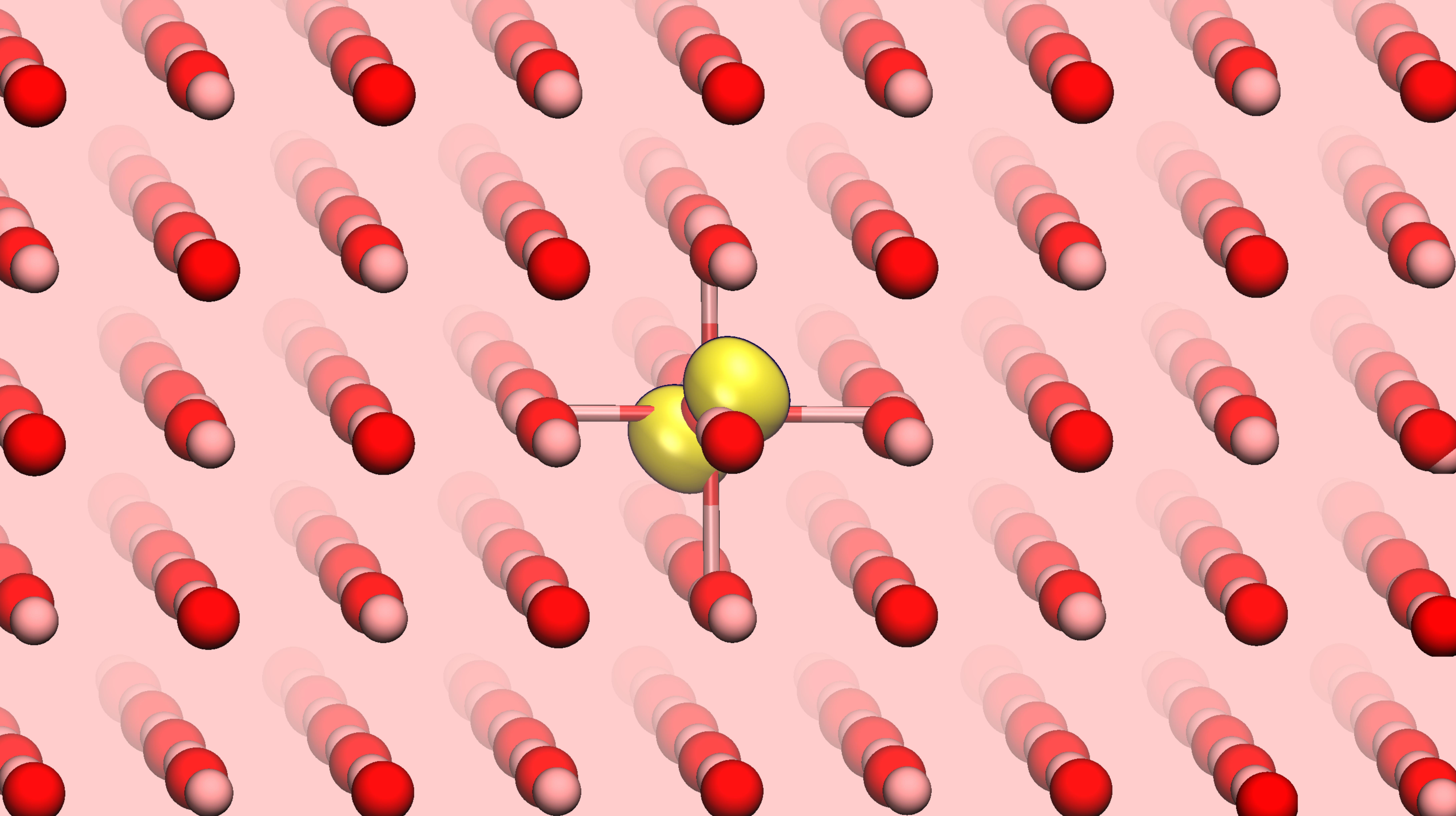
Working with Professor Alfredo Pasquarello at EPFL, they have published two papers in Physical Review Letters and Physical Review B describing a new approach for solving a major shortcoming of a well-established theory that physicists use to study the interactions of electrons in materials. The method is called density functional theory or DFT, and is used in physics, chemistry, and materials science to study the electronic structure of many-body systems like atoms and molecules.
DFT is a powerful tool for performing ab-initio calculations of materials, by simplified treatment of the electron interactions. However, DFT is susceptible to spurious interactions of the electron with its own self – what physicists refer to as the “self-interaction problem”. This self-interaction is one of the greatest limitations of DFT, often leading to incorrect description of polarons, which are often destabilized.
“In our work, we introduce a theoretical formulation for the electron self-interaction that solves the problem of polaron localization in density functional theory,” says Falletta. “This gives access to accurate polaron stabilities within a computationally-efficient scheme. Our study paves the way to unprecedented calculations of polarons in large systems, in systematic studies involving large sets of materials, or in molecular dynamics evolving over long time periods.”
References
Many-Body Self-Interaction and Polarons
Stefano Falletta and Alfredo Pasquarello
https://journals.aps.org/prl/abstract/10.1103/PhysRevLett.129.126401
Polarons free from many-body self-interaction in density functional theory
Stefano Falletta and Alfredo Pasquarello
https://journals.aps.org/prb/abstract/10.1103/PhysRevB.106.125119
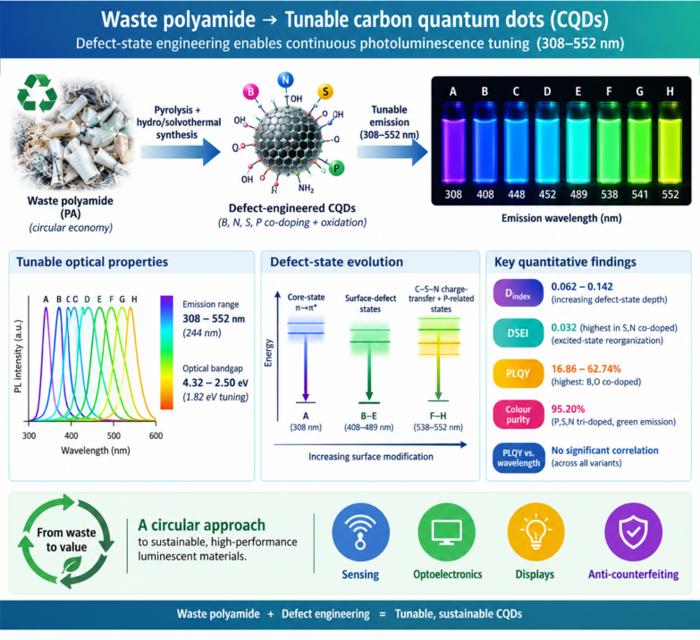
Waste polyamide-derived CQDs show continuous photoluminescence tuning from 308 to 552 nm through sequential defect-state engineering, with optical transition energies decreasing from 4.32 to 2.50 eV. @Christian Ebere Enyoh from Saitama University Carbon quantum dots (CQDs) are fluorescent carbon nanomaterials with potential applications in sensing, optoelectronics, displays, anti-counterfeiting, and environmental technologies. Their optical properties can be adjusted by modifying the carbon...
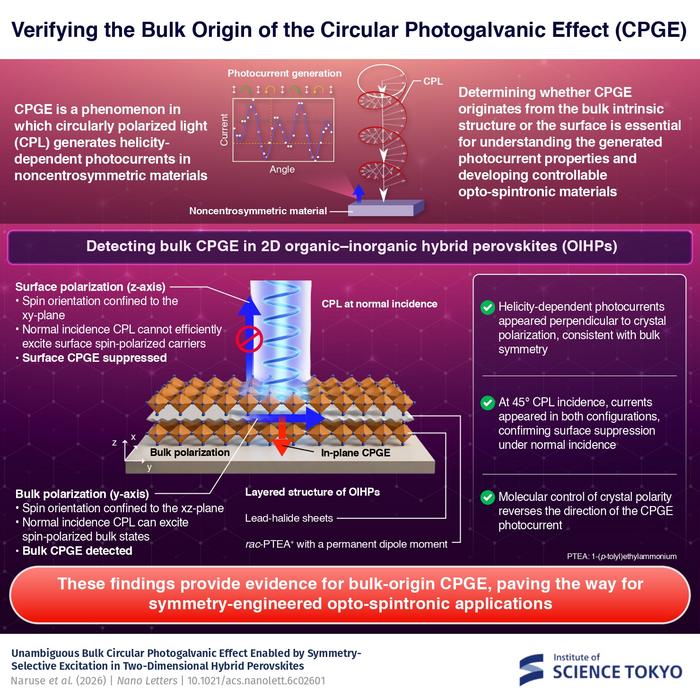
The researchers used circularly polarized light at normal incidence and found that helicity-dependent photocurrents appeared perpendicular to the crystal’s polarization but vanished when measured parallel to it, supporting a bulk origin of CPGE. @Institute of Science Tokyo The circular photogalvanic effect (CPGE), a phenomenon that generates helicity-dependent photocurrents in noncentrosymmetric materials, can originate purely from a crystal's internal structure without contribution from the...
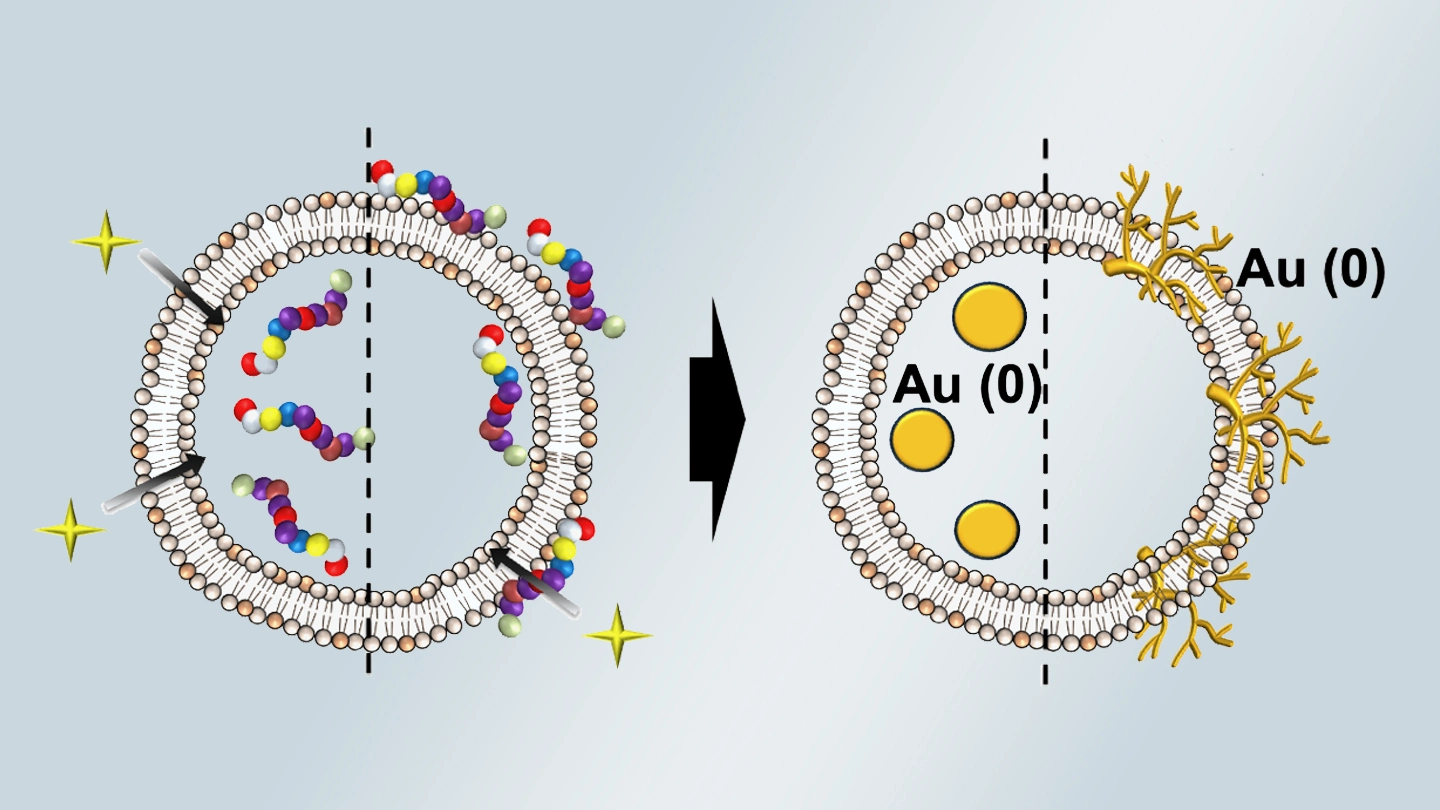
Summary of gold nanoparticle growth programming in liposome based on localization of biomineralization peptide The position of biomineralization peptides within liposomes can influence how gold nanoparticles grow, reports a research team from Institute of Science Tokyo. Peptides localized at the membrane interface promote branched structures, while those confined to the liposome interior favor spherical nanoparticles. The findings offer a new strategy for controlling nanoscale reaction...
