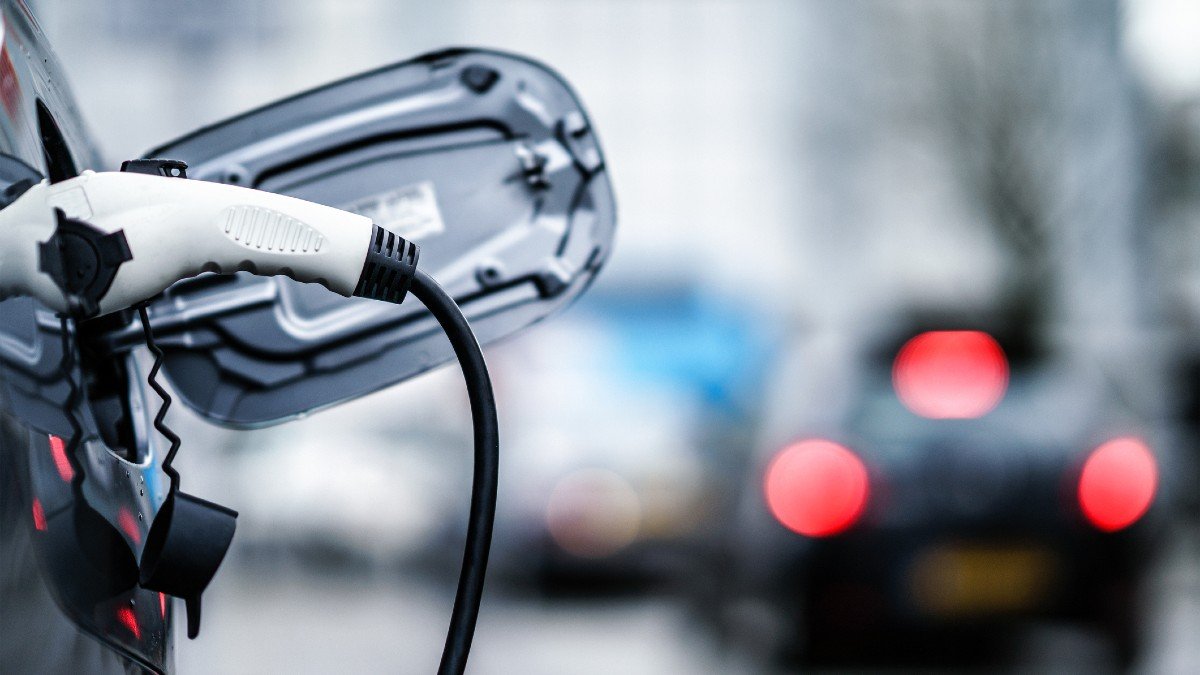
In a paper published by the journal Energy and Environmental Materials, researchers from Surrey's Advanced Technology Institute (ATI) revealed their new technology which has the potential to revolutionise energy use in electric vehicles and reduce renewable based energy loss in the national grid. The team also believe their technology can help push forward the advancement of wind, wave and solar energy by smoothing out the intermittent nature of the energy sources.
The ATI's super-capacitor technology is based on a material called Polyaniline (PANI), which stores energy through a mechanism known as "pseudocapacitance." This cheap polymer material is conductive and can be used as the electrode in a super-capacitor device. The electrode stores charge by trapping ions within the electrode. It does this by exchanging electrons with the ion, which "dopes" the material.
In their paper, the team detail how they developed a new three-layer composite using carbon nanotubes, PANI, and hydrothermal carbon that demonstrates remarkable rate-capability at high energy densities, independent of the power use.
Ash Stott, lead scientist on the project and Ph.D student from the University of Surrey, said: "The future of global energy will depend on consumers and industry using and generating energy more efficiently and super-capacitors have already been proven to be one of the leading technologies for intermittent storage as well as high-power delivery. Our work, has established a baseline for high energy devices that also operate at high power, effectively widening the range of potential applications."
Professor Ravi Silva, Director of the ATI at the University of Surrey, said: "This highly ambitious and impactful work has the potential to change the way we all live our lives - and it might be what is needed to make the change for an efficient and fast charging solution of harvested energy from the environment. We see this having an impact in all sorts of industries - from all wearable technology to mobile Internet of Things applications that will launch the 5G revolution. The potential for our super-capacitor is limitless."
Exceptional rate‐capability from carbon encapsulated polyaniline supercapacitor electrodes
Ash Stott, Mehmet O. Tas, Elaine Y. Matsubara, Mateus G. Masteghin, Jose M. Rosolen, Radu A. Sporea, S. Ravi P. Silva
Energy & Environmental Materials (2020)
DOI: 10.1002/eem2.12083
Contact information:
Prof. Ravi Silva
Director, Advanced Technology Institute (ATI) and Head of NanoElectronics Centre
S.Silva@surrey.ac.uk
Phone: +44 (0)1483 689825
University of Surrey
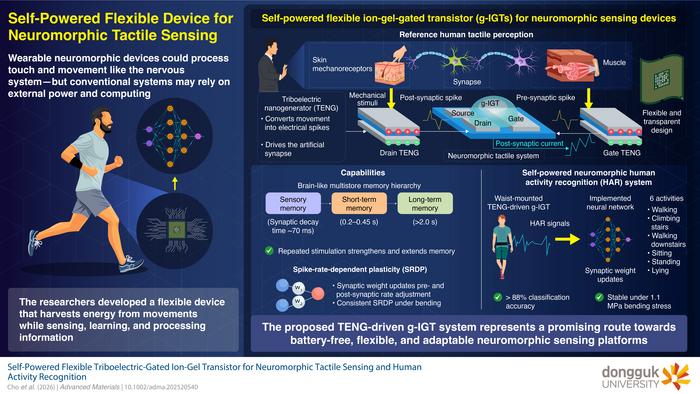
The proposed TENG-driven g-IGT is a flexible, self-powered neuromorphic device capable of reproducing multiple memory states and spike-rate-dependent learning Neuromorphic devices, which are designed to emulate aspects of biological neural networks, are promising candidates for developing low-power and intelligent sensing technologies, including wearable applications. Among the device architectures explored for neuromorphic computing, graphene-channel ion-gel-gated transistors (g-IGTs) are...
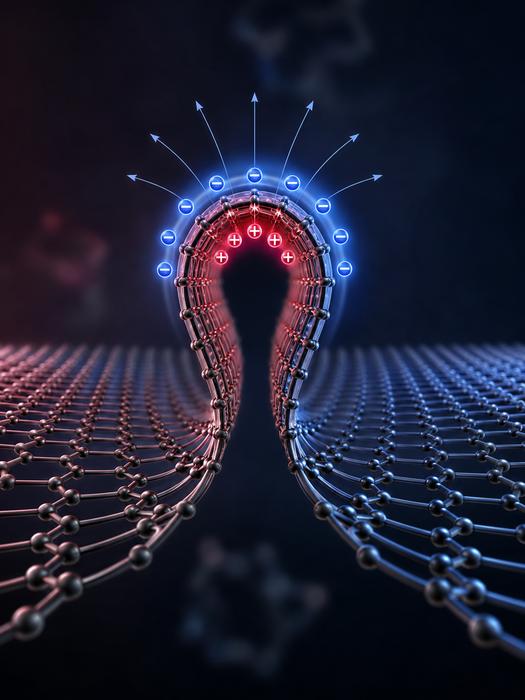
Rice University researchers have shown that sub-nanometer wrinkles in graphene generate flexoelectric charge separation, reshaping local electrical behavior through curvature alone. Extreme bending produces polarization far stronger than in larger systems and may enable geometry-controlled electronics without chemical doping. Published in Advanced Materials.
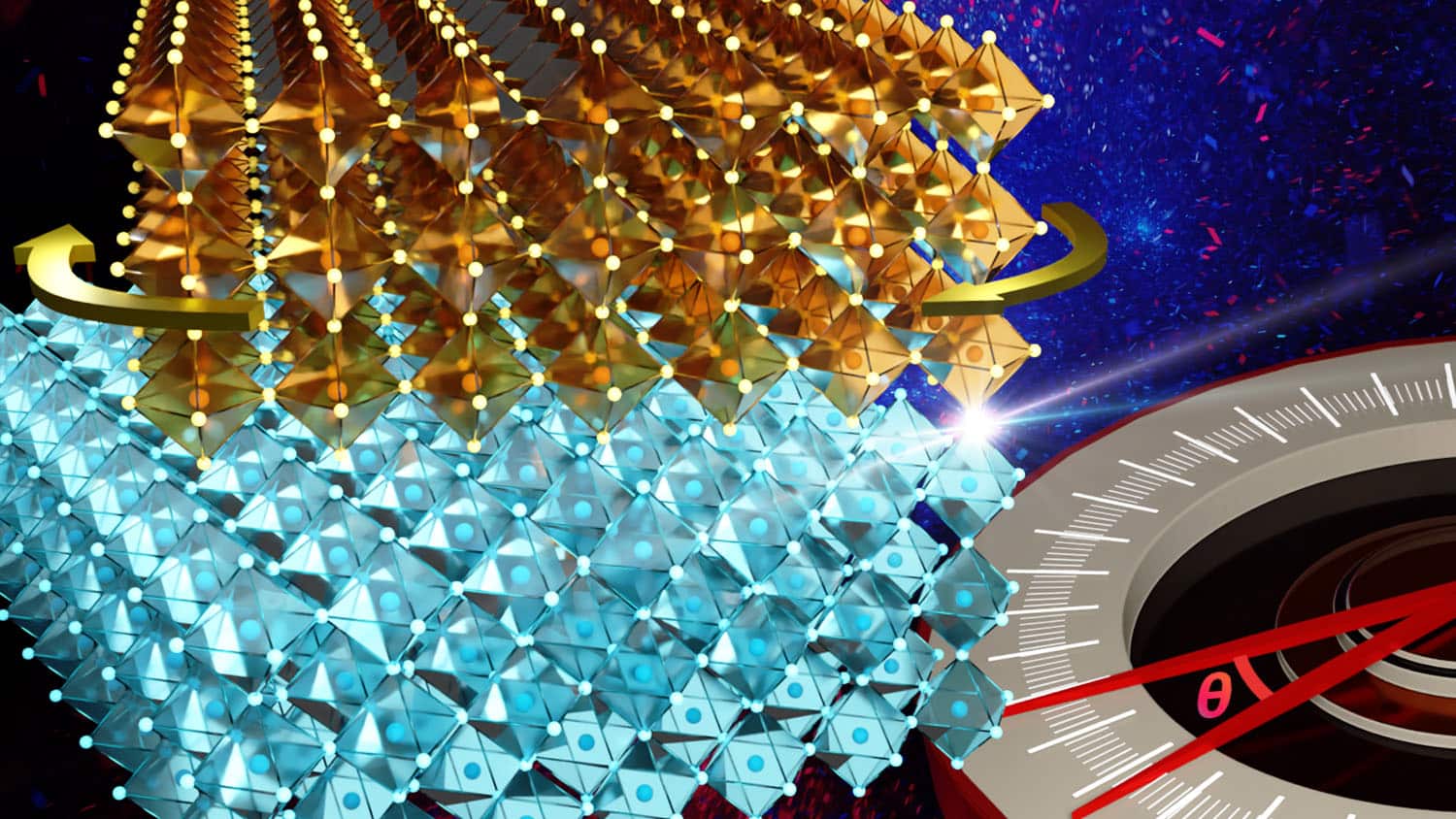
Researchers at NC State have extended twistronics beyond van der Waals materials into strongly bonded crystalline oxides. By stacking sodium niobate membranes with twist angles controlled down to 0.1 degrees, and confirming results via synchrotron X-ray diffraction, the team found interlayer bonds distort the atomic lattice, shifting phase structure and domain configuration. The technique works at near-millimeter scale, far larger than typical twistronic devices, marking a real step toward pract
