Helmholtz-Zentrum Dresden-Rossendorf (HZDR)
Researchers at the Helmholtz-Zentrum Dresden-Rossendorf (HZDR) have uncovered previously unobserved oscillation states – so-called Floquet states – in tiny magnetic vortices. Unlike earlier experiments, which required energy-intensive laser pulses to create such states, the team in Dresden discovered that a subtle excitation with magnetic waves is sufficient. This finding not only raises fundamental questions in basic physics but could also eventually serve as a universal adapter bridging electronics, spintronics, and quantum devices. The team reports its results in the scientific journal Science.
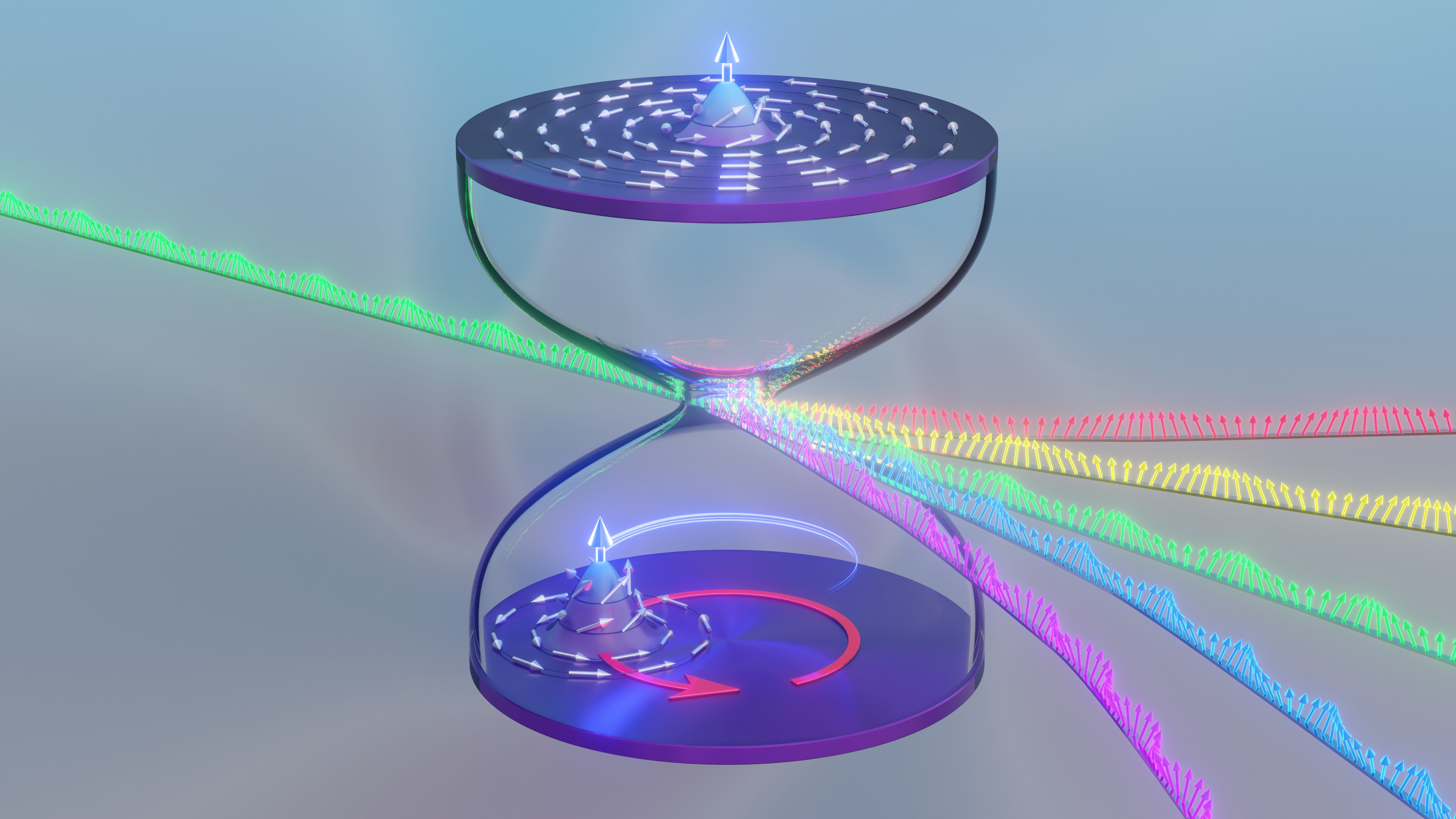
Magnetic vortices can form in ultrathin, micron-sized disks of magnetic materials such as nickel–iron. Within these vortices, the elementary magnetic moments – tiny compass needles – arrange themselves in circular patterns. When externally perturbed, waves can propagate through the system in a manner reminiscent of a stadium-wide “wave.” Each compass needle tilts slightly and transfers its impulse to the next. Scientists refer to these collective wave excitations as magnons.
“These magnons can transmit information through a magnet without the need for charge transport,” explains project leader Dr. Helmut Schultheiß from the Institute of Ion Beam Physics and Materials Research at HZDR. “This capability makes them highly attractive for research into next-generation computing technologies.”
Some time ago, his team began experimenting with particularly small magnetic disks, reducing their diameters from several micrometers down to a few hundred nanometers. Their initial goal was to assess how differently sized disks might be used for neuromorphic computing, a novel computational paradigm. Yet while analyzing the data, the researchers noticed that some disks produced not just a single resonance line in the spectrum, but rather an entire series of finely split lines – a veritable frequency comb. “At first we assumed it was a measurement artifact or some kind of interference,” recalls Schultheiß. “But when we repeated the experiment, the effect reappeared. That is when it became clear we were looking at something genuinely new.”
Rotating vortex core
The key to the phenomenon lay in the mathematical framework developed by the French mathematician Gaston Floquet. As early as the late 19th century, he showed that systems subjected to periodic driving can develop entirely new states: when nudged rhythmically, additional oscillations arise that do not exist in equilibrium. Until now, however, the generation of such Floquet states has typically required strong laser pulses and significant energy input. The Dresden team discovered that in magnetic vortices, Floquet states can self-emerge – provided the magnons are excited strongly enough. In that case, they transfer part of their energy to the vortex core, causing it to perform a minute circular motion around its center. This subtle movement is sufficient to modulate the magnetic state rhythmically.
Experimentally, the effect manifests as a frequency comb: instead of a single sharp resonance, an entire bundle of regularly spaced lines appears – much like a pure tone splitting into a series of harmonic overtones. “We were stunned that such a minute core motion was enough to transform the familiar magnon spectrum into a whole array of new states,” says Schultheiß.
With microwatts to frequency combs
What makes this so remarkable is the efficiency: the process can be triggered with extremely low energy. Where other setups demand high-power laser pulses, here only microwatt-level inputs suffice – a tiny fraction of the power consumed by a smartphone in standby mode. This opens up intriguing possibilities. For instance, such frequency combs could help synchronize otherwise disparate systems – linking ultrafast terahertz phenomena with conventional electronics or quantum components. “We call it the universal adapter,” Schultheiß explains. “Just as a USB adapter allows devices with different connectors to work together, Floquet magnons could bridge frequencies that would otherwise remain incompatible.”
Looking ahead, the team already has plans to explore whether this principle extends to other magnetic structures. The effect may also prove valuable for developing new computing architectures, since it could facilitate coupling between magnonic signals, electronic circuits, and quantum systems. “On the one hand, our discovery opens new avenues for addressing fundamental questions in magnetism,” Schultheiß emphasizes. “On the other hand, it could eventually serve as a valuable tool to interconnect the realms of electronics, spintronics, and quantum information technology.”
The Labmule program developed at HZDR, which is offered as a lab automation tool, was used for all measurements of magnetic vortices and, for evaluating the data from various measuring devices.
Reference
Self-induced Floquet magnons in magnetic vortices
Christopher Heins, Lukas Körber, Joo-Von Kim, Thibaut Devolder, Johan H. Mentink, Attila Kákay, Jürgen Fassbender, Katrin Schultheiss, Helmut Schultheiss
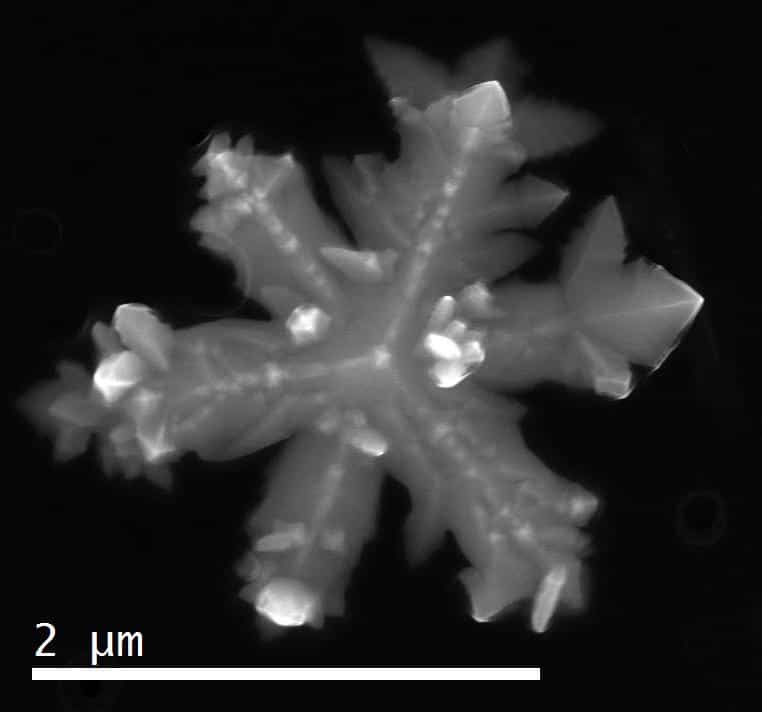
Whether they’re tickling your nose, hugging your eyelashes or melting on your tongue, few winter wonders are as fascinating as snowflakes. The freezing-cold crystals are known for their one-of-a-kind appearances, which can be attributed to the multiple scientific processes that converge during their growth. Water molecules solidify and stick together in the glacial air. As they collect, they craft complex hexagonal formations often too small for the naked eye. No two snowflakes are ever quite...
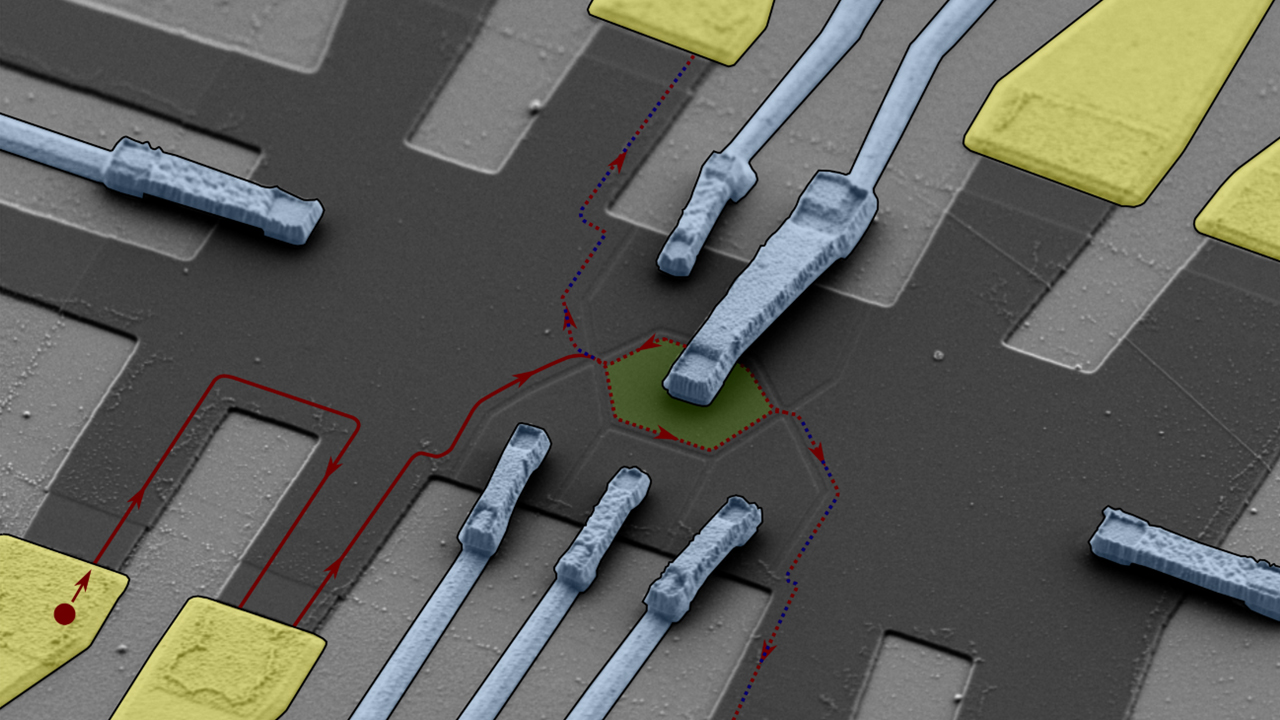
In the future, quantum computers are anticipated to solve problems once thought unsolvable, from predicting the course of chemical reactions to producing highly reliable weather forecasts. For now, however, they remain extremely sensitive to environmental disturbances and prone to information loss. A new study from the lab of Dr. Yuval Ronen at the Weizmann Institute of Science, published today in Nature, presents fresh evidence for the existence of non-Abelian anyons – exotic particles consi...
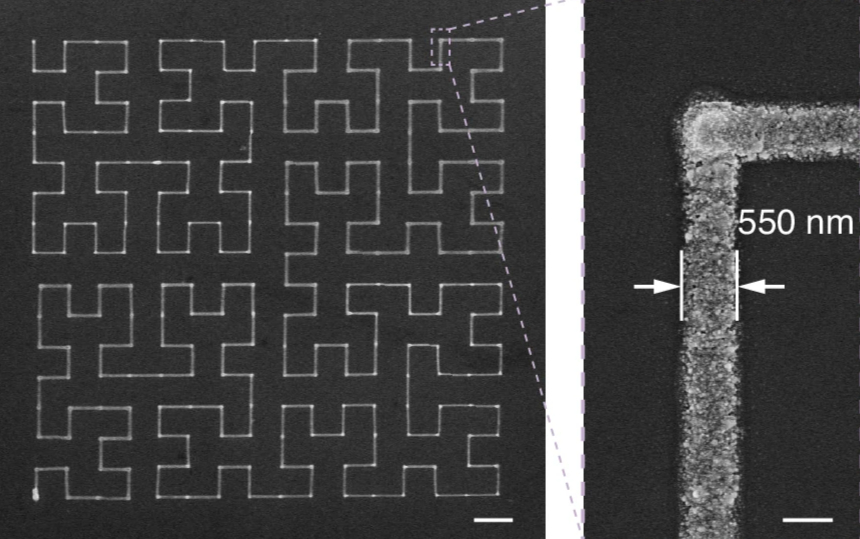
A research team led by Professor Leo Tianshuo Zhao from the Department of Electrical and Electronic Engineering at the Faculty of Engineering, University of Hong Kong (HKU), has developed the world’s smallest fully printed infrared photodetectors, which are an innovative room-temperature nano-printing platform that overcomes the limitations of traditional silicon-based technology. Near-infrared (NIR) technology is essential for applications such as autonomous systems, biomedical sensing, and...
This week in nanotech
$10.2M raised
2 funding rounds · 19 deals tracked
New products
 Nion-compatible In Situ STEM Holders for Electrical BiasingHummingbird Scientific Featured
 Ti-WCMBN Nanomaterialia Featured
 GHK-CuPeoples Peps
Market insights
Last 30 days: Quantum Technologies was the busiest vertical: 53 of 180 events (29%).
Money raised per month