École Polytechnique Fédérale de Lausanne (EPFL)
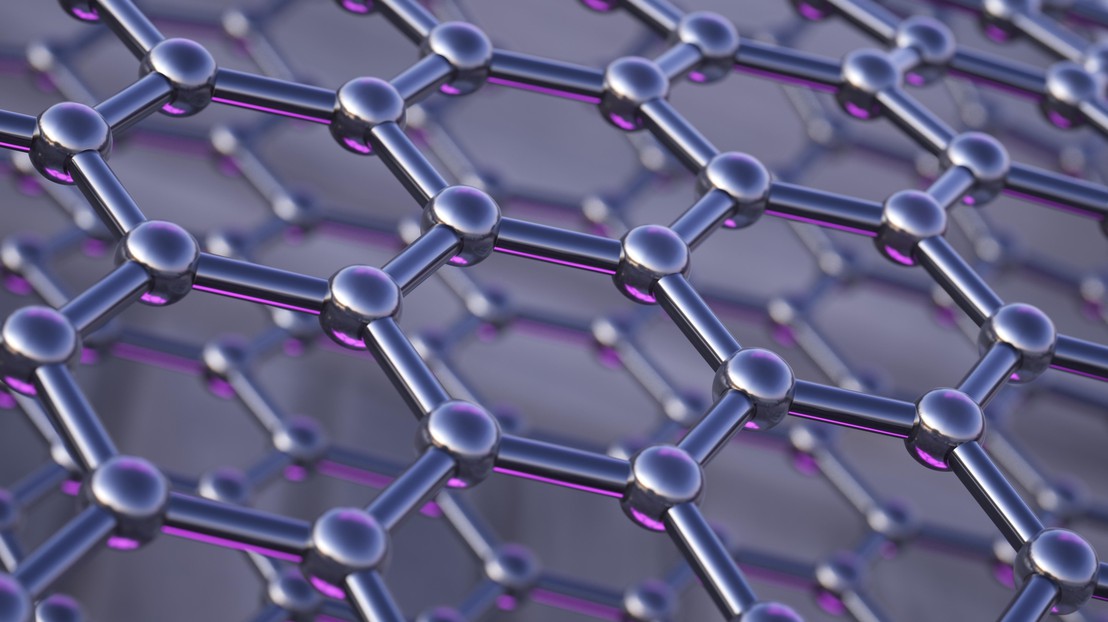
EPFL physicists and their collaborators have directly observed and controlled a rare double-dome pattern of superconductivity in twisted trilayer graphene, shedding light on how exotic quantum states emerge and interact in engineered materials.
Superconductivity is a phenomenon where certain materials can conduct electricity with zero resistance. Obviously, this has enormous technological advantages, which makes superconductivity one of the most intensely research fields in the world.
Double domes
But superconductivity is not straightforward. Take, for example, the double-dome effect. When scientists plot where superconductivity appears in material as they change how many electrons are in it, the material's superconducting regions sometimes look like two separate "domes" on a graph.
In other words, the material becomes superconducting, then stops, then becomes superconducting again as we keep changing its electron density.
The graphene connection
Double-dome superconductivity has been seen before in some complex materials, such as graphene. Graphene is essentially a sheet of carbon atoms just one atom thick linked together in a honeycomb pattern. Still, it has transformed the field of quantum materials research because it features some really strange effects.
For example, when we stack two graphene layers and twist them at specific angles, the electrons in the graphene behave in new and unexpected ways, creating quantum phases like magnetism, electrical insulation, and, of course, superconductivity.
But there is an even more complext structure of graphene that takes this further by adding a third layer, making the system even more complex and tunable: Magic-angle twisted trilayer graphene (MATTG). With MATTG, researchers can now observe and control a double-dome pattern of superconductivity that was previously only suspected in graphene systems.
Double-dome supercondictivity in twisted graphene
Now, a team led by Mitali Banerjee at EPFL, together with partners in Switzerland, the UK, and Japan, has shown that MATTG allows direct control of the double-dome superconductivity pattern. By carefully stacking the layers and adjusting the electric field, the researchers could fine-tune the system and track where superconductivity appeared or disappeared as they varied the number of electrons.
Their experiments, supported by theory, revealed that two distinct superconducting regions—the domes—show up as they gradually changed the electron count in MATTG. The work sheds light on how unconventional superconductivity can be created and controlled in 2D materials.
The researchers built devices consisting of three layers of graphene, stacked so the middle one is twisted by about 1.55 degrees relative to the others. They placed the stack between thin layers of insulating hexagonal boron nitride, then added electrodes and gates to precisely control the electron density and apply an electric “displacement field", which let the researchers adjust how electrons move in the material, making it possible to turn superconductivity on or off.
The scientists then measured how MATTG's resistance changed as they varied the electron density, magnetic field, and applied current at temperatures close to absolute zero (100 millikelvin). This allowed them to map out the regions where superconductivity appeared.
By tuning the displacement field, they could further tune the material's band structure (the set of rules that determines how electrons can move and behave inside the material), letting them control the emergence and disappearance of the double-dome pattern.
The team observed that superconductivity in twisted trilayer graphene does not form a single, smooth region but instead splits into two separate domes as the electron density is tuned. Between the domes, superconductivity is strongly suppressed, indicating a possible competition or change in the underlying pairing mechanism.
Each dome displayed unique features: one side showed a sharper and more sudden switch into the superconducting state, and the measurements showed a kind of “memory” in how the material responded to electrical current: how it reacted to increasing current wasn't the same as how it reacted to decreasing current. The other dome had a gentler, slower transition into superconductivity with no evidence of “memory”.
The researchers developed theoretical work (Hartree-Fock calculations) to interpret their experimental findings, showing that subtle changes in how the electrons arrange themselves, which are shaped by both interactions and the applied displacement field, determine where superconductivity is favored. The data point to different types of electron pairing in the two domes, possibly linked to changes in the electronic “order” of the system.
The study highlights MATTG as the first system where double-dome superconductivity can be directly controlled by an electric field. It offers a new way to study how unconventional superconductivity emerges and how it can be tuned, opening up possibilities for designing quantum devices or exploring new states of matter in engineered materials.
Reference
Gate-tunable double-dome superconductivity in twisted trilayer graphene
Zekang Zhou, Jin Jiang, Paritosh Karnatak, Ziwei Wang, Glenn Wagner, Kenji Watanabe, Takashi Taniguchi, Christian Schönenberger, S. A. Parameswaran, Steven H. Simon & Mitali Banerjee

Understanding what happens inside a material when it is hit by ultrashort light pulses is one of the great challenges of matter physics and modern photonics. A new study published in Nature Photonics and led by Politecnico di Milano reveals a hitherto neglected but essential aspect, precisely the contribution of virtual charges, charge carriers that exist only during interaction with light, but which profoundly influence the material’s response. The research, conducted in partnership with the...
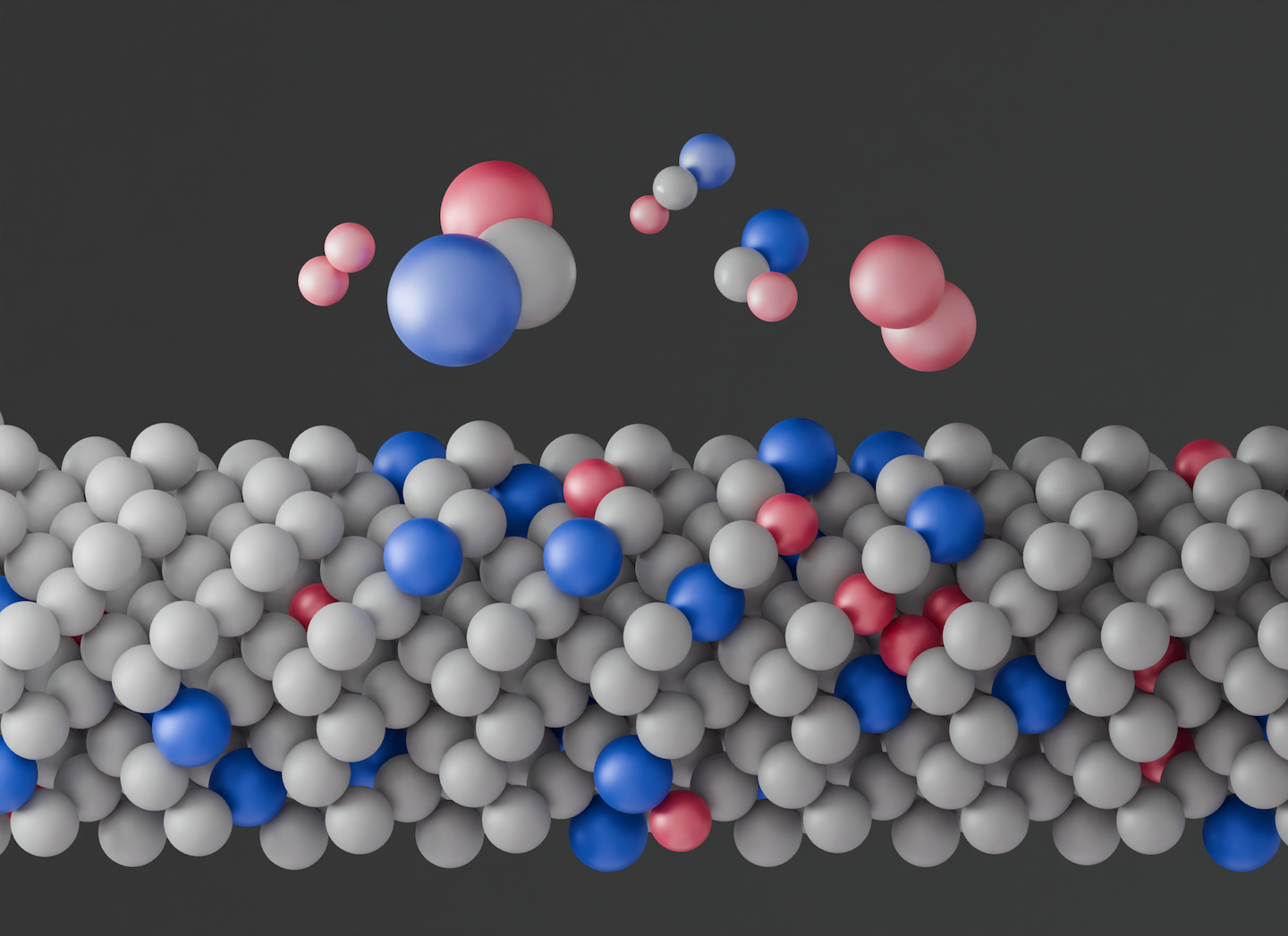
A team led by Lawrence Berkeley National Laboratory (Berkeley Lab) and George Washington University have confirmed that atoms in semiconductors will arrange themselves in distinctive localized patterns that change the material’s electronic behavior. The research, published today in Science, may provide a foundation for designing specialized semiconductors for quantum-computing and optoelectronic devices for defense technologies. On the atomic scale, semiconductors are crystals made of differe...
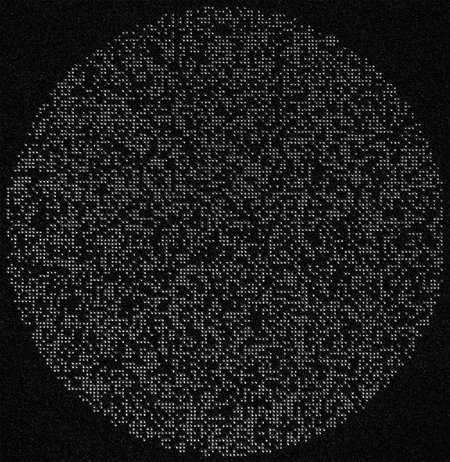
Quantum computers will need large numbers of qubits to tackle challenging problems in physics, chemistry, and beyond. Unlike classical bits, qubits can exist in two states at once—a phenomenon called superposition. This quirk of quantum physics gives quantum computers the potential to perform certain complex calculations better than their classical counterparts, but it also means the qubits are fragile. To compensate, researchers are building quantum computers with extra, redundant qubits to...
