Lawrence Livermore National Laboratory (LLNL)
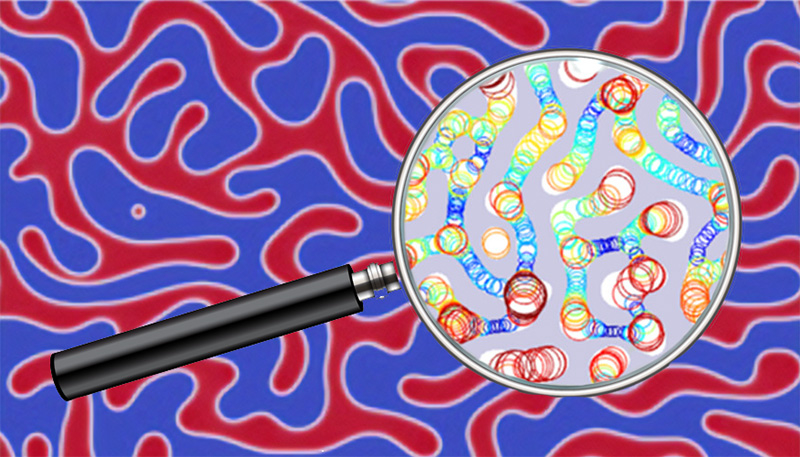
Determining the relationship between microstructure features and their properties is crucial for improving material performance and advancing the design of next-generation structural and functional materials. However, this task is inherently challenging.
To address the challenges, LLNL scientists developed an efficient and comprehensive computational framework to decipher implications of porous microstructures and their properties. The research appears in the journal ACS Applied Materials & Interfaces.
“We have developed an integrated computational framework which incorporates physics-based microstructure modeling, microstructure feature extraction, microstructure-aware effective property evaluation and machine-learning analysis tools,” said Longsheng Feng, LLNL scientist and lead author of the paper.
The team applied the framework to polymer-based porous materials as a representative model system and demonstrated its capability to explore how polymerization dynamics influence various general and local microstructure features like domain size and pore size distribution, and how these features impact transport properties.
“Our objective is to establish a framework capable of understanding not only the formation of microstructures using physics-based models and evaluating their effective properties, but also aims to discern which microstructure features dictate different properties and how they do so,” said Tae Wook Heo, LLNL scientist and co-author of the paper.
This approach offers a novel framework for assessing microstructure−property relationships in polymer-based porous materials, paving a way for the development of advanced materials.
“Understanding these relationships can guide the processing procedures to tailor specific microstructures to achieve desired properties of polymeric porous materials for various applications, such as membranes,” said Juergen Biener, LLNL scientist and co-author of the paper.
Reference
Integrated Framework to Model Microstructure Evolution and Decipher the Microstructure–Property Relationship in Polymeric Porous Materials
Longsheng Feng, Sijia Huang, Tae Wook Heo, and Juergen Biener
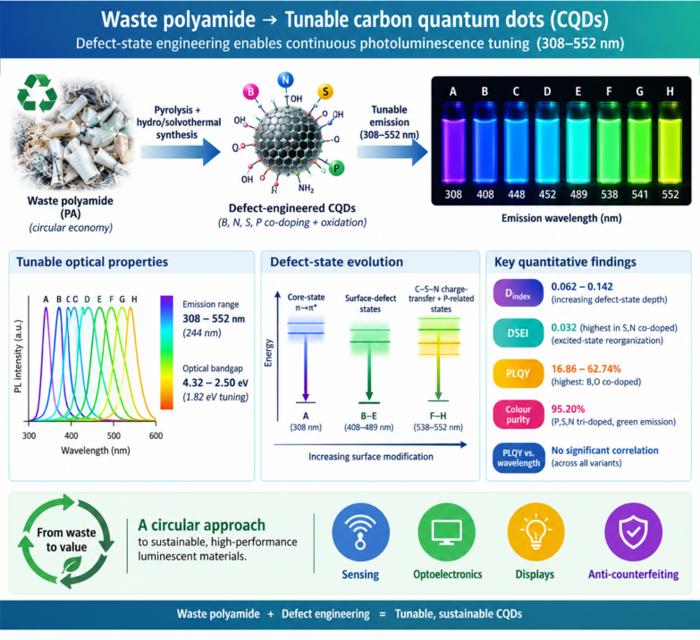
Waste polyamide-derived CQDs show continuous photoluminescence tuning from 308 to 552 nm through sequential defect-state engineering, with optical transition energies decreasing from 4.32 to 2.50 eV. @Christian Ebere Enyoh from Saitama University Carbon quantum dots (CQDs) are fluorescent carbon nanomaterials with potential applications in sensing, optoelectronics, displays, anti-counterfeiting, and environmental technologies. Their optical properties can be adjusted by modifying the carbon...
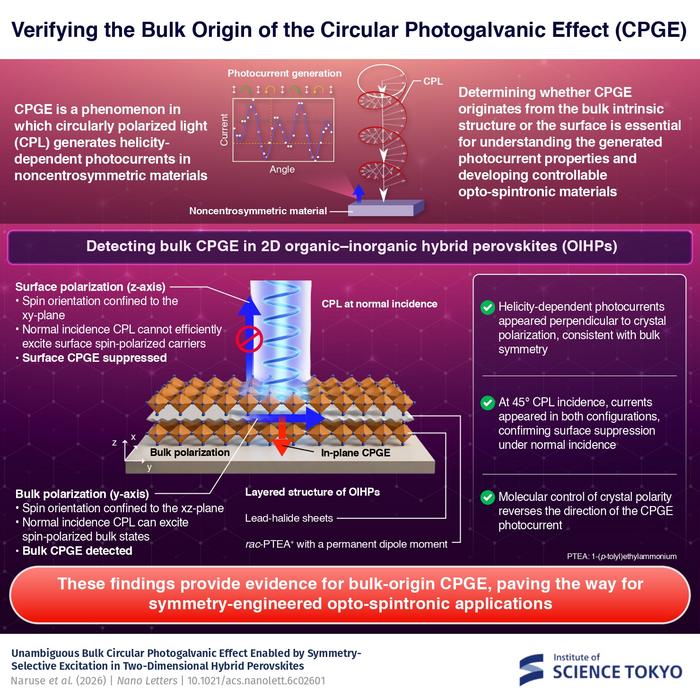
The researchers used circularly polarized light at normal incidence and found that helicity-dependent photocurrents appeared perpendicular to the crystal’s polarization but vanished when measured parallel to it, supporting a bulk origin of CPGE. @Institute of Science Tokyo The circular photogalvanic effect (CPGE), a phenomenon that generates helicity-dependent photocurrents in noncentrosymmetric materials, can originate purely from a crystal's internal structure without contribution from the...
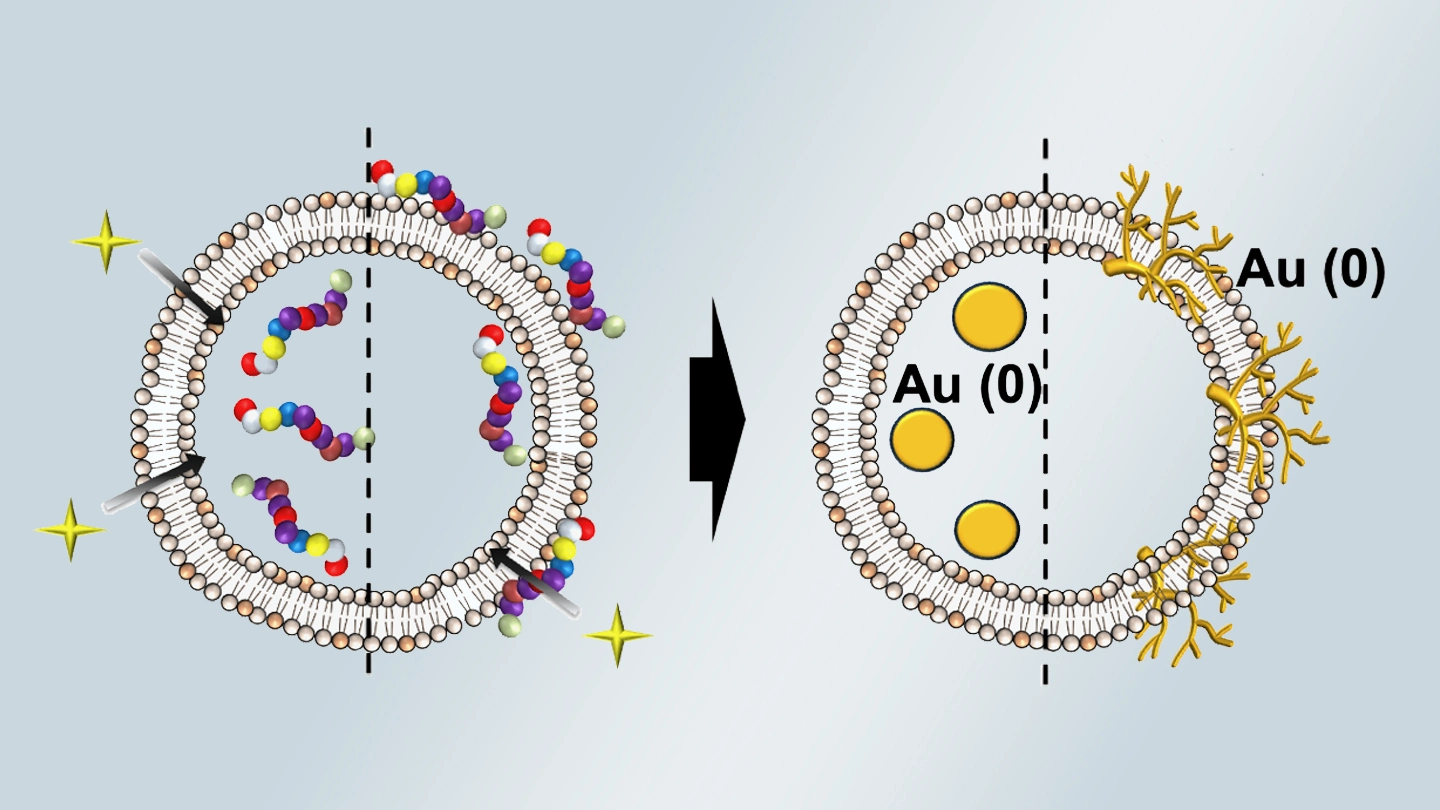
Summary of gold nanoparticle growth programming in liposome based on localization of biomineralization peptide The position of biomineralization peptides within liposomes can influence how gold nanoparticles grow, reports a research team from Institute of Science Tokyo. Peptides localized at the membrane interface promote branched structures, while those confined to the liposome interior favor spherical nanoparticles. The findings offer a new strategy for controlling nanoscale reaction...
