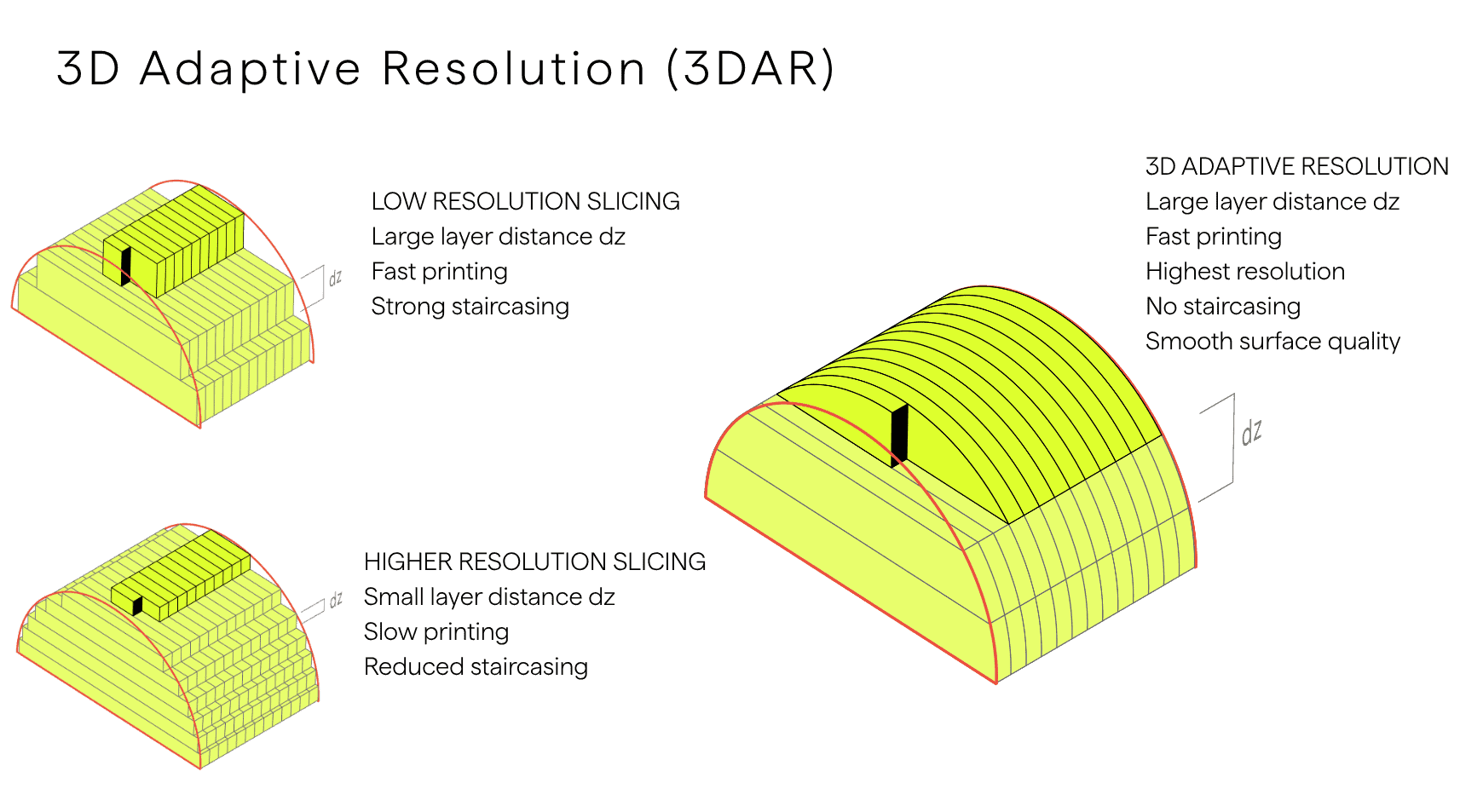
Vienna, 8 October 2026. UpNano GmbH (Vienna, Austria) has developed 3D Adaptive Resolution (3DAR) technology, which enables dynamic control of the printing voxel in all three spatial dimensions during 2-photon polymerisation (2PP) 3D printing. The company announced the new product as an addition to its existing Adaptive Resolution technology.
Adaptive Resolution has been one of UpNano's core technologies since the introduction of its NanoOne printing systems. It changes the dimensions of the voxel created at the laser focus according to the precision required, allowing a fine voxel for delicate structures and a larger one for rapidly filling bulk volumes. 3DAR now adds dynamic control over the voxel in all three spatial dimensions.
"3D Adaptive Resolution gives us dynamic control over the voxel in all three spatial dimensions," says Bernhard Küenburg, CEO of UpNano. "We can continuously adapt its shape to the geometry we want to create. This allows us to combine printing speed with the surface quality required particularly for optical and photonic applications."
UpNano has demonstrated surface roughness down to Sq 3 nm and shape accuracy below 20 nm. Spiral phase plates with a diameter of 125 µm can be fabricated in less than ten seconds, while aspheric microscopic lenses measuring just 7 µm can be printed within two to three seconds.
The first UpNano printers capable of 3DAR have been purchased by an Asian company, which has expressed strong interest in acquiring a significant number of additional systems. The technology is particularly suited to micro-optics, photonics packaging and semiconductor applications.
Source: UpNano news
JEDEC has set the first silicon photonics AI network reliability standard, according to the feed headline.
ZEISS has agreed to acquire Ceres Holographics, a Scottish maker of thin-film holographic optical elements for automotive windshield displays. Ceres will join ZEISS Microoptics. The price was not disclosed.
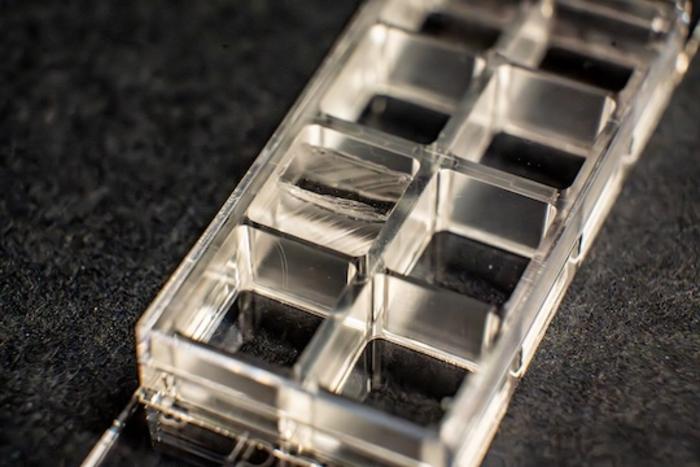
Rice University researchers have extended light sheet microscopy to single-objective operation inside standard commercial sample chambers. By 3D nanoprinting noncytotoxic inserts that reflect the light sheet into the sample, the team reduced background fluorescence, photobleaching and photodamage without altering existing sample preparation workflows.






