Jena, Germany, 8 October 2026. ZEISS has agreed to acquire Ceres Holographics, a holographic technology company based in Livingston, Scotland. Ceres will become part of ZEISS Microoptics, the ZEISS business unit that develops holographic solutions for automotive, aerospace and consumer products. The purchase price was not disclosed.
Founded in 2009, Ceres Holographics designs, masters and replicates thin-film holographic optical elements (HOEs) for transparent displays and augmented reality. Its technology is aimed at producing very large HOEs in high volumes. The company's main application is automotive windshield displays, and it works with automotive manufacturers (OEMs).
ZEISS Microoptics is based in Jena and is part of the ZEISS Photonics & Optics business. Its ProSight platform covers large-area holographic projection, cameras integrated in transparent surfaces, and holographic lighting, from optical design to series production.
ZEISS says the acquisition is intended to speed up the commercialization of holographic windshield displays, and to support entry into retail, near-to-eye displays and public transport.
"Ceres Holographics and ZEISS share a clear vision and deep commitment to advancing holography," said Dr. Roman Kleindienst, Head of ZEISS Microoptics.
Source: ZEISS press release
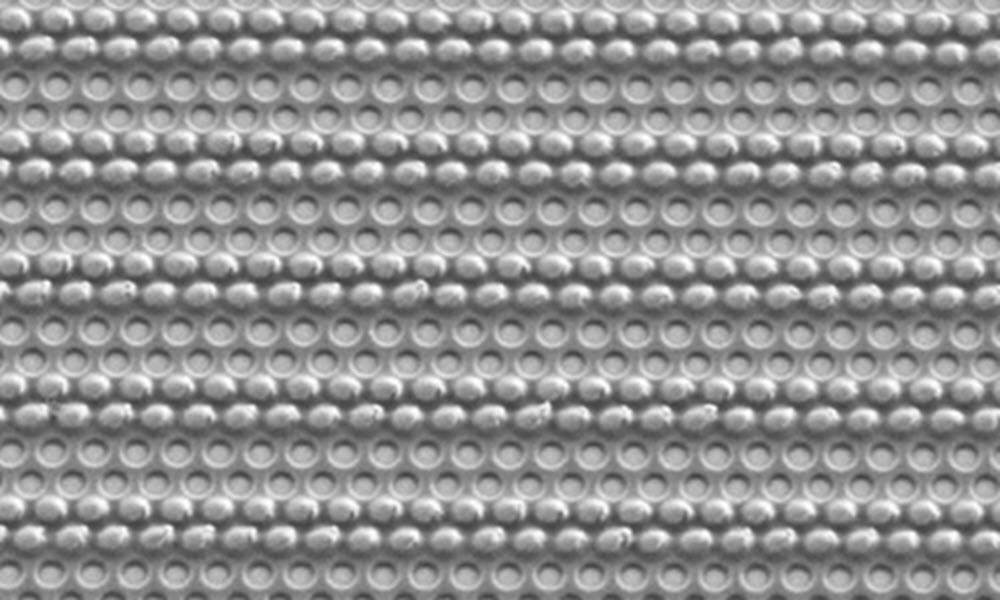
Most space missions rely on chemical rockets for propulsion. Rockets must carry fuel, which increases spacecraft mass and limits their speed and travel distance. For decades, researchers have explored light sails as an alternative. These devices use radiation pressure—the force exerted when light reflects from a surface—to generate thrust. When driven by a powerful laser, a light sail can accelerate continuously without onboard propellant, enabling faster travel across the solar system. Conve...
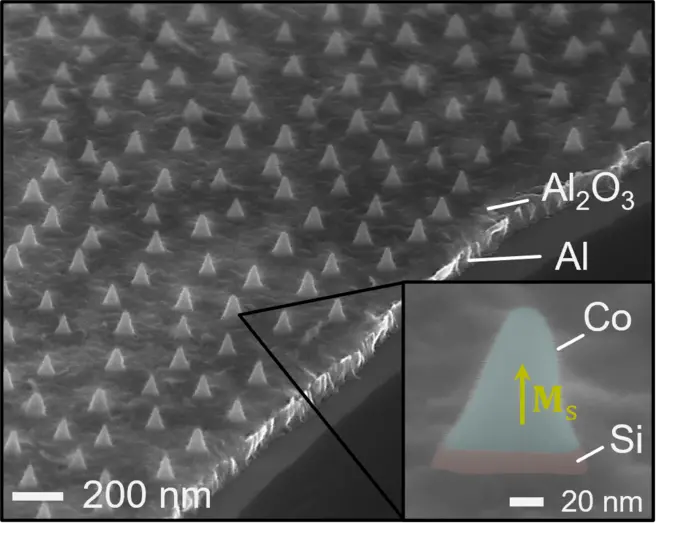
Nonreciprocal interactions between light and matter lie at the heart of many exotic physical phenomena, from magnet-free optical isolation to axion-inspired electrodynamics. One particularly intriguing example is the Tellegen effect, a nonreciprocal magnetoelectric coupling predicted more than 75 years ago but long considered weak and negligible at optical frequencies. “In natural materials, the optical Tellegen effect is extraordinarily weak, making it challenging to observe experimentally,”...
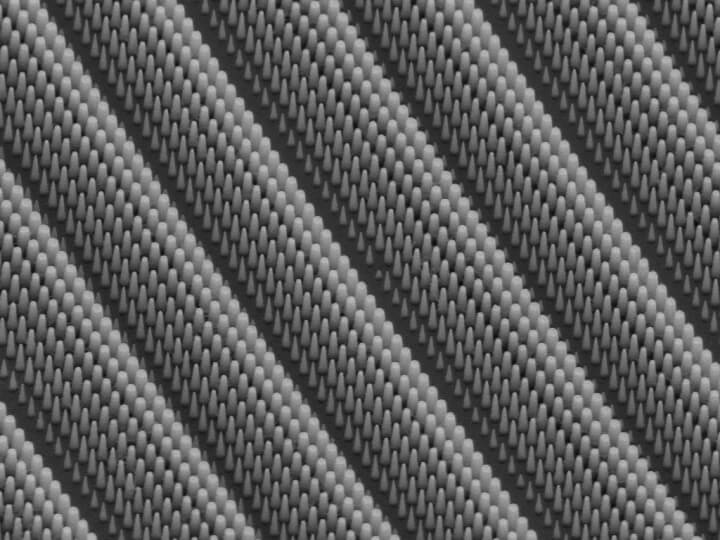
An unexpected discovery in a Harvard lab has led to a breakthrough insight into choosing an unconventional material, silica, to make optical metasurfaces – ultra-thin, flat structures that control light at the nanoscale and are already replacing traditional optical devices like lenses and mirrors. A team from Harvard's John A. Paulson School of Engineering and Applied Sciences and collaborators at the University of Lisbon has found that in some cases, silica — the fundamental building block o...






