Chinese Society for Optical Engineering
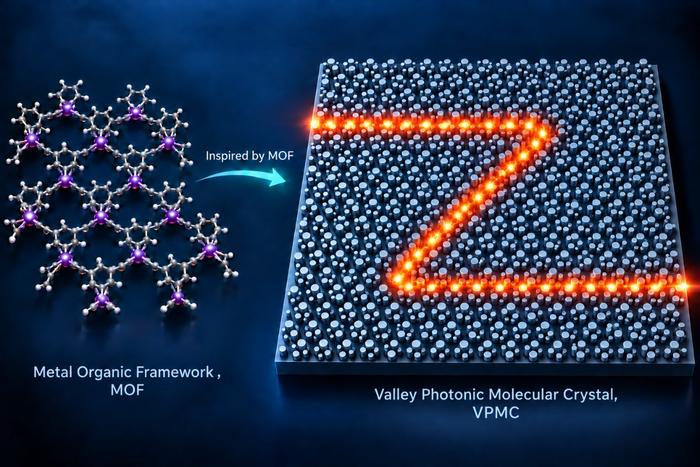
A research team led by Yidong Huang at Tsinghua University, including Xue Feng and Yongzhuo Li, has developed valley photonic molecular crystals (VPMCs) on a silicon platform. Combining theoretical modeling, numerical simulations, and experimental validation, the researchers demonstrated that topological edge states remain robust under rotational disorder ranges up to 60°, opening new avenues for integrated photonic devices.
The study draws inspiration from molecular topological insulators based on metal–organic frameworks. In these materials, molecular rotations can significantly influence optical and mechanical properties, yet their impact on topology has remained largely unexplored. Because random rotations break structural periodicity, conventional topological characterization based on energy-band theory and momentum space becomes inapplicable.
To overcome this challenge, the team introduced molecular rotational freedom into valley photonic crystals. In this design, optical “molecules” occupy fixed, periodic lattice sites while retaining randomly distributed orientations. This design provides a controllable platform to study the impact of rotational disorder on valley topology.
The researchers first investigated how molecular orientation determines the topological properties of periodic VPMCs. They then constructed an effective Hamiltonian approach to characterize the valley-topological properties of disordered VPMCs via an averaged Dirac mass and an effective valley Chern number. A complementary spectral localizer analysis in real space confirmed the existence of topological edge states without relying on structural periodicity.
Devices fabricated on silicon chips provided experimental validation. Simulations showed light propagating along a Z-shaped interface under substantial rotational disorder, while measured transmission spectra retained high-transmission peaks associated with topological edge states. These features persisted for disorder ranges reaching 60°. The study also investigated competition between topological edge states and Anderson localization in the regime of strong disorder.
The findings demonstrate the robustness of VPMCs to strong, global rotational disorder and establish molecular orientation as an additional dimension to manipulate topological properties. This framework is not limited to the specific molecular structure in the paper, it is applicable to all C3-symmetric molecules. This work has the potential for programmable topological photonic systems and synthetic gauge fields, including pseudo-electric and pseudo-magnetic fields. This work could also inspire related investigations in condensed matter, acoustic, and cold atom platforms.
Reference
Valley photonic molecular crystals
Zhe Li, Yiheng Fan, Ziming Chen, Deyang Kong, Kaiyu Cui, Yongzhuo Li, Xue Feng, and Yidong Huang
Q.ANT and IONOS launched a joint pilot program giving developers access to Q.ANT's second-generation photonic NPU through bare metal servers in a German IONOS data center. The pilot begins in November 2026 and is free to selected participants.
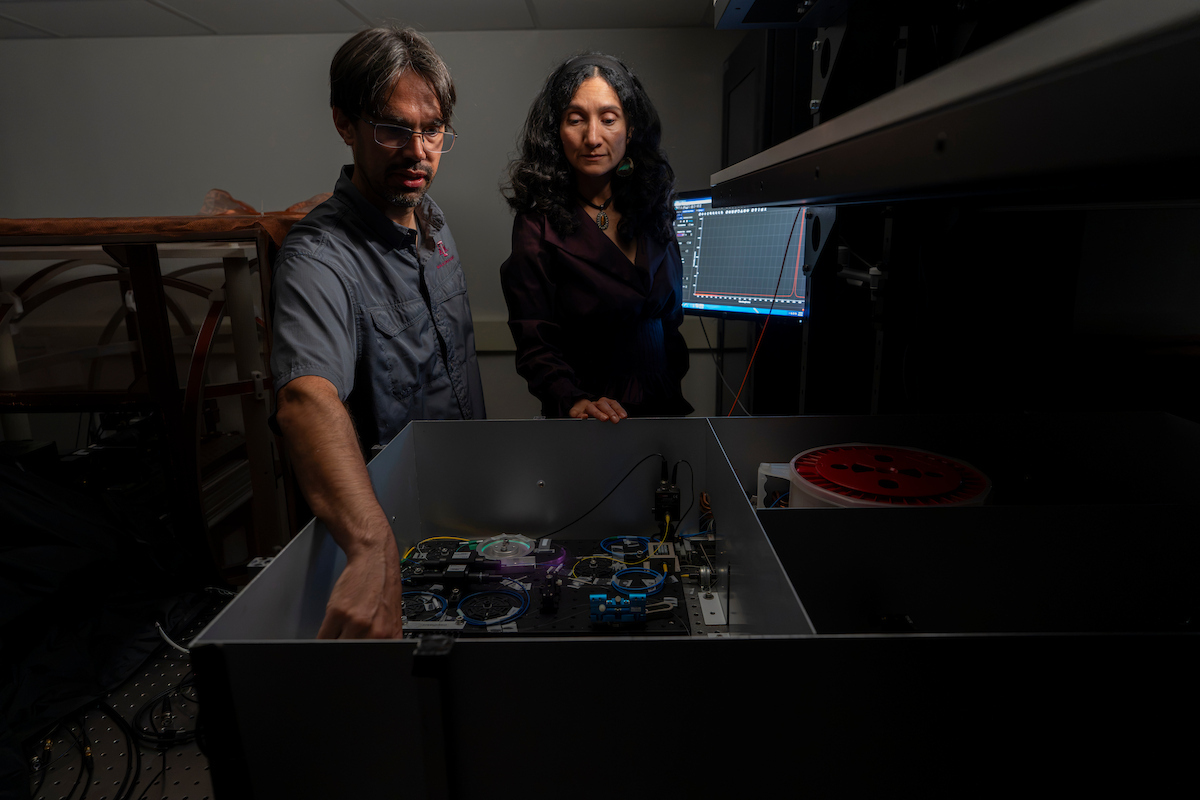
A Texas A&M team has combined two-photon excited image scanning microscopy with super-resolution optical fluctuation imaging (2PE-ISM-SOFI) to resolve cellular structures below 100 nanometers while still imaging deep into intact tissue. The approach, published in the Journal of Biomedical Optics, reaches lateral resolution near 75 nanometers, about five times sharper than conventional two-photon microscopy.
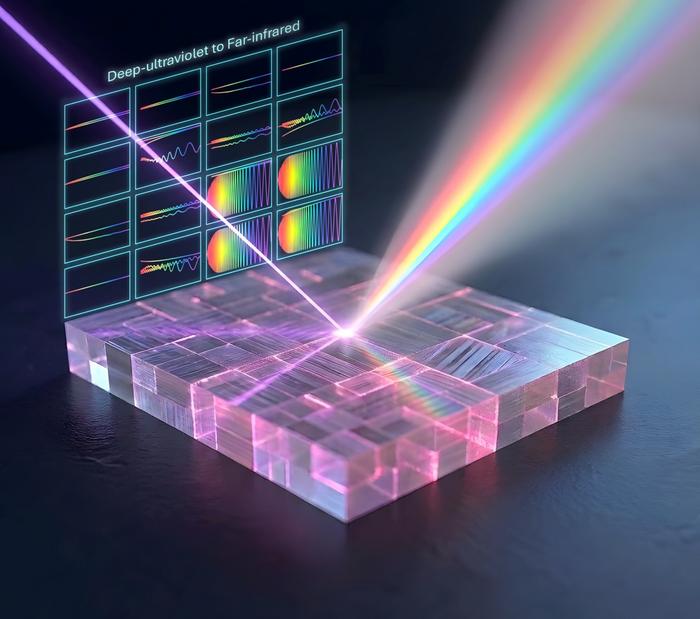
Researchers have precisely characterized the refractive index and absorption of barium titanate across wavelengths from the ultraviolet to the far-infrared, using Mueller-matrix spectroscopic ellipsometry on single-crystal samples to isolate intrinsic properties from mixed domain responses.
This week in nanotech
10 deals tracked
New products
 Nion-compatible In Situ STEM Holders for Electrical BiasingHummingbird Scientific Featured
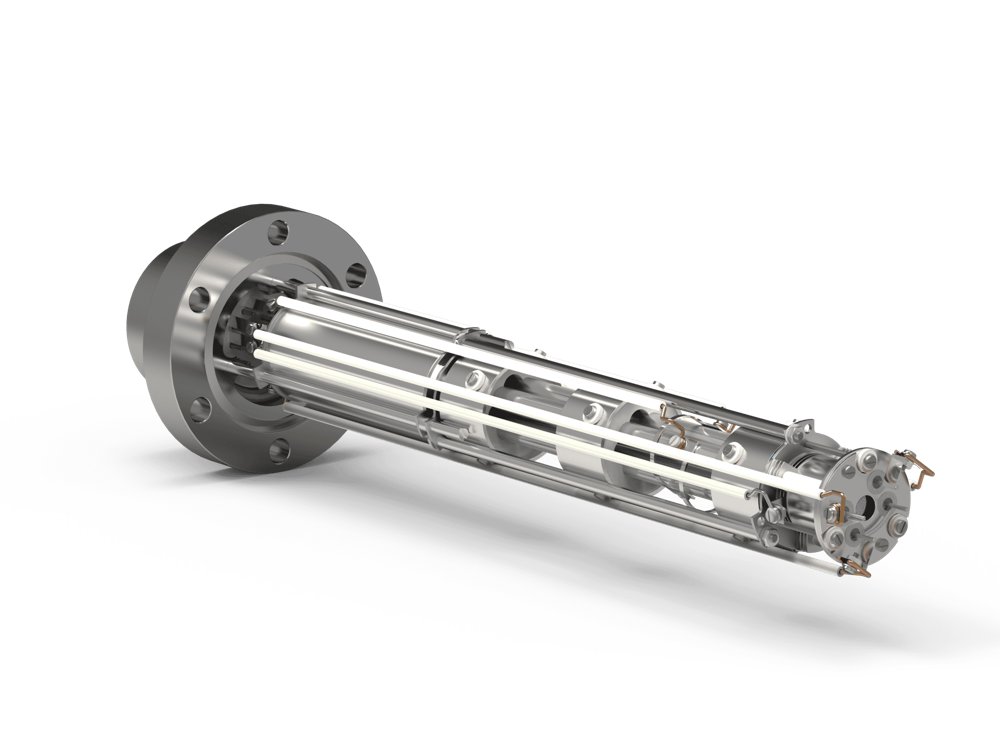 DLS-1 Mass Spectrometer for Fusion Gas AnalysisHiden Analytical Featured
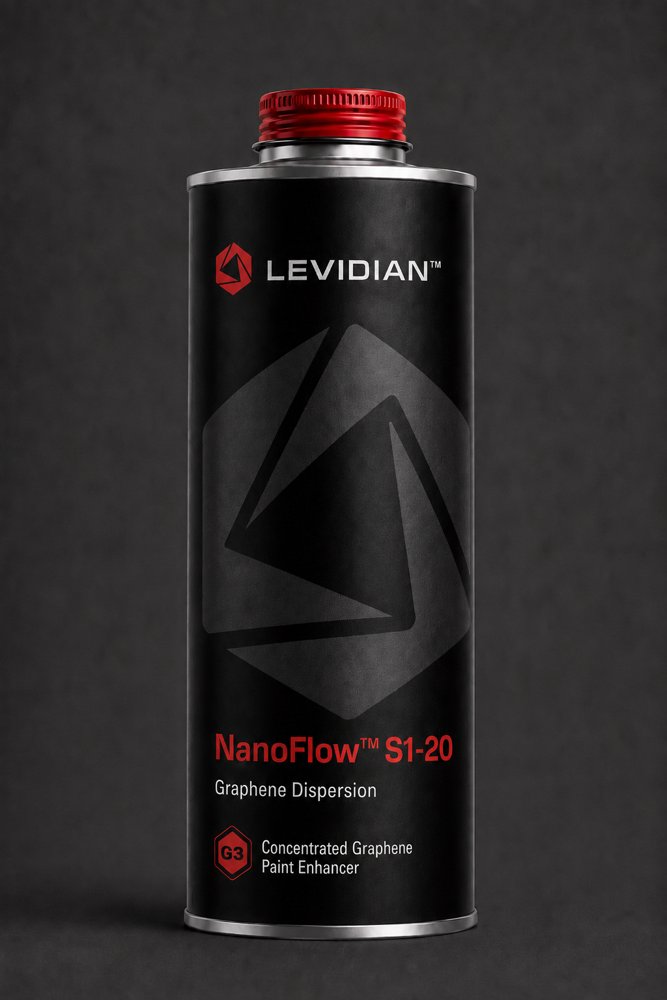 NanoFlow® S1-20Levidian
Market insights
Last 30 days: Semiconductors & Electronics was the busiest vertical: 48 of 154 events (31%).
Money raised per month
Behind the deal
Who led Sandia National Laboratories’s $3.4M Grant?
See the investors with Insights Pro →