Fritz Haber Institute of the Max Planck Society
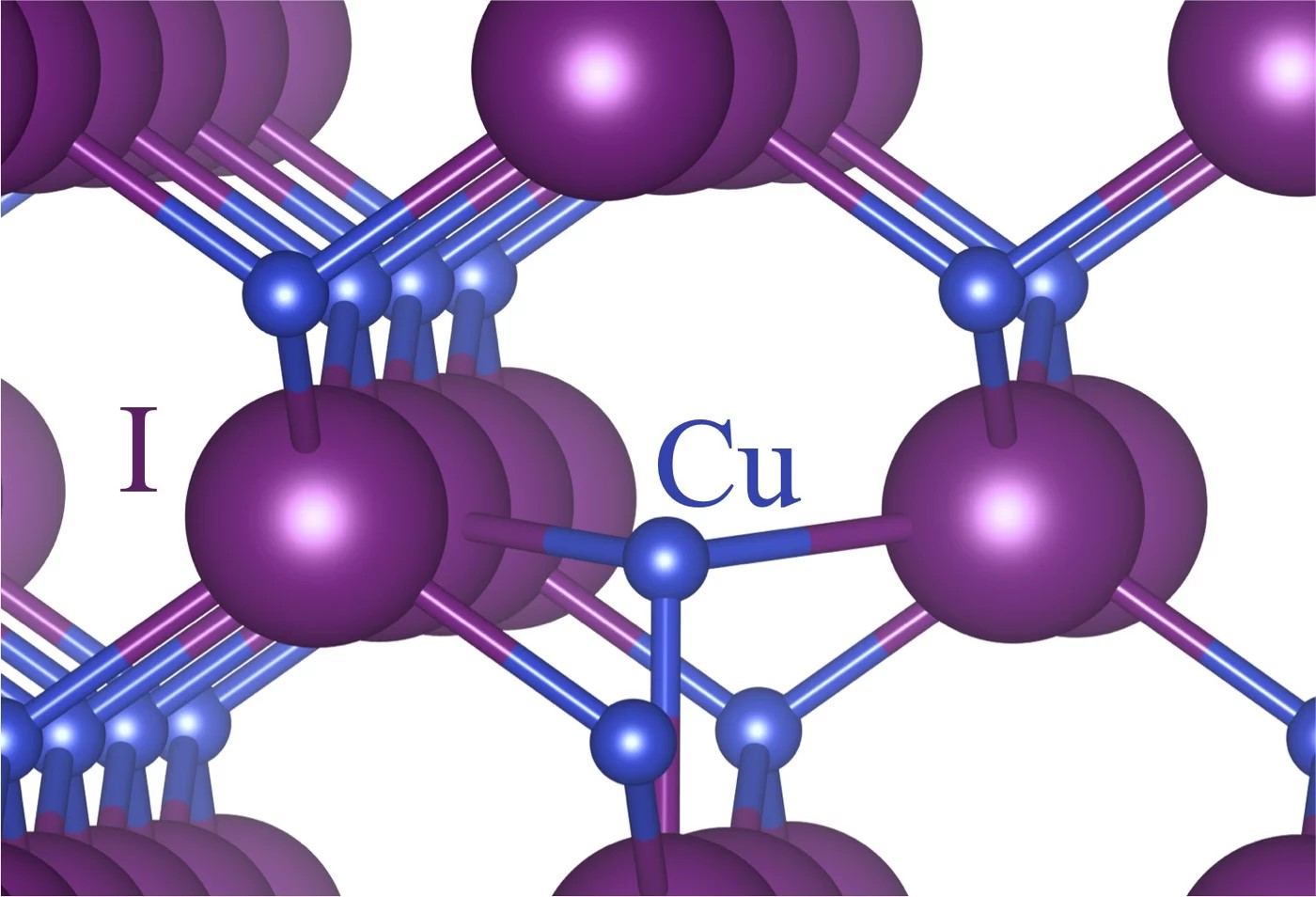
Researchers at the NOMAD Laboratory at the Fritz Haber Institute of the Max Planck Society have shed light of the microscopic mechanisms that determine thermal conduction in heat insulators. Through their computational research they have demonstrated that even short lived and microscopically localized defect structures have a substantial impact on macroscopic transport processes. This discovery could contribute to more energy-efficient technologies by allowing for the tailoring of nanoscale thermal insulators through defect engineering.
The NOMAD Laboratory researchers have recently elucidated on fundamental microscopic mechanisms that offer to tailor materials for heat insulation. This development advances the ongoing efforts to enhance energy efficiency and sustainability.
The role of heat transport is crucial in various scientific and industrial applications, such as catalysis, turbine technologies, and thermoelectric heat converters that convert waste heat into electricity. Particularly in the context of energy conservation and the development of sustainable technologies, materials with high thermal insulation capabilities are of utmost importance. These materials allow to retain and utilize heat that would otherwise go to waste. Therefore, improving the design of highly insulating materials is a key research objective in enabling more energy-efficient applications.
However, designing strongly heat insulators is far from trivial, despite the fact that the underlying fundamental physical laws are known for nearly a century. At a microscopic level, heat transport in semiconductors and insulators was understood in terms of the collective oscillation of the atoms around their equilibrium positions in the crystal lattice. These oscillations, called “phonons” in the field, involve zillions of atoms in solid materials and hence cover large, almost macroscopic length- and time-scales.
In a recent joined publication in Physical Review B (Editors Suggestions) and Physical Review Letters, researchers from the NOMAD Laboratory at the Fritz Haber Institute have advanced the computational possibilities to compute thermal conductivities without experimental input at unprecedented accuracy. They demonstrated that for strong heat insulators the above-mentioned phonon picture is not appropriate. Using large-scale calculations on supercomputers at of the Max Planck Society, the North-German Supercomputing Alliance, and the Jülich Supercomputing Centre, they scanned over 465 crystalline materials, for which the thermal conductivity had not been measured yet. Besides finding 28 strong thermal insulators, six of which featuring an ultra-low thermal conductivity comparable to wood, this study shed light on a hitherto typically overseen mechanisms that allows to systematically lower the thermal conductivity. “We observed the temporary formation of defect structures that massively influences the atomic motion for an extremely short period of time”, says Dr. Florian Knoop (now Linköping University), first author of both publications. “Such effects are typically neglected in thermal-conductivity simulations, since these defects are so short-lived and so microscopically localised compared to typical heat-transport scales, that they are assumed to be irrelevant. However, the performed calculations showed that they trigger lower thermal conductivities”, adds Dr. Christian Carbogno, a senior author of the studies.
These insights may offer new opportunities to fine-tune and design thermal insulators on a nanoscale level through defect engineering, potentially contributing to advances in energy-efficient technology.
References
Ab initio Green-Kubo simulations of heat transport in solids: Method and implementation
Florian Knoop, Matthias Scheffler, and Christian Carbogno
https://journals.aps.org/prb/abstract/10.1103/PhysRevB.107.224304
Anharmonicity in Thermal Insulators: An Analysis from First Principles
Florian Knoop, Thomas A. R. Purcell, Matthias Scheffler, and Christian Carbogno
https://journals.aps.org/prl/abstract/10.1103/PhysRevLett.130.236301
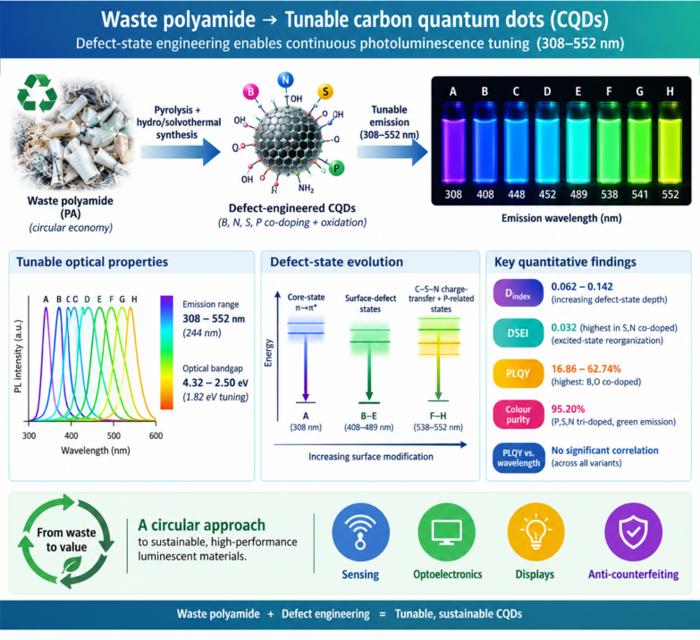
Waste polyamide-derived CQDs show continuous photoluminescence tuning from 308 to 552 nm through sequential defect-state engineering, with optical transition energies decreasing from 4.32 to 2.50 eV. @Christian Ebere Enyoh from Saitama University Carbon quantum dots (CQDs) are fluorescent carbon nanomaterials with potential applications in sensing, optoelectronics, displays, anti-counterfeiting, and environmental technologies. Their optical properties can be adjusted by modifying the carbon...
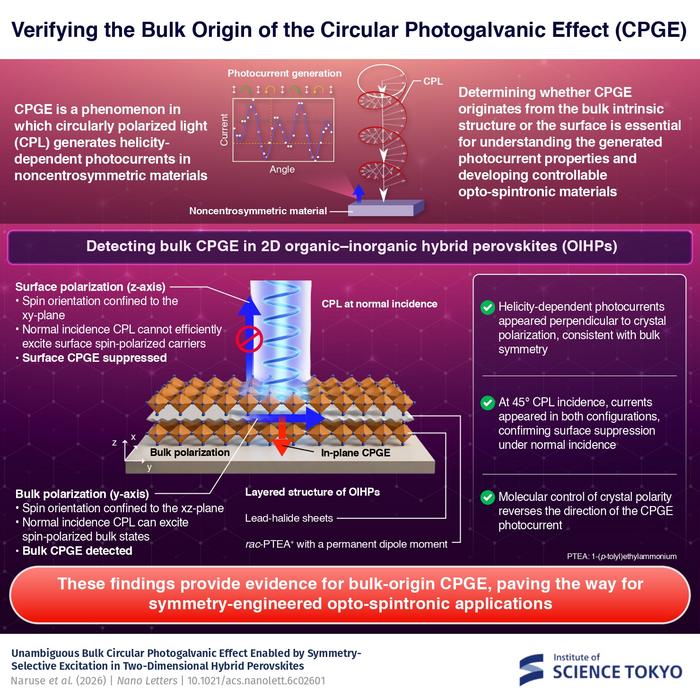
The researchers used circularly polarized light at normal incidence and found that helicity-dependent photocurrents appeared perpendicular to the crystal’s polarization but vanished when measured parallel to it, supporting a bulk origin of CPGE. @Institute of Science Tokyo The circular photogalvanic effect (CPGE), a phenomenon that generates helicity-dependent photocurrents in noncentrosymmetric materials, can originate purely from a crystal's internal structure without contribution from the...
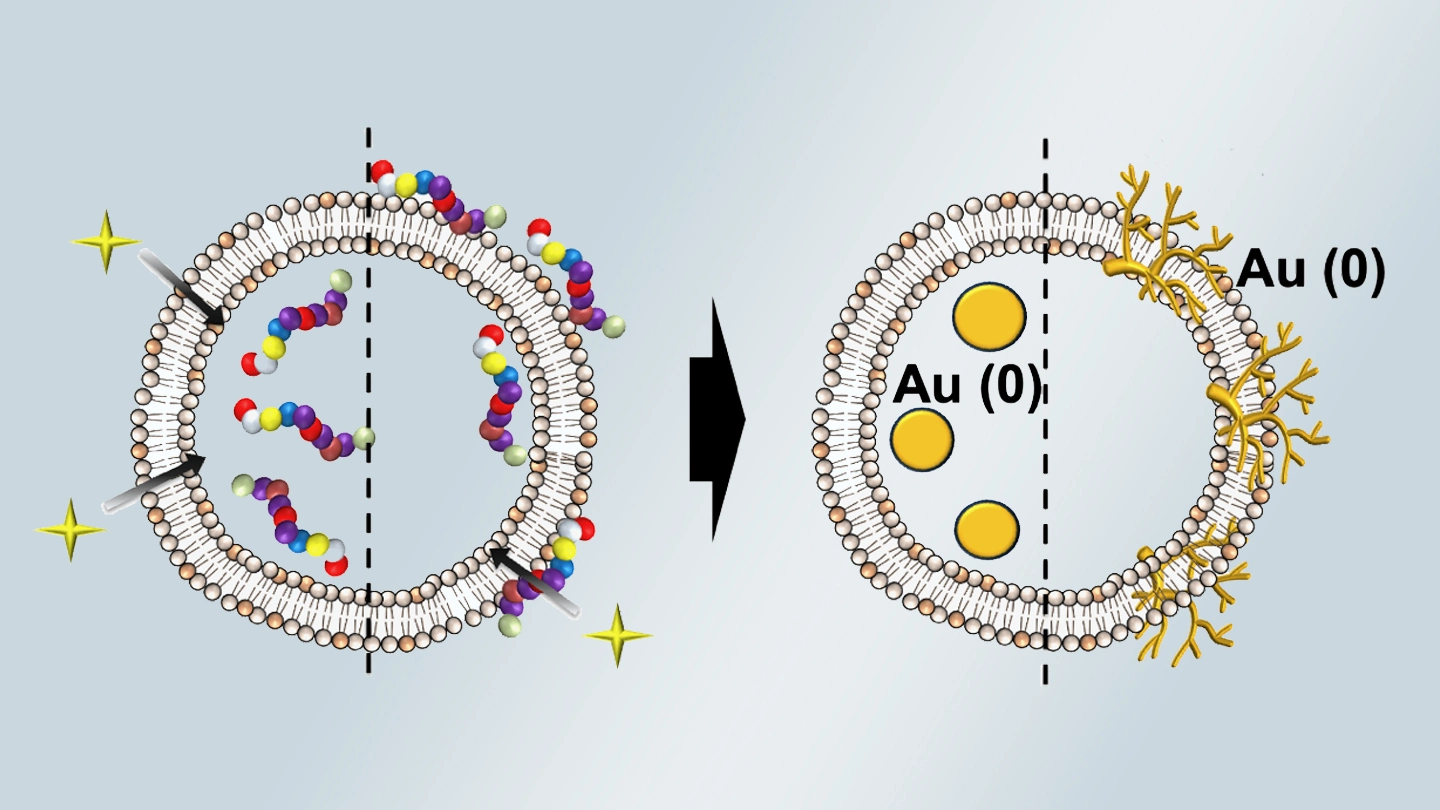
Summary of gold nanoparticle growth programming in liposome based on localization of biomineralization peptide The position of biomineralization peptides within liposomes can influence how gold nanoparticles grow, reports a research team from Institute of Science Tokyo. Peptides localized at the membrane interface promote branched structures, while those confined to the liposome interior favor spherical nanoparticles. The findings offer a new strategy for controlling nanoscale reaction...
