By Photon etc
The nCore is a fully autonomous multi-sensor scanning platform designed for continuous drill core scanning and handling. Built with our proprietary state-of-the-art hyperspectral imagers, the system can deliver exceptional performance directly on site or in a laboratory with a variety of different modular configurations readily available. Three modular system options are available: Compact, U-Shaped and Container to accommodate all mining industry needs. The nCore allows for the integration of up to 7 optical sensors, offering the most comprehensive set of imaging tools and providing an extensive map of the mineralogical landscape with unparalleled accuracy. Capabilities Hyperspectral VNIR - REE deposits - Additional discrimination capabilities for hydrated minerals Hyperspectral SWIR/eSWIR - Mapping of white mica, biotite, chlorite, kaolinite, epidote, etc. - Direct detection of hydrocarbons - Additional discrimination capabilities for hydrated minerals RGB - Colour and textural mapping MWIR - Mapping of carbonates in hydrothermal deposits (Au-Cu) LWIR - Mapping of non-hydrated silicates 3D laser profiler - RQD evaluation LIF & LIBS - REE identification - Direct quantitative elemental mapping Room for improvement - Expandable with novel characterization methods Unique Characteristics Up to 7 optical sensors and a bar core reader Fast scanning rate over 1600 m of core per 8-hour shift No sample preparation needed Range from 400 nm to 11,5 micron of scanning Modular systems 560 MB of data volume per meter Specifications Spectral range (nm): VNIR 400 - 1000; SWIR 1.7 950 - 1600; SWIR 2.5 950 - 2500; eSWIR 2.9 1600 - 2800; MWIR 3000 - 5000; LWIR 7500 - 11500 Spectral channels: 447, 256, 320, 320, 246, 106, 3 Spectral sampling (nm/channel): 1.3, 2.5, 5.0, 3.8, 8.00, 40.0 Spectral resolution FWHM (nm): <2, <5, <10, <8, <20, <100 Spatial channels: 800, 256, 256, 256, 256, 256, 2048 Spatial sampling (mm/px) (FOV = 25 - 32 cm): 0.31 - 0.4; 1.0-1.25; 0.2; x,y: 100μm, z: 200μm FPS: 100, 500 Scan speed mm/s: 100 Reduced system dimensions (L x W x H) Compact system: 3800 x 800 x 2000 mm Full system dimensions (L x W x H) U-Shaped System: 7700 x 1400 x 2300 mm Container dimensions (L x W x H): 6000 x 2430 x 2590 mm Max sample size (L x W x H): 370 x 1650 x 80 mm Warranty: one year Pre-alignment conveyor - Allows easy feeding in order to have a continuous flow of drill boxes Return conveyor - The u-shaped path allows the product to be fed on one side and returned on the back side for an efficient one person operation Height-adjustable camera enclosure - Can be adjusted to different drill core diameters up to 3 inches Integrated workstation - Easy access to data during the scanning process Bar code reader - Easy reading of the barcode label on the core boxes while they are being scanned, making it easy to tag hyperspectral data How it works The system incorporates five motorised axes to automatically handle the core boxes. The operator loads the input conveyor, and the on-board control computer feeds the boxes as required while acquiring the signal. After being processed, the core boxes exit onto the return conveyor and are collected by the operator. Due to its versatile design, the nCore system can be used as a containerised mobile laboratory outdoors, but the scanner can also be taken out of the container and used in the core storage facility when more convenient. A bespoke lighting system provides high density illumination for a very high scan rate and gives good results with dark minerals. This system, combined with our hyperspectral brush cameras, provides a high signal to noise ratio, fast scan rate and high resolution images over the widest spectral range ever achieved. The operator's screen displays a live view of the current acquisition from each camera as well as a reconstructed view of the core box and allows various meta information to be added to the data file, such as core box number, hole name, metres, etc. The nCore has been developed for geologists to minimise logging time and enable them to focus more on mineral map interpretation and model refinement, which we believe is a priority for them. The system has been developed to handle the repetitiveness and systematicity involved in logging, and will provide geologists with a revolutionary time-saving asset, so that they can focus their expertise on the drill core of interest, avoiding the mundane aspects of the job. In-depth core analysis can increase the accuracy of the resource estimate and more effectively define the design of a future mine. In addition, it can exponentially increase the return on an exploration campaign, significantly reducing the initial drilling costs. With full core logging and mineral interpretation on site and in the lab, a digital library will allow users to easily access and share geological information for future review. Information that will not degrade over time and will not require costly storage in a facility. Instant access to objective and accurate mineralogy will allow a faster decision on the next target. A higher processing rate and a reduction in the number of samples sent to the laboratory will result in a lower overall cost per metre for analysis. Modular System Platform Options U-Shaped - This efficient system allows one person to feed and return on the same side. Maximum Sensors - Twice as must space than the Compact system allowing up to 14 optical sensors and a barcode reader. Compact - Perfect for indoor use to allow an easy scan with a high throughput. Maximum Sensors - 5 hyperspectral cameras, 2 optical sensors (RGB camera and 3D laser profiler), and a barcode reader. Container - The container system can be shipped anywhere for efficient work both indoors and outdoors. Maximum Sensors - Twice as must space than the Compact system allowing up to 14 optical sensors and a barcode reader.
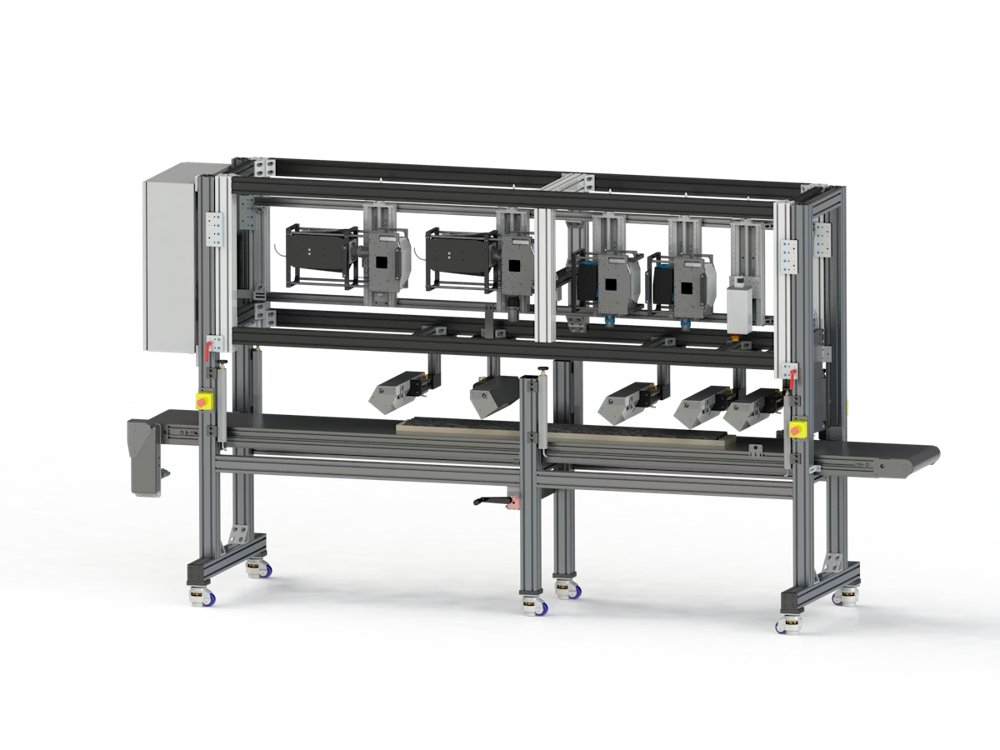
Hyperspectral Core Scanner The nCore is a multi-sensor scanning platform designed for drill core analysis. Whether deployed directly on-site or in a laboratory setting, the nCore offers unmatched versatility with modular configuration options tailored to the mining industry's needs. With the capability to integrate up to seven optical sensors, the nCore delivers an unparalleled map of the mineralogy landscape. Powered by Photon etc.'s proprietary hyperspectral imagers, it ensures precise and reliable performance for advanced mineral analysis, making it an indispensable tool for modern mining operations.
CATEGORY

Lecteur de plaques dédié à l’infrarouge à ondes courtes Lecteurs de plaques SWIR Photon etc. fait progresser le criblage à haut débit avec ClaIR™, un lecteur de plaques dédié à l’infrarouge à ondes courtes (SWIR, 900–1700 nm) et optimisé pour les nanocapteurs optiques et les nanomatériaux de prochaine génération. En opérant là où les matrices biologiques sont hautement transparentes, cette plateforme offre la sensibilité exceptionnelle requise pour cribler les capteurs à nanotubes de carbone à paroi simple (SWCNT) et suivre les éléments de reconnaissance moléculaire. ClaIR™ permet un balayage de zone automatisé par puits pour valider efficacement les nanocapteurs optiques dédiés aux cytokines inflammatoires, cartographier la localisation intracellulaire des capteurs en cytologie cancéreuse et accélérer la détection des biomarqueurs. ClaIR™ ClaIR est un lecteur de microplaques dans le NIR-II. Il enregistre la fluorescence de 900... Recherche sur les nanotubes de carbone
CATEGORY
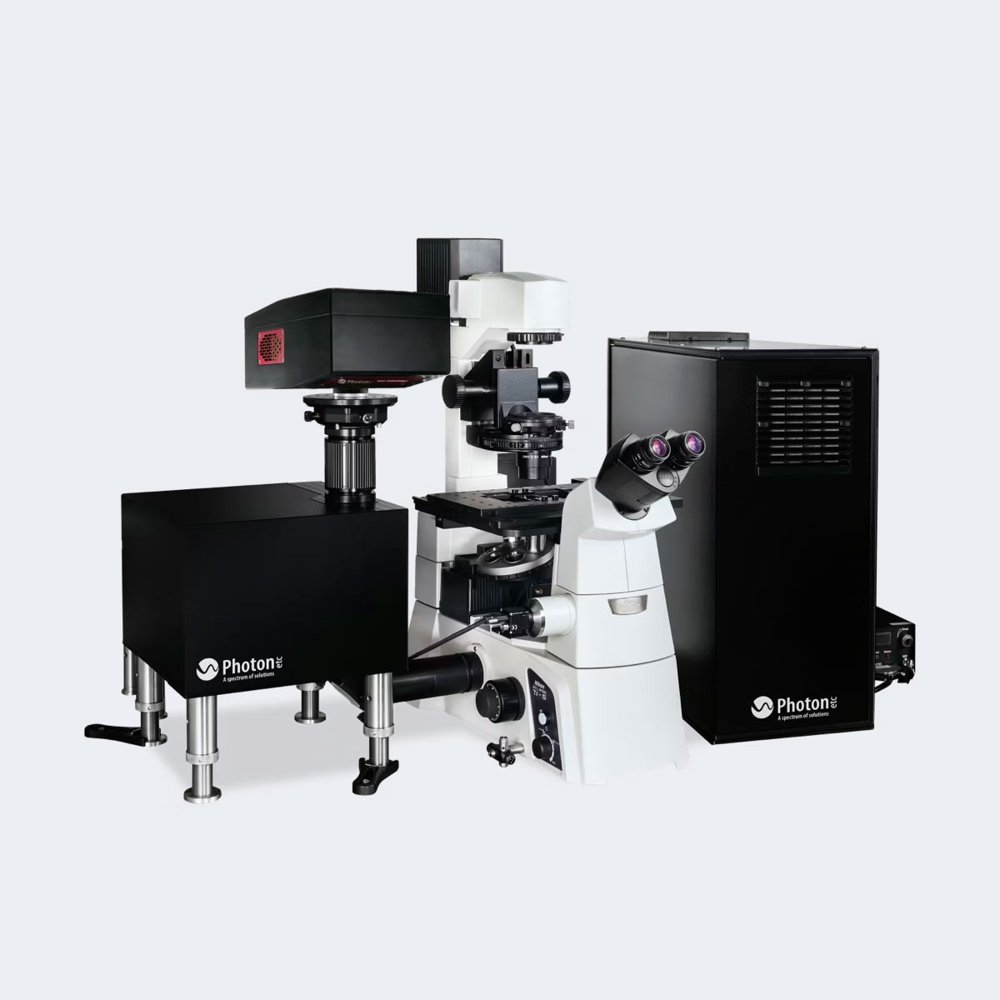
IMA is a hyperspectral microscope delivering spectral and spatial information from 400 nm to 1620... High-resolution spatial and spectral characterization at the microscopic scale
CATEGORY
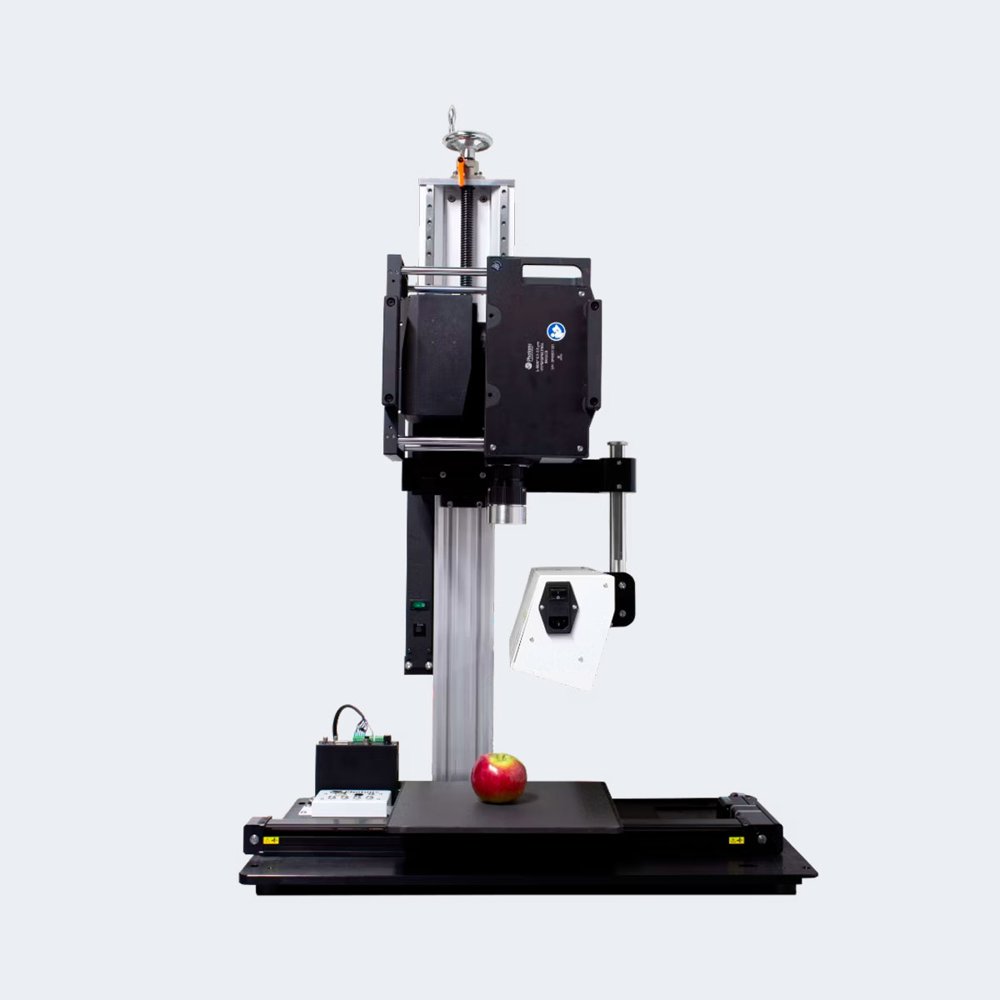
L-EOS™ is an infrared push broom hyperspectral SWIR camera 0.9 to 2.5 µm. In contrast to traditional imaging techniques that capture images in only three spectral bands (red, green, and blue) per pixel, the L-EOS, a hyperspectral imaging system, captures hundreds of spectral bands stacked in each pixel, forming a hyperspectral data cube. This unique capability allows for highly detailed and comprehensive spectral analysis of the imaged objects. However, it’s worth noting that the L-EOS requires either motion from the object or the camera itself to acquire the data cube, as it creates an image by scanning one row at the time. Hyperspectral data cube provides more information than single band imaging, making it suitable for material sorting and in-depth analysis.
CATEGORY
