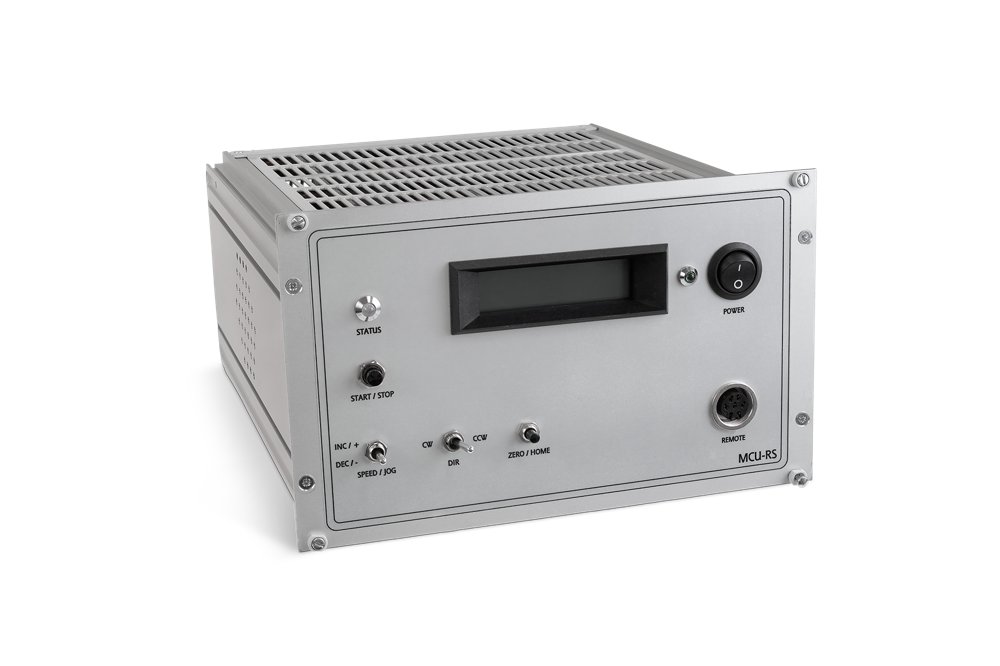
Motorized UHV throttle valve for down-stream pressure control
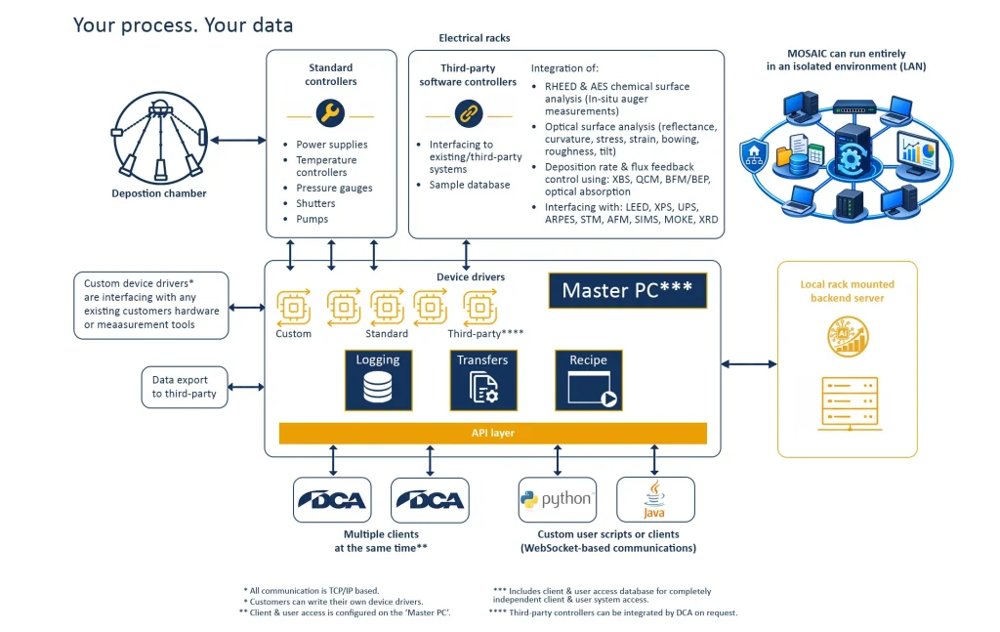
DCA Instruments is proud to introduce MOSAIC, its next-generation process management and control platform designed to help users manage, optimize, and scale increasingly complex deposition processes. Built on decades of expertise in advanced materials growth and Ultra-High Vacuum (UHV) technology, MOSAIC transforms process knowledge into manufacturing intelligence, helping users bridge the gap between research, pilot production, and future manufacturing environments. MOSAIC combines complete equipment control, advanced automation, process intelligence, and an AI-ready architecture in a single software platform designed for the future of thin film deposition. As advanced materials become more sophisticated, the demands placed on deposition systems continue to grow. Whether developing cutting-edge semiconductor structures, quantum materials, photonic devices, or complex oxide heterostructures, users need more than reliable hardware. They need software capable of capturing process knowledge, improving reproducibility, and enabling continuous optimization. MOSAIC has been developed to support the entire technology lifecycle. For research teams, the platform provides a highly flexible environment for process development and experimentation. Its configurable user interface allows users to create personalized workflows, visualize live and historical process data, and rapidly adapt recipes as processes evolve. Continuous data logging ensures valuable process knowledge is captured and available for future analysis. For pilot production and manufacturing environments, MOSAIC delivers the automation, consistency, and traceability required for scale-up. Automated workflow management, comprehensive reporting, and optimized growth-campaign execution help reduce operator workload while increasing throughput and process reproducibility. Campaign optimization can improve operational efficiency by up to 30%, helping users maximize utilization of critical deposition resources. MOSAIC is designed to support the demanding applications enabled by DCA’s MBE, UHV sputtering, PVD, and integrated multi-chamber platforms. The software provides the process control, automation, and data intelligence required for advanced material systems including III-V semiconductors, III-N materials, II-VI compounds, metal oxides (incl. BTO / STO), superconducting materials, and UHV-sputtered thin films. At its core, MOSAIC combines recipe management, automation, process intelligence, and traceability within a single software environment. Its architecture has been designed to simplify increasingly complex deposition workflows while providing deeper insight into process performance. Key capabilities include: - Layer-Based Recipe Management for flexible and reusable process development. - Automated Growth-Campaign Management to optimize system utilization, transfers, and workflow execution. - Automated Flux Calibration and Closed-Loop Process Control for improved stability and reproducibility. - Anomaly Root-Cause Analysis to quickly identify the most likely source of process deviations. - Complete Process Traceability with continuous logging of system parameters, alarms, operator actions, and recipe versions. - Automatic End-of-Run Reporting for streamlined documentation and process review. - SECS/GEM Compatibility for integration into advanced manufacturing and factory automation environments. One of MOSAIC’s most powerful features is its built-in root-cause analysis capability. Users can flag any process event and the software will automatically analyze system data to identify the most likely source of the anomaly. This enables faster troubleshooting, reduced downtime, and more efficient process optimization. MOSAIC is designed around a simple principle: your process, your data. The platform operates entirely within the customer’s local network, ensuring that process data, manufacturing know-how, and intellectual property remain under the user’s control. Encrypted communications and a security-focused architecture help protect valuable information without relying on cloud connectivity. MOSAIC has also been designed to align with the objectives of the EU Cyber Resilience Act. Every deposition process is unique. Recognizing this, DCA developed MOSAIC with a highly flexible and open architecture. Through its API and dedicated Java and Python SDKs, users can integrate external equipment, automate laboratory workflows, create custom dashboards, and develop their own advanced control routines. This allows organizations to build automation strategies tailored to their specific process requirements while maintaining a consistent and scalable software platform. MOSAIC is more than a process control system. It is a platform built for the next generation of intelligent deposition. Developed with an AI-ready architecture from the ground up, MOSAIC is designed to support pre-trained AI models developed and validated by DCA. Initial applications focus on assisted parameter tuning and flux-drift compensation, creating a pathway toward increasingly autonomous process optimization. This vision ultimately leads toward self-driving deposition: systems capable of continuously learning, adapting, and optimizing processes while maintaining the precision and reliability demanded by advanced materials research and production. With MOSAIC, DCA is taking an important step toward the future of thin film deposition. By bringing together advanced automation, process intelligence, traceability, secure local data management, and AI-ready capabilities, MOSAIC empowers users to unlock greater value from their process expertise and deposition infrastructure. Whether enabling breakthrough research, supporting pilot-line development, or preparing for future manufacturing, MOSAIC provides the digital foundation for smarter, more efficient, and more scalable thin film deposition.
CATEGORY
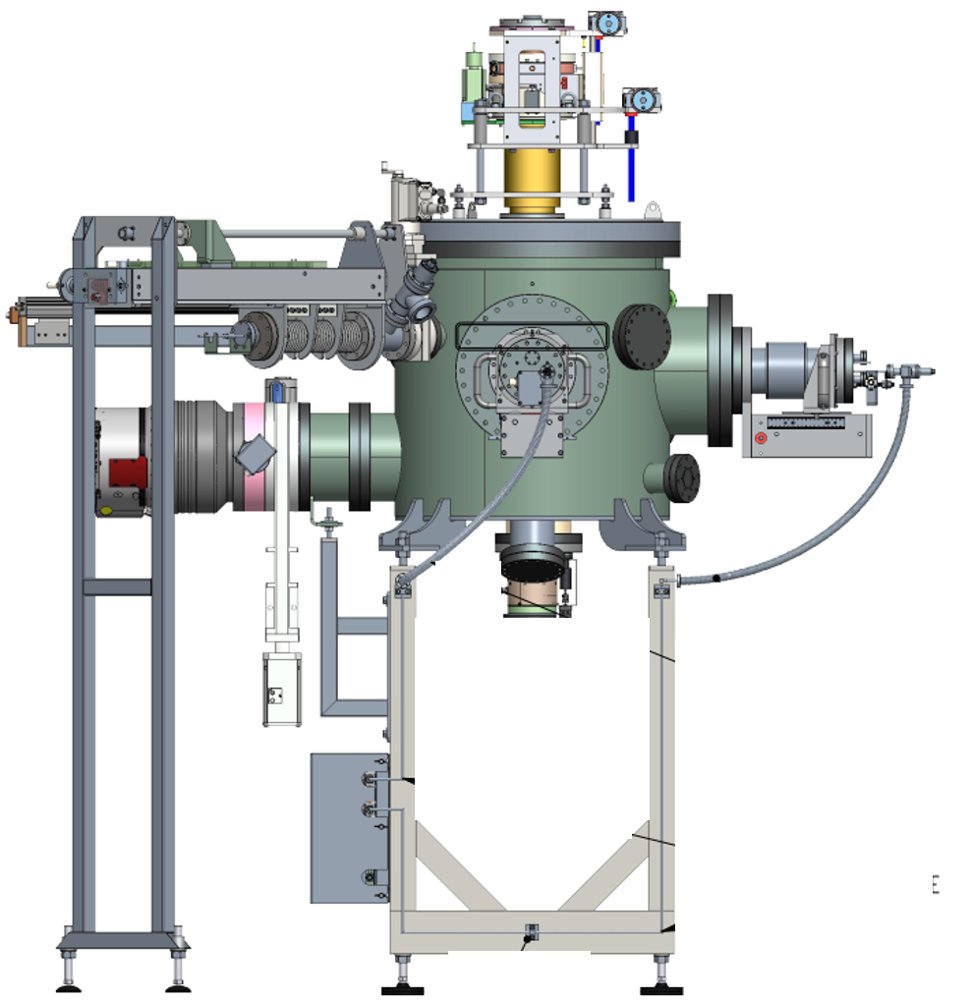
Ultra-high-vacuum (UHV) magnetron sputtering (base pressure < 5 × 10⁻¹⁰ Torr) is ideally suited to high-purity, high-precision thin-film growth, where minimising substrate contamination and the incorporation of unwanted species is critical. This capability is particularly important for emerging materials systems such as novel magnetic materials, spintronic devices, high-temperature superconducting nitrides, and quantum devices (e.g. BTO). Key features: - True UHV compatibility - Bakeout up to 200°C - Base pressure in the low 10-10 Torr range - Excellent growth uniformity - High flexibility for customisation The S-Series combines traditional features from conventional sputtering, such as: - High deposition rates & uniformity and with great adheasion - The suitability for almost any materials (including organic and magnetic materials) - A high degree of growth control with: - Low level of contamination - Low risk of oxidation - Excellent film uniformity - Very high purity - Very sharp interfaces UHV sputtering enables the addition of in-situ analysis while maintaining minimal residual gas contamination. This results in an extended mean free path for sputtered atoms, significantly reducing oxidation risks. As a result, UHV sputtering produces exceptionally pure films with unparalleled uniformity, ensuring sharp interfaces and facilitating the development of advanced (magnetic) materials. Applications include oxide materials for quantum devices (such as BTO), magnetic films, spintronics, high-temperature superconductors (e.g., NbN, TiN, ZrN), and innovative research-grade multilayers. System overview: The S-Series, for 'research', features a compact chamber that is perfect for space-limited laboratory environments. Despite its size, it includes all essential ports for sources, analytical components, pumping, and sample manipulation. For a simple and cost-effective solution, an optional load lock enables direct transfer to the process chamber. Additionally, intermediate buffer and degas chambers can be incorporated. The system is fully bakeable to over 200°C without the need for counter cooling or disassembly, and it achieves a base pressure in the low 10⁻¹⁰ Torr range. S-Series (R&D) at a glance: - Flexible multi-chamber system design for research purposes and up to 4″ (100 mm) substrate size: - S500 ORIGIN System – eight source ports - S500 FLEX System – six source ports and a port for an e-beam evaporator - Top-down or bottom-up sputtering: - Confocal design for co-deposition - FTS (Facing Target Sputtering for e.g. organic materials) - Substrate manipulator: - Substrate sizes up to 4″ (100 mm) - Heating up to 1000 °C - Rotation up to 60 rpm - Tilting, Cooling, Wedge Shutters and customised variants available - With DC, RF or magnetic bias - Manufactured from high temperature resistant materials and compatible with oxygen - Magnetron operation: - DC (typical for materials with high melting point) - RF (for insulating materials, prevents charge build-up at target) - Pulsed DC (for reactive sputtering and materials with high impedance) - HiPIMS (for e.g. materials with high microstructure) - True UHV compatibility (200°C bakeout and base pressure in the low 10-10 Torr) - Manual sample transfer with UHV cluster tool - Wafer transfer from Transfer Chamber, Buffer Chamber, Sample Storage, Load lock - Hybrid systems available when combined with MBE, e-beam or PLD Specifications: S500 ORIGIN / S500 FLEX Chamber Diameter 500mm Bakeout temperature 200°C Base pressure < 5 x10⁻¹⁰ Torr Pump configuration Turbo Molecular / Cryo Pump and regulated throttling valve (downstream pressure control) Sputter Magnetron source ports: 8 x CF100 (confocal) 1 x CF150 (vertical, centered) / 6 x CF100 (confocal) 1 x CF150 (vertical, centered) Electron Beam source port – 1 x CF200 (horizontal) RHEED ports CF40 (source), CF63/100 (screen) Gauging, RGA, Ellipsometry ports CF40 QCM, BFM, Optical ports CF63 Atom absorption ports optional (2 x CF16) Viewport CF100 (with manual rotary shutter) Top flange (wire sealed) Manipulator (CF150), Viewports (3 x CF63) The number of connection ports depends on the source configuration and can be tailored to the customers requirements.
CATEGORY
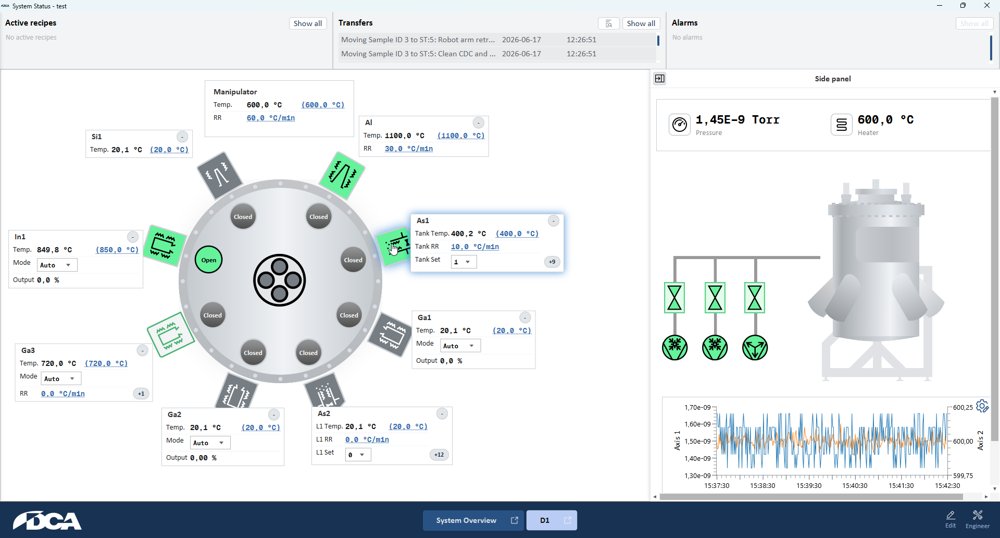
MOSAIC - Next Generation Process Control Software Mo nitor, S ense, A utomated I nterface C ontrol More than just control — MOSAIC delivers understanding Key features: - AI-ready by Design - Layer-based Recipe Control with Recipe Editor - Anomaly root-cause analysis (sophisticated Data Logging Module) - Full System – One Interface, highly customisable - Secure Local-network Access - SECS/GEM Compatible MOSAIC is DCA’s next-generation process control software and is now delivered with every new system,giving complete software control of the entire UHV tool, from a single, configurable interface over one Ethernet connection, on Windows or Linux. What sets MOSAIC apart? Root-cause analysis: - Flag any event and MOSAIC analyses the system parameters to identify the most likely cause. - Optional SMS alerts can flag fault conditions on unattended runs. Highly customisable UI: - Users can add/remove/move plots, status cards, and tabs to build their own views. - Permission levels tailored for each user. - A clear API with Java and Python SDKs is available for deeper automation or integration. AI-ready by design: - AI-ready architecture built toward fully self-driving deposition. - MOSAIC was built from the ground up to run pre-trained AI models. - DCA’s AI models are developed and validated before release as controlled, version software updates. - The AI models begin with assisted parameter tuning and flux-drift compensation, and advancing toward self-driving deposition. - Runs on a local PC, no cloud needed (your process – your data). Automated growth-cycle management: - Sample recipes are built from layers (sub-recipes of commands), with each layer assigned to a specific chamber. - Easy recipe creation and editing with the graphical editor and command library. - All recipes run in parallel, automatically sequencing transfers and optimising run time. - Full control throughout – pause, edit, or override mid-run. - Automatically generates end-of-run growth report. Continuous data logging: - Every value and I/O channel is continuously recorded at 0.5 s intervals. - Older data is aggregated to minimize disk space while ensuring efficient storage and retrieval. - Data export and API access. Specifications Operating System: Configurable for Windows or Linux (long-term-support releases) Connection: Single Ethernet (TCP/IP) connection between control PC and system; if the PC or connection fails, recipe execution stops and the system holds a safe state Recipes & campaign management: Layer-based, per-sample; parallel execution with automatic campaign-time and transfer optimisation – improves campaign efficiency up to 30% Calibration & flux control: Automated flux calibration; closed-loop source control keeps fluxes stable during growth Real-time control: All devices, gate valves and shutters; definable, prioritised fault handling with watchdog protection; hardware safety interlocks act independently of the software Root-cause analysis: Mark any process anomaly and MOSAIC will pinpoint the most likely cause – allows faster remedial action to reduce downtime AI-ready Architecture: Ready to run AI models toward self-driving deposition; controlled, versioned model updates from DCA, installed when you choose Traceability & data: Continuous logging of every value and I/O channel; per-sample records of recipe version, measured values, alarms and operator actions; open analysis-ready files (tab-delimited) plus database logging; export and API access; configurable live/historic charts; equipment-state logging for OEE reporting; automatic end-of-run growth report Source management: Material-usage and cell-depletion tracking Simulation: Offline simulation mode for recipe testing and operator training Access & security: Encrypted operation within the local network — no internet exposure by design; configurable permission levels; designed to align with the EU Cyber Resilience Act Interfaces & API: SECS/GEM (SEMI E5, E30, E37) — GEM capability document on request; API with Java and Python SDKs; fully configurable GUI Integration: Add DCA or third-party sources at any time – integrated and tested at the DCA factory
CATEGORY
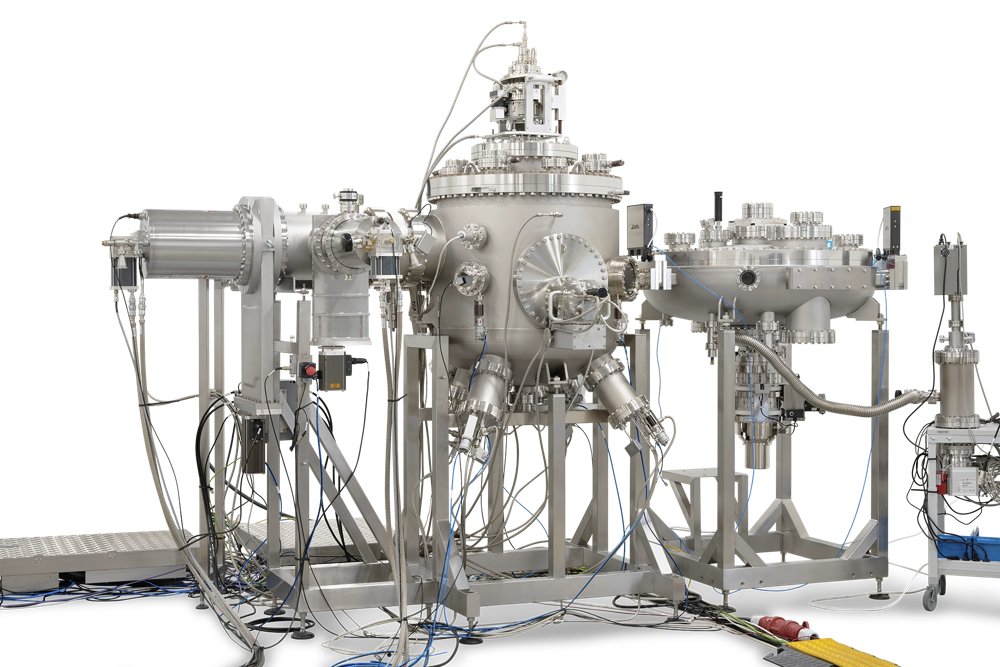
Production UHV Sputtering Systems for up to 12" wafers Magnetron sputtering allows deposition of very high-melting point materials, with high film adhesion and deposition rates compared to Effusion Cells. Key features: - Substrates up to 12″ /300 mm. - Fully automated UHV substrate/wafer transfer system. - Advanced sputtering technology with excellent growth uniformity (e.g. Titanium on Silicon (8″/200 mm with +/- 1%). - Customisation for specific applications/processes (nitrides/oxides) possible. - Integration of analytical tools (Optical/EIES, RHEED, RGA, Atom Absorption). Applications: - Quantum devices (STO & BTO). - Spintronics and Nanotechnology. - Semiconductor fabrication. - Research-grade multilayers. - High-temperature superconductors (NbN, TiN, VN). Production of emerging technologies demands reliability, reproducibility and leading edge performance, optimised with fully automated wafer transfer for high throughput. Facing Target Sputtering (FTS) is used for new devices. It offers low damage deposition for sensitive layers by containing the plasma between two facing targets, leading to reduced substrate damage from energetic ions and electrons. It also enables high deposition rates and high target utilisation, resulting in high-quality films with smooth surfaces, low defect states, and good electrical/optical properties required in for Quantum Photonics. The S-Series has been developed to operate at UHV base pressure (in the low 10 -10 Torr range), minimising substrate contamination and incorporation of undesirable species into a coating, a key challenge for novel magnetic and quantum devices. System overview S-Series for production seamlessly integrates into fully automated processes and is compatible with the fully automated CDC transfer systems. It features a proven chamber design, incorporating all necessary ports for sources, analytical components, pumping, and manipulation. S-Series at a glance: - (Multi-) Chamber system design, production ready: - S800 chamber for up to 8” (200 mm). - S1000 chamber for up to 12” (300 mm). - Customised chamber layouts. - Substrates: wafer without carrier ring, wafer with ring/holder. - Top-down sputtering: - Confocal design for co-deposition - Linear design options for sequential deposition. - FTS (Facing Target Sputtering) for e.g. large wafers using APEX-L linear sputter magnetron. - Substrate manipulator: - Substrate sizes from 6” (150 mm) to 12” (300 mm) - Rotation (60 rpm), heating (1000 °C) - DC, RF or magnetic bias - Manufactured from high temperature resistant materials and compatible with high oxygen pressures - Magnetron operation: - DC (typical for materials with high melting point) - RF (for insulating materials, prevents charge build-up at target) - Pulsed DC (for reactive sputtering and materials with high impedance) - HiPIMS (for e.g. materials with high microstructure) - True UHV compatibility with bakeout up to 200°C. - Integration of various analytical methods (Optical, RHEED, QCM, RGA) - Fully automated wafer transfer with UHV cluster tool (central distribution chamber with buffer chamber, sample storage and load lock). - Integrates perfectly into multi-chamber cluster tools for high throughput production requirements. Specifications S800 / S1000 / Custom Chamber diameter 800 mm / 1000 mm / custom Bakeout temperature 200°C Base pressure < 5 x10 -10 Torr Pump configuration Turbo Molecular / Cryo Pump and regulated throttling valve (downstream pressure control) Sputter magnetron source ports (confocal) up to 5 x CF150 (S800) up to 6 x CF150 (S1000) custom configuration to match requirements Linear sputter magnetron source ports up to 2 x CF350 (off-axis) RF Plasma source port CF100 RHEED ports CF63 (source), CF100 (screen) Gauging, RGA, Ellipsometry ports CF40 QCM, BFM, Optical ports CF63 Atom absorption ports CF16 Viewport(s) CF100 (with shutter) Top flange (wire seal) Manipulator, Viewports
CATEGORY
