By Gatan
EDAX APEX 3.1 delivers a suite of enhancements and critical bug fixes designed to empower researchers and engineers working with electron microscopy. This release reflects our commitment to innovation, scientific integrity, and user-centric design—helping you get closer to your samples and uncover more meaningful insights. Key features Rebuild elemental maps up to 50x faster - Generate true elemental maps in seconds or minutes instead of hours. Our refactored analytical engine calculates net count and, atomic or weight percent maps quickly,enabling rapid interpretation and improved workflow efficiency. Achieve greater accuracy on complex samples - Experience ~2x better carbon quantification accuracy with our enhanced analytical model. - Advanced features are now available to everyone. Advanced features, such oxygen by stoichiometry and conductive coating correction, are now in APEX EDS Standard, making it easier to analyze challenging samples reliably. Easier to use - Personalized acquisition and analysis settings are now associated with your user to prevent unwanted changes. - Sort analytical results by position or element to simplify quantitative analysis of multiple samples or regions of interest. - Uses the same quantification engine across all experiment types. Supports a wider range of microscope columns and microscope vendors - Enables more laboratories to leverage EDAX detectors and software seamlessly. Elevate your data collection and analysis with APEX 3.1, now running on Microsoft Windows 11. Why these updates matter Every feature and fix in APEX 3.1 is designed with the researcher’s journey in mind. Whether you’re pushing the boundaries of elemental analysis or streamlining your workflow, these improvements help you achieve more reliable, precise, and insightful results—reflecting our passion for discovery and collaboration.
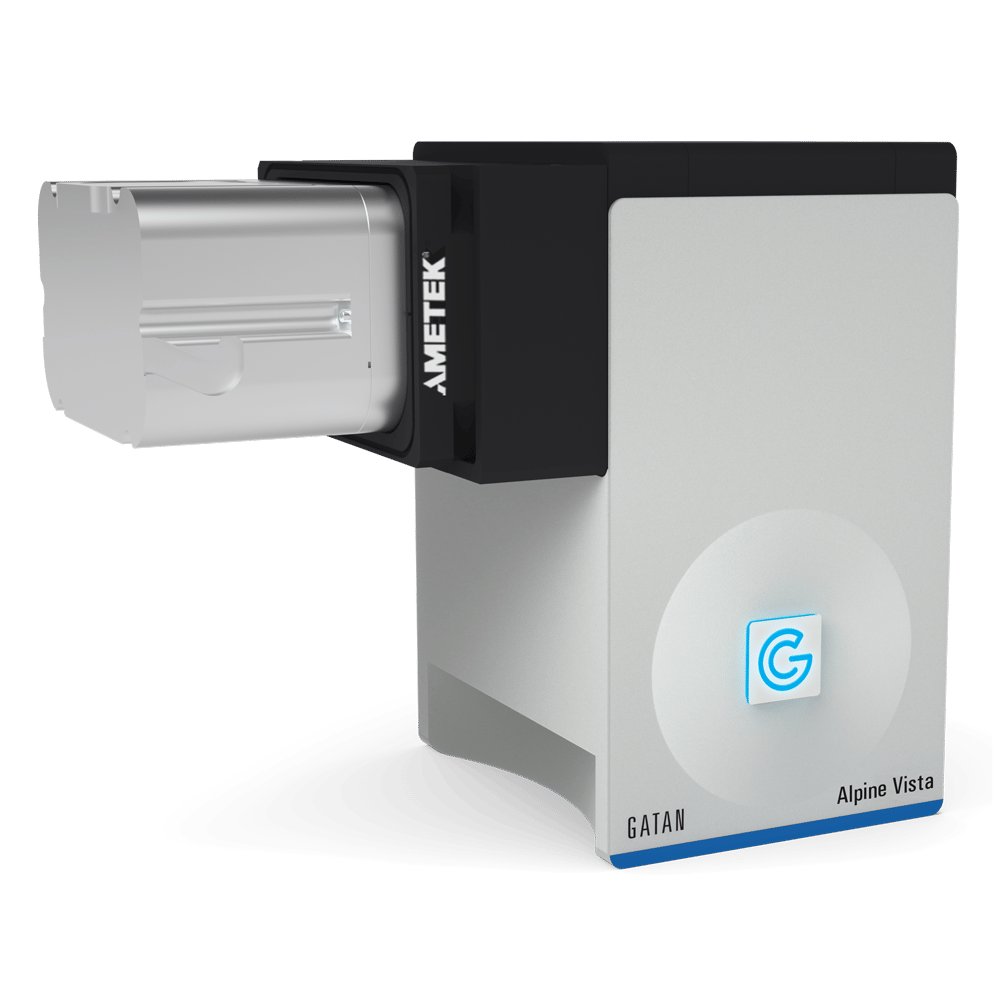
Models 1124, 1125. The world’s first direct detection cameras to democratize cryo-EM. Alpine®is the world’s first direct detection camera series to democratize cryo-electron microscopy (cryo-EM) imaging. By enabling the acquisition of high-resolution structures on 80 – 200 keV microscopes, the Alpine series allows routine cryo-EM research on more affordable, workhorse instruments and expands its usefulness to the larger research community. Two models available to match the field of view with your application needs: Alpine (1124) – Turns 80 – 200 keV screening microscopes into data-collection microscopes with single-electron counting capabilities. Delivers a detective quantum efficiency (DQE) up to 2.4-times the performance of scintillator-based cameras. Makes the 2D classification of small molecules possible while improving macromolecule reconstructions. Streamlines your workflow and detects failures early to produce better structures, faster. Real-time counting ensures there is no compromise between data collection speed and quality.
CATEGORY
Models 1124, 1125. The world’s first direct detection cameras to democratize cryo-EM. Alpine®is the world’s first direct detection camera series to democratize cryo-electron microscopy (cryo-EM) imaging. By enabling the acquisition of high-resolution structures on 80 – 200 keV microscopes, the Alpine series allows routine cryo-EM research on more affordable, workhorse instruments and expands its usefulness to the larger research community. Two models available to match the field of view with your application needs: Alpine Vista (1125) – Maximizes imaging throughput for your high-performance microscopes with a large FOV of 5,760 x 4,092 pixels. Delivers a detective quantum efficiency (DQE) up to 2.4-times the performance of scintillator-based cameras. Makes the 2D classification of small molecules possible while improving macromolecule reconstructions. Streamlines your workflow and detects failures early to produce better structures, faster. Real-time counting ensures there is no compromise between data collection speed and quality.
CATEGORY
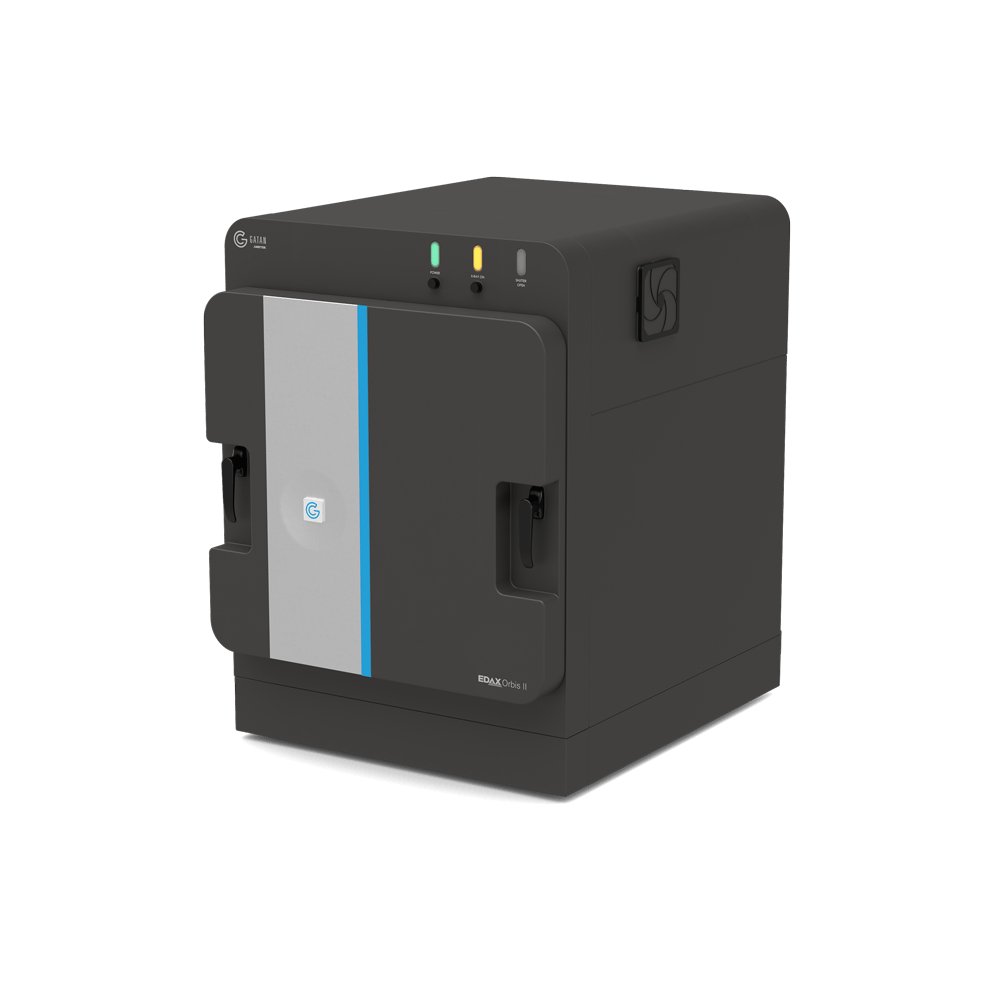
Model 1140 Delivers non-destructive, high-performance elemental analysis with unmatched flexibility and ease of use. The EDAX® Orbis™ II micro-x-ray fluorescence (micro-XRF) system delivers non-destructive, high-performance elemental analysis with unmatched flexibility and ease of use. Engineered for excellence across the full spectrum of micro-XRF applications, the Orbis II empowers users to analyze everything from the smallest particles to large, complex samples—quickly and accurately. Experience the next level of micro-XRF analysis with the EDAX Orbis II—where precision meets performance. - Custom x-ray window technology enables the detection of light elements - Proprietary coaxial light and x-ray optics precisely targets specific regions – eliminating x-ray interference from adjacent areas - Maximizes throughput by collecting spectra 2.5x faster and spectral maps 3x faster - Streamlines workflows with programmable autorun routines to boost productivity and ensure consistent results
CATEGORY
