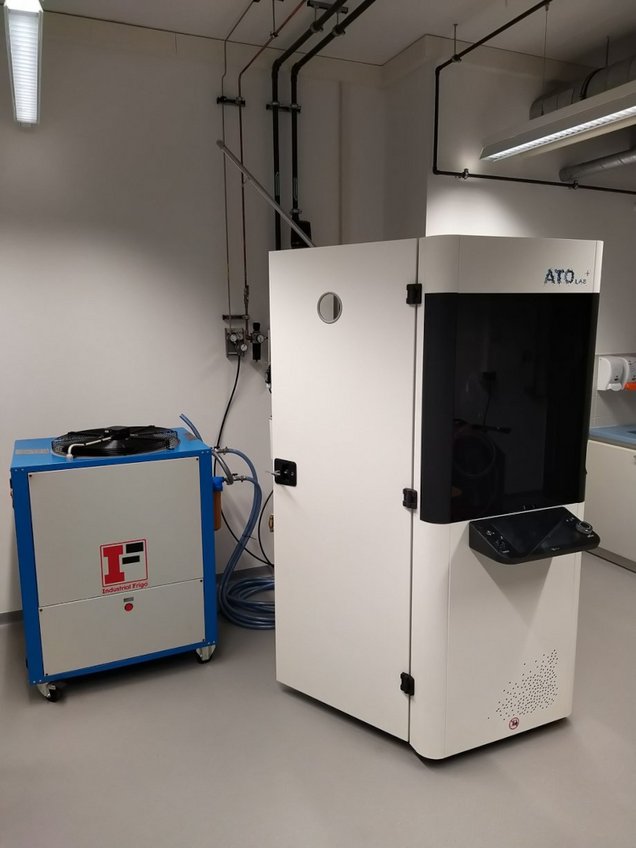
By Leibniz Institute for Solid State and Materials Research Dresden - IFW Dresden
Selected features: Compact ultrasonic atomizer for a wide range of metal alloys including Ti-based or other reactive metal materials Highly spherical metal powders suitable for material development in the field of additive manufacturing (powder bed fusion, deposition welding) Flexible machine setup for the atomization of wire or bulk (rods, several millimeters diameter) Low operating costs and high efficiency
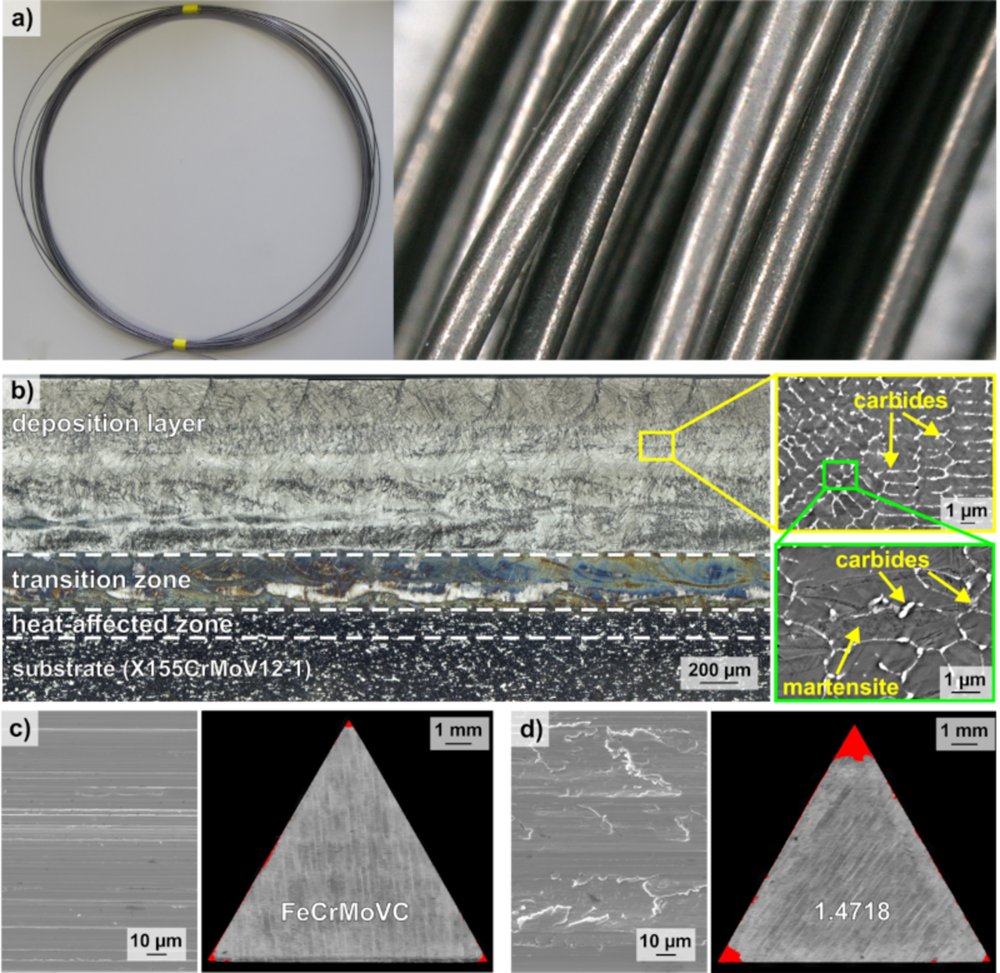
The research activities focus on the development of novel tailored steels applicable as filler materials for hardfacing and repair welding of high-performance tool steels, which can be processed as wire or powder material by e.g. manual laser cladding or directed energy deposition (DED). In order to extend the tool lifetime, deposition and repair welding provides a cost-efficient and resource-conserving method for the surface protection of tools (e.g. against wear and/or corrosion), to rebuilt worn or broken components or to correct production failures. To overcome the high susceptibility to cracking of most high-performance tool steels and the limited portfolio of adequate filler materials, tailored Fe-based alloys are designed and synthesized for different application-orientated specifications of tools and molds at Leibniz IFW Dresden. One example is the Fe85Cr4Mo8V2C1 (wt%) alloy, which is successfully applied as coating material on several high-performance tool steels (e.g. C-rich X155CrMo12-1) using a pulsed Nd:YAG laser system. Especially for repair purpose, manual laser cladding with thin filler wires (diameters down to 0.2 mm) is a preferred method for relevant industry areas. As a consequence, the alloy was fabricated as wire material at Leibniz IFW Dresden by an optimized workflow of suitable process technologies on an industrial scale. Due to the high cooling rates during the welding process and appropriate laser parameters, a fine microstructure composed of martensite, austenite as well as MC- and M2C-type carbides was formed. The combination of phases along with their special morphology and distribution result in crack-free coatings with an enhanced hardness of up to 900 HV 0.1 and a high abrasive wear resistance. Therefore, the final coatings with improved properties outperform conventionally available and applied cladding alloys.
CATEGORY
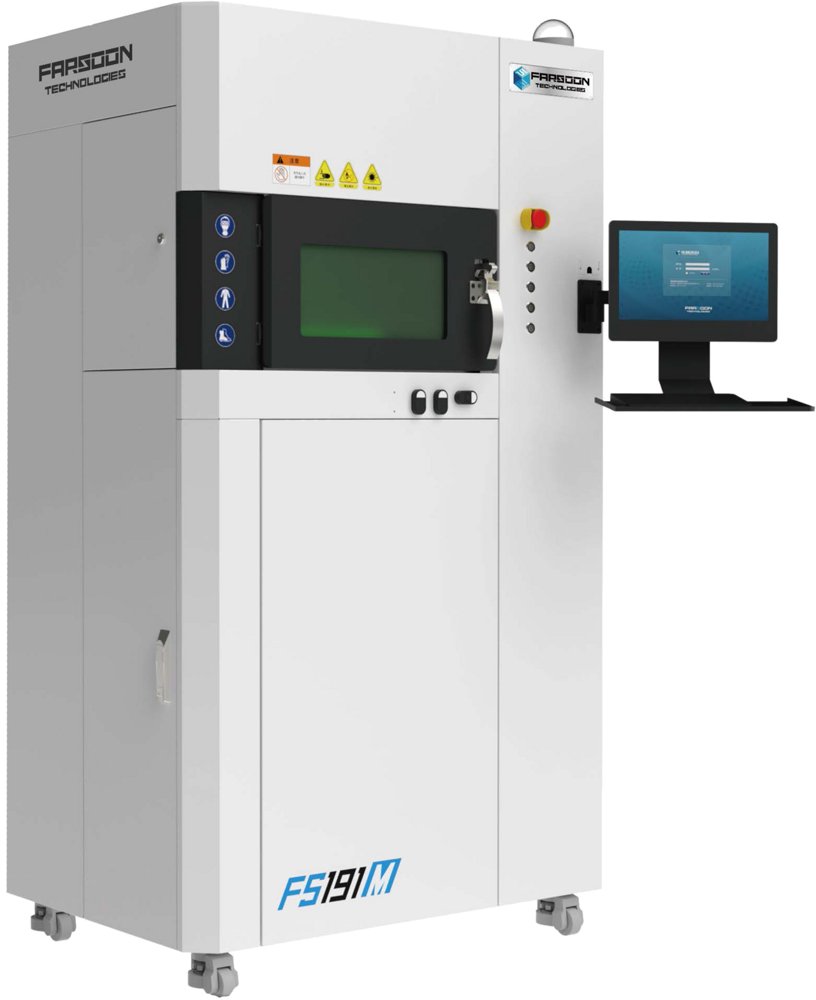
500W fiber laser for processing a wide range of alloys Maximum build envelope: Ø191 mm x 220 mm; reduced build envelope: Ø80 mm x 90 mm Laser beam shaping module (Gaussian and DoubleGaussian laser beam profiles) High-temperature build plate heating up to 400°C Permanent filter module Versatile and compact machine with short setup times, low powder consumption, and an open software platform
CATEGORY
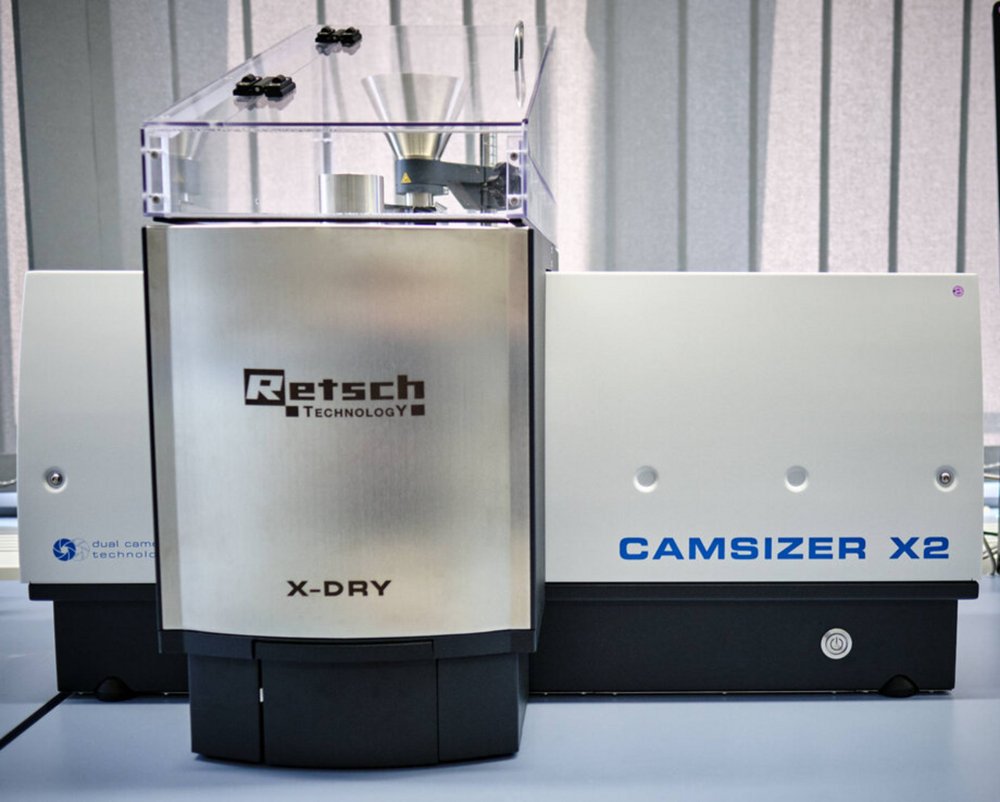
Dynamic picture analysis of powders and loose bulk solids (granules, fibers) Robust and reliable device for precise and quick measurements (several thousand to millions of particles) Particle size analysis from 1 µm to several millimeters Detailed 2D-analysis of shape characteristics (anisotropy, sphericity, symmetry)
CATEGORY
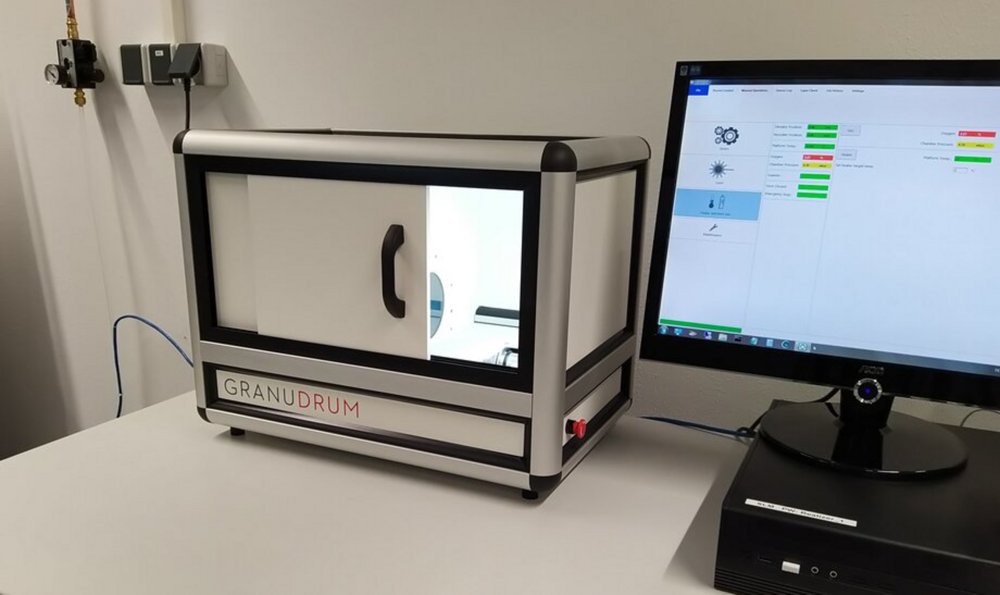
Automated powder flowability measurement device based on a rotating drum principle Dynamic measurement principle with adjustable rotating speeds for the detection of the air/powder interface relations Characterization of flowing angle and cohesive index Reduction cell for the analysis of small powder volumes
CATEGORY
