By Gatan
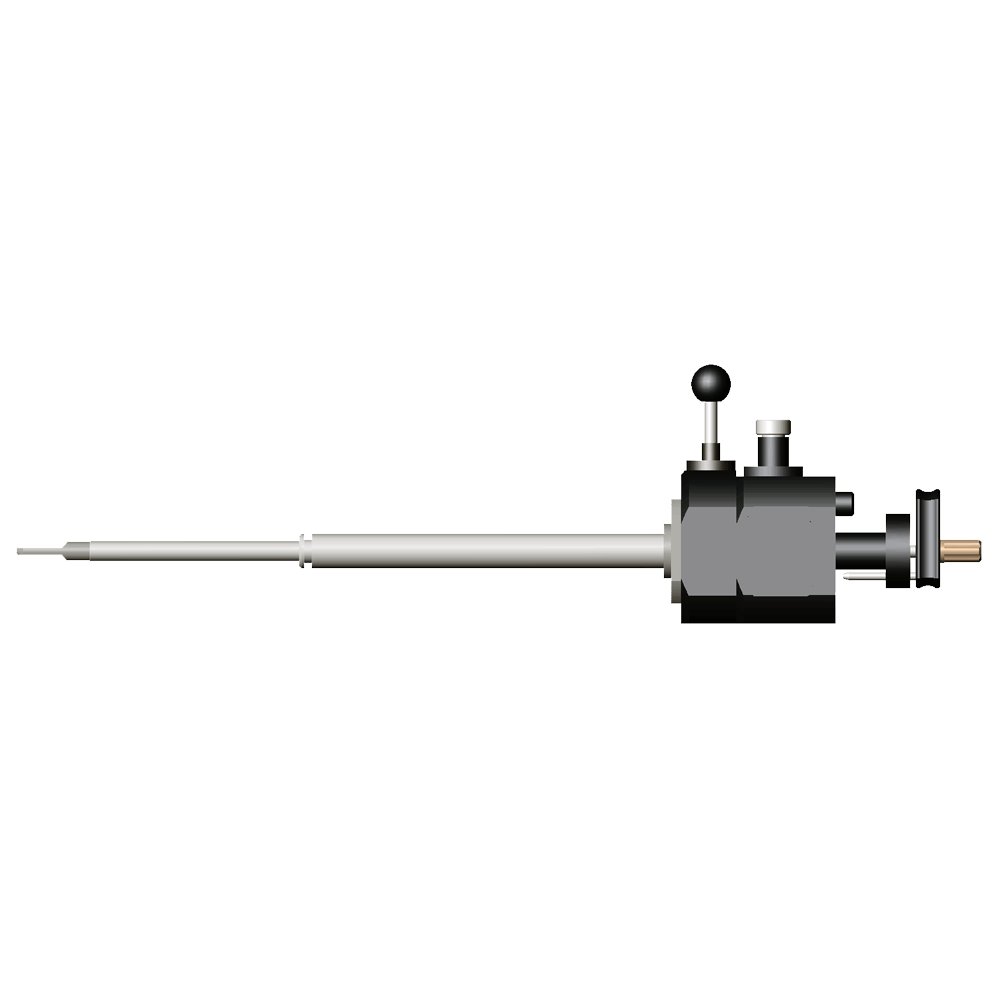
Double tilt vacuum transfer holder, model 648, permits the transfer of a specimen from a preparation station (glove box or vacuum chamber) into the transmission electron microscope (TEM) under vacuum or controlled atmospheric conditions. The tip of the specimen holder can be retracted into or extended from the barrel of the holder. Clockwise rotation of the black, knurled knob located at the back of the holder retracts and seals the specimen tip within the barrel of the holder to protect the specimen from atmospheric air during transfer to the TEM. Counter-clockwise rotation of this knob extends the specimen tip for specimen loading or viewing in the TEM. The specimen cradle and Hexring ® clamping system of the holder are made of beryllium to minimize any unwanted x-ray signals emanating from the holder when conducting energy-dispersive x-ray spectroscopy (EDS) analysis of the specimen. 1 The cradle is optimized to reduce shadowing effects for EDS analysis. A robust ToggleTilt™ mechanism provides β-tilt with no mechanical binding of the specimen cradle at its tilt limits. Depending upon the TEM model, the motor drive for the β-tilt mechanism can be operated directly from the microscope motor drive controls. Alternatively, the model 902 Accutroller can be used to adjust β-tilt of the specimen cradle with the added advantage that the cradle tilt angle can be displayed digitally, and tilt limits can be set electronically. 2 Benefits - Analytical design: Specimen cradle, Hexring, and anti-twist washers are made of beryllium for analytical applications - ToggleTilt β-drive mechanism: Robust operation with no mechanical binding of the specimen cradle at tilt limits Maximum ±30° using TEM control Maximum ±45° using Accutroller - Reduced shadowing: Optimized for EDS analysis 1 The beryllium Hexring mechanism and anti-twist washer are fragile. 2 Tilt ranges and compatibility of specimen holders vary according to the TEM manufacturer, model, pole piece gap, and the presence of in-gap accessories. Applications - Electron diffraction and EDS analysis of atmospherically sensitive specimens Specifications Drift rate at 0° tilt 1.5 nm/mm Resolution at 0° tilt 0.34 nm Observable area at 0º tilt Diameter 3.24 mm 2 2.03 mm Observable area at 60° α tilt 0.79 mm 2 Specimen cradle material Beryllium Standard holder tip material Titanium Faraday cup Not available Capacity Number of samples 1 Diameter 3 mm Max. grid thickness 100 μm The specifications provided herein are approximate and are intended only as guidelines. Drift rate and high-resolution performance are dependent upon ambient conditions and installation of the TEM pursuant to the manufacturer’s specifications. All specifications are subject to change. Ordering Model Description 648.MA Double Tilt Vacuum Transfer Holder, Model 648 (Motorized Tilt) 648.F Double Tilt Vacuum Transfer Holder, Model 648 (JEOL Only, FasTEM) 902 Accutroller System Unit must be configured for type when ordered.
Models 1124, 1125. The world’s first direct detection cameras to democratize cryo-EM. Alpine®is the world’s first direct detection camera series to democratize cryo-electron microscopy (cryo-EM) imaging. By enabling the acquisition of high-resolution structures on 80 – 200 keV microscopes, the Alpine series allows routine cryo-EM research on more affordable, workhorse instruments and expands its usefulness to the larger research community. Two models available to match the field of view with your application needs: Alpine (1124) – Turns 80 – 200 keV screening microscopes into data-collection microscopes with single-electron counting capabilities. Delivers a detective quantum efficiency (DQE) up to 2.4-times the performance of scintillator-based cameras. Makes the 2D classification of small molecules possible while improving macromolecule reconstructions. Streamlines your workflow and detects failures early to produce better structures, faster. Real-time counting ensures there is no compromise between data collection speed and quality.
CATEGORY
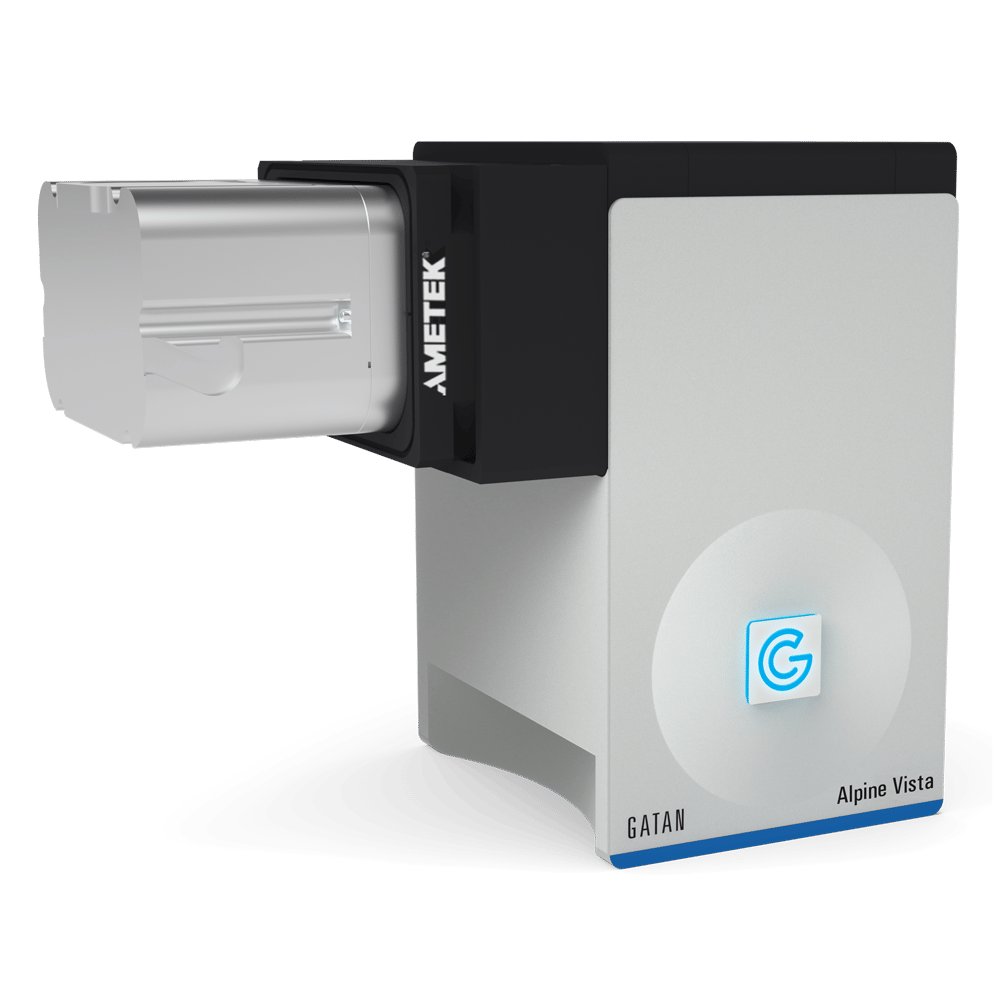
Models 1124, 1125. The world’s first direct detection cameras to democratize cryo-EM. Alpine®is the world’s first direct detection camera series to democratize cryo-electron microscopy (cryo-EM) imaging. By enabling the acquisition of high-resolution structures on 80 – 200 keV microscopes, the Alpine series allows routine cryo-EM research on more affordable, workhorse instruments and expands its usefulness to the larger research community. Two models available to match the field of view with your application needs: Alpine Vista (1125) – Maximizes imaging throughput for your high-performance microscopes with a large FOV of 5,760 x 4,092 pixels. Delivers a detective quantum efficiency (DQE) up to 2.4-times the performance of scintillator-based cameras. Makes the 2D classification of small molecules possible while improving macromolecule reconstructions. Streamlines your workflow and detects failures early to produce better structures, faster. Real-time counting ensures there is no compromise between data collection speed and quality.
CATEGORY
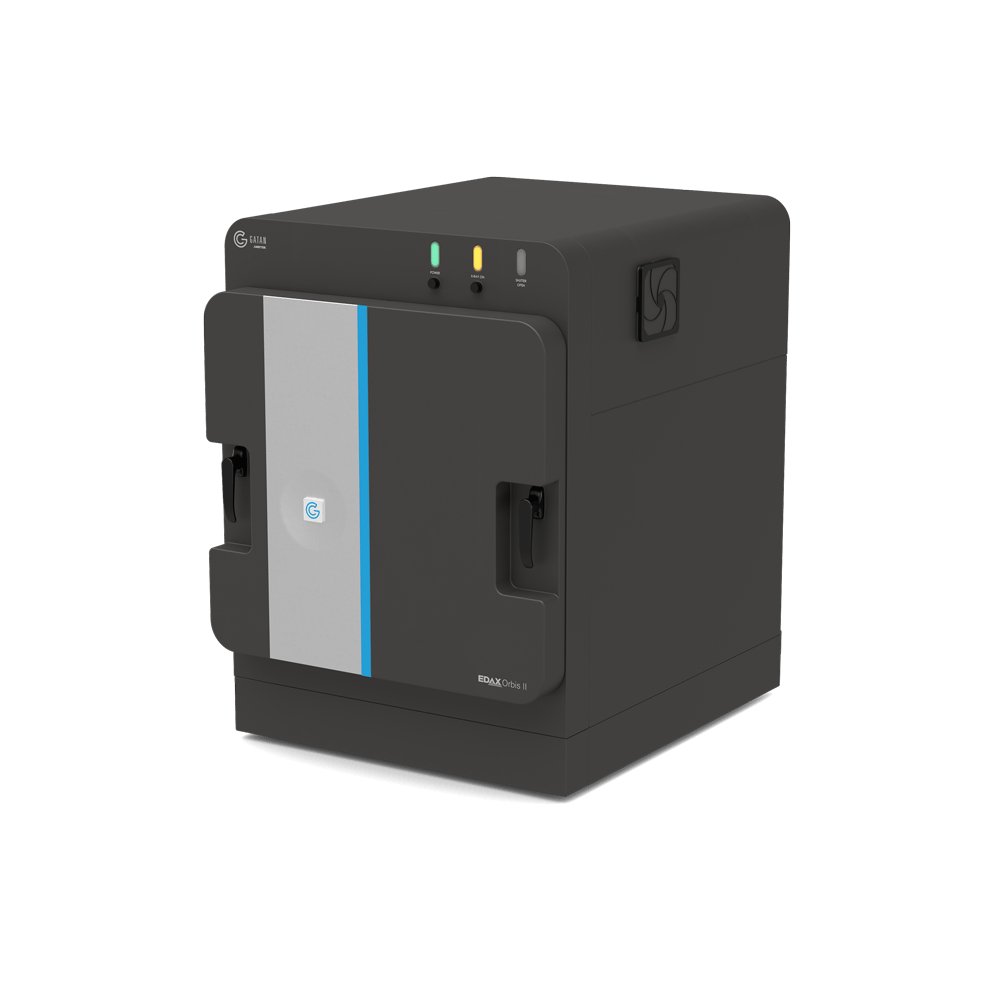
Model 1140 Delivers non-destructive, high-performance elemental analysis with unmatched flexibility and ease of use. The EDAX® Orbis™ II micro-x-ray fluorescence (micro-XRF) system delivers non-destructive, high-performance elemental analysis with unmatched flexibility and ease of use. Engineered for excellence across the full spectrum of micro-XRF applications, the Orbis II empowers users to analyze everything from the smallest particles to large, complex samples—quickly and accurately. Experience the next level of micro-XRF analysis with the EDAX Orbis II—where precision meets performance. - Custom x-ray window technology enables the detection of light elements - Proprietary coaxial light and x-ray optics precisely targets specific regions – eliminating x-ray interference from adjacent areas - Maximizes throughput by collecting spectra 2.5x faster and spectral maps 3x faster - Streamlines workflows with programmable autorun routines to boost productivity and ensure consistent results
CATEGORY
