By Gatan
Models 613, 636, 671 Optimized for low temperature observation of in-situ phase transitions. Transmission electron microscope (TEM) cooling holders are used in applications that require low temperature observation of in-situ phase transitions and to reduce contamination due to carbon migration. Reduce unwanted thermal effects in various analytical techniques and facilitates energy dispersive x-ray spectroscopy (EDS) and electron energy loss spectroscopy (EELS) analysis by reducing contamination and mass loss When configured for EDS applications, holder tip is designed to provide a clear path between sample and detector to reduce shadowing for EDS analysis Liquid nitrogen cooling holders: - Model 613: Minimum operating temperature Less than -170 °C; Beryllium cradle √; Specimen positioning α tilt; Specimen securing Hexring®; Faraday cup Optional; Maximum electrical feedthroughs (optional) 6 - Model 1697: Minimum operating temperature Less than -170 °C; Beryllium cradle Optional; Specimen positioning α, β tilt; Specimen securing Hexring; Motorized control β tilt; Faraday cup 0 Multi-function cooling holders: - Model 671: Minimum operating temperature Less than -170 °C; Specimen positioning α Tilt; Specimen securing Hexlok™ clamping screw; Specialized function Straining; Motorized control Straining; Maximum electrical feedthroughs 0 1 Analytical configuration uses a Hexring mechanism. 2 Configuration with electrical connections is a special build for this holder.
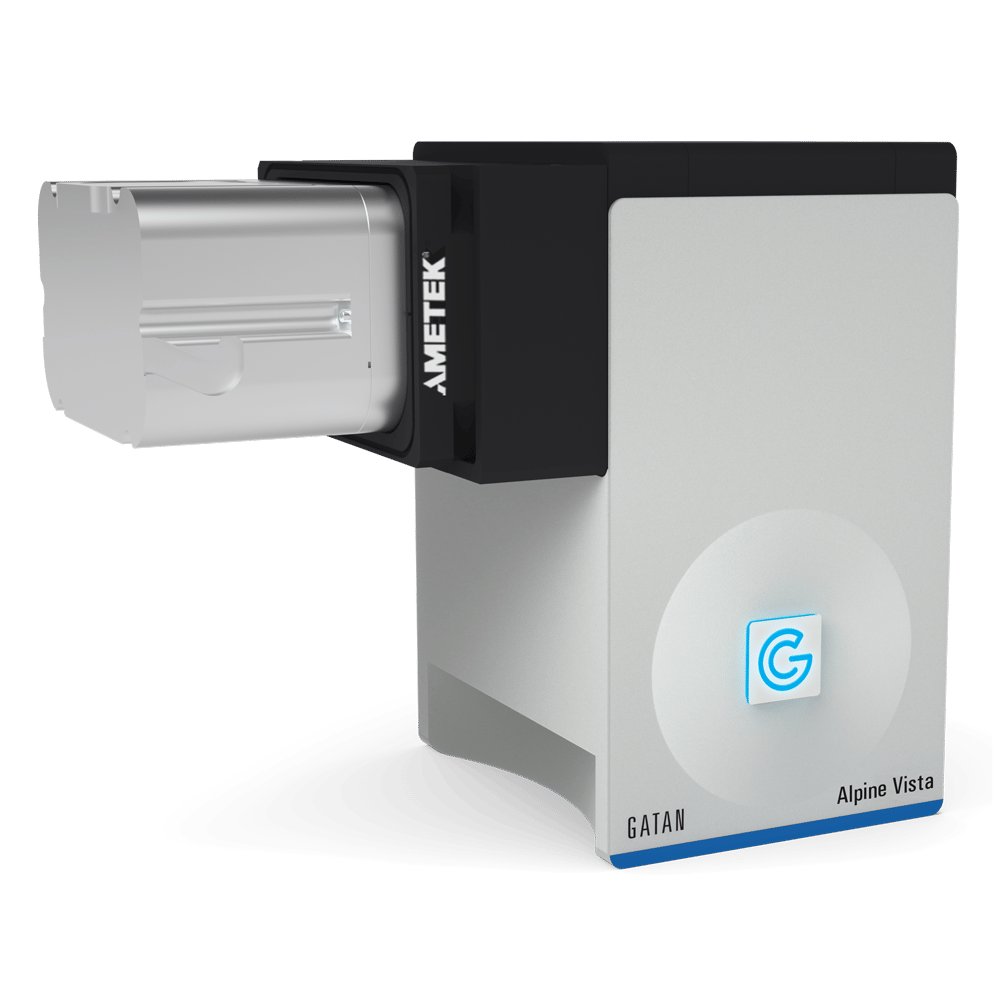
Models 1124, 1125. The world’s first direct detection cameras to democratize cryo-EM. Alpine®is the world’s first direct detection camera series to democratize cryo-electron microscopy (cryo-EM) imaging. By enabling the acquisition of high-resolution structures on 80 – 200 keV microscopes, the Alpine series allows routine cryo-EM research on more affordable, workhorse instruments and expands its usefulness to the larger research community. Two models available to match the field of view with your application needs: Alpine (1124) – Turns 80 – 200 keV screening microscopes into data-collection microscopes with single-electron counting capabilities. Delivers a detective quantum efficiency (DQE) up to 2.4-times the performance of scintillator-based cameras. Makes the 2D classification of small molecules possible while improving macromolecule reconstructions. Streamlines your workflow and detects failures early to produce better structures, faster. Real-time counting ensures there is no compromise between data collection speed and quality.
CATEGORY
Models 1124, 1125. The world’s first direct detection cameras to democratize cryo-EM. Alpine®is the world’s first direct detection camera series to democratize cryo-electron microscopy (cryo-EM) imaging. By enabling the acquisition of high-resolution structures on 80 – 200 keV microscopes, the Alpine series allows routine cryo-EM research on more affordable, workhorse instruments and expands its usefulness to the larger research community. Two models available to match the field of view with your application needs: Alpine Vista (1125) – Maximizes imaging throughput for your high-performance microscopes with a large FOV of 5,760 x 4,092 pixels. Delivers a detective quantum efficiency (DQE) up to 2.4-times the performance of scintillator-based cameras. Makes the 2D classification of small molecules possible while improving macromolecule reconstructions. Streamlines your workflow and detects failures early to produce better structures, faster. Real-time counting ensures there is no compromise between data collection speed and quality.
CATEGORY
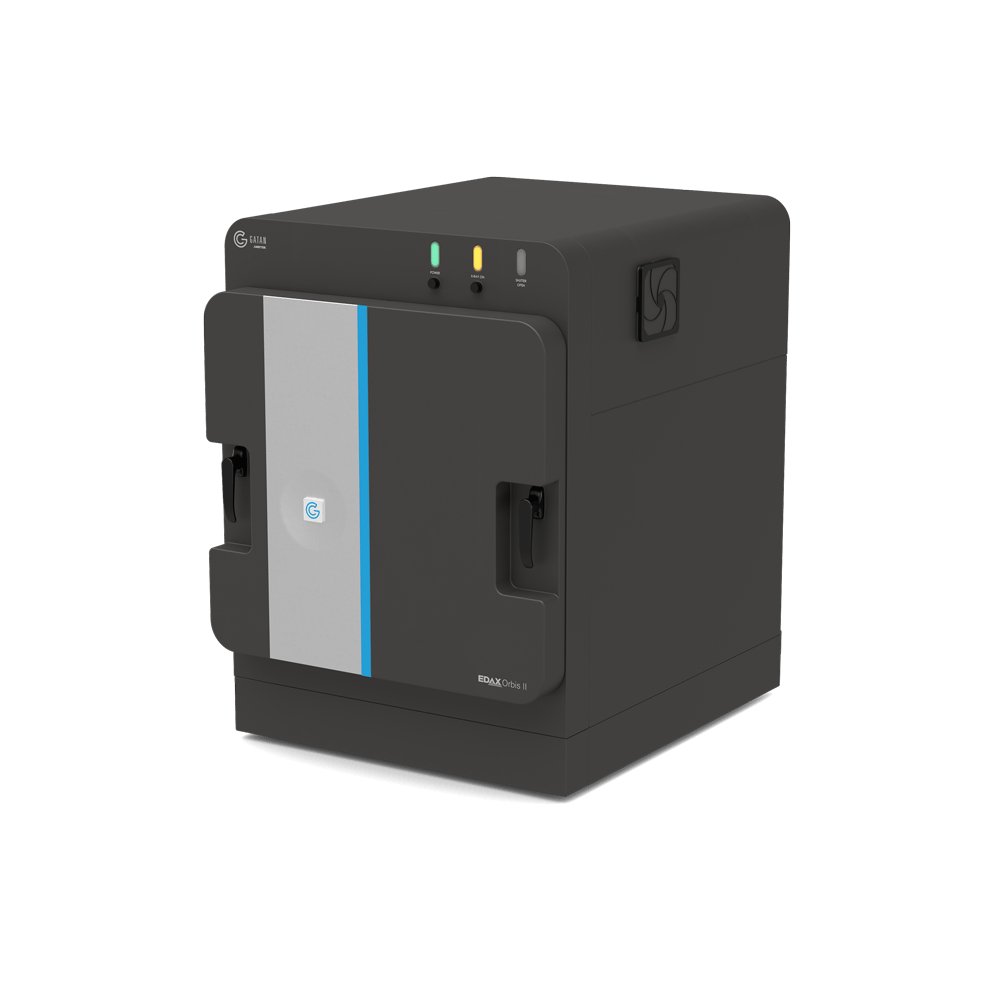
Model 1140 Delivers non-destructive, high-performance elemental analysis with unmatched flexibility and ease of use. The EDAX® Orbis™ II micro-x-ray fluorescence (micro-XRF) system delivers non-destructive, high-performance elemental analysis with unmatched flexibility and ease of use. Engineered for excellence across the full spectrum of micro-XRF applications, the Orbis II empowers users to analyze everything from the smallest particles to large, complex samples—quickly and accurately. Experience the next level of micro-XRF analysis with the EDAX Orbis II—where precision meets performance. - Custom x-ray window technology enables the detection of light elements - Proprietary coaxial light and x-ray optics precisely targets specific regions – eliminating x-ray interference from adjacent areas - Maximizes throughput by collecting spectra 2.5x faster and spectral maps 3x faster - Streamlines workflows with programmable autorun routines to boost productivity and ensure consistent results
CATEGORY
