By Ondax
These lasers come in an industry‑standard 14‑pin butterfly package, with either fiber‑coupled output (standard: 1 m, FC/PC, 0.22 NA, 105 µm MM fiber, 900 µm jacket) or free‑space output. Typical spectral bandwidth is ~0.07–0.09 nm (wavelength‑dependent), with SMSR ≥ 40 dB. The PowerLocker® VHG provides wavelength stabilization with < 0.010 nm/°C dependence over a broad stabilized temperature range. Threshold current: 250–325 mA (wavelength‑dependent) Operating current (typ–max): 800–1200 mA (typical) up to 1000–1600 mA (max), model‑dependent Operating voltage: ~1.9–2.5 V (typical–max, wavelength‑dependent). Always confirm the exact line in the datasheet table for your wavelength/SKU. TEC current (max): 2 A TEC voltage (max): 4 V Thermistor: 10 kΩ NTC, Beta 3450 Central stabilized temperature: 28 °C (typ), usable 20–40 °C; specified stabilized range ≥ 10 °C. Use a good thermal path and thermal paste; thermal runaway is possible if heat is not removed effectively. For free‑space models, polarization is typically >50:1. Multimode fiber-coupled units are mixed polarization. Free‑space beam divergence (typ.): V×H ≈ 3 mrad × 25 mrad (638 nm is ~3×11 mrad). Fiber‑coupled output is through 0.22 NA, 105 µm MM fiber. Because we tightly control wavelength accuracy and tolerance, it is important to specify the reference medium used for wavelength measurement. Light travels slightly more slowly in air than in vacuum, causing the wavelength in air to be marginally shorter. To avoid ambiguity and ensure consistency, wavelengths in our datasheets are vacuum‑referenced, which is also the convention used by many spectroscopy databases. As an example, a HeNe laser specified at 632.991 nm in vacuum corresponds to 632.816 nm in air. This difference does not indicate a physical change in the laser, only a difference in how the wavelength is referenced. Laser diodes are highly ESD‑sensitive; keep anode/cathode shorted when not in use. Use a static‑free work area, grounded wrist straps, and conductive containers. Latent ESD damage can shorten lifetime. Mount stress‑free on a flat, thermally conductive surface with thermal paste. Primary heat removal is through the baseplate; inadequate heat sinking can cause thermal runaway and permanent damage. The lasers are wavelength‑stabilized across 0–100% power, which helps keep Raman shift calibration tight during power ramping. The narrow spectral bandwidth (e.g., ~0.08 nm typical at 785/830/976 nm) and high SMSR improve rejection of ASE and side modes in spectrometers. ASE bandpass filters are required.
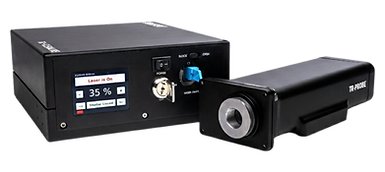
SIERRA™ Raman Spectrometer with SURELOCK™ laser is engineered to be ultra-compact, durable, and easy to use, making it an ideal choice for any Raman spectroscopy applications. Featuring the SureLock™ Laser, it ensures steady, high-power, and spectrum-narrowed performance while maintaining low power consumption. The SIERRA™ platform combines a well-established SureLock wavelength-stabilized laser source with an integrated spectrometer in a single compact housing. This architecture reduces alignment complexity and simplifies system integration. Sierra is designed to accelerate the development of Raman solutions by providing a turnkey optical engine that ensures consistent, reproducible performance while lowering overall system size and cost.
CATEGORY
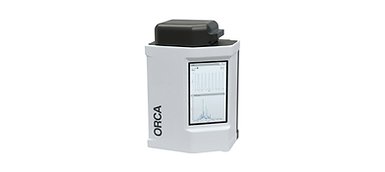
ORCA is a THz-Raman™ crystallinity meter that uses a scanning laser beam to detect and identify low concentrations of specific polymorphs of Active Pharmaceutical Ingredients (APIs) within complex mixtures. By probing low-frequency lattice vibrations that are highly sensitive to crystal structure, ORCA enables reliable detection of targeted polymorphic forms even at very low concentrations. This rapid, non-destructive technique requires little to no sample preparation and provides a powerful complement to PXRD for solid-form characterization. ORCA supports polymorph screening, crystallinity analysis, and pharmaceutical quality control, enabling fast identification of crystalline phases directly within heterogeneous samples.
CATEGORY
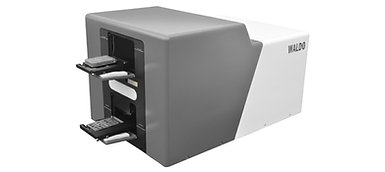
WALDO builds on the WPS high-throughput THz-Raman™ screening platform by adding flexible measurement geometries for a wider range of microplate formats. WALDO supports laser scanning through transparent well plates as well as top-down excitation for opaque plates, including stainless steel and Kapton plates commonly used for PXRD experiments. This dual-mode capability allows researchers to perform rapid polymorph screening and crystallinity analysis across different sample holders while leveraging the sensitivity of low-frequency THz-Raman™ spectroscopy to probe crystal lattice structure and molecular composition.
CATEGORY
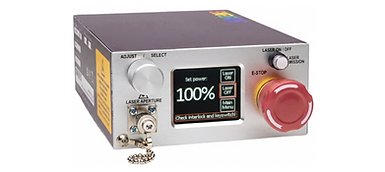
SureLock™ wavelength-stabilized laser diodes and modules incorporate our ultra-narrowband VBGs, forming an external cavity using TruSet to precisely lock the laser’s wavelength to the needs of the application. This enhances spectral brightness and optical performance stability across the entire power range and extended temperature conditions. The extremely short external cavity offers superior mode selection and a smaller footprint than Littrow or Littman cavity designs while reducing the spectral bandwidth of a typical laser by an order of magnitude. With fast warm-up times, flexible power options, and consistent performance, these lasers are ideal for demanding applications such as analytical instruments. Available as modules or components, SureLock® lasers offer flexibility for seamless development and system integration. Applications - Raman spectroscopy - Holography - HeNe replacement - Particle characterization - Analytical instrumentation - Speckle interferometry - Metrology and inspection
CATEGORY
