
By CIC nanoGUNE
A. Chuvilin, S. Merkens, C. Tollan and M. Grzelczak Priority date: 24 July 2023 Flow Cells for Liquid-Phase Transmission EM and Methods Ownership - CIC nanoGUNE (99,5%) - University of the Basque Country UPV/EHU (0,5%) Usage Model reactor for quantitative monitoring of nanoscale samples in liquid environment via transmission electron microscopy. Description - A new concept of liquid cells in which mass transport is controlled to enable the monitoring of nanoscale dynamics via transmission electron microscopy, capable of replicating relevant experimental parameters from ex situ experiments. - Micrometer-sized channels guide the fluid flow into the liquid cell but around the central nanochannel, where imaging is performed and in which diffusion is imposed as the dominant mass transport mechanism due to the higher flow resistance. - Utilizing MEMS (Micro-Electro-Mechanical Systems) technology, the liquid cell can be customized in various configurations to tune its hydrodynamic properties. The micrometer-sized channels can either surround the electron-beam transparent membrane or be directly formed by its structure through corrugation. Advantages - Extremely fast (~ s) solution exchange comparable to benchtop scenarios; renewal for electrochemical application and replacement for mixing experiments - Very low (~ mbar/(mL/h)) overall flow resistance; reduces risk of window rupture and bulging or allows for higher volumetric flow rates - Very slow (~ µm/s) local flow velocity; reduces risk to flush sample away - Modular assembly; circumvents restrictions due to the sample deposition and ensures compatibility with existing sample holders
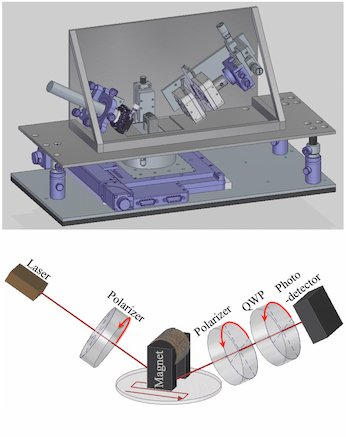
E. Oblak, A. Berger, P. Riego, A. Garcia-Manso, A. Martinez-de Guerenu, F. Arizti, and A. Irizar Priority date: 30 April 2019 Granted: Europe (01/12/2021) Ownership CIC nanoGUNE Usage Ultra-sensitive detection of magneto-optical signals by an ellipsometric extraction method, capable to measure even non-ferromagnetic samples. Description - A tool that is capable of AC-field modulated magneto-optical ellipsometry measurements and designed to do this in an extremely sensitive manner, while using low-cost components. - It is a stand-alone system that does not require a high-quality laboratory environment. It achieves (sufficiently) rapid metrology data acquisition, so that it is capable of scanning entire wafers. Thus, it has the potential to be utilized under production like conditions. - Due to our novel methodology we are able to obtain measurements with a sensitivity in the rage of 510-8 and are able to characterize ferromagnetic samples as well as non-ferromagnetic samples. - We have demonstrated that separate information about different individual layers in a magnetic multilayer system can be obtained,even if individual layers generate only a very small fraction of the magneto-optical signal.It is furthermore possible to detect if such different layers show a synchronized or unsynchronized magnetization reversal. ADVANTAGES - T-MOKE geometry – more suitable for applications (compact design) - Robustness - Extreme sensitivity level - Efficient false signal suppression - Cost-effective components - Entire surface scans possible - No (high quality) laboratory environment needed
CATEGORY

M. Knez, M. Beltran, D. Talavera, and M. Vila Priority date: 22 September 2016 Granted: Spain (03/03/2020) Owned by: CIC nanoGUNE, Ctech-nano, S.L. Licensed to: Ctech-nano, S.L.
CATEGORY
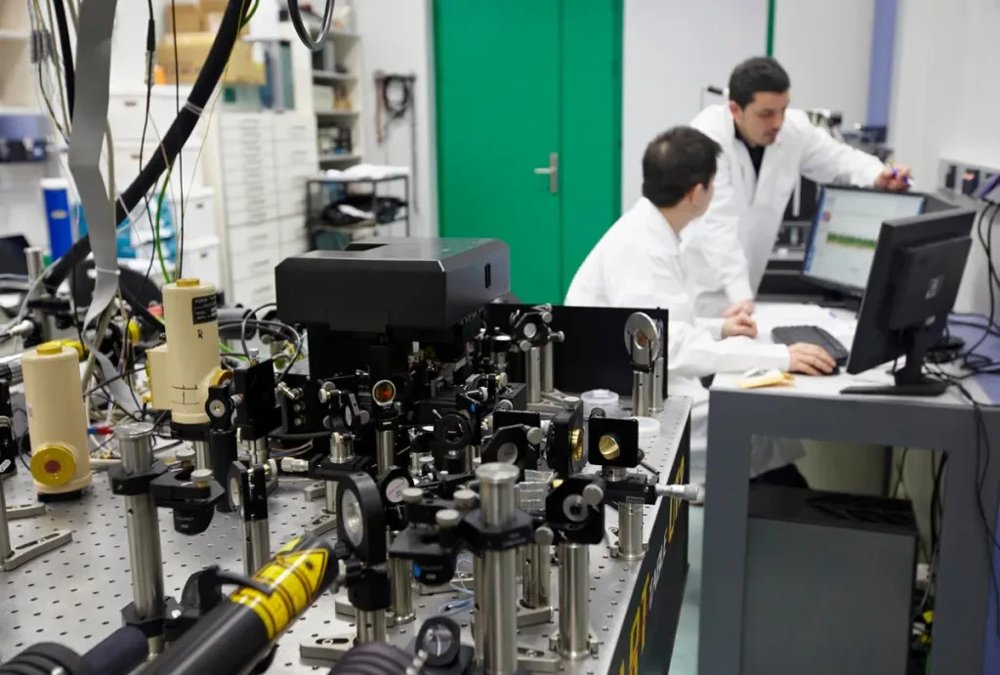
F. Koppens, S. Castilla, V. Pusapati, R. Hillenbrand, A.Bylinkin Priority date: 03 June 2024 Ownership - ICFO (75%) - CIC nanoGUNE (25%)
CATEGORY
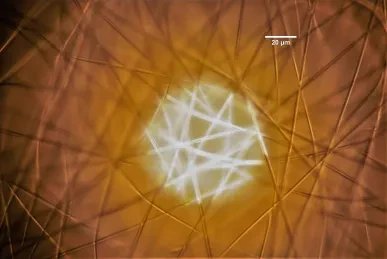
So in recent years "we have developed the Novaspider equipment, which merges 3D printing manufacturing techniques with electrospinning techniques to produce fibers", explained Latasa. "By using polymer nanofibers, whose nature, diameter, appearance and morphology can be simply and efficiently modulated, the equipment makes it possible to design composite materials that are robust, light, porous and have a high specific surface area," he added.
CATEGORY
