By BE Semiconductor Industries N.V.
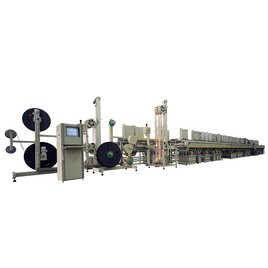
Meco's Solution for High Speed Spot Plating with Exceptional Flexibility Meco's internationally patented spot-wheel technology with its modular construction provides the best solution for high speed selective silverspot plating in today's market. Meco originally developed the patented spot tool system to plate leadframes on a continuous basis. This lead to a number of advantages over the traditional step and repeat plating systems. Today's leadframe market is rapidly moving towards more diversity in IC-packaging with variable spot patterns. Besides the trend towards lead-less packages (like CSP, BGA), matrix leadframes are more and more required. Meco's spot technology is well prepared to handle variable spot patterns such as single-spot, minispot, ring-spot, matrix-spot and stripes. All these diverse products can be handled with the same selective spot equipment by simple and easy exchange of the product specific spot-tooling. Meco's Spot Technology The spot wheel technology is based on a continuously moving product onto a rotating spot wheel (spot-tool) in combination with a stationary jet and integrated anode (sparger). The plating solution is pumped through the anodes and slots of the sparger on the rotating spot-tool, onto the moving product. Accurate positioning of the spots is ensured by pilot pins on the spot-tool and matching pilot holes in the leadframe. Both the spot-tool and sparger can be easily exchanged when changing to a different product set-up. Spot-Tool and Sparger Configuration Variable spot patterns require variable solutions. Therefore, Meco supplies several spot-tool configurations such as spot-wheel, stripe-wheel, "chain" spot-wheel and combinations of it. For silverspot plating we commonly use "chain" spot-wheels as shown, which gives the best spot tolerance. Main purpose of the sparger is providing high agitation. Therefore, the sparger configuration is dependent on product and spot-tool. We supply several sparger types, such as length-slotted, cross-slotted or with small holes. The cross-slotted as shown is commonly used for matrix products. Good Distribution As with all Meco technologies, the continuous nature of the spot plating reduces individual spot distribution characteristics to fall well within the industries standards and ensures repeatability from spot to spot. High Speed Plating Meco's spot technology makes high plating speeds possible (roughly 3 times faster than for step and repeat systems). Because the leadframe moves continuously around and engages with the spot-tool, there is no "dead" time as seen in the step and repeat system. For high-speed silver spot plating you can reach up to 156 micron per minute based on 250 A/dm2, depending on spot configuration. In most high-speed silver spot lines with line speeds up to 12 m/min a tandem spot unit is sufficient to reach the common silver specification of 4 microns. Low Product Change-Over Time With the Meco spot-tool and sparger concept, low conversion times can be reached. Converting to a new product will take approx. 4 hours by a well trained operator. For a product within the same product family it can be done within an hour by a well trained operator. Minimum Drag-Over The high drag-over values seen in step and repeat machines are dramatically reduced in the Meco RTR Ag line, whilst overall output is much faster. The drag-over caused by the step and repeat rapid advancement motion is eliminated in the Meco's continuous operation.
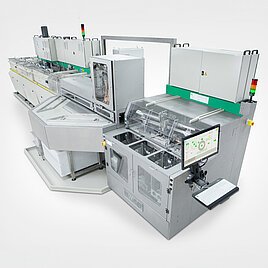
Revolutionary Loading System: Gentle Handling for Leadframes The Meco CDL 1500 redefines leadframe handling, introducing a sophisticated loading mechanism designed to treat leadframes with the utmost care, eliminating any risk of damage. The patented Meco carrier belt, engineered to reduce drag, facilitates deflashing on both sides of the leadframe in a single pass. Automatic Precision: Stacked and/or Slotted Magazine Handling Choose from a range of product handling options, including stacked magazine handling with a buffer system accommodating 1 to 7 magazines, or slotted magazine handling with a buffer system handling up to 6 magazines. The system also supports a combination of stack and slotted magazine handling. Employing a specially designed clip device, the Meco CDL 1500 ensures the automatic loading and unloading of leadframes onto the continuously moving carrier belt. Products can be loaded closely together, with a mere 2-3 mm gap between each item. Flexibility and Swift Change-Over Time The Meco CDL 1500 stands out for its remarkable product flexibility and rapid change-over time. With minimal product-related parts, change-overs can be completed in under 5 minutes by a single operator. This flexibility allows handling various frame sizes, ranging from 150 mm to 300 mm in length and 25 mm to 100 mm in width. Setting the Benchmark in Chemical Deflashing Sensitive packages pose a challenge with electro deflashing due to potential delamination caused by hydrogen bubble formation. Our chemical deflashing method immerses the leadframe in a specially designed water-based solution, eliminating hydrogen formation. The chemical is molding compound-friendly, even with extended dwell times. The continuously moving carrier belt transports the strips to the CD Turret for deflashing. Dwell time options range from 20 minutes (1200 strips/h) to 60 minutes (400 strips/h). After undergoing high-pressure deflashing and final cleaning, the fully automatic, synchronized unload positions discharge the strips into magazines. Continuous Processing Advantages The continuous processing of strips through the machine offers significant advantages over batch-type deflash lines. Consistent treatment conditions result in excellent deflash quality, with minimal variation from one product type to another. Additionally, the close proximity of loaded products on the carrier belt enhances overall efficiency. Seamless Control with Electro Plating Control Software (B6) Ensuring easy control and monitoring of the CDL cleaning line, our Electro Plating Control Software (B6) features a user-friendly interface based on the Windows operating system. Users can manage machine operations, check process parameters, modify setpoints, and store different recipes for swift change-overs. Security and User Access Control Security and user access control are paramount at Meco. Each user enjoys their own authorization level, limiting tasks to the appropriate level of access. The B6 guarantees that all process parameters align with specified values before production begins, preventing errors and optimizing performance. Cost-Effective and Efficient The Meco CDL 1500 not only delivers superior performance but also offers cost-saving benefits. With low water usage, high production yields, and minimal running costs, the system ensures efficient and economical operations. Experience the Pinnacle of Chemical Deflashing Elevate your chemical deflashing experience with Meco's CDL 1500 system. Trust in our expertise, innovative technology, and unwavering commitment to delivering high-quality solutions. Contact us today to discover how our cutting-edge systems can enhance your production process and maximize your success.
CATEGORY
Mecostrip EPL 4 is an anodic acidic, non fluoride containing, electrolytic stripping process for fast stripping of tin or tin-lead from stainless steel. Mecostrip EPL 4 is an anodic acidic, non fluoride containing, electrolytic stripping process for fast stripping of tin or tin-lead from stainless steel. The process is primarily designed for use in the Meco EPL plating lines to strip the tin or tin-lead deposits from the stainless steel carrier belt. Unlike other acid strippers, this stripper does not produce sludge and does nor leave any residue on the carrier belt. All the stripped tin or tin-lead will be redeposited on the stainless steel cathode plates, which results in low metal concentrations in the electrolytic solution. The attach on the carrier belt is negligible. The Mecostrip EPL 4 does not leave a strongly passivated stainless steel surface and therefore activation of the carrier belt can be easily carried out. To order Mecostrip EPL 4 please use the following information: - Mecostrip EPL 4 Make Up: Product Code 888.900.25623 - Mecostrip EPL 4 Replenisher: Product Code 888.900.25624
CATEGORY
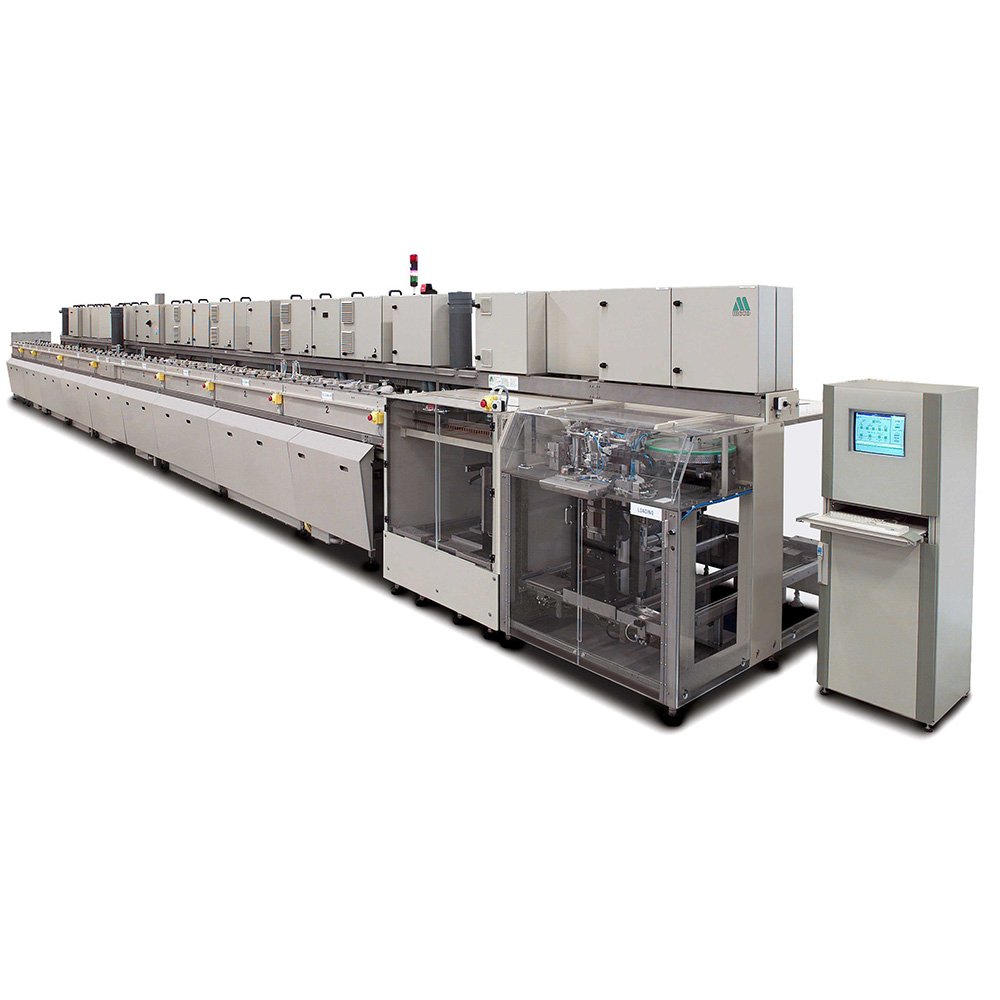
Meco - Advancing Flux Cleaning to the Next Level Meco is the industry leader in leadframe solder plating and flux cleaning solutions. With over 400 installations of our computer-controlled EDF/EPL systems, we set the standard in the industry. Now, we are taking flux cleaning to new heights with our latest innovation, the Meco FXL System. Experience the next level of flux cleaning with Meco's FXL System. Trust our expertise, innovative technology, and commitment to delivering high-quality solutions. Contact us today to learn more about how our cutting-edge systems can enhance your production process and maximize your success. Key features Innovative Loading System: Handling Leadframes with Care Our FXL System introduces a sophisticated loading mechanism that handles leadframes with utmost care, eliminating any damage or sagging of wires even for leadframes with exposed die. The patented Meco carrier belt reduces drag and allows for cleaning on both sides of the leadframe in a single pass. Automatic and Efficient: Slotted Magazine and Clip Device Featuring a slotted magazine and a specially designed clip device, our FXL System ensures automatic loading and unloading of leadframes onto the continuous carrier belt. The system enables products to be loaded closely together, with a gap of only 2-3 mm between each item. Product Flexibility and Quick Change-Over Time One of the significant advantages of the FXL System is its high product flexibility and fast change-over time. With just a few product-related parts, change-overs can be accomplished in less than 5 minutes by a single operator. This flexibility allows you to handle various frame sizes, ranging from 150 mm to 300 mm in length and 25 mm to 100 mm in width. Easy Control with Electro Plating Control Software (EPCS) To facilitate easy control and monitoring of the FXL cleaning line, we provide the Electro Plating Control Software (EPCS). With a user-friendly interface based on the Windows operating system, the EPCS offers a clear view of the system's status. It allows users to control machine operations, check process parameters, modify setpoints, and store different recipes for quick change-overs. Security and User Access Control At Meco, we prioritize security and user access control. Each user has their own authorization level, ensuring that tasks are limited to the appropriate level of access. The EPCS guarantees that all process parameters are within specification values before production begins, preventing errors and optimizing performance. Cost Savings and Efficiency The FXL System not only delivers superior performance but also offers cost-saving benefits. With its low water usage, high production yields, and minimal running costs, the system ensures efficient and economical operations. Experience the Next Level of Flux Cleaning Experience the next level of flux cleaning with Meco's FXL System. Trust our expertise, innovative technology, and commitment to delivering high-quality solutions. Contact us today to learn more about how our cutting-edge systems can enhance your production process and maximize your success. Downloads FXL 2022.pdf
CATEGORY
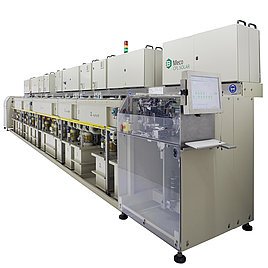
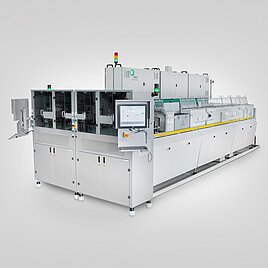
Meco CPL: More Power Out of Your Cell at a Lower Cost! The Meco CPL is based on the robust and proven concept of the Meco EPL which has, with more than 350 machines installed worldwide, built a reputation in the semiconductor world for leadframe plating applications. Key Features - Vertical product handling - Low drag-out of plating chemicals - Compact machine design/easy to maintain - Inline plating process/high up time - Efficiency improvement: 0.3 - 0.5 % (abs.) with seed-and-plate - Proven machine concept ( 350 machines in semiconductor industry) - Ideal platform for plating of Interdigitated Back Contact (IBC) cells where a thick Cu-Sn layer is plated on the rearside electrode - Ideal platform for plating of HIT cells as Cu plating drastically reduces the high metallization costs associated with heterojunction cells - Plating on frontside and backside at the same time for metallization (plating) of bi-facial cells such as HIT cells - Plating of n-type cells - Process start-up by Meco Details A vast majority of Si cells is produced by screen printing silver paste onto the front side of the wafer. To form electrical contact with the cell emitter a firing step is done afterwards. This is a well established production method within the PV industry although there are areas for further improvement. Typically screen printed contact fingers are printed 90-100 micron wide to obtain sufficient electrical conductance. To further increase the cell efficiency the contact finger width can be reduced as the active area of the cell increases (less shading). However, cell efficiency improvement is limited as the poor aspect ratio of screen printed contact fingers leads to an increase of the contact finger resistance value at the same time. Meco offers a real solution for cell efficiency improvement: the process starts on a narrow and thin seed layer of Ag paste where the electrical conductance of the contact finger is further enhanced by electroplating either Ag or Ni-Cu-Sn onto it. This gives a narrow contact finger while the resistance value is also improved at the same time. With the CPL, an overall absolute cell efficiency improvement of 0.3 - 0.5% can be obtained and also expensive Ag paste can be saved as only a narrow and thin seed layer is required. Therefore with the CPL an RoI of < 1 year can be achieved! The total CPL throughput is 1,500 to 3,000 cells/hour. Specifications - Cell size: 5 x 5", 6 x 6" - Cell type: mono-c, multi-c - Cell technology: p-type, n-type, bifacial, MWT, Back Contact (IBC), HIT cells - Metal options: Ag, Ni-Cu-Sn, Cu-Sn (for IBC) - Plating thickness (typical) Ag: 5-7 um, Ni: 1 um, Cu: 8 um, Sn: 2-3 um - Throughput: 1,500 - 3,000 UPH (pilot line: 100 - 500 UPH) - Production capacity 50 - 100 MW/year
CATEGORY
