By Photon etc
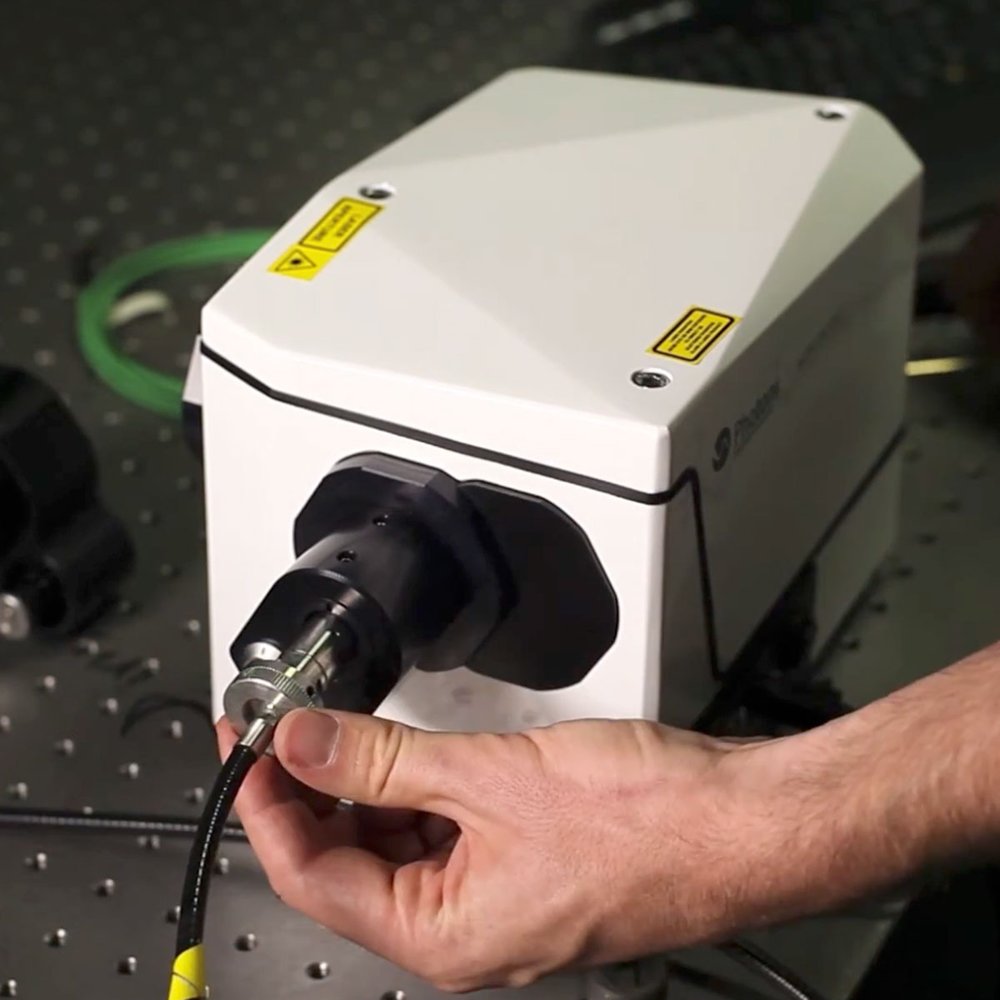
Supercontinuum Tunable Filter Fast and accurate wavelength tuning for optimal use of supercontinuum sources. The Laser Line Tunable Filter (LLTF CONTRAST) is a non-dispersive tunable bandpass filter based on volume Bragg gratings. Once coupled to a supercontinuum white laser, it acts as a wavelength selector to produce a continuously tunable source. It combines outstanding out-of-band rejection with an optical density higher than OD6 and a wideband tuning range across the visible (VIS) and infrared (NIR, SWIR) spectra. This supercontinuum filter can be customized to cover the entire 400 nm to 2500 nm spectral range with high resolution in wavelength. Moreover, the LLTF CONTRAST requires no alignment or adjustment to unlock its potential for advanced spectroscopic techniques, including photoluminescence excitation (PLE), photoluminescence (PL), and Raman spectroscopy, enabling precise and insightful analyses. Category Supercontinuum Filter Key Features - Out-of-band rejection higher than OD 6 - Wide tuning range (400-2500 nm) - Efficiency up to 60% - Free-space or fiber-coupled - Easy and fast installation - Intuitive control software LLTF CONTRAST™ Unveil the full potential of your scientific endeavors with the versatility and precision of this supercontinuum tunable filter. Technical Specifications CONTRAST-SR-VIS CONTRAST-SR-SWIR CONTRAST-EXT III CONTRAST-EXT IV Spectral range CONTRAST-SR-VIS: 400-1000 nm CONTRAST-SR-SWIR: 1000-2300 nm (2500 nm optional) CONTRAST-EXT III: 400-1700 nm (1700 nm optional) CONTRAST-EXT IV: 400-2300 nm (2500 nm optional) Bandwidth CONTRAST-SR-VIS: 1.5 - 2.5 nm CONTRAST-SR-SWIR: 2.0 - 5.0 nm CONTRAST-EXT III: 1.5 - 2.5 nm 400-1000 nm CONTRAST-EXT IV: 1.5 - 2.5 nm 400-1000 nm Bandwidth CONTRAST-EXT III: 2.0 - 5.0 nm 1000-1700 nm CONTRAST-EXT IV: 2.0 - 5.0 nm 1000-2300 nm Out-of-band rejection CONTRAST-SR-VIS: < -60dB@±40nm typically<-30dB@±10 nm CONTRAST-SR-SWIR: < -60dB@±80nm typically CONTRAST-EXT III: <-60dB@±40nm 400-1000 nm CONTRAST-EXT IV: <-60dB@±40nm 400-1000 nm Out-of-band rejection CONTRAST-EXT III: <-60dB@±80nm 1000-2300 nm CONTRAST-EXT IV: <-60dB@±80nm 1000-2300 nm typically <-30 dB@±20 nm Peak efficiency CONTRAST-SR-VIS: Around 65% (typically) CONTRAST-SR-SWIR: Around 65% (typically) CONTRAST-EXT III: Around 65% (typically) CONTRAST-EXT IV: Around 65% (typically) Optical density (OD) CONTRAST-SR-VIS: > OD6 (measured at 1064 nm) CONTRAST-SR-SWIR: > OD6 (measured at 1064 nm) CONTRAST-EXT III: > OD6 (measured at 1064 nm) CONTRAST-EXT IV: > OD6 (measured at 1064 nm) Stabilization time wavelength step CONTRAST-SR-VIS: 20 ms for 1 nm steps 50 ms for 10 nm steps CONTRAST-SR-SWIR: 20 ms for 1 nm steps 50 ms for 10 nm steps CONTRAST-EXT III: 20 ms for 1 nm steps 50 ms for 10 nm steps CONTRAST-EXT IV: 20 ms for 1 nm steps 50 ms for 10 nm steps Dimensions (L x W x H) CONTRAST-SR-VIS: 9 x 6.3 x 6.7 (inches) 23 x 16 x 17 (cm) CONTRAST-SR-SWIR: 9 x 6.3 x 6.7 (inches) 23 x 16 x 17 (cm) CONTRAST-EXT III: 9 x 6.3 x 6.7 (inches) 23 x 16 x 17 (cm) CONTRAST-EXT IV: 11.8 x 9.1 x 6.7 (inches) 30 x 23 x 17.4 (cm) Technical Specifications - Higher Resolution CONTRAST-X Spectral range CONTRAST-X: X represents a custom spectral range: up to 5 gratings Bandwidth CONTRAST-X: 0.15 - 0.9 nm Out-of-band rejection CONTRAST-X: Typically around 65% Peak efficiency CONTRAST-X: Around 65% (typically) Optical density (OD) CONTRAST-X: Depends on spectral range Stabilization time wavelength step CONTRAST-X: 20 ms for 1 nm steps 50 ms for 10 nm steps Dimensions (L x W x H) CONTRAST-X: 9 x 6.3 x 6.7 (inches) 23 x 16 x 17 (cm) Fibered output CONTRAST-X: An X-Y-Z translation adjustment allows coupling optimization. FCAPC standard connector (SMA, FCPC on demand). Both lens and mirror based-models available Harmonic filter CONTRAST-X: Upon request Alignement kit CONTRAST-X: In free space configuration (input/output), the alignment kit allows the user to rapidly find the correct alignment. Applications 2D Materials Astronomy InGaAs Characterization Metamaterials Organic PV Perovskite Spectral Characterization
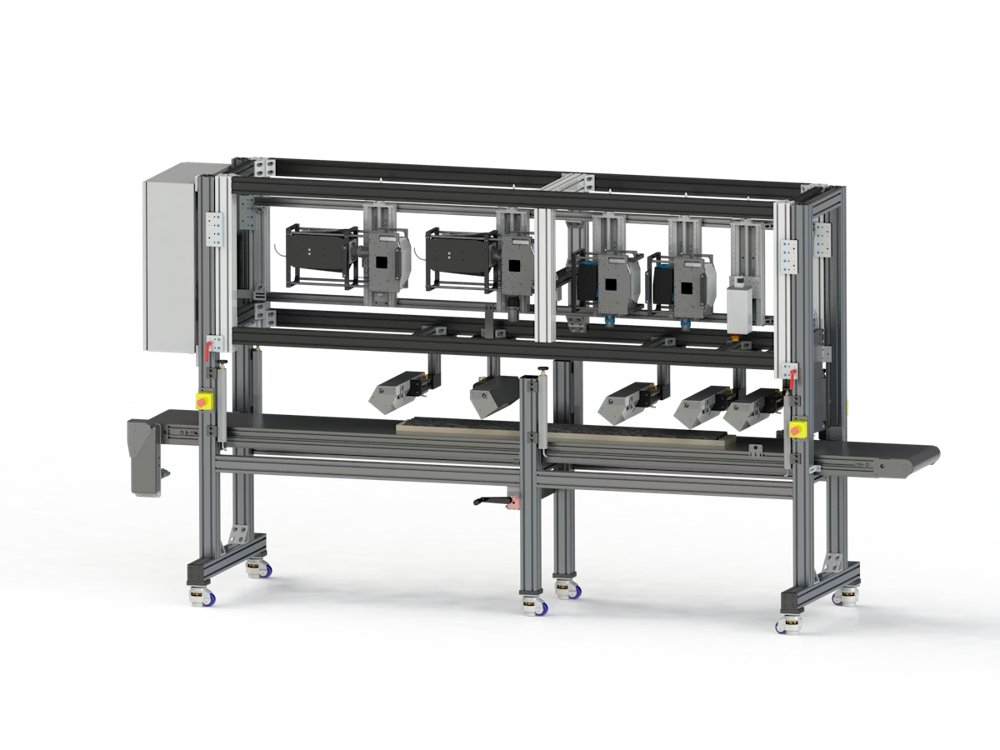
Hyperspectral Core Scanner The nCore is a multi-sensor scanning platform designed for drill core analysis. Whether deployed directly on-site or in a laboratory setting, the nCore offers unmatched versatility with modular configuration options tailored to the mining industry's needs. With the capability to integrate up to seven optical sensors, the nCore delivers an unparalleled map of the mineralogy landscape. Powered by Photon etc.'s proprietary hyperspectral imagers, it ensures precise and reliable performance for advanced mineral analysis, making it an indispensable tool for modern mining operations.
CATEGORY

Lecteur de plaques dédié à l’infrarouge à ondes courtes Lecteurs de plaques SWIR Photon etc. fait progresser le criblage à haut débit avec ClaIR™, un lecteur de plaques dédié à l’infrarouge à ondes courtes (SWIR, 900–1700 nm) et optimisé pour les nanocapteurs optiques et les nanomatériaux de prochaine génération. En opérant là où les matrices biologiques sont hautement transparentes, cette plateforme offre la sensibilité exceptionnelle requise pour cribler les capteurs à nanotubes de carbone à paroi simple (SWCNT) et suivre les éléments de reconnaissance moléculaire. ClaIR™ permet un balayage de zone automatisé par puits pour valider efficacement les nanocapteurs optiques dédiés aux cytokines inflammatoires, cartographier la localisation intracellulaire des capteurs en cytologie cancéreuse et accélérer la détection des biomarqueurs. ClaIR™ ClaIR est un lecteur de microplaques dans le NIR-II. Il enregistre la fluorescence de 900... Recherche sur les nanotubes de carbone
CATEGORY
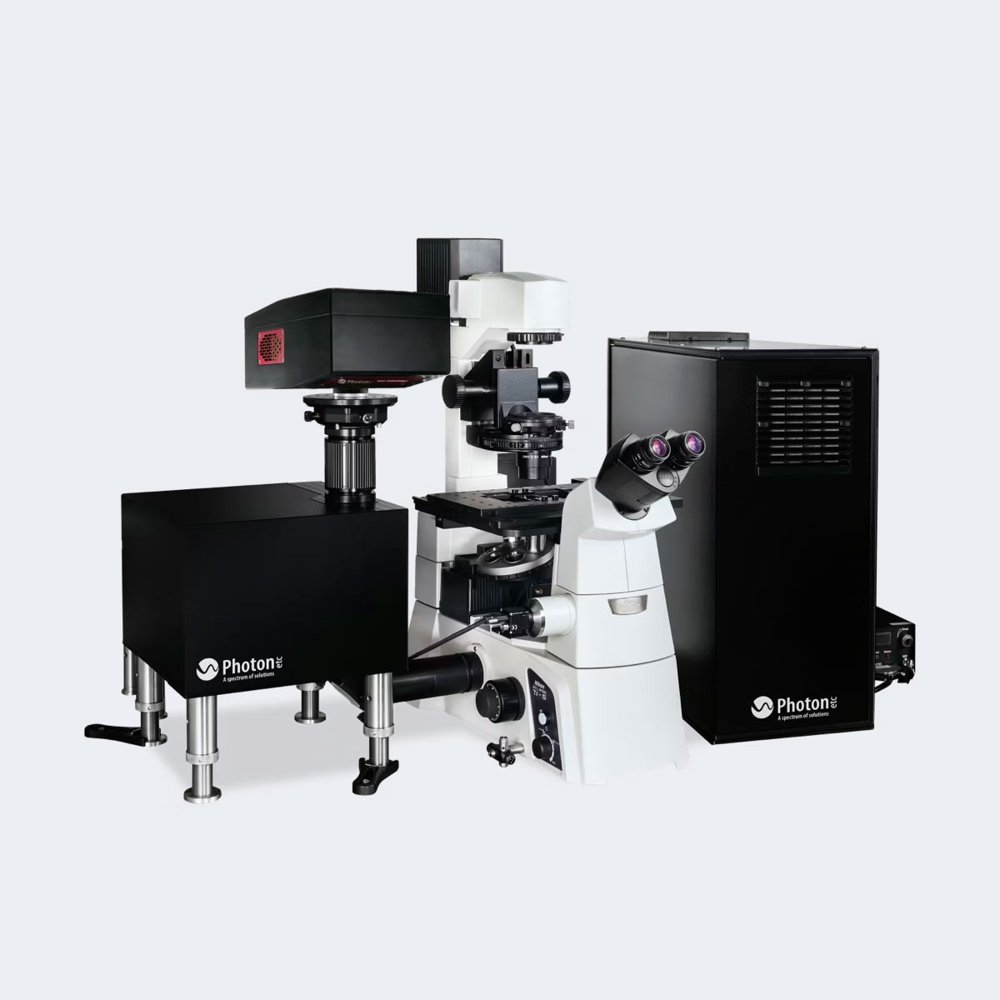
IMA is a hyperspectral microscope delivering spectral and spatial information from 400 nm to 1620... High-resolution spatial and spectral characterization at the microscopic scale
CATEGORY
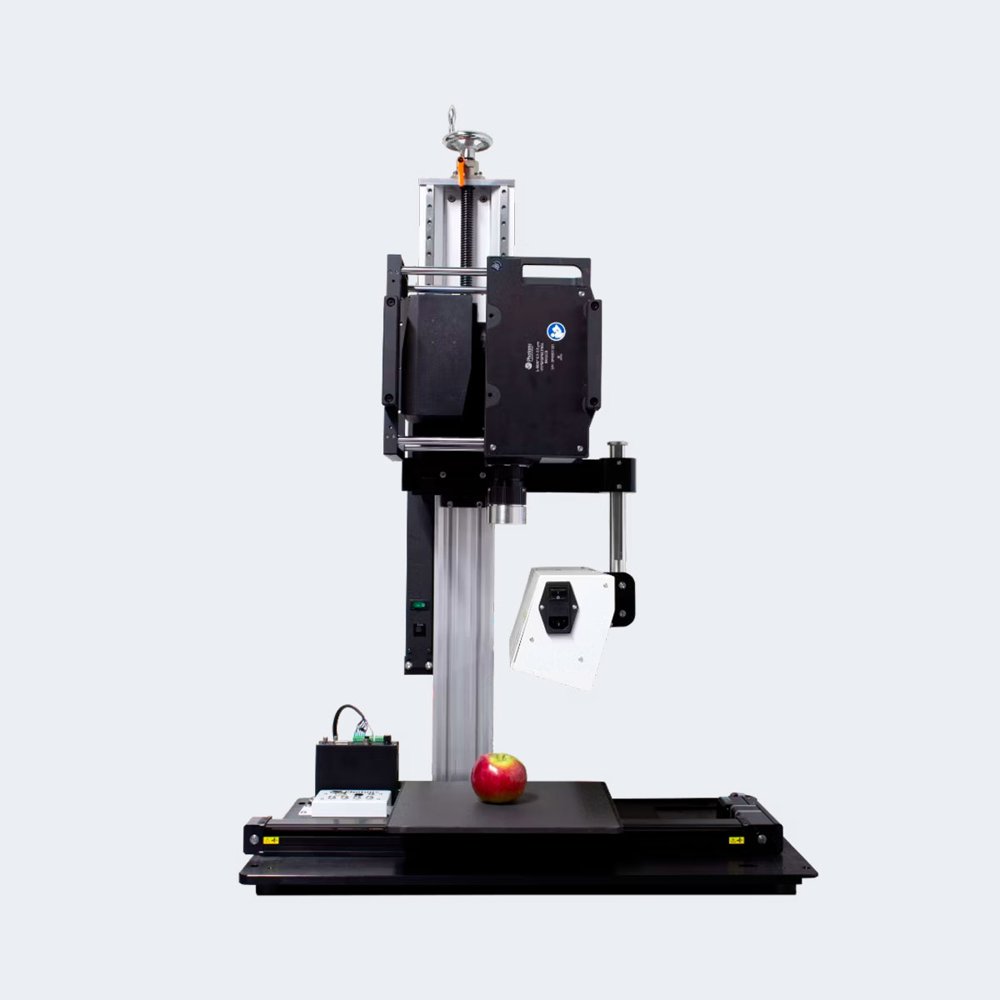
L-EOS™ is an infrared push broom hyperspectral SWIR camera 0.9 to 2.5 µm. In contrast to traditional imaging techniques that capture images in only three spectral bands (red, green, and blue) per pixel, the L-EOS, a hyperspectral imaging system, captures hundreds of spectral bands stacked in each pixel, forming a hyperspectral data cube. This unique capability allows for highly detailed and comprehensive spectral analysis of the imaged objects. However, it’s worth noting that the L-EOS requires either motion from the object or the camera itself to acquire the data cube, as it creates an image by scanning one row at the time. Hyperspectral data cube provides more information than single band imaging, making it suitable for material sorting and in-depth analysis.
CATEGORY
