By MP4MNT
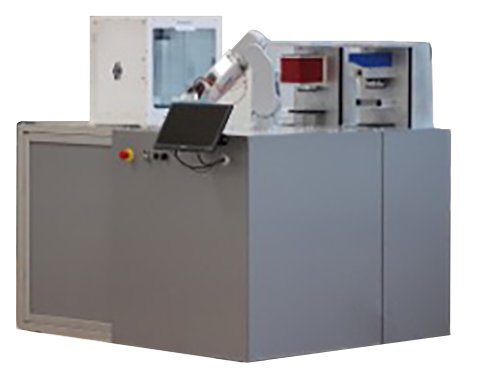
Teclas is a multifunctional manufacturing platform capable of working on the micro-scale. It currently integrates three manufacturing processes: additive manufacturing with an FDM, a laser welding station, and a laser etching station. The management of the production process is fully automated, in fact through the use of a user-programmed robotic arm, work steps and semi-finished products are managed autonomously. The platform is scalable ensuring the introduction of new production stations. One of the application fields of Teclas is certainly the lab-on-chip (LOC) sector and microfluidic devices. In this sector, the integration of micro- and nano-scaffolds is a key factor for cell culture and selection. A case study related to the production of a LOC for microfluidic analysis is reported. This example represents all the functions of the machinery: a polymer case (A) was first printed, into which the metal foil was inserted. The closure cap of the device was first prepared by a laser ablation process (B) related to the two points related to fluid inlet and outlet. Finally, laser welding of the cap (C) with the base was performed. The developed LOC is a device that allows the analysis of biological fluids through capacitively coupled contactless conductivity detection (C4D) measurement. Teclas is a full custom machine of a scalable nature, consequently the technical specifications of the production processes integrated so far are reported. - The platform has a robotic arm (Mitsubishi model RV-2FR-D-S25 CR800-02VD), with payload up to 2 kg, a 500 mm range and a repeatability of 20 μm. - The type of laser welding used is quasi simultaneous laser welding (QSLW); a fiber-coupled laser is used, with wavelength stabilized at 976 nm and with a power of 27 W. The core diameter of the fiber is 105 μm with a NA of 0.22. - For the laser etching process the platform uses a 30 W CO2 laser, with a wavelength of 10.6 μm and a diameter of 4±1 mm. With the intention of getting a spot of 100 μm, the laser beam is expanded by a 3.5x factor, obtaining a 14 mm diameter. - For the additive manufacturing part, the model S5 of the Ultimaker, with FDM (fused deposition modeling) technology is used. The printer has a 20 μm layer resolution (minimum thickness) with a 400 μm nozzle. Furthermore, two extruders can be used simultaneously
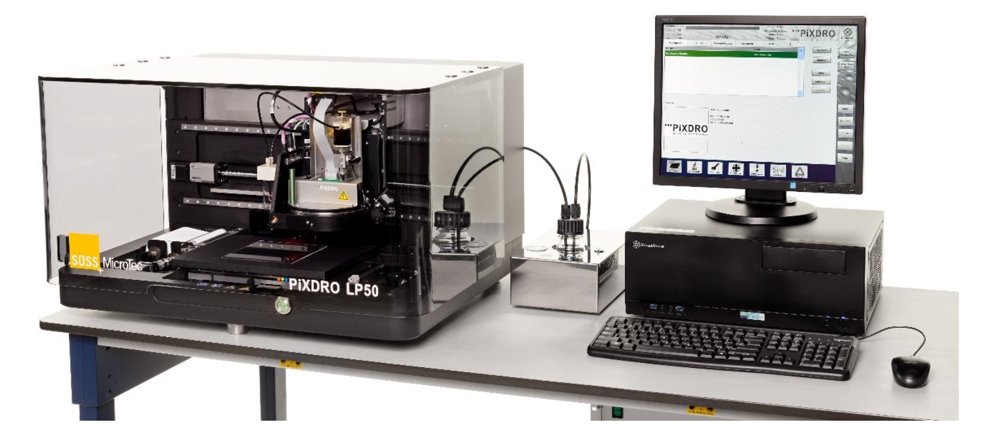
The SUSS LP50 platform is an open, accurate, flexible, and easy to use system. Advanced metrology capabilities and print quality control with cutting-edge print strategies SUSS LP50 is designed for a wide range of applications such as semiconductor assembly, PCB, printed electronics, photo voltaic, display, battery and bio/pharma. Complete R&D inkjet printing system including printer, PC and monitor. High accuracy motion system with motion control in X, Y, Z plus printhead rotation and substrate table rotation - Maximum substrate dimension; 227 x 327 x 25 (W x L x H) mm - Automatic substrate alignment with advanced image recognition system - Integrated drop watcher and substrate camera - Automatic print strategy calculation - Temperature controlled vacuum clamping substrate carrier Temperature up to 90 degrees Celsius - Support for common image file formats
CATEGORY
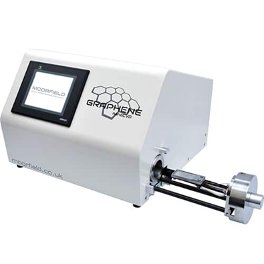
The nanoCVD is a graphene chemical vapor deposition (CVD) system designed for meticulous control over essential parameters like pressure, temperature, and gas composition, which are crucial for effective graphene synthesis. H2 and Ar as operation gases, CH4 as carbon feedstock, N2 as service gas - 1100 °C heater - 2cm x 3cm uniform heating surface - low thermal inertia, meaning fast processes (growth process lasting less than 30 minutes) - working both in gas flux control and in pressure control - low pressure operation: base pressure lower than 0.01 Torr, operating pressure 1-10 Torr (Ar/H2/CH4 mixture) - deposition controlled by a multi-setpoint programmable software - the equipment can be used also for carbon nanotube deposition
CATEGORY
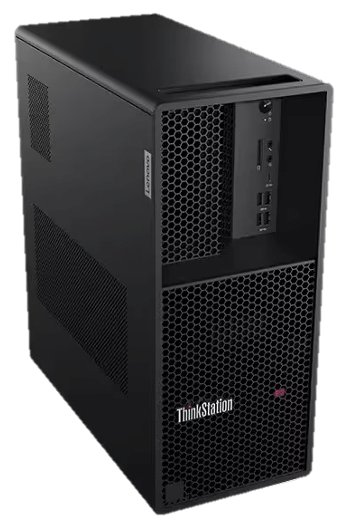
Thinkstation P3 Tower, 30GSCT01WW Chilab ITEM Laboratory Workstation fully dedicated to co-design and optimisation. Thermal, mechanical, electrical, microfluidic etc. studies can be done using the most famous programs for designing and performing Multiphysics Finite Element Method simulations. Processor: Intel(R) Core(TM) i9-14900K, 3200 MHz - RAM: 128 GB - SO: Microsoft Windows 11 Enterprise - Installed programs: Office 365, SOLIDWORKS, COMSOL Multiphysics 6.1 (Licenza di Ateneo), ANSYS (Licenza di Ateneo), Ansys Optic Studio, SIEMENS EDA (OOFELIE Multiphysics, HyperLynx VX e Xpedition Enterprise), MATLAB (latest version), Wolfram Mathematica, Julia
CATEGORY
