By Gatan
Designed to produce consistent, high‑quality surfaces across semiconductors, batteries, and advanced materials using a single, integrated workflow. The PECS™ III is a broad-beam argon ion milling system designed to produce consistent, high‑quality surfaces across semiconductors, batteries, and advanced materials using a single, integrated workflow. It enables reliable surface preparation for complex, multi‑material samples while minimizing operator dependence and preparation-induced artifacts. Advantages: - Consistent, high quality surfaces: Produces uniform, low damage surfaces suitable for demanding analytical techniques across a wide range of materials. - High throughput for complex materials: Improves milling rates by 4.4x and enables preparation of larger areas for faster, more meaningful results. - Up to 7x wider cross-section capability: Prepares large area cross-sections with ease, supporting semiconductor, battery, and multilayer systems. - Universal, simple preparation across diverse materials: Ensures predictable, repeatable outcomes independent of operator skill, reducing rework and preparation variability. - Streamlined workflow: Delivers results using one preparation workflow, reducing handling steps and improving overall efficiency. - Integrated coating functionality: Deposits consistently thin coatings to protect sample surfaces and enable analysis of delicate and non-conductive materials.
Models 1124, 1125. The world’s first direct detection cameras to democratize cryo-EM. Alpine®is the world’s first direct detection camera series to democratize cryo-electron microscopy (cryo-EM) imaging. By enabling the acquisition of high-resolution structures on 80 – 200 keV microscopes, the Alpine series allows routine cryo-EM research on more affordable, workhorse instruments and expands its usefulness to the larger research community. Two models available to match the field of view with your application needs: Alpine (1124) – Turns 80 – 200 keV screening microscopes into data-collection microscopes with single-electron counting capabilities. Delivers a detective quantum efficiency (DQE) up to 2.4-times the performance of scintillator-based cameras. Makes the 2D classification of small molecules possible while improving macromolecule reconstructions. Streamlines your workflow and detects failures early to produce better structures, faster. Real-time counting ensures there is no compromise between data collection speed and quality.
CATEGORY
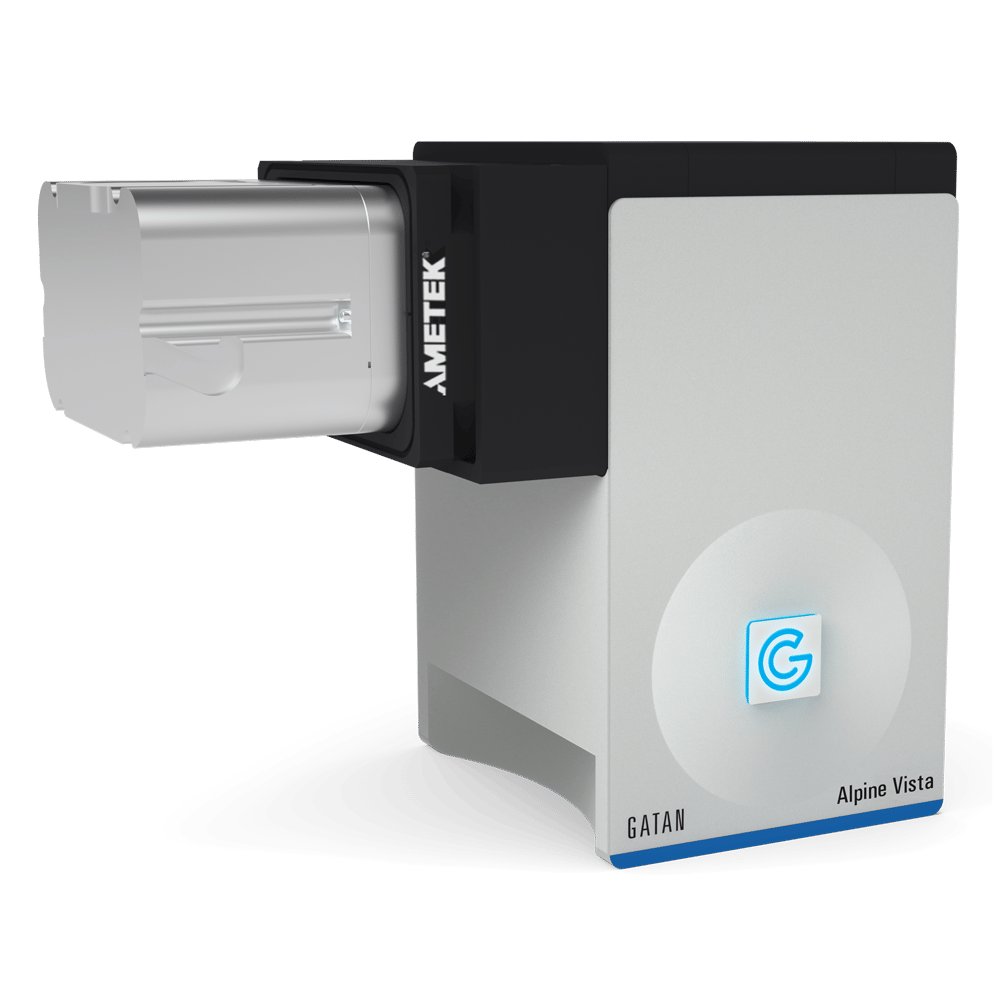
Models 1124, 1125. The world’s first direct detection cameras to democratize cryo-EM. Alpine®is the world’s first direct detection camera series to democratize cryo-electron microscopy (cryo-EM) imaging. By enabling the acquisition of high-resolution structures on 80 – 200 keV microscopes, the Alpine series allows routine cryo-EM research on more affordable, workhorse instruments and expands its usefulness to the larger research community. Two models available to match the field of view with your application needs: Alpine Vista (1125) – Maximizes imaging throughput for your high-performance microscopes with a large FOV of 5,760 x 4,092 pixels. Delivers a detective quantum efficiency (DQE) up to 2.4-times the performance of scintillator-based cameras. Makes the 2D classification of small molecules possible while improving macromolecule reconstructions. Streamlines your workflow and detects failures early to produce better structures, faster. Real-time counting ensures there is no compromise between data collection speed and quality.
CATEGORY
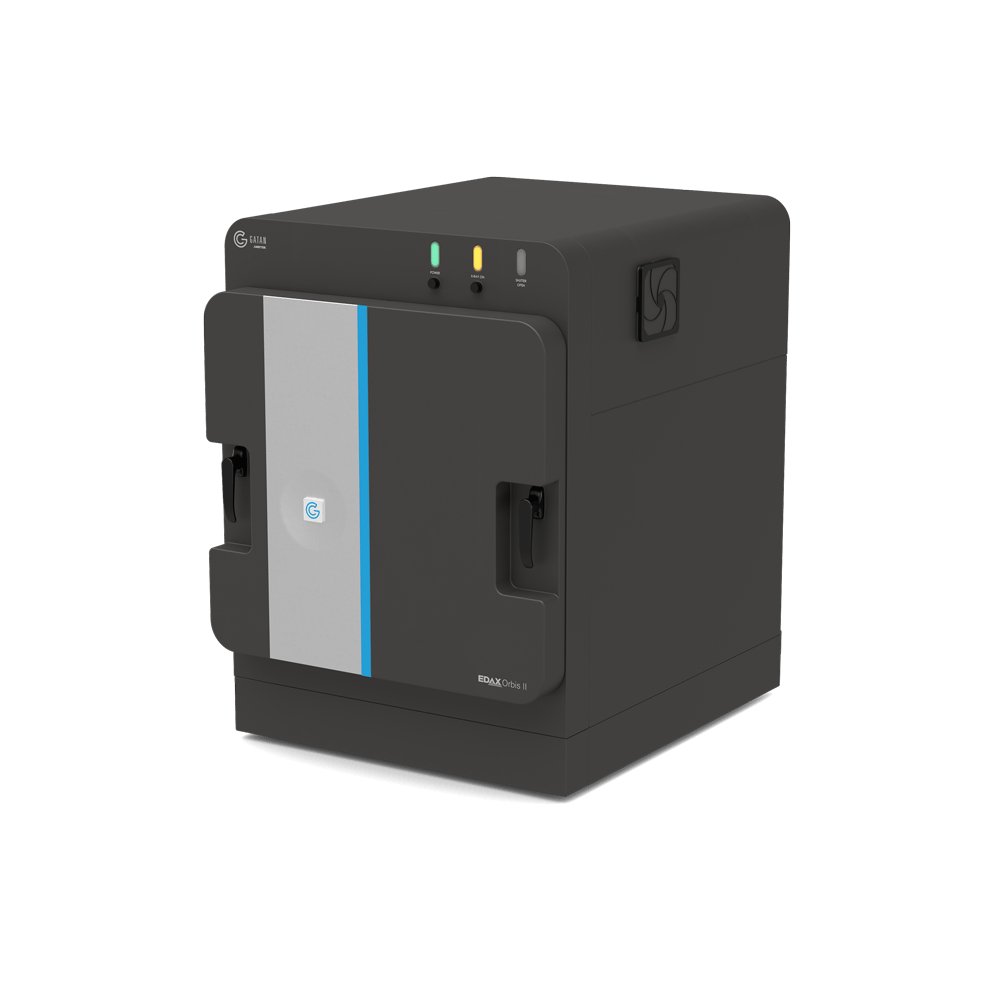
Model 1140 Delivers non-destructive, high-performance elemental analysis with unmatched flexibility and ease of use. The EDAX® Orbis™ II micro-x-ray fluorescence (micro-XRF) system delivers non-destructive, high-performance elemental analysis with unmatched flexibility and ease of use. Engineered for excellence across the full spectrum of micro-XRF applications, the Orbis II empowers users to analyze everything from the smallest particles to large, complex samples—quickly and accurately. Experience the next level of micro-XRF analysis with the EDAX Orbis II—where precision meets performance. - Custom x-ray window technology enables the detection of light elements - Proprietary coaxial light and x-ray optics precisely targets specific regions – eliminating x-ray interference from adjacent areas - Maximizes throughput by collecting spectra 2.5x faster and spectral maps 3x faster - Streamlines workflows with programmable autorun routines to boost productivity and ensure consistent results
CATEGORY
