By Photon etc
NIR imaging with this versatile InGaAs camera. The Alizé 1.7 is amongst the most cost-effective high-end InGaAs cameras on the market. The Alizé 1.7 is a high-end, scientific grade, 640 x 512 pixels resolution, InGaAs camera that marries performance with reliability. It has low noise levels, high efficiency, and a rapid frame rate compatible with an external trigger. This is made possible by a combination of state-of-the-art control electronics and a four stage thermoelectric cooler (TE) which can maintain an operating temperature as low as -60 °C. The cooler uses forced air cooling which requires none of the maintenance of a water or liquid nitrogen cooled unit. Alizé 1.7 Applications Overview - Photovoltaics characterization by photoluminescence (PL) and electroluminescence (EL) using SWIR imaging - Semiconductor wafers inspection and device failure detection - Photon etc. InGaAs cameras are able to easily detect fake (neon green) rice among a continuous stream of real rice (dark blue), an innovation that opens the door to fast real-time food contaminant detection. Technical Specifications Sensor: Alizé 1.7x InGaAs FPA; Alizé 1.7s InGaAs FPA Sensor Format: Alizé 1.7x 640 x 512; Alizé 1.7s 640 x 512 Pixel size: Alizé 1.7x 15 µm; Alizé 1.7s 15 µm Spectral range (QE > 10%): Alizé 1.7x 500 - 1700 nm; Alizé 1.7s 900 - 1700 nm Peak Quantum Efficiency: Alizé 1.7x > 85 %; Alizé 1.7s > 80 % Typical operability: Alizé 1.7x > 99.9 %; Alizé 1.7s > 99.5 % Cooling Temperature @ 20°C ambiant: Alizé 1.7x -60 °C; Alizé 1.7s -60 °C Cooling method: Alizé 1.7x TEC + forced air; Alizé 1.7s TEC + forced air Typical Dark Current*: Alizé 1.7x 150 ē/px/s; Alizé 1.7s 240 ē/px/s Typical Gain setting (ē/ADU): Alizé 1.7x High: 2.67 | Low: 47.5; Alizé 1.7s High: 2.2 | Med: 7.4 | Low: 89 Typical readout noise (ē): Alizé 1.7x High: 22 | Low: 135; Alizé 1.7s Moyen: 75 Frame rate in CameraLink™ (fps): Alizé 1.7x High: 105 | Low: 210; Alizé 1.7s Up to 240 full frame. 1900 for a 128x128 RO Frame rate in USB 3.0 (fps): Alizé 1.7x High: 110 | Low: 220; Alizé 1.7s Up to 240 full frame. 1900 for a 128x128 ROI Digitization (bits): Alizé 1.7x 13; Alizé 1.7s 14 Image Format: Alizé 1.7x 16 bits HDF5, FITS and TIFF; Alizé 1.7s 16 bits HDF5, FITS and TIFF Software: Alizé 1.7x PHySpec™ control and analysis software, SDK (C++, Python); Alizé 1.7s PHySpec™ control and analysis software, SDK (C++, Python) Computer interface: Alizé 1.7x USB 3.0 and CameraLink™; Alizé 1.7s USB 3.0 and CameraLink™ Ambient temperature range: Alizé 1.7x 10 °C à 35 °C; Alizé 1.7s 10 °C à 35 °C Dimensions: Alizé 1.7x 169 mm x 130 mm x 97 mm; Alizé 1.7s 169 mm x 130 mm x 97 mm Power Supply: Alizé 1.7x 12V DC; Alizé 1.7s 12V DC Weight: Alizé 1.7x 2.9 kg; Alizé 1.7s 2.9 kg
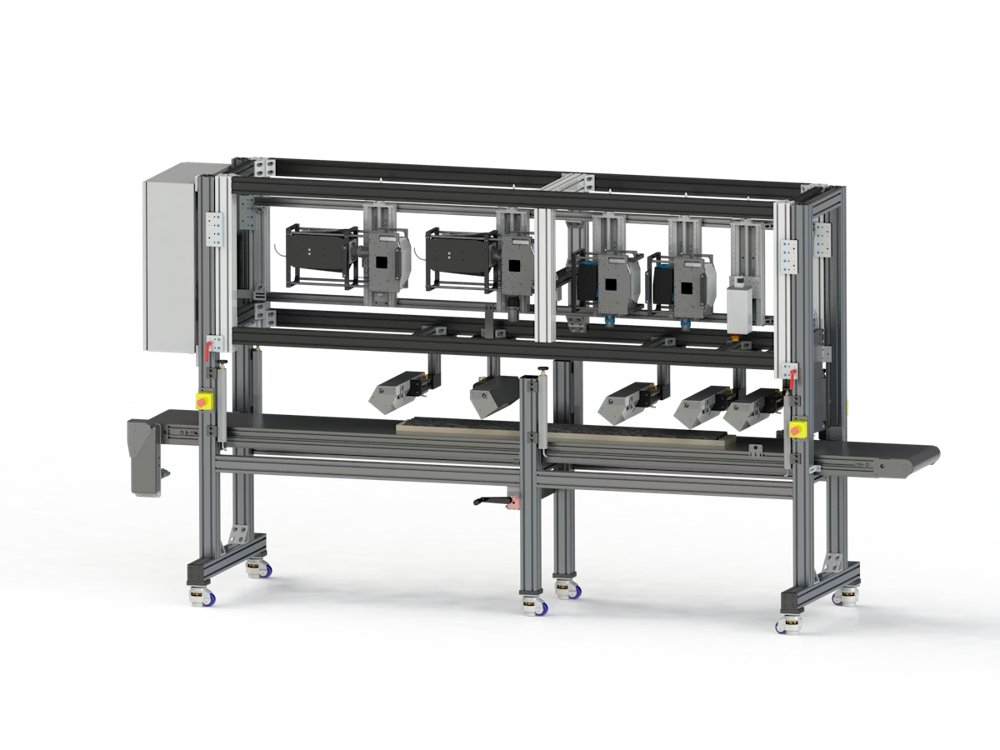
Hyperspectral Core Scanner The nCore is a multi-sensor scanning platform designed for drill core analysis. Whether deployed directly on-site or in a laboratory setting, the nCore offers unmatched versatility with modular configuration options tailored to the mining industry's needs. With the capability to integrate up to seven optical sensors, the nCore delivers an unparalleled map of the mineralogy landscape. Powered by Photon etc.'s proprietary hyperspectral imagers, it ensures precise and reliable performance for advanced mineral analysis, making it an indispensable tool for modern mining operations.
CATEGORY

Lecteur de plaques dédié à l’infrarouge à ondes courtes Lecteurs de plaques SWIR Photon etc. fait progresser le criblage à haut débit avec ClaIR™, un lecteur de plaques dédié à l’infrarouge à ondes courtes (SWIR, 900–1700 nm) et optimisé pour les nanocapteurs optiques et les nanomatériaux de prochaine génération. En opérant là où les matrices biologiques sont hautement transparentes, cette plateforme offre la sensibilité exceptionnelle requise pour cribler les capteurs à nanotubes de carbone à paroi simple (SWCNT) et suivre les éléments de reconnaissance moléculaire. ClaIR™ permet un balayage de zone automatisé par puits pour valider efficacement les nanocapteurs optiques dédiés aux cytokines inflammatoires, cartographier la localisation intracellulaire des capteurs en cytologie cancéreuse et accélérer la détection des biomarqueurs. ClaIR™ ClaIR est un lecteur de microplaques dans le NIR-II. Il enregistre la fluorescence de 900... Recherche sur les nanotubes de carbone
CATEGORY
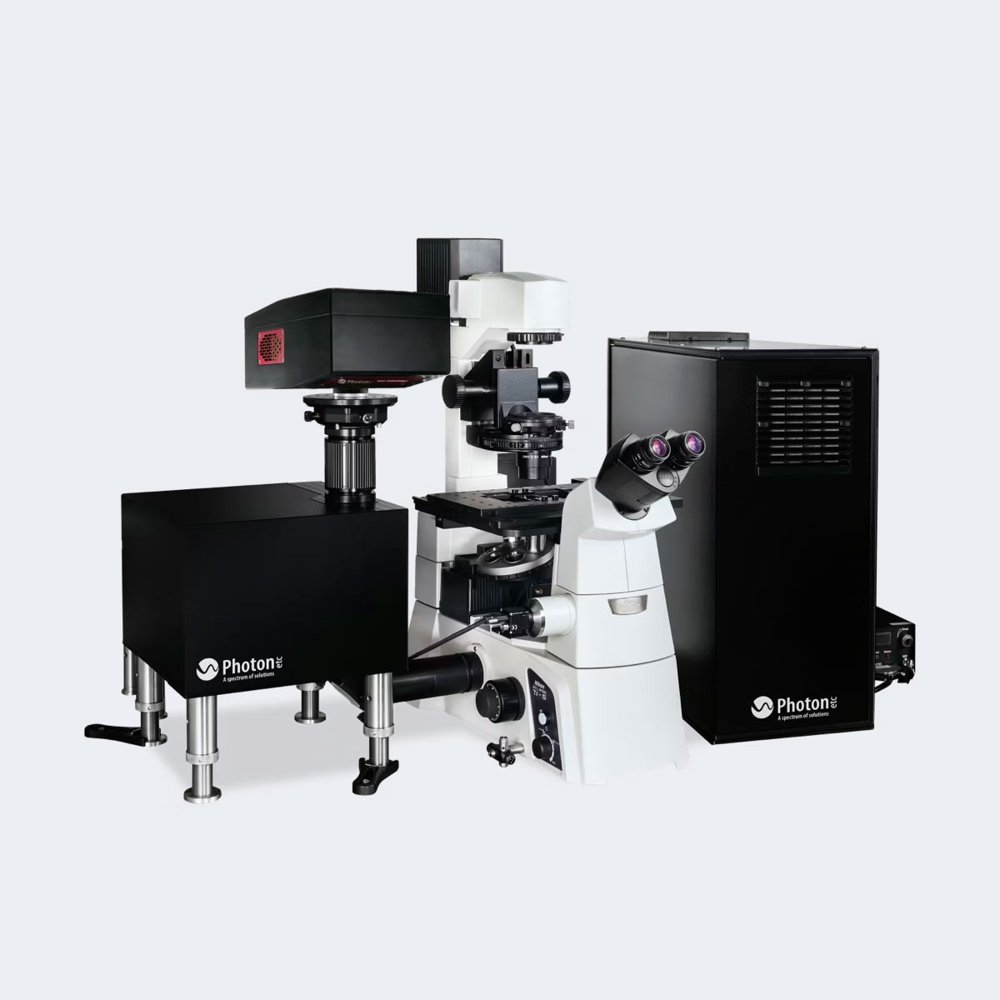
IMA is a hyperspectral microscope delivering spectral and spatial information from 400 nm to 1620... High-resolution spatial and spectral characterization at the microscopic scale
CATEGORY
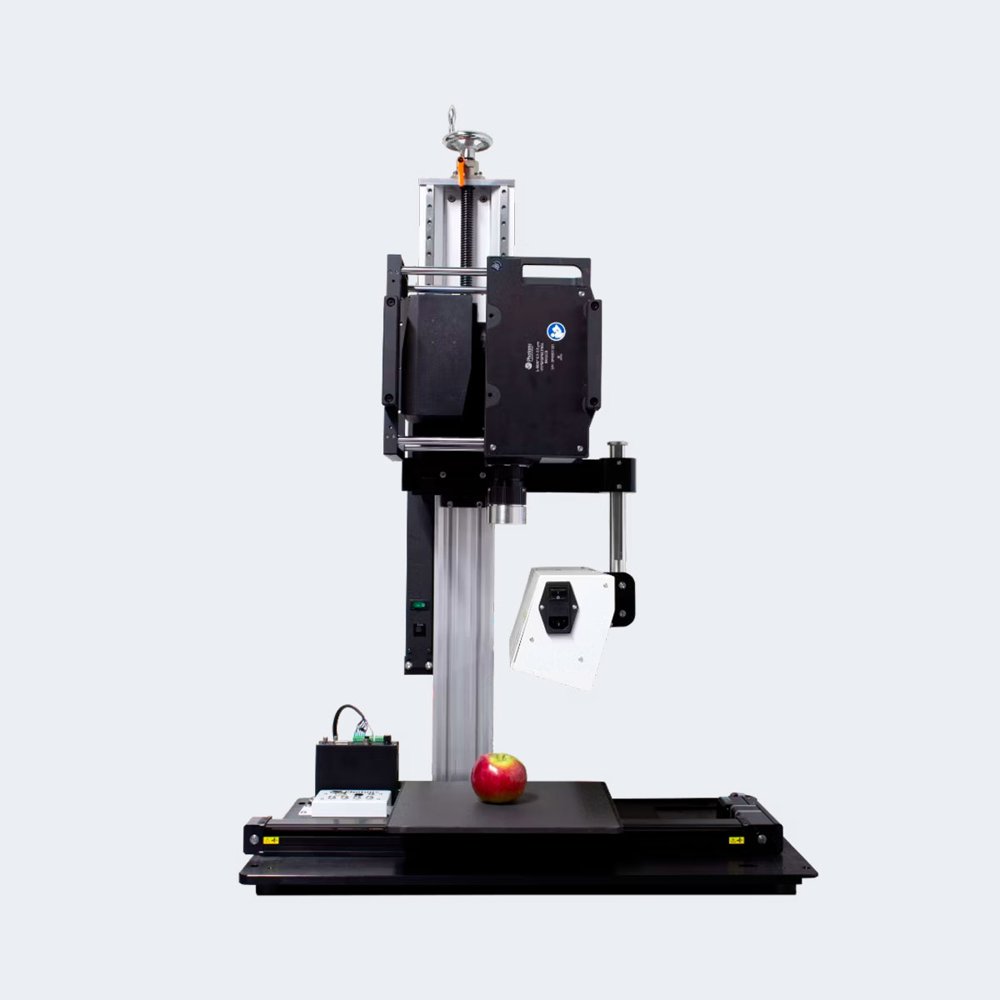
L-EOS™ is an infrared push broom hyperspectral SWIR camera 0.9 to 2.5 µm. In contrast to traditional imaging techniques that capture images in only three spectral bands (red, green, and blue) per pixel, the L-EOS, a hyperspectral imaging system, captures hundreds of spectral bands stacked in each pixel, forming a hyperspectral data cube. This unique capability allows for highly detailed and comprehensive spectral analysis of the imaged objects. However, it’s worth noting that the L-EOS requires either motion from the object or the camera itself to acquire the data cube, as it creates an image by scanning one row at the time. Hyperspectral data cube provides more information than single band imaging, making it suitable for material sorting and in-depth analysis.
CATEGORY
