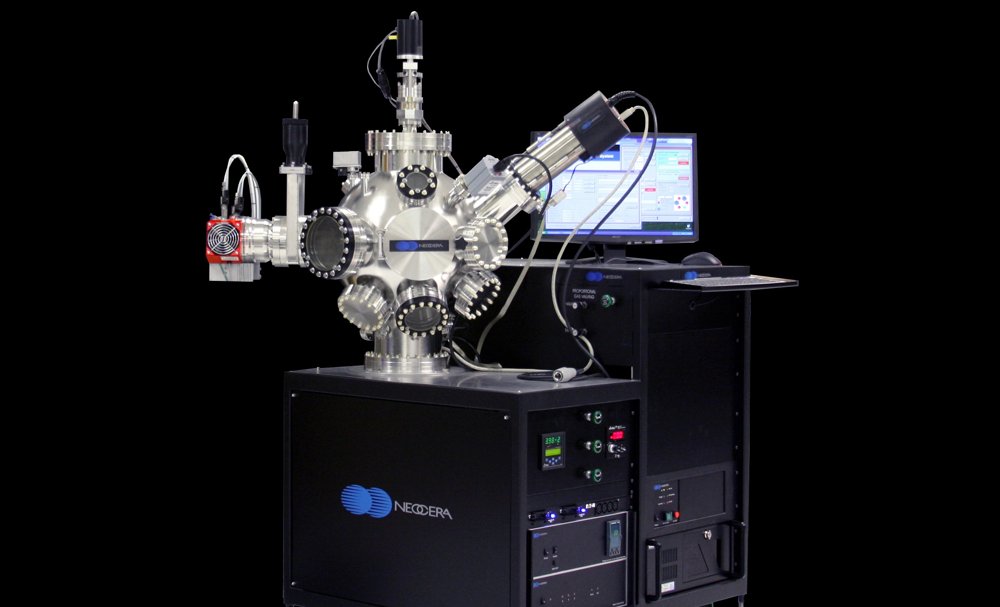
By Neocera
Pulsed Electron Deposition (PED) is a process in which a pulsed (80-100 ns) high power electron beam (~1000 A, 15 kV) penetrates approximately 1 μm into the target resulting in a rapid evaporation of target material. The non-equilibrium heating of the target facilitates stoichiometric ablation of the target material. Under optimum conditions, the target stoichiometry is preserved in the deposited films. All solid state materials – metals, semiconductors and insulators, including those transparent to laser wavelengths in PLD – can be deposited as thin films with PED. By combining PLD and PED, the range of complex materials that can be prepared as thin films can be greatly enhanced.
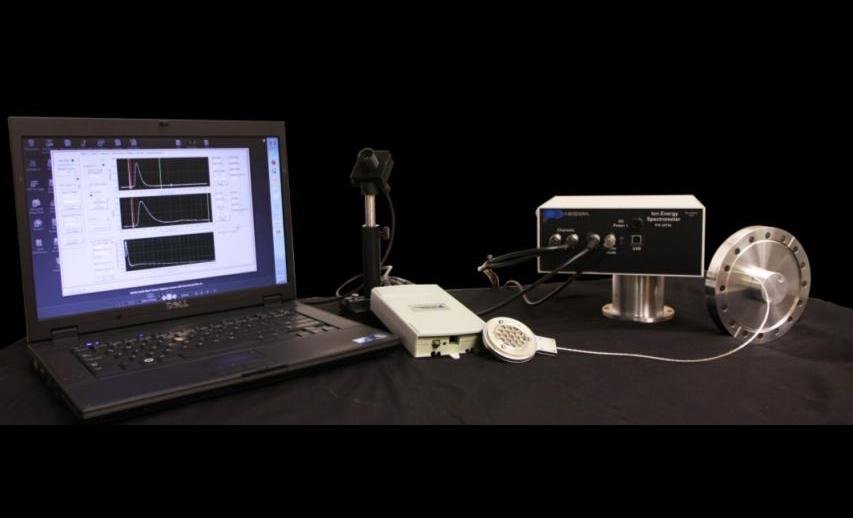
IES provides energetics of the laser generated plasma plume which is directly responsible for obtaining high quality films and interfaces.
CATEGORY
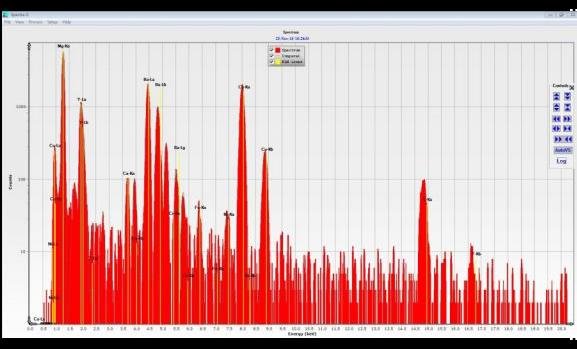
Low-Angle X-ray Spectroscopy (LAXS) – In-situ Real Time Composition Analysis Special Features - Real-time thin film composition measurement by in situ X-ray spectroscopy - Simultaneous real-time structure (RHEED) and real-time composition (LAXS) measurements - Designed specially for materials researchers depositing complex compositions - Ideal for epitaxial multi-component metal-oxide films - Integration with Neocera PLD/Laser MBE Systems – turn-key solutions - Technique can be extended to all physical vapor deposition methods Overview Composition of a thin film is an important materials property that controls the application potential via the underlying electronic structure. Neocera’s LAXS uses an X-ray spectroscopic technique developed specifically to access the elemental composition of a multi-component thin film in situ, during film growth (real-time). LAXS analyzes X-ray emission spectra of the film excited by an energetic RHEED electron beam used in PLD/ Laser MBE Systems. Using a unique methodology of dynamic spectroscopy, LAXS automatically acquires, processes, and analyzes multiple spectra as the film is deposited layer by layer. LAXS software communicates seamlessly with PLD system, pulsed laser and process controls, resulting in a fully integrated turn-key PLD-RHEED-LAXS System. The system enables the PLD user to unravel the relation between the deposition parameter space and the variations in the resulting film composition, and to optimize the process for obtaining a high quality functional multi-component films for a variety of applications. LAXS takes advantage of intrinsically low incident angles of the electron beam, and small X-ray take-off angles. The low incidence angle, specific to RHEED, facilitates an efficient X-ray generation within the thin film under energetic electron impact. The low take-off angle of X-rays allows minimization of background signal. A special collimator optimizes field-of-view of LAXS to deliver maximum signal-to-noise ratio important for thin films that are only a few nanometers thick. LAXS incorporates a state-of-the-art X-ray Spectrometer (Silicon Drift Detector). The X-ray detector and digital pulse processing facilitate high resolution in energy and fast counting rate. LAXS assembly, mounted on a standard vacuum flange, features a 3-axis mechanical stage to align the field-of-view of the instrument precisely to the substrate area irradiated with the RHEED electron beam. Data acquisition software is highly customized and incorporated in LAXS. The Spectra processing program can handle up to 40 elements. The user may specify several film elements of interest (such as PLD target elements), and LAXS follows the dynamics of their spectral intensities over the entire deposition process. Complete LAXS user guide, and a detailed procedure of the system relative sensitivity calibration protocol is provided Feature | Details Energy range of X-rays | 1-20 KeV Energy Resolution | 130 eV Detector | Silicon Drift Maximum count rate | 10,000 cps Mechanical alignment | in situ, 3 axis Software | Labview integrated with PLD and RHEED
CATEGORY
Neocera's extensive research using PLD established critical parameters to maximize thin film quality, especially for the deposition of epitaxial complex oxide thin films. These considerations have been incorporated into the Pioneer system design. For example, many complex oxide thin films after deposition at high temperatures benefit from cooling down in a relatively high pressure (100 -500 Torr) of Oxygen. All Pioneer system are designed to operate in the full pressure range from their rated base pressure to atmospheric pressure. Multi target carousels with target rotation and target rastering schemes produce uniform ablation over the entire surface of the target and eliminates the need for resurfacing the target. To eliminate the concern of carbon contamination affecting film quality, oil-free pumping stacks are standard on all Pioneer systems. Pioneer PLD systems use a laser beam angle of incidence of 45º, preserving optimum uniformity of laser fluence on the target without resorting to complex and costly optical elements. Shallow angles of incidence can cause the laser spot to elongate on the target, resulting in loss of fluence uniformity.
CATEGORY
Features - Layer-by-layer, 2D growth control. - Deposition of unit cell thick films with excellent thickness control via RHEED intensity oscillations. - Deposition of epitaxial films, multi-layer heterostructures with exceptional interface control. - Oxygen compatibility up to 500 mTorr (differentially pumped). Overview In reflection high-energy electron diffraction (RHEED,) a high energy (20-30 keV) electron beam is incident on the film growth surface at a glancing angle of ~2˚- 5˚. The diffraction pattern created on a screen contains information about the crystal structure of the film, stress at the interface, possible impurity phases etc and can be used for real-time monitoring of the film quality. The RHEED oscillations, where the RHEED specular spot intensity is monitored as a function of deposition time provides information on the deposition rate as well as information on the growth mode (2D vs 3D) of the deposited film. A high quality 2D layer-by-layer growth mode is inferred by the observed RHEED intensity oscillations extending to several cycles. Double differential pumping of the RHEED source facilitates high-pressure operation up to about 500 mTorr, facilitating real-time monitoring of complex oxide film growth at high oxygen pressures. High-pressure RHEED systems are routinely integrated with Neocera PLD systems, but can also be integrated with existing PLD systems. It is however mandatory, that the deposition system should have ports for both the RHEED gun and the RHEED screen at an optimal position with respect to the substrate surface. Care is also required for providing customer-safety from harmful X-rays. The essential components of a high-pressure RHEED system are (1) RHEED electron gun and RHEED screen, (2) double differential pumping system and accessories for high-pressure operation and (3) a high-sensitivity CCD camera for image processing and (4) data acquisition software for analysis. Feature Details RHEED Gun Energy 1-30 keV Maximum beam current 100 uA Stability 2x10 -4 hr Minimum spot size 40 um @ 150 mm Max. operating pressure with double differential pump 500 mTorr Total angular deflection ±7.5 degrees Features RHEED Screen with shutter 2 sets of low-aberration magnetic coils for incident and azimuth angle adjustments Differential pumps Features 2 sets of turbo pumps backed by fore pumps Wide range vacuum gauge Gate valve for isolation of RHEED from PLD Chamber Frame support for pumps attached to RHEED CCD Camera Features 12-bit, high-resolution, peltier-cooled CCD camera Optimized for RHEED imaging with zoom in and out Data acquisition software Features Complete set of software for image acquisition, archiving and analysis Growth rate acquisition mode allows for acquiring intensity data Multi-threaded video - real-time exposure control and background subtraction
CATEGORY
