By Ondax
PicoPulse™ filters are solid‑glass volume holographic gratings (CVBG) for with gradually varying index modulation period designed specifically for laser pulse stretching and compression, offering compact, robust, high‑efficiency alternatives to ruled gratings and fiber Bragg gratings (FBGs). What are typical applications? - Chirped Pulse Amplification (CPA) systems requiring pulse stretching and recompression. - Systems where compact, alignment‑friendly chromatic dispersion elements are needed. How does a CVBG work? A CVBG has a linearly varying grating period along the propagation axis: - Shorter and longer wavelengths are diffracted at different depths, creating a linearly varying group delay that stretches or compresses the pulse depending on direction. What advantages do PicoPulse™ and CVBGs offer versus ruled gratings? - Compact geometry with drastically reduced footprint and simpler alignment. - High laser‑induced damage threshold for high‑energy / high‑power systems. - Low scatter, high efficiency, and near‑diffraction‑limited output beam quality after stretching/compression. - Environmental stability, including temperature tolerance and mechanical robustness. What key performance specifications are available? PicoPulse™ (Coherent/Ondax) - Center wavelength range: 1029–1300 nm (custom wavelengths: 400–2000+ nm available). - Dispersion rate: 10–100 ps/nm (50 ps/nm standard). - Spectral bandwidth: 1–10 nm typical. - Stretched pulse length: 200–300 ps. - Diffraction efficiency: ~90% in free space. What power handling capabilities do these gratings have? - PicoPulse™ supports many orders of magnitude higher power than fiber Bragg gratings or gel‑based gratings suitable for industrial applications. What beam quality can be expected? - PicoPulse™ maintains distortion‑free, round, near‑diffraction‑limited output after stretching and compression, even over varying temperatures (13°C–60°C). Can these gratings function as both stretchers and compressors? Yes. CVBGs inherently support bidirectional use, acting as stretchers or compressors depending on which facet the laser enters. Are custom versions available? Yes. Please contact. What are typical mounting and mechanical details? Size depends on application and specifications.
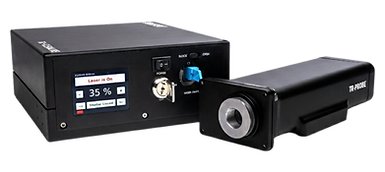
SIERRA™ Raman Spectrometer with SURELOCK™ laser is engineered to be ultra-compact, durable, and easy to use, making it an ideal choice for any Raman spectroscopy applications. Featuring the SureLock™ Laser, it ensures steady, high-power, and spectrum-narrowed performance while maintaining low power consumption. The SIERRA™ platform combines a well-established SureLock wavelength-stabilized laser source with an integrated spectrometer in a single compact housing. This architecture reduces alignment complexity and simplifies system integration. Sierra is designed to accelerate the development of Raman solutions by providing a turnkey optical engine that ensures consistent, reproducible performance while lowering overall system size and cost.
CATEGORY
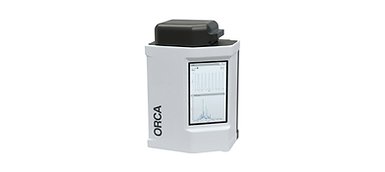
ORCA is a THz-Raman™ crystallinity meter that uses a scanning laser beam to detect and identify low concentrations of specific polymorphs of Active Pharmaceutical Ingredients (APIs) within complex mixtures. By probing low-frequency lattice vibrations that are highly sensitive to crystal structure, ORCA enables reliable detection of targeted polymorphic forms even at very low concentrations. This rapid, non-destructive technique requires little to no sample preparation and provides a powerful complement to PXRD for solid-form characterization. ORCA supports polymorph screening, crystallinity analysis, and pharmaceutical quality control, enabling fast identification of crystalline phases directly within heterogeneous samples.
CATEGORY
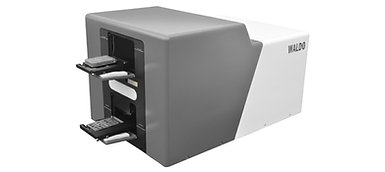
WALDO builds on the WPS high-throughput THz-Raman™ screening platform by adding flexible measurement geometries for a wider range of microplate formats. WALDO supports laser scanning through transparent well plates as well as top-down excitation for opaque plates, including stainless steel and Kapton plates commonly used for PXRD experiments. This dual-mode capability allows researchers to perform rapid polymorph screening and crystallinity analysis across different sample holders while leveraging the sensitivity of low-frequency THz-Raman™ spectroscopy to probe crystal lattice structure and molecular composition.
CATEGORY
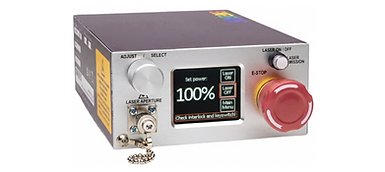
SureLock™ wavelength-stabilized laser diodes and modules incorporate our ultra-narrowband VBGs, forming an external cavity using TruSet to precisely lock the laser’s wavelength to the needs of the application. This enhances spectral brightness and optical performance stability across the entire power range and extended temperature conditions. The extremely short external cavity offers superior mode selection and a smaller footprint than Littrow or Littman cavity designs while reducing the spectral bandwidth of a typical laser by an order of magnitude. With fast warm-up times, flexible power options, and consistent performance, these lasers are ideal for demanding applications such as analytical instruments. Available as modules or components, SureLock® lasers offer flexibility for seamless development and system integration. Applications - Raman spectroscopy - Holography - HeNe replacement - Particle characterization - Analytical instrumentation - Speckle interferometry - Metrology and inspection
CATEGORY
