development of targeting systems for cancer therapies – oncology – currently being implemented by NanoGroup. Another planned application of the aptamer platform involves the use of oligonucleotide factors guiding the development of polysaccharide cytostatic carriers developed by NanoGroup. Problems arising in therapy using currently available drugs (rapid metabolism and excretion from the body, unfavorable biodistribution) are solved in two ways. One is to search for new therapeutic preparations, the other is to develop appropriate drug delivery systems. Among drug carriers, oligonucleotide carriers – aptamers – deserve attention due to their low immunogenicity. The use of this type of conjugate can ensure better bioavailability and resistance to degradation, reduce the immunogenicity of the drug, ensure prolonged release of the therapeutic substance, leading to an extension of its duration of action, and in the case of chemotherapy, to the saturation of cancer cells with the drug, which leads to an increase in the effectiveness of the therapeutic process. Currently, the development of aptamer technology, which are single-stranded oligonucleotides that bind with high affinity and high selectivity to selected molecular targets (biomarkers), may compete with ADCs (antibody drug conjugates). These compounds have enormous therapeutic potential, including in oncology, where aptamer-drug conjugates can be used to deliver tumor-destroying substances directly to cancer cells. The use of aptamer technology may lead to the development of drugs with minimal side effects. This is due to their selective action at the molecular level and low molecular weight. The result of the project will be a conjugate consisting of a carrier molecule linked to a cytostatic drug. What distinguishes the product being developed from other solutions of this type (e.g., antibody-drug conjugates) is the use of an aptamer—a single-stranded DNA molecule—as a carrier. The aptamer with the attached drug molecule will not only be highly selective for a specific type of cancer, but also (due to its size), unlike antibody-drug conjugates, will have high penetration of cancerous tissue. An innovative approach is the introduction of additional modifications to the aptamer molecule (using the aptamer platform developed by Pure Biologics for the selection of modified aptamers), which will increase the stability of the aptamer and, consequently, the entire conjugate.
development of dialysis support filtration – expansion of specialization in the field of kidney disease treatment – nephrology – currently being developed by DOTO Medical As part of this activity, NanoGroup plans to continue the Pure Biologics/Doto Medical project in the future, which aims to develop an innovative medical device based on the developed aptamer technology. According to the adopted assumptions, the medical device under development (selective biomolecular filter) should significantly improve the effectiveness of removing toxins from the body during hemodialysis performed on patients suffering from, for example, chronic kidney disease (CKD). The project has been divided into subprojects (A) and (B), each of which will develop an adsorber (filter) targeting different molecular targets. The effect of toxin capture by the adsorbent (A) will be to preserve residual kidney function, while the use of the adsorbent developed in project (B) will reduce the risk of cardiovascular disease and mortality in patients with CKD.
CATEGORY
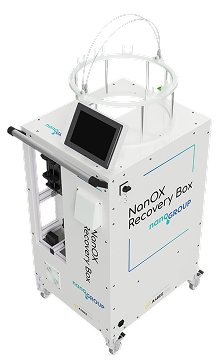
The NanOX system is the first complete solution on the market dedicated to warm kidney perfusion before transplantation. It allows for keeping the kidney alive outside the body, supporting metabolic processes. It enables the use of organs with higher risk, particularly from donors after circulatory arrest (DCD). It doubles the potential transplant market, reducing healthcare and social costs for long-term dialysis patients. It consists of the NanOX 4 Kidney perfusion fluid, based on our respiratory gas transfer technology, the NanOX Recovery Box perfusion device, and a single-use perfusion kit. NanOX 4 Kidney Perfusion Device - Defined fluid temperature range from 4°C to 37°C - Circulation condition simulation - Continuous data registration - Emergency power supply - Development platform for additional organs
CATEGORY
This allows for improving their efficiency and safety. FLEXIBILITY Enables quick initiation of new projects, leading to the creation of derivative patents based on the core technology. LIMITED RISK Uses known and well-researched active substances with established therapeutic profiles and side effects, reducing developmental risks. REPEATABILITY OF THE PROJECT The polysaccharide nanoparticle technology accelerates project execution by leveraging the effects of previous studies. STRONG SCIENTIFIC FOUNDATION Research conducted in international centers forms the foundation for derivative projects.
CATEGORY
NanOX 4 Kidney Perfusion Fluid Successful Autotransplantation After a 30-minute ischemia simulation, a pig kidney was removed and subjected to a 12-hour ex vivo perfusion at 25°C using the NanOX fluid and device, followed by a successful autotransplantation back into the donor. A 14-day observation period ended successfully. 147 Hours of Ex-Vivo Storage We achieved a breakthrough in organ storage research, maintaining an organ in a viable state outside the body for 147 hours – longer than any existing solution on the market.
CATEGORY
