By Gatan
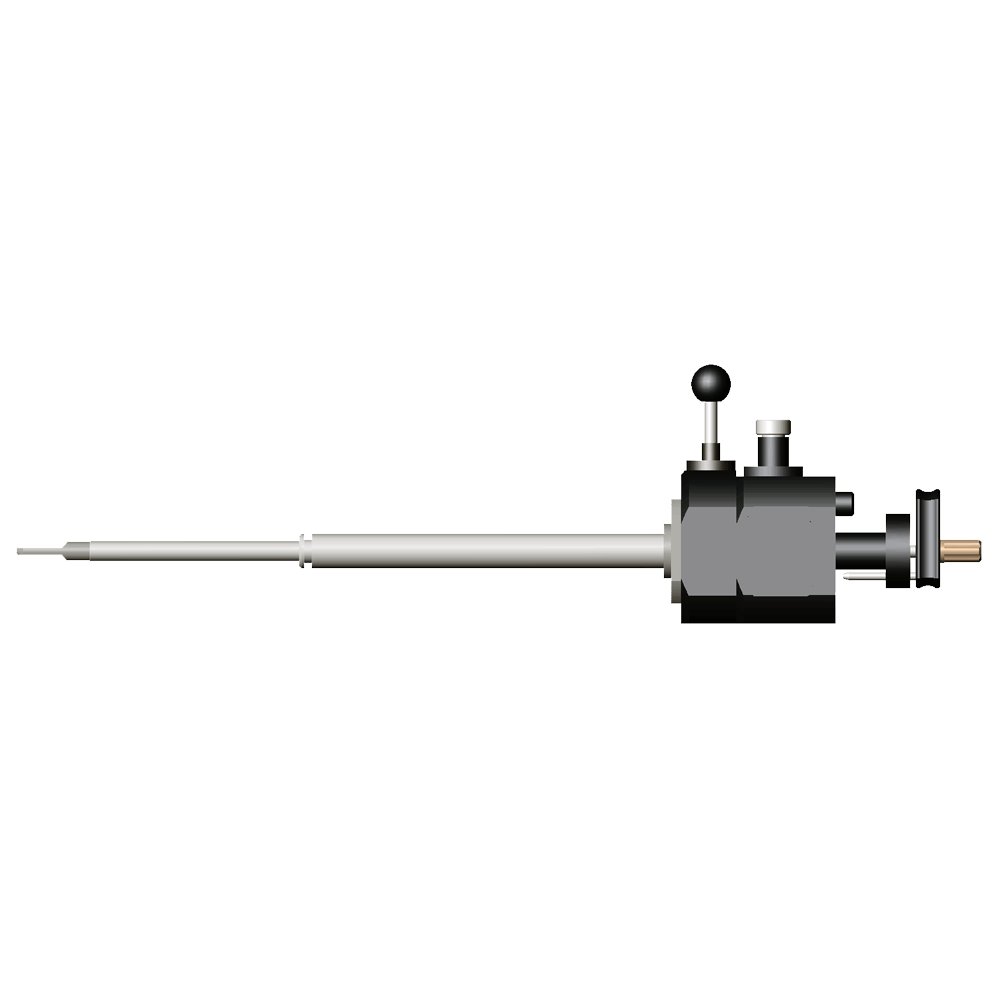
Elsa Cryo-Transfer Holder Series Models 698, 698.MS The Elsa ™ cryo-transfer holder series is a next-generation, single- tilt liquid nitrogen holder designed for the frost-free transfer of a sample at liquid nitrogen temperature into a transmission electron microscope (TEM). These holders are primarily used for imaging radiation-sensitive, frozen-hydrated specimens for single particle cryo-electron microscopy (cryo-EM) and beam-sensitive applications such as battery materials. Benefits • Larger dewar, redesigned from the ground up: Increases the liquid nitrogen volume by 2.5x • New multi-specimen tip: Load three TEM grids at once to significantly accelerate system throughput • Extended hold time: Allows >8 h of stable, high-resolution imaging • <1.5 nm/min drift rate: Ensures that image quality is high during data collection • Resolve <2.3 Å features: Enables high-resolution imaging even under cryo-conditions • Centrosymmetric design: Reduces settling and drift during tomography by maintaining the center of gravity during a stage tilt This holder comes with three different tip configurations. The multi-specimen tip allows three grids to be loaded at once. The ultra-low-profile single specimen tip uses the Quickload™ clipring-free mechanism to secure the specimen and provides the highest tilt range of any side-entry cryo-transfer holder available today (±80° tilt). Finally, the standard tip, often considered the easiest for novice users, uses a clipring mechanism to secure the sample. The Elsa holder is designed to provide a larger liquid nitrogen reservoir with a hold time of more than 8 h. This allows researchers to perform longer, unsupervised data collection to support overnight or more complex cryo-experiments. In addition, the Elsa holder utilizes a high-resolution cable so that the holder can be set to maintain a constant temperature throughout an experiment without compromising performance. This helps to minimize specimen drift, reducing the time needed to wait for the stage to stabilize before one can collect an image. This high-resolution cable also enables researchers to isotropically resolve features at <2.3 Å resolution. Figure 1. Samples can be mounted on a standard profile holder (left) that uses a clipring or the multi-specimen holder (right), which improves system throughput. The lightweight cryo-workstation provides low-temperature specimen loading to protect the frozen-hydrated grid. A one- piece cryo-shield encapsulates the frozen-hydrated grid to provide protection against damage caused by warming and frost formation during transfer from the workstation to the electron microscope. A centrosymmetric design makes it easier for novice and expert cryo-electron microscopists to use. As you rotate or tilt the holder, the center of gravity is maintained, reducing settling and drift during tomography experiments. As a result, novice and expert microscopists can acquire higher quality, clearer images. Elsa Cryo-Transfer Holder Series, Models 698, 698.MS Specifications Drift rate at 0° tilt <1.5 nm/min Isotropic resolution at 0° tilt 2.3 Å Observable area at 0° tilt 3.2 mm 2 Standard specimen cup/holder tip material Beryllium copper Capacity Diameter Max. grid thickness 3 mm 150 μm Cryogen Liquid nitrogen Operating temperature Less than -170 °C Time to reach -170 °C 698 698.MS <45 min <55 min Dewar capacity 250 mL Time to resolution specifications <75 min Hold time below -170 °C >8 h Specifications provided herein are approximate and are intended only as guidelines. Drift rate and high-resolution performance are dependent upon ambient conditions and installation of the TEM pursuant to the manufacturer’s specifications. Specifications are subject to change without notice. Ordering Model Description 698.STP Elsa Cryo-Transfer Holder (Standard Profile, Workstation, Temperature Controller) 698.ULP Elsa Cryo-Transfer Holder (Ultra-Low Profile, Workstation, Temperature Controller) 698.MSP Elsa Multi-Specimen Cryo-Transfer holder (Multi-Specimen Holder, Workstation, Temperature Controller) Figure 2. The Elsa cryo-transfer holder allows you to double your experiment time: >9 h below -145 °C with >8 h below -170 °C. Figure 3. A high-resolution image of gold lattice at cryo-temperatures using the Elsa cryo-transfer holder (top). The holder shows excellent resolution and drift that allows high-resolution features (blue 2.3 Å, red 2.0 Å, green 1.45 Å, yellow 1.2 Å) to be readily visible (bottom). Applications • Cryo-EM • Cryo-tomography • Electron crystallography • Beam-sensitive materials science
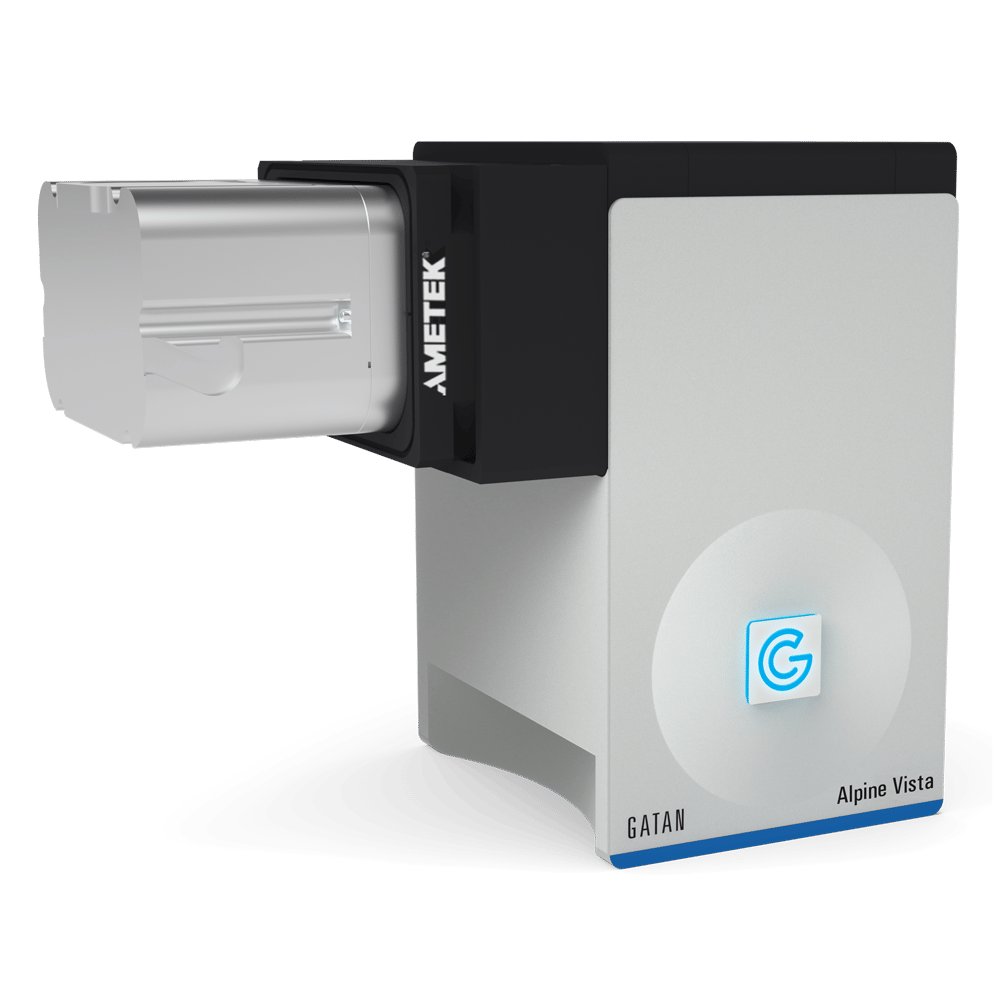
Models 1124, 1125. The world’s first direct detection cameras to democratize cryo-EM. Alpine®is the world’s first direct detection camera series to democratize cryo-electron microscopy (cryo-EM) imaging. By enabling the acquisition of high-resolution structures on 80 – 200 keV microscopes, the Alpine series allows routine cryo-EM research on more affordable, workhorse instruments and expands its usefulness to the larger research community. Two models available to match the field of view with your application needs: Alpine (1124) – Turns 80 – 200 keV screening microscopes into data-collection microscopes with single-electron counting capabilities. Delivers a detective quantum efficiency (DQE) up to 2.4-times the performance of scintillator-based cameras. Makes the 2D classification of small molecules possible while improving macromolecule reconstructions. Streamlines your workflow and detects failures early to produce better structures, faster. Real-time counting ensures there is no compromise between data collection speed and quality.
CATEGORY
Models 1124, 1125. The world’s first direct detection cameras to democratize cryo-EM. Alpine®is the world’s first direct detection camera series to democratize cryo-electron microscopy (cryo-EM) imaging. By enabling the acquisition of high-resolution structures on 80 – 200 keV microscopes, the Alpine series allows routine cryo-EM research on more affordable, workhorse instruments and expands its usefulness to the larger research community. Two models available to match the field of view with your application needs: Alpine Vista (1125) – Maximizes imaging throughput for your high-performance microscopes with a large FOV of 5,760 x 4,092 pixels. Delivers a detective quantum efficiency (DQE) up to 2.4-times the performance of scintillator-based cameras. Makes the 2D classification of small molecules possible while improving macromolecule reconstructions. Streamlines your workflow and detects failures early to produce better structures, faster. Real-time counting ensures there is no compromise between data collection speed and quality.
CATEGORY
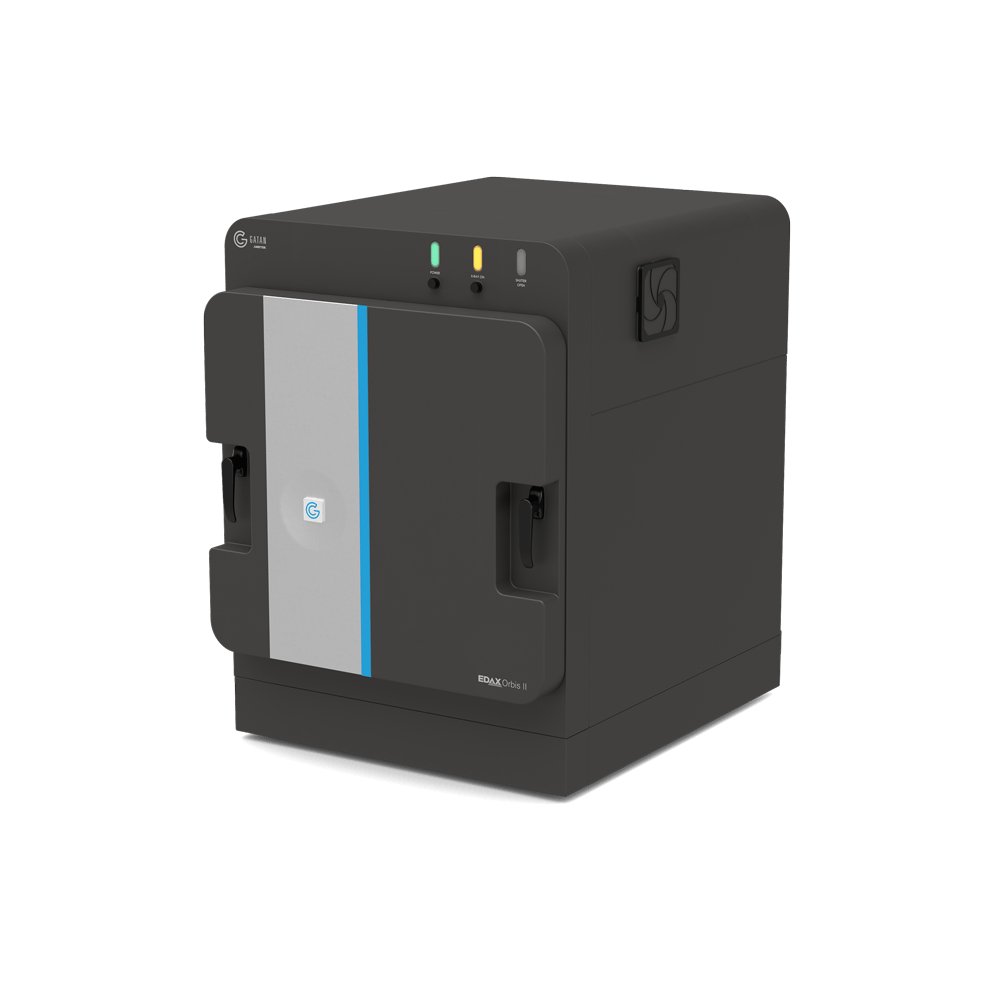
Model 1140 Delivers non-destructive, high-performance elemental analysis with unmatched flexibility and ease of use. The EDAX® Orbis™ II micro-x-ray fluorescence (micro-XRF) system delivers non-destructive, high-performance elemental analysis with unmatched flexibility and ease of use. Engineered for excellence across the full spectrum of micro-XRF applications, the Orbis II empowers users to analyze everything from the smallest particles to large, complex samples—quickly and accurately. Experience the next level of micro-XRF analysis with the EDAX Orbis II—where precision meets performance. - Custom x-ray window technology enables the detection of light elements - Proprietary coaxial light and x-ray optics precisely targets specific regions – eliminating x-ray interference from adjacent areas - Maximizes throughput by collecting spectra 2.5x faster and spectral maps 3x faster - Streamlines workflows with programmable autorun routines to boost productivity and ensure consistent results
CATEGORY
