By Innovative Scientific Solutions Inc.
(Product ID: FB-XXX) Warning! Use with adequate ventilation or appropriate respiratory protection. This product is flammable; do not spray near flame, heat, or sparks. This product contains solvents and propellants that may damage some plastic surfaces. Directions: 1. Clean the model, calibration coupons, and a small test piece with alcohol or acetone on wipes. 2. Shake the paint thoroughly for several minutes. Ideally, the paint in its container may also be partially submerged in an ultrasonic bath (cleaner) filled with water for a few minutes to enhance mixing. 3. Pour the paint into the gun without filtering or straining. For the HVLP gun: Set gun to 10 psi (68kPa). This may vary due to air-hose differences. This keeps overspray to a minimum. Set the fluid control knob on the sprayer all the way closed (clockwise) and then open it two full turns (anticlockwise) and pattern control to almost full open or anticlockwise. This setting yields a sheet pattern (as opposed to a circular pattern at the opposite extreme of the adjustment) which typically yields more uniform results. For the air brush: 4. Set the pressure to 10 psi (68kPa) or less. 5. Test your spray method on a test piece of metal. Keep the gun about 12 inches (30 cm) away from surface while spraying. Over a bare metal surface or screen layer coated surface, apply about 7 to 9 (very light) cross coats. Cross coats means working from left to right or right to left while moving down the model, then work back up left to right or right to left. This constitutes one coat. The next coat is applied top to bottom or bottom to top in a similar manner. Do not exceed 12 coats as too much paint could result in separation from the metal. Do not apply a wet coat. Wet coats may cause the model to appear to have a skin rash. Let the FIB Basecoat™ layer dry before applying UniFIB® or BinaryFIB® over top. FIB Basecoat™ does not need to separately cured. It can be cured with the PSP layer after it is applied. Models coated with FIB-based paints should be cured at 75˚ C for at least one hour in order to minimize the temperature sensitivity of the pressure response of the paint. For all Paints: For best results, apply light coats, allow paint to dry between coats (~10 sec.), and STOP when you have good coverage. Most common reasons for FIB Basecoat™ paint failure: 1. Too many coats on the surface. The paint will crack and peel off. This will require the model to be repainted. 2. Applying paint too heavily. (surface appears wet) Generally caused by moving the gun too slowly. This will look like a rash, repaint recommended if the problem is extensive. 3. Grease or oil on surface. May not notice this by eye, but the temperature and pressure sensitivity of the paint will be compromised. Clean and repaint. Removal of FIB Basecoat™ from surfaces: Acetone on wipes works best for metal surfaces, but will damage most plastic surfaces. Caution! Acetone can damage the surface of some plastics!
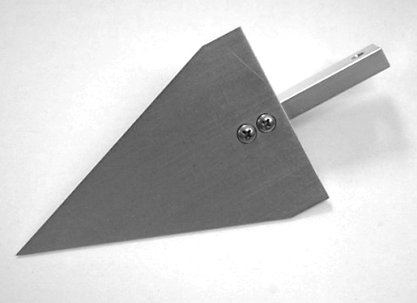
The educational PSP/TSP system provides everything needed for new users to get started using PSP and TSP. This system provides high spatial resolution, excellent dynamic range, but lower data capture rates than our higher-end systems. For applications where time in the wind tunnel is not a critical issue, it represents an excellent cost/performance trade-off. This system provides full capability for undergraduate demonstrations, training, and laboratory exercises. It will support all but the most demanding graduate and faculty research programs requiring distributed pressure and temperature measurements in wind tunnel environments. The system employs proven ISSI LED technology for excitation of the luminous probes in the paints. The camera is based on a color CCD sensor, eliminating the need for a filter wheel when using bi-luminophore paints. The OMS-Lite software package is easy to use and fully supports the educational and research capabilities of the PSP/TSP system. Standard System Components: - Color CCD Camera: 12 bit, 1.9 Megapixel color CCD camera with Gigabit Ethernet connectivity - LM2X-DM-400 LED Array: High-power UV LED module with TTL control - PSG-3: Pulse/delay generator for instrument control and synchronization - Parbolic Reflector and Diffuser: Focuses output of LM2 series LEDs from 120- to 40-degrees giving 2-3 times increased focused output. - PSP/TSP Starter Kit: PSP starter kit including beginner paints in spray cans, Binary FIB and FIB Basecoat with HVLP paint gun and airbrush with compressor and fittings. - Optical Kit: This kit contains all lenses and filters needed to get started using PSP and TSP. Available with c-mount or Canon® EF mount lenses. - ProAcquire and OMS-Lite: Data acquisition and data reduction software. Test models used in the lab experiments are provided with the the educational PSP/TSP system. An aluminum delta wing and NACA 0012 airfoil model are included with the system along with the mounting hardware to install them for either 1/4″-20 or M6. Other models are available to purchase upon request as well as pressure tapped models. The PSP system package has several options for purchase. Depending on the size of the facility the system will be used in, some different optical kits may be appropriate. Additional LEDs and cameras can also be added to systems and seamlessly integrated. Building a system with the appropriate hardware for your facility is paramount to the success of the results.
CATEGORY
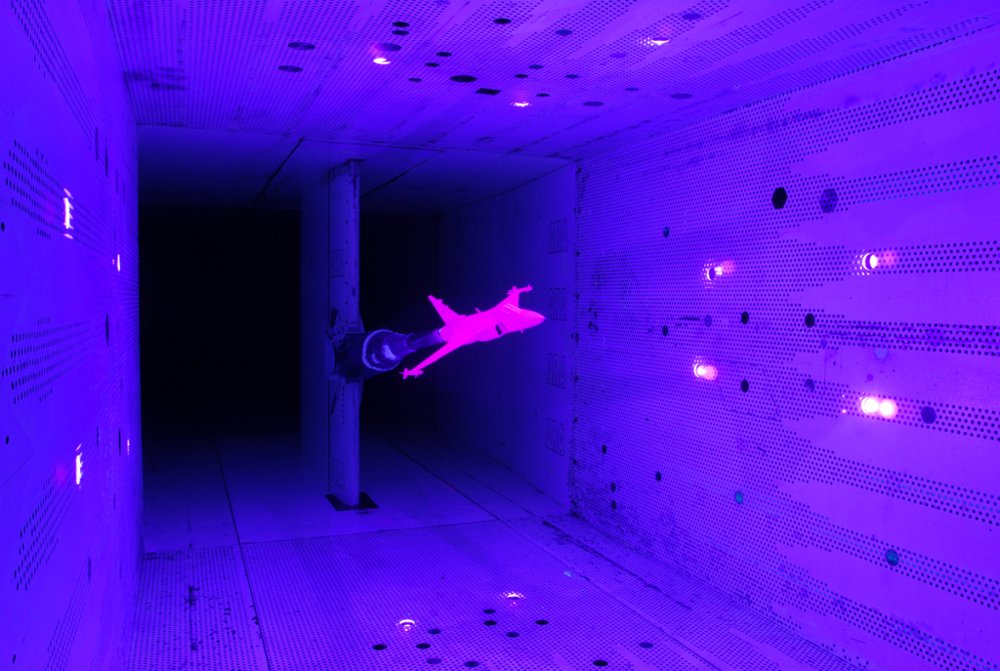
Temperature Sensitive Paint is an optical sensor for temperature measurements. A paint-like coating is applied to a surface and the fluorescence of the paint is monitored with a camera. The paint fluorescence is a function of the local temperature, and therefore, each pixel on the camera acts as a thermocouple.
CATEGORY
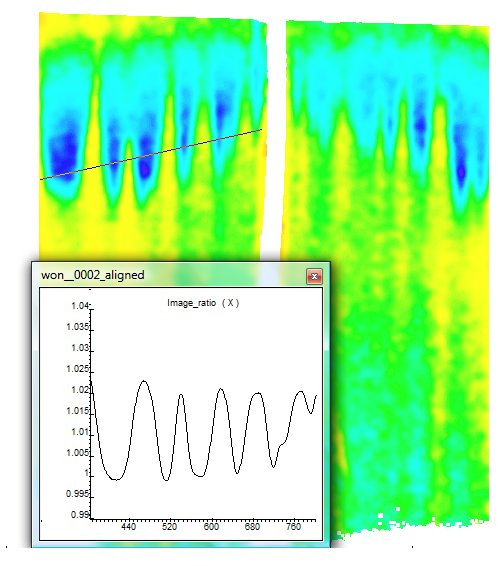
Binary paint is composed of two probes, a pressure sensor and a reference probe. The reference probe is used to compensate for errors caused by model displacement/deformation. It can also be used to compensate for temperature.
CATEGORY
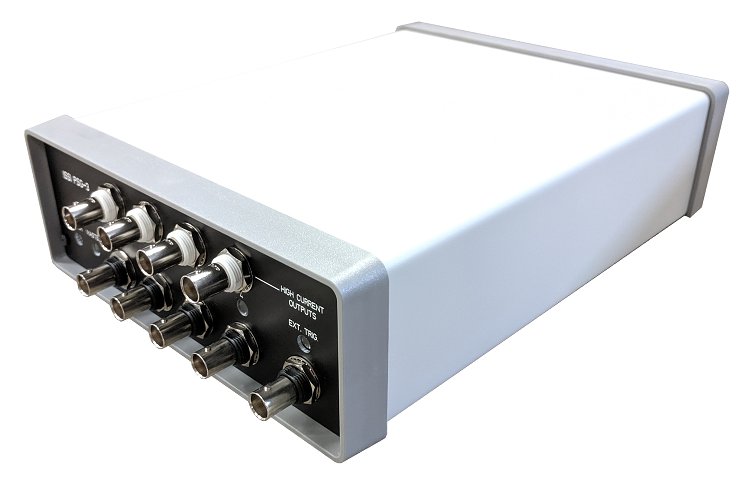
The PSG-3 is a four channel digital pulse/delay generator used for controlling the timing of experiment parameters and can be used as an experiment master clock or externally triggered (or gated) by an external event. The PSG-3 replaces the PSG-2 in the ISSI product line. Pulse width, delay, repetition rate, and other timing parameters are controlled by a simple user interface (or also by any web browser interface) and communication is via Ethernet or USB. Features - Two dual-channel independently programmable pulse generators (each PSG-3 has 4 total channels). The PSG-3 can produce two separate frequency outputs either synchronously or asynchronously. - Four high-current TTL level outputs extend the utility of this generator by allowing it to drive low impedance loads (50 Ohms) such as solenoids and drive logic over long cable runs - Browser accessible HTTP-interface (internal web-server) - Remotely programmable through Ethernet or USB via simple software interface (or HTTP-based API) - Multiple timing bases (ns, us, ms) - Multiple PSG-3s can be cascaded to increase the number of channels - BNC inhibit input (TTL high level) to allow the PSG-3 to be gated by an external source - User application controlled or external signal triggering - Firmware upgradeability through USB - 50 MHz maximum trigger rate (20ns delay resolution) - Divide-by-N from 1-255 - Input Trigger Threshold 0.05-5.0V - Simple LabVIEW® integration Ideal for laser timing systems, automated testing, and precision pulse applications.
CATEGORY
