By Gatan
DigitalMicrograph®, also known as Gatan Microscopy Suite®, is the industry-standard software for collecting and analyzing data from transmission electron microscopes (TEM) and scanning TEM (STEM) systems. The software development kit (SDK) empowers you to go beyond the standard interface and create solutions tailored to your research. With the DigitalMicrograph scripting language you can quickly create custom experiments, custom data processing algorithms, prototype new techniques and share tools with the microscopy community. With the C++ SDK you get further benefits: Language familiarity For those folk knowledgeable in C or C++ this might be easier than working in the scripting language. High speed Algorithms that iterate over images can be much faster in C++ than the scripting language. Easy access to 3rd party libraries Additional data processing or hardware control APIs are often implemented in C++ and will be easier to use. Easier debugging Development environments usually include more comprehensive debugging tools than can be found in the scripting language. With the C++ software development kit you can design, build, test, and maintain full-scale applications or systems. This is distinctly different from DigitalMicrograph or Python scripting, which allow you to write small programs (scripts) to automate tasks or extend functionality within the existing software environment. Feature | SDK-based development | Scripting Scope: Full applications | Task-specific automation Language: C++ | DigitalMicrograph Script, Python Execution: Compiled | Interpreted Integration: Easy use of external libraries | Uses functions in the DigitalMicrograph scripting API Use case: Large scale packages, acquisition or analysis | Prototyping experiment or analysis, automating small workflows
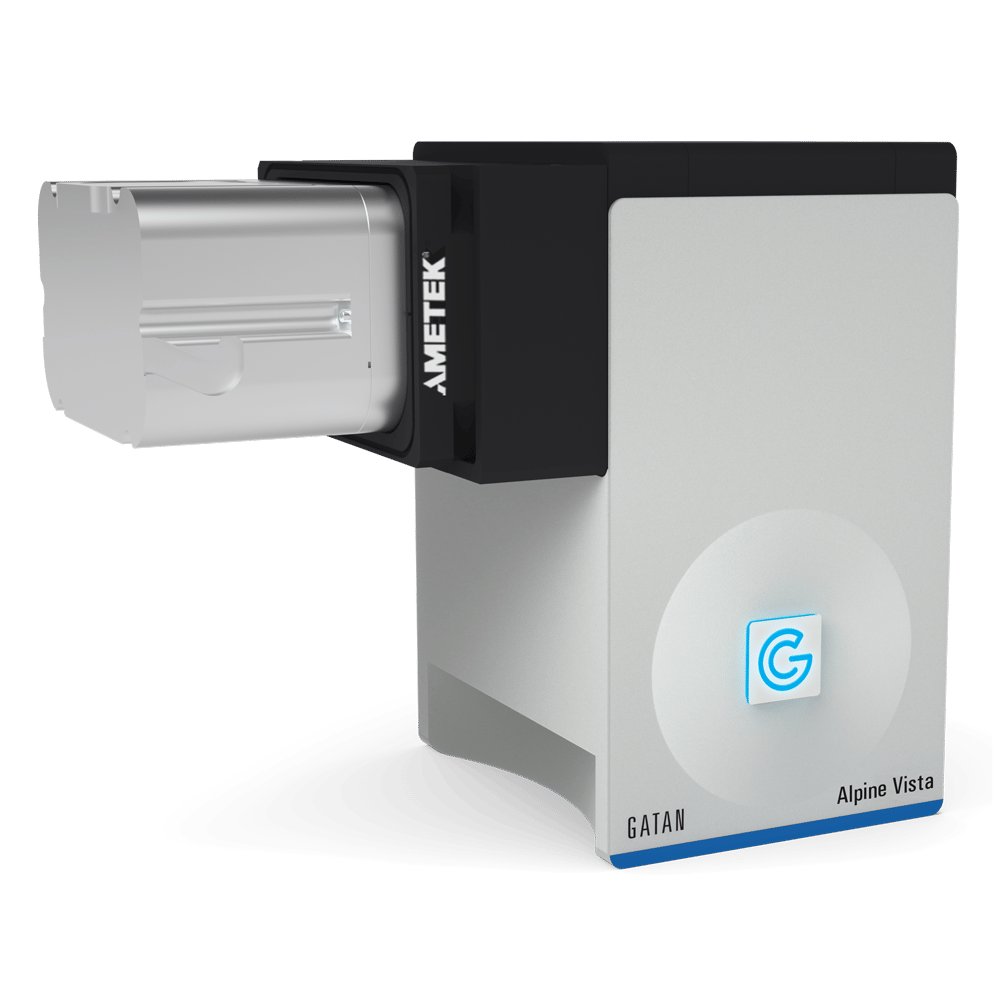
Models 1124, 1125. The world’s first direct detection cameras to democratize cryo-EM. Alpine®is the world’s first direct detection camera series to democratize cryo-electron microscopy (cryo-EM) imaging. By enabling the acquisition of high-resolution structures on 80 – 200 keV microscopes, the Alpine series allows routine cryo-EM research on more affordable, workhorse instruments and expands its usefulness to the larger research community. Two models available to match the field of view with your application needs: Alpine (1124) – Turns 80 – 200 keV screening microscopes into data-collection microscopes with single-electron counting capabilities. Delivers a detective quantum efficiency (DQE) up to 2.4-times the performance of scintillator-based cameras. Makes the 2D classification of small molecules possible while improving macromolecule reconstructions. Streamlines your workflow and detects failures early to produce better structures, faster. Real-time counting ensures there is no compromise between data collection speed and quality.
CATEGORY
Models 1124, 1125. The world’s first direct detection cameras to democratize cryo-EM. Alpine®is the world’s first direct detection camera series to democratize cryo-electron microscopy (cryo-EM) imaging. By enabling the acquisition of high-resolution structures on 80 – 200 keV microscopes, the Alpine series allows routine cryo-EM research on more affordable, workhorse instruments and expands its usefulness to the larger research community. Two models available to match the field of view with your application needs: Alpine Vista (1125) – Maximizes imaging throughput for your high-performance microscopes with a large FOV of 5,760 x 4,092 pixels. Delivers a detective quantum efficiency (DQE) up to 2.4-times the performance of scintillator-based cameras. Makes the 2D classification of small molecules possible while improving macromolecule reconstructions. Streamlines your workflow and detects failures early to produce better structures, faster. Real-time counting ensures there is no compromise between data collection speed and quality.
CATEGORY
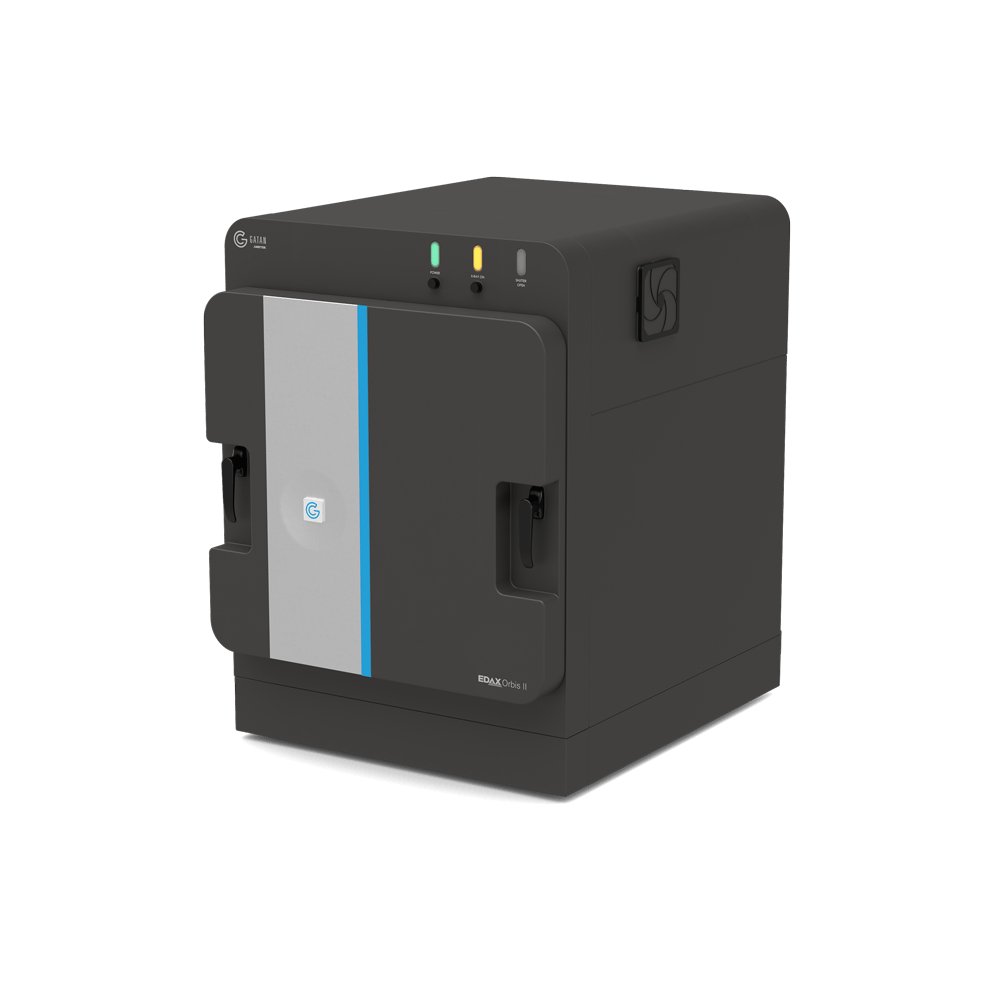
Model 1140 Delivers non-destructive, high-performance elemental analysis with unmatched flexibility and ease of use. The EDAX® Orbis™ II micro-x-ray fluorescence (micro-XRF) system delivers non-destructive, high-performance elemental analysis with unmatched flexibility and ease of use. Engineered for excellence across the full spectrum of micro-XRF applications, the Orbis II empowers users to analyze everything from the smallest particles to large, complex samples—quickly and accurately. Experience the next level of micro-XRF analysis with the EDAX Orbis II—where precision meets performance. - Custom x-ray window technology enables the detection of light elements - Proprietary coaxial light and x-ray optics precisely targets specific regions – eliminating x-ray interference from adjacent areas - Maximizes throughput by collecting spectra 2.5x faster and spectral maps 3x faster - Streamlines workflows with programmable autorun routines to boost productivity and ensure consistent results
CATEGORY
