
Physicists in the Harvard John A. Paulson School of Engineering and Applied Sciences (SEAS) have created a compact laser that emits extremely bright, short pulses of light in a useful but difficult-to-achieve wavelength range, packing the performance of larger photonic devices onto a single chip.
Published in Nature, the research is the first demonstration of an on-chip, picosecond, mid-infrared laser pulse generator that requires no external components to operate. The device can make what’s called an optical frequency comb, a spectrum of light consisting of equally spaced frequency lines (like a comb), used today in precision measurements. The new laser chip could one day speed the creation of highly sensitive, broad-spectrum gas sensors for environmental monitoring, or new types of spectroscopy tools for medical imaging.
The paper’s senior author is Federico Capasso, the Robert L. Wallace Professor of Applied Physics at SEAS and the Vinton Hayes Senior Research Fellow in Electrical Engineering. Supported by the National Science Foundation and the Department of Defense, the research was a collaboration with the Schwarz group at Vienna University of Technology (TU Wien); a consortium of Italian scientists led by Luigi A. Lugiato; and Leonardo DRS Daylight Solutions led by Timothy Day.
“This is an exciting new technology that integrates on-chip nonlinear photonics to generate ultrashort pulses of light in the mid-infrared; no such thing existed until now,” Capasso said. “What’s more, such devices can be readily produced at industrial laser foundries using standard semiconductor fabrication.”
The mid-infrared is an invisible section of the electromagnetic spectrum that is leveraged today in environmental applications. Because many gas molecules like carbon dioxide and methane absorb mid-infrared light efficiently, this wavelength range has been an important tool in monitoring environmental gases, notably with quantum cascade laser technology that was pioneered by Capasso in the 1990s.
The new paper demonstrates a path to generating a broadband light source that could detect, for example, many different absorption fingerprints of gases in a single device.
“It’s a key step to creating what we call a supercontinuum source, which can generate thousands of different frequencies of light, all in one chip,” said Dmitry Kazakov, co-first author and research associate in Capasso’s group. “I think that’s a real possibility for the future of this platform.”
Fundamental to the new feat of nanophotonic engineering is the quantum cascade laser, which generates coherent beams of mid-infrared light by layering together different nanostructured semiconductor materials. Unlike other semiconductor lasers that have relied for decades on well-established techniques called mode-locking to generate their pulses, quantum cascade lasers remain notoriously difficult to pulse due to their inherently ultra-fast dynamics. Existing mid-infrared pulse generators based on quantum cascade lasers typically require complex setups to achieve pulsed emission as well as many discrete hardware components. They are also generally limited to a certain output power and spectral bandwidth.

The new pulse generator seamlessly combines, into a single device, several concepts in nonlinear integrated photonics and integrated lasers to make specific types of picosecond light pulses called solitons. In designing their chip architecture, the researchers took inspiration from a seemingly unrelated type of light-modulating device called a Kerr microresonator. Their creative thinking allowed them to skirt traditional techniques, like mode-locking, for pulse generation.
“Our measurements were non-traditional when it came to quantum cascade laser research,” said co-first author Theodore Letsou, a graduate student at MIT and research fellow in Capasso’s group. “We merged two types of fields and took what the Kerr resonator community does and applied it to our systems. That was an exciting process.”
"For me, the most significant impact of our new work – beyond the impressive physics – is the confidence it has given us in fabricating and operating multicomponent architectures, which is a capability that had remained a major challenge in mid-infrared integrated photonics until now," said paper co-author Benedikt Schwarz, professor at TU Wien. “We’re already developing new architectures to enable functionalities previously thought impossible."
The researchers drew on a foundational theory published in the 1980s that established a framework for passive Kerr resonators. One of the new paper’s co-authors is Luigi Lugiato, who worked on repurposing his original equation to describe the dynamics of the mid-IR laser system.
“This is an exciting culmination of a journey that began with the Lugiato-Lefever equation,” said Lugiato, professor emeritus at University of Insubria, Italy. “What started as a model for passive systems has evolved into a unified framework for soliton frequency combs in all kinds of cavities. That path led us to predict solitons in optically driven quantum cascade lasers above threshold – now confirmed by this experiment.”
The new mid-infrared laser can reliably maintain pulse generation for hours at a time. Crucially, it can also be mass-produced using existing industrial fabrication processes, which could greatly increase the speed of its widespread adoption. The device is made of a ring resonator that can be externally driven; an on-chip laser that drives the ring resonator; and a second active ring resonator that acts as a filter. The chips were made at TU Wien.
“This technology promises to be a real game-changer in the field of mid-infrared spectroscopy,” said paper co-author Timothy Day, Senior Vice President and General Manager of Leonardo DRS’ Daylight Solutions business unit. “The ability to leverage existing fabrication processes to produce these devices in commercial volumes could really enable what’s next in several markets, including environmental monitoring, industrial process control, life sciences research and medical diagnostics.”
Reference
Driven bright solitons on a mid-infrared laser chip
Dmitry Kazakov, Theodore P. Letsou, Marco Piccardo, Lorenzo L. Columbo, Massimo Brambilla, Franco Prati, Sandro Dal Cin, Maximilian Beiser, Nikola Opačak, Pawan Ratra, Michael Pushkarsky, David Caffey, Timothy Day, Luigi A. Lugiato, Benedikt Schwarz & Federico Capasso
https://www.nature.com/articles/s41586-025-08853-y
Harvard John A. Paulson School of Engineering and Applied Sciences (SEAS)
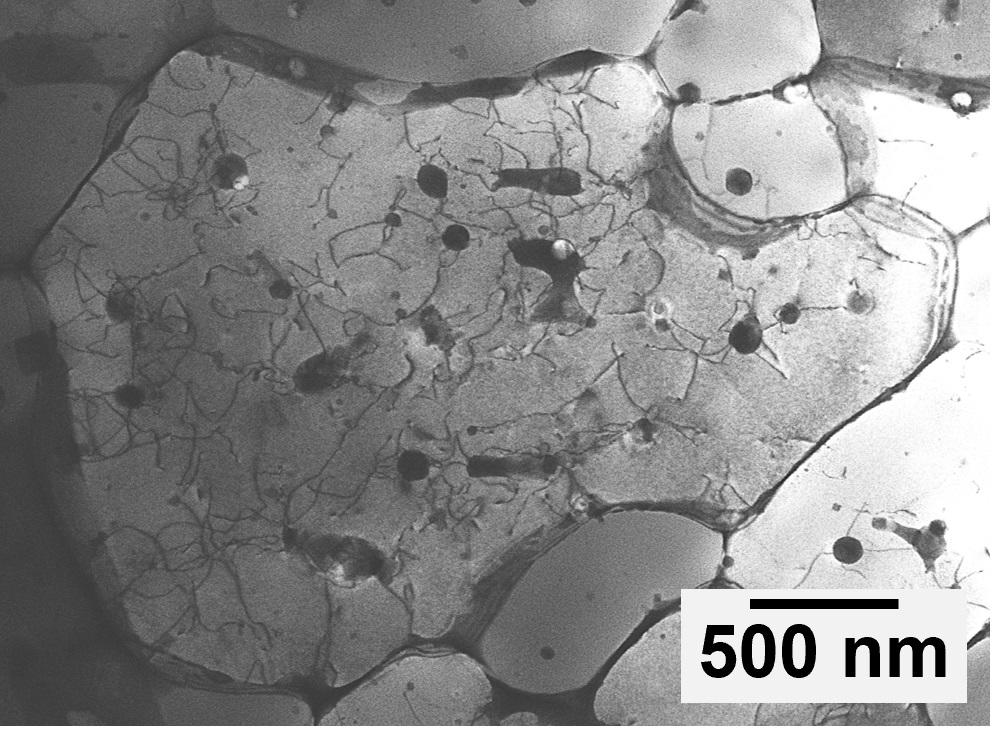
In metals, perfect crystals are weak. The regular patterns of perfect crystals make it easier for the atoms to slip past each other. When that happens, the metal bends, stretches or breaks. Quasicrystals break up the regular pattern of the aluminum crystals, causing defects that make the metal stronger.
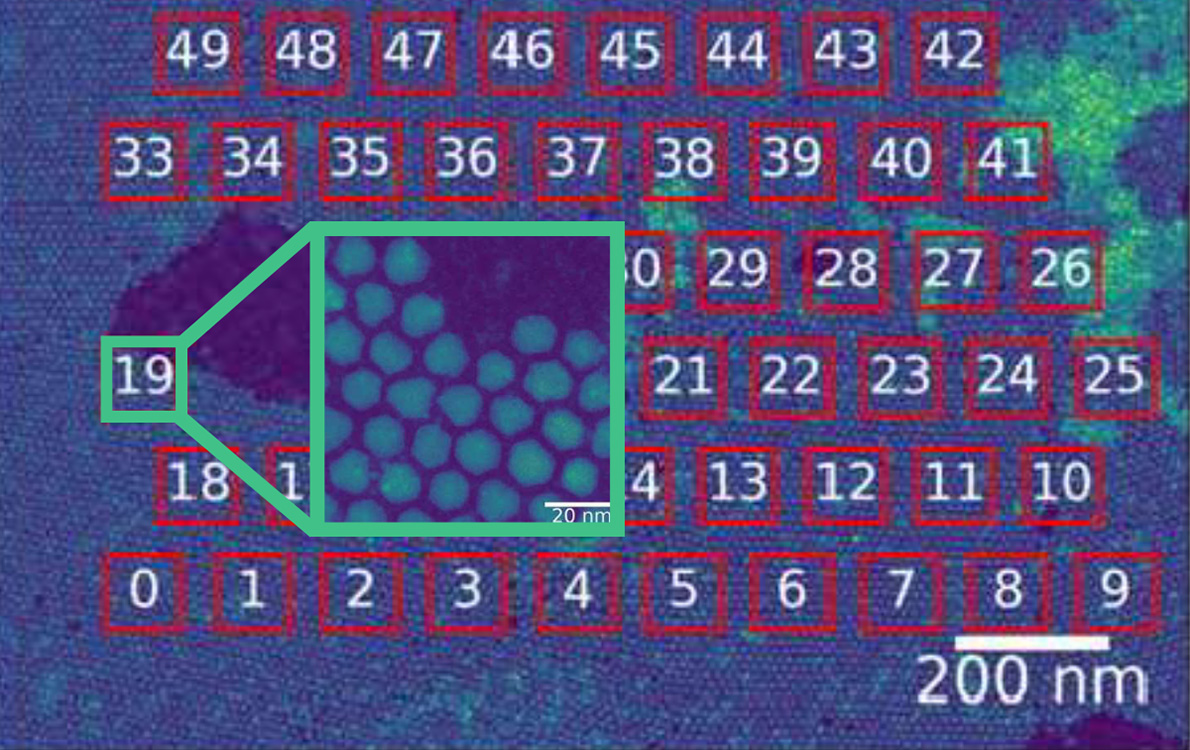
“We now have a way for people to interact with a detector on one side and a supercomputer on the other side with a simple webpage called Distiller in the middle,” said Peter Ercius, interim facility director of the National Center for Electron Microscopy (NCEM) at Berkeley Lab’s Molecular Foundry. “We’re moving towards getting huge amounts of data processed in an automated way with minimal human intervention.”
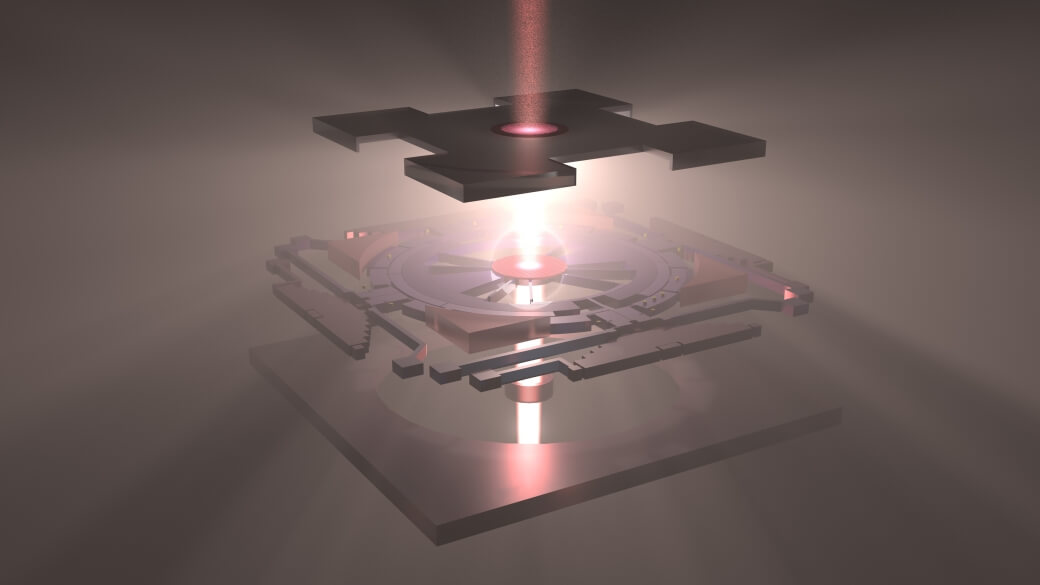
In twisted moiré photonic crystals, how the layers twist and overlap can change how the material interact with light. By changing the twist angle and the spacing between layers, these materials can be fine-tuned to control and manipulate different aspects of light simultaneously — meaning the multiple optical components typically needed to simultaneous measure light’s phase, polarization, and wavelength could be replaced with one device.
