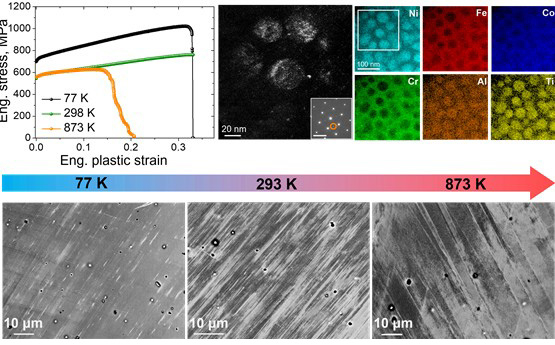
A research team at POSTECH (Pohang University of Science and Technology), led by Professor Hyoung Seop Kim from the Department of Materials Science and Engineering, Graduate Institute of Ferrous Technology, and Department of Mechanical Engineering, has developed a new alloy that maintains its strength and ductility across extreme temperatures ranging from –196 °C to 600 °C. The findings, which have drawn attention from the aerospace and automotive industries, were published in the international journal Materials Research Letters.
Most metals used in everyday life are sensitive to temperature changes—metal doorknobs feel icy in winter and scalding in summer. Consequently, conventional metal materials are typically optimized for performance within a narrow temperature range, limiting their effectiveness in environments with dramatic temperature fluctuations
To overcome this challenge, the POSTECH research team introduced the concept of the "Hyperadaptor" and developed a nickel-based high-entropy alloy (HEA) that embodies this idea.
The newly developed HEA demonstrates nearly constant mechanical performance across a wide temperature range—from cryogenic conditions at -196°C (77 K) to high heat at 600°C (873 K). This remarkable stability is attributed to the presence of nanoscale L1₂ precipitates, which are uniformly distributed within the alloy. These fine particles act as reinforcements that inhibit deformation, while the alloy's internal structure accommodates stress through consistent slip behavior, regardless of temperature.
This development holds significant promise for applications that involve sudden or extreme temperature changes, such as rocket or jet engines, automotive exhaust systems, power plant turbines, and pipelines. The alloy’s ability to maintain stable performance under such conditions can greatly enhance both safety and efficiency in these demanding environments.
“Our HEA breaks through the limitations of existing alloys and establishes a new class of temperature-insensitive materials,” said Professor Kim. “The Hyperadaptor concept represents a breakthrough in developing next-generation materials with consistent mechanical behavior even under extreme conditions.”
Reference
Hyperadaptor; Temperature-insensitive tensile properties of Ni-based high-entropy alloy a wide temperature range
Hyojin Park, Sujung Son, Soung Yeoul Ahn, Hyojeong Ha, Rae Eon Kim, Jae Heung Lee, Hyo Moon Joo, Jung Gi Kim & Hyoung Seop Kim
https://www.tandfonline.com/doi/full/10.1080/21663831.2025.2457346
POSTECH
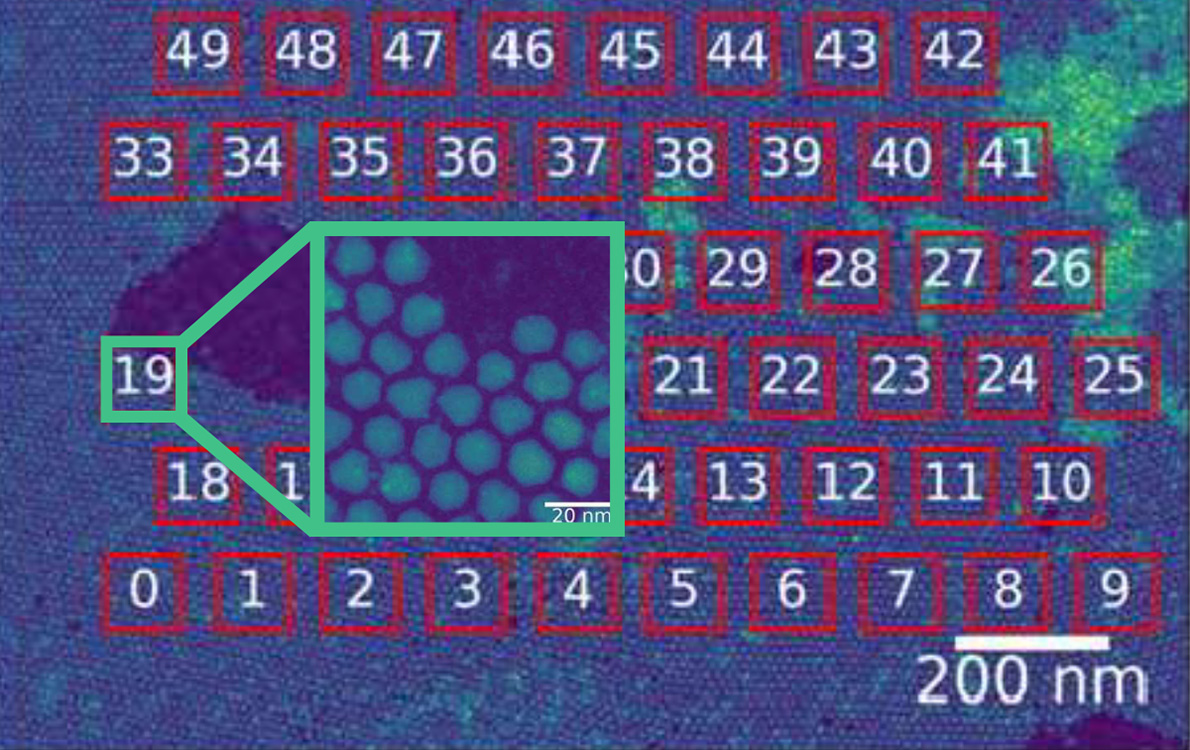
“We now have a way for people to interact with a detector on one side and a supercomputer on the other side with a simple webpage called Distiller in the middle,” said Peter Ercius, interim facility director of the National Center for Electron Microscopy (NCEM) at Berkeley Lab’s Molecular Foundry. “We’re moving towards getting huge amounts of data processed in an automated way with minimal human intervention.”
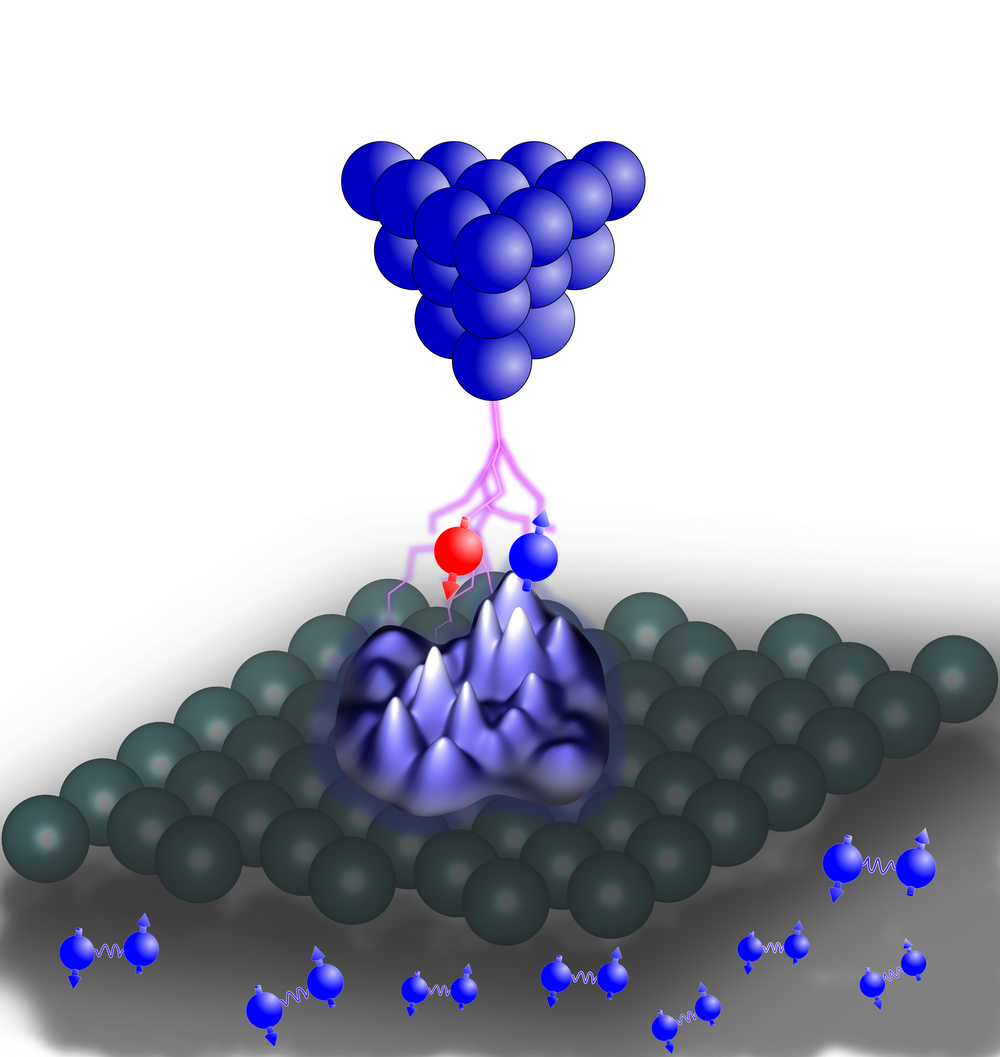
Researchers have caused a material’s superconductivity to permeate into a nearby normal metal via a single molecule. They showed that this effect could be controlled and say that this control could allow the creation of so-called Majorana quasiparticles, which many research teams are exploring as future quantum bits (qubits) for quantum computers.
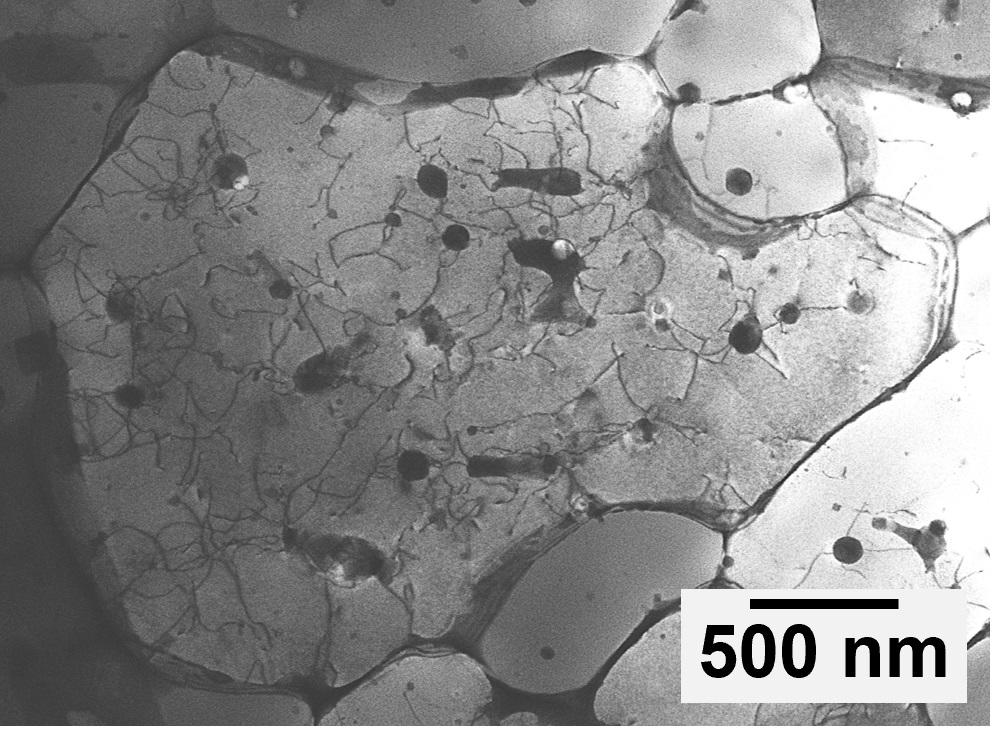
In metals, perfect crystals are weak. The regular patterns of perfect crystals make it easier for the atoms to slip past each other. When that happens, the metal bends, stretches or breaks. Quasicrystals break up the regular pattern of the aluminum crystals, causing defects that make the metal stronger.
